

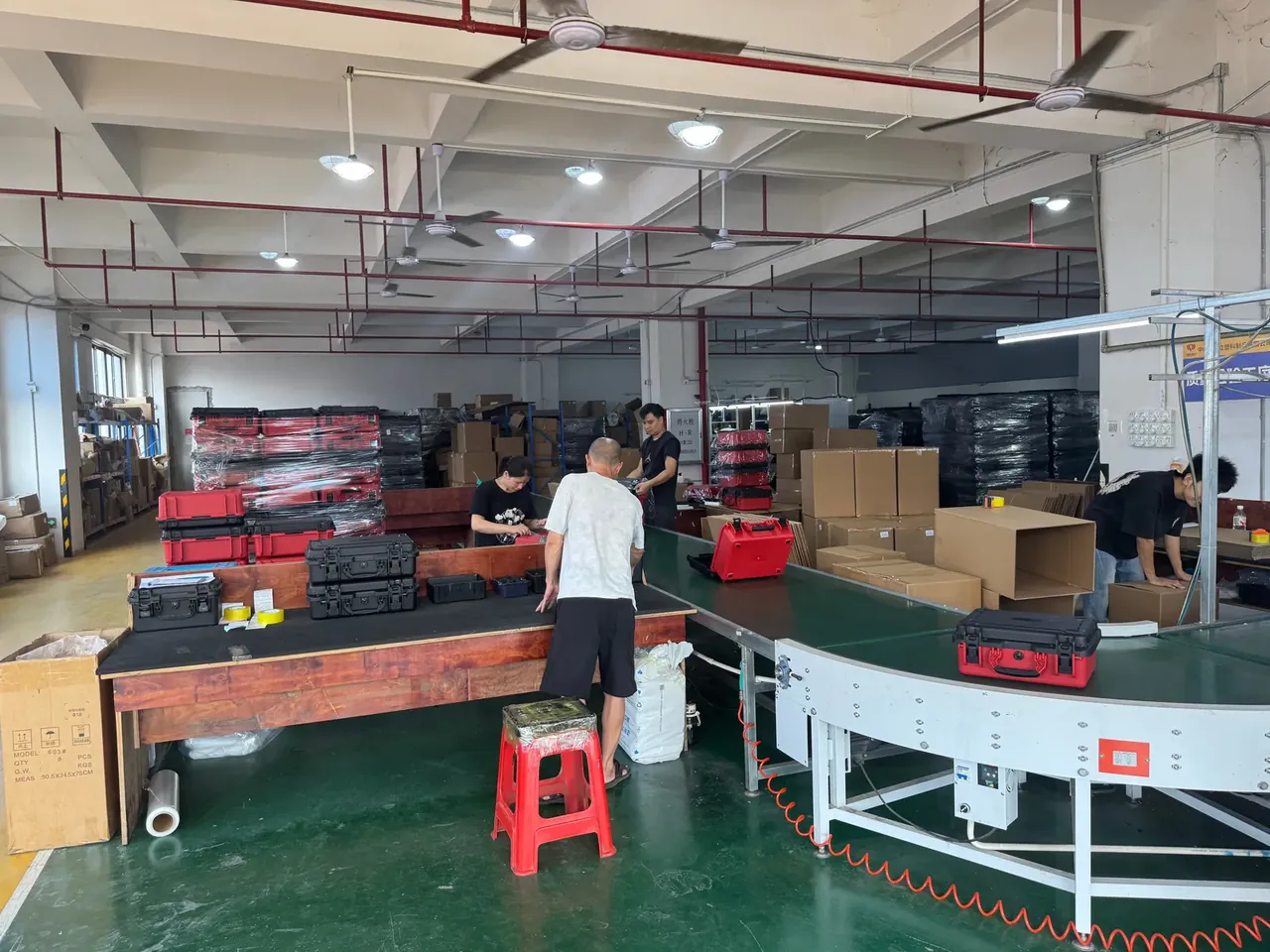
Quick answer: A case dual sourcing split follows how much volume the second plant can hold, not how low it quotes, which is why 70/30 is the usual landing point.
Table of contents
- Where the 70/30 split comes from
- Qualifying the second source
- The six-week switch and surge ceiling
- Colour difference and quarterly review
- FAQ
1. Where the 70/30 split comes from
One line at the only supplier stopped for six weeks, and procurement learned that the second line is counted from qualification day, not from order day. At 600 cases a week that outage is a 3,600-case hole, and the work that fills it has to start six weeks earlier.
The 70/30 split is not a round number pulled out of the air. The lead plant takes 70%, or 1,680 of the 2,400 cases needed monthly, and moulds the body and lid; the second plant takes 30%, 720 cases, starting on lids and handle mounts where tooling changes are quick, then widening to full shells. Share follows capacity, not price.
| Item | Lead plant, 70% | Second plant, 30% |
|---|---|---|
| Monthly share | 1,680 cases | 720 cases |
| Starting parts | Body and lid moulding | Lid and handle mount |
| Tooling | Original mould | Copied mould |
| Delivery | One truck a week | One truck a fortnight |
| Surge during an outage | Holds its share | Up to 60% in six weeks |
| Review | Quarterly | Quarterly |
Thirty percent has a floor for a reason. Below 20% the second plant runs only two or three months a year, the press operators forget the tool, and every restart costs more in scrap than the split saves.
Write the share as monthly, not annual. An annual 70/30 lets the supplier move capacity to other customers in a slow season; a monthly split keeps the 720 cases on the schedule in February as well as in September, and that obligation is what the 3% price premium buys.
Whether the spare line pays is a comparison of failure costs. Six weeks of downtime at 3,600 cases and 82 CNY a unit is 295,000 CNY of lost revenue, and with penalties and expedited freight it usually passes 350,000 CNY. Running dual sourcing costs 57,000 CNY amortised plus 21,000 CNY of premium, and one outage in three years clears that bill.
2. Qualifying the second source
Qualification costs 12,000 CNY: eight dimensional checks on the first article, two sealing checks, one drop sequence, three colour plaques and two small trial runs. Copying the mould costs 45,000 CNY, less than the original because the geometry is fixed and only the parting line and cooling layout need reworking.
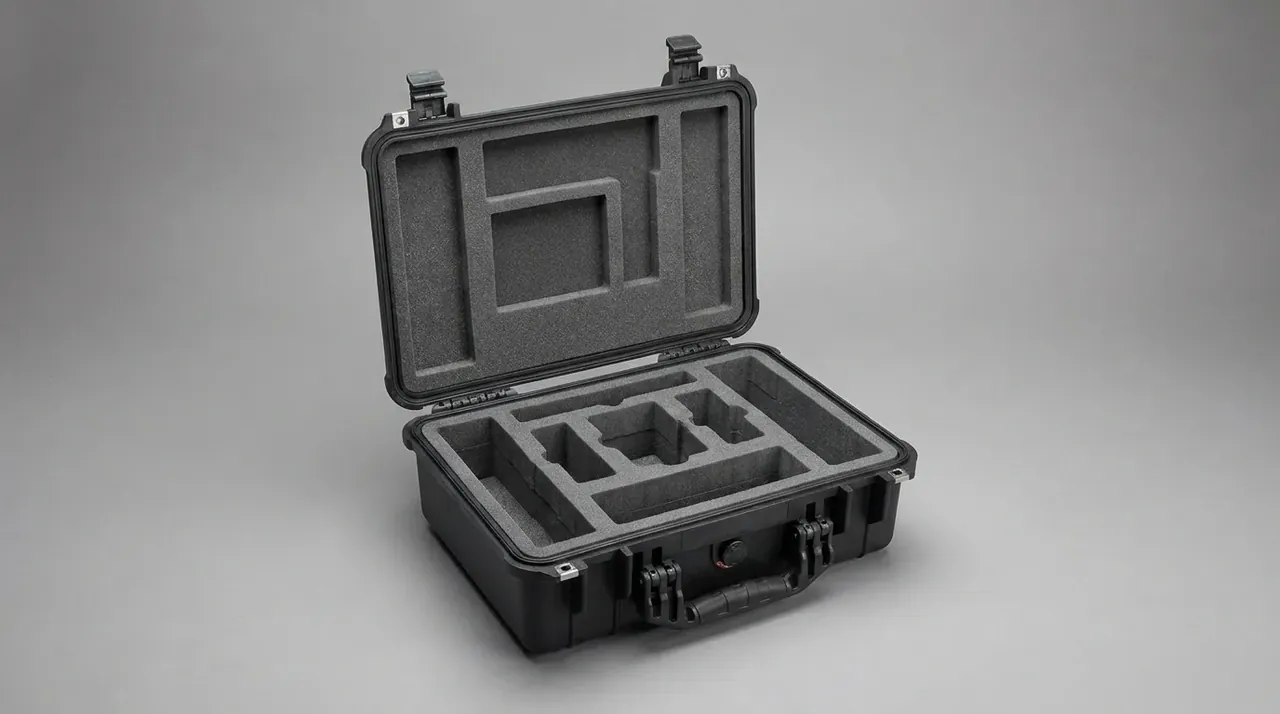
Together that is 57,000 CNY, or 6.6 CNY a case over twelve months at 720 cases a month, which is 8% of the 82 CNY price. The figure belongs in year one; spreading it over three years hides the real cost of switching until the second switch exposes the ledger.
A copied mould is not the original. Parting surfaces, cooling circuits and ejector positions are all re-matched, and the first 200 shots run roughly three times the flash and sink risk of the original, so the trial batch cannot be smaller than 200 pieces and the first article needs a full dimensional report.
Across five candidate plants, fewer than 40% pass qualification on the first attempt. Planning four weeks of qualification into six weeks of calendar is what buys the one round of rework that is nearly always needed.
Sign off the copied mould item by item instead of watching it produce a part. Cavity dimensions within ±0.2 mm of drawing, parting line offset at or below 0.1 mm, cooling circuits leak-free after 30 min under water, ejector synchronisation within 0.3 mm, and only then does a trial run start. Both sides keep a signed copy, because this sheet disappears within two years in any case dual sourcing file.
3. The six-week switch and surge ceiling
The six-week window is four weeks of qualification plus two of trials and first-article approval. Started on the day the line stops, the first conforming batch lands at the end of week six, and the gap in between is covered by stock or by paying for capacity, with no third option.
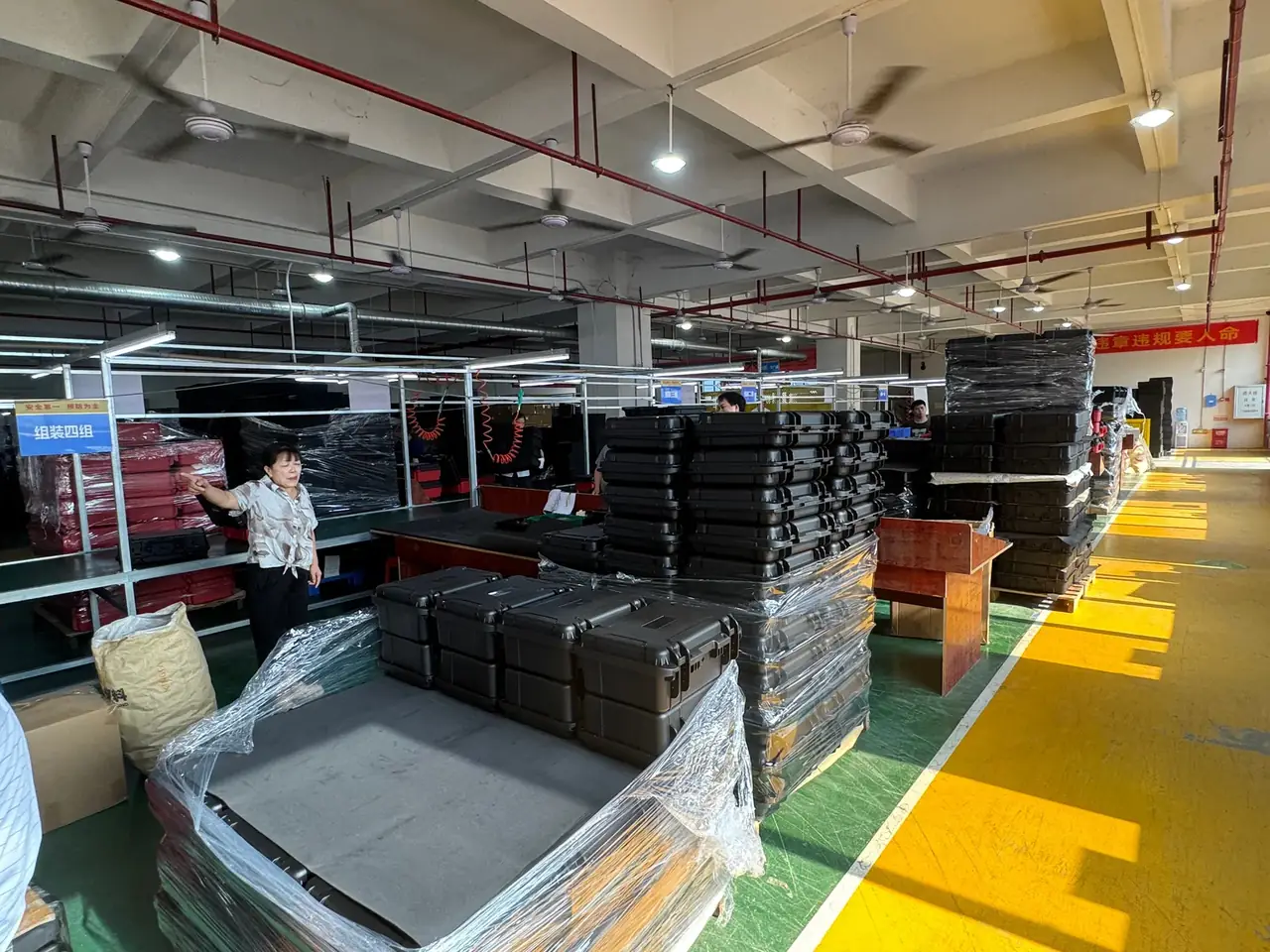
A surge ceiling only counts when it sits in the contract. The second plant carries about 1,000 cases a month of headroom, enough to reach 60% share, or 1,440 cases; beyond that it needs a night shift, which adds 12% to cost and is not always accepted.
| Trigger | Response | Surge ceiling | Time to reach |
|---|---|---|---|
| Lead plant 3 days late | Pull schedule forward | Plus 20% share | 1 week |
| Lead plant 2 weeks late | Add a night shift | Plus 50% share | 2 weeks |
| Lead plant stopped | Full switch | Up to 60% share | 6 weeks |
| Lead plant exits | Reallocate | 100% share | 12 weeks |
The surge ceiling is not the capacity ceiling. At 60% share the presses are available, but the packing line and the inspectors are not, and those two take three weeks to scale. A contract that says priority supply and nothing else delivers nothing on the day it matters.
Cases from the two plants must never share a pallet during a switch. One mixed pallet breaks the batch trace at the customer, and rework means unpacking and relabelling by pallet, which costs 96 CNY in labour for 24 cases.
The first 200 pieces need a full inspection rather than a sample. Switching risk concentrates in the shots straight after a mould goes into production, where flash, sink and stiff latches all show up, and inspecting everything costs about 1,200 CNY.
4. Colour difference and quarterly review
Batch-to-batch colour is held by ΔE, and the criterion is ΔE ≤1.5. The same colour code run at two plants drifts with masterbatch lots: at 1.5 the eye barely notices, above 2.0 the difference is obvious once parts sit side by side.
Measurement has to be identical: D65 light, 45/0 geometry, three 80 mm plaques kept from each batch, first and last article measured and averaged. The two plants swap plaques every quarter and retest on one instrument, which settles in minutes what separate readings argue about for weeks.
The quarterly review scores four items at 25 points each: on-time delivery, colour pass rate, complaints and hours to respond to an exception. Below 80 points the share drops by 10 percentage points, and two quarters in a row below 80 starts a replacement, which means cutting the plant to 20% for a quarter rather than stopping orders outright.
Single adjustments stay at or below 10 percentage points. Moving 30 points at once looks decisive, but it usually pushes the losing plant to drop the tool, and the structure falls back to a single source.
Keep the review on file. Raw indicator data, plaque numbers and complaint references belong together for two years, so the next buyer inherits evidence instead of opinion.
Conclusion
Case dual sourcing succeeds on the 70/30 split and a switch checklist, not on two names in the vendor master. Fix the share monthly at 1,680 and 720 cases so a slow season does not empty the second line. Amortise the 57,000 CNY of qualification and tooling inside year one, which is 6.6 CNY a case. Run the switch on a six-week clock, four weeks of qualification and two of trials, started the day a line stops. Write the surge ceiling as 60% within six weeks, backed by three weeks of packing and inspection scaling. Hold colour at ΔE ≤1.5 with quarterly plaque swaps, and review share every quarter at 10 points per move. Then walk the checklist: qualification pack, mould sign-off, 200-piece trial, plaque swap, packing line expansion, mixed-pallet ban.
This article discusses container-side specifications and design implications only, and does not cover any handling, loading or use of the contents.
Related Reading
Related Products
- 8 Series — Gun Cases; Military Equipment Cases; Camera Equipment Cases; Drone Cases; Watch Cases; Knife Cases; First Aid Cases; Electronics Equipment Cases
- WL8-2812 PP Gun Case — model WL8-2812
- All protective cases and toolboxes: 7 series, 158 models