

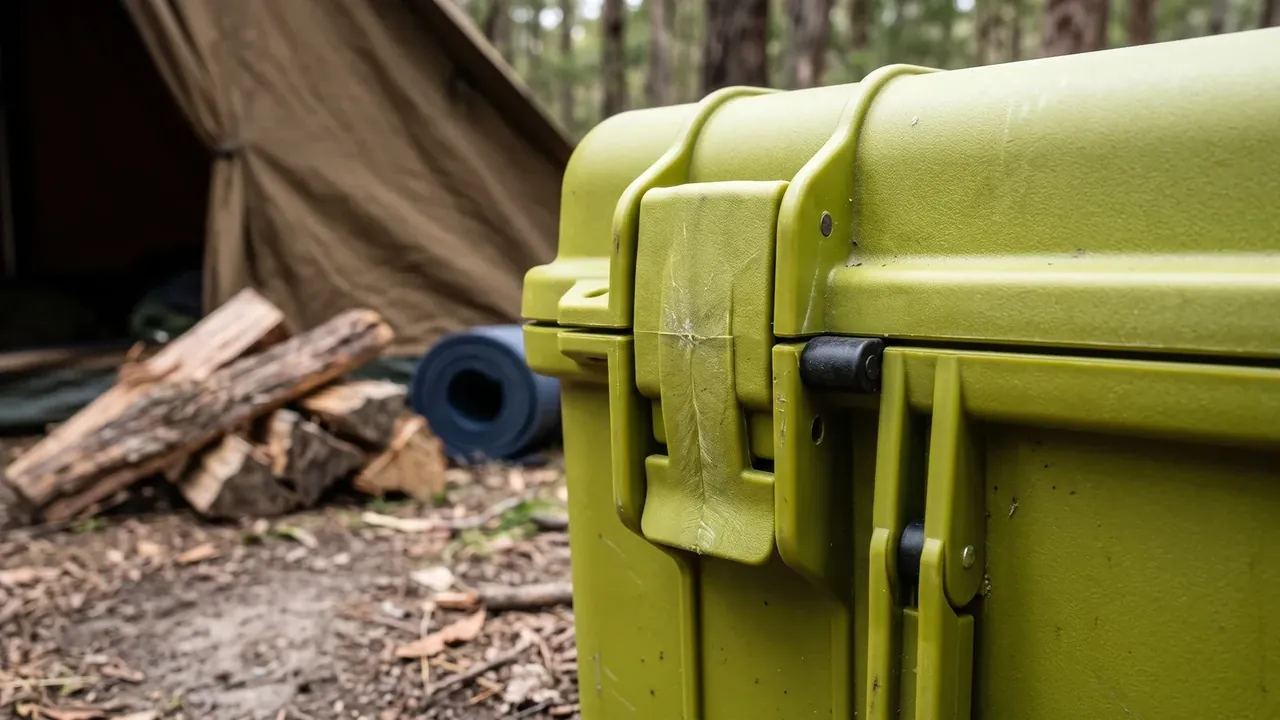
Quick answer: A hard case manufacturer quote is comparable only after mould, resin, hardware, foam, testing and packing sit on separate lines. Here is the order to check them, and the clause numbers to demand.
Table of contents
- What a Hard Case Manufacturer Should Itemise in a Quote
- Process Capability Before Certificates
- Lead Time Is Five Stages, Not One Number
- Writing MIL-STD and IP Clause Numbers Into Acceptance
- Payment Terms, Tooling Ownership and Drawing Rights
- Five Costs That Get Billed Twice
- FAQ
1. What a Hard Case Manufacturer Should Itemise in a Quote
The first question is not the price but how many lines it contains. A single figure looks tidy until the drawing changes, at which point it becomes: quote it again.
The finer the split, the more room there is to negotiate later.
| Quote line | Unit | What to examine | The vague version |
|---|---|---|---|
| Tooling | set, one off | refund path, quantity, owner | folded into unit price |
| Resin | kg, net plus loss | PE grade, density, UV package | polyethylene, no grade |
| Hardware | set | stainless grade, salt spray hours | 304 written as stainless |
| Foam | set | density, hardness, CNC routed | thickness only |
| Testing | item | revision and method number | to national standard |
Resin is worth isolating. A 60 L body weighs 9.2 kg net; with 8% scrap the quoted weight should read 9.9 kg. Across 300 units that 0.7 kg gap is 210 kg of compound, enough to explain a few thousand yuan.
2. Process Capability Before Certificates
Certificates can be bought inside two months. Process capability cannot.
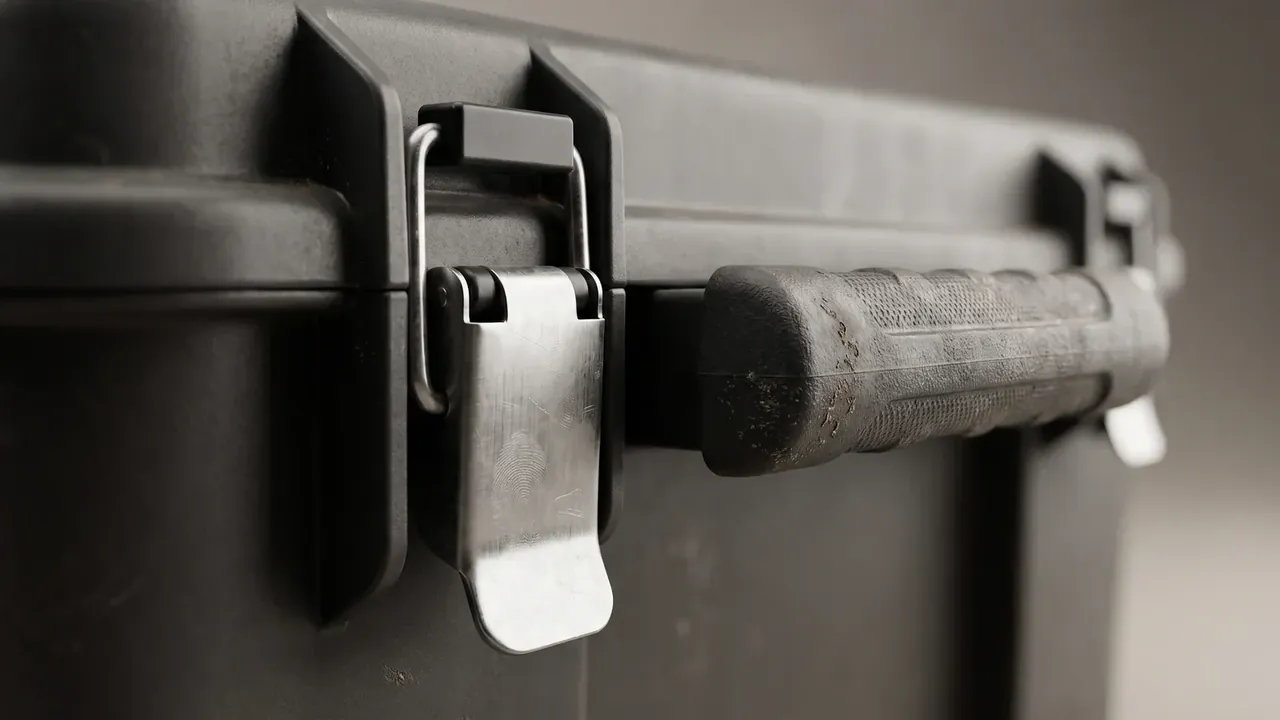
Capability sits in three places. Arm length sets the largest body a line can turn out, and a 2.5 m arm covers shells up to roughly 120 L before a bigger machine is needed. Oven spread matters too: above about 5 °C, wall thickness across one batch swings between 6 mm and 9 mm, latches stop clamping evenly and the leak test passes on Monday and fails on Wednesday. Mould plate thickness, 4 mm against 3 mm, decides tool life and how crisp the corners stay. Watch hardware assembly too: stainless latches are torqued around 6 N·m, and an under-torqued seat fails first in a drop test. Finally find the leak station, where a regulated air supply and an immersion tank decide whether the IP rating was measured or printed.
- Machine line: arms multiplied by real shifts, not nameplate count.
- Resin line: PE grade, density and the current inbound record.
- Rework line: bodies in the bay and their tags.
3. Lead Time Is Five Stages, Not One Number
The rounder the lead time, the more it needs unpacking. Thirty days may or may not include first article testing.
| Stage | Days | Waiting on | Compressible |
|---|---|---|---|
| Drawing release | 3 to 5 | both engineers | yes, with wall thickness |
| Mould build | 18 aluminium, 25 steel | tool room | no, thinner plate only |
| First article and drop test | 5 to 7 | test room | no, skipping it means untested |
| Production | 300 units, about 7 days | machine schedule | yes, extra shifts |
| Inspection and loading | 3 to 4 | third party | yes, book early |
Added up, a realistic 300 unit order lands between 45 and 55 days. A hard case manufacturer promising 30 days, testing included, has removed two stages.
4. Writing MIL-STD and IP Clause Numbers Into Acceptance
A standard only works inside a contract. In a brochure it is an adjective.
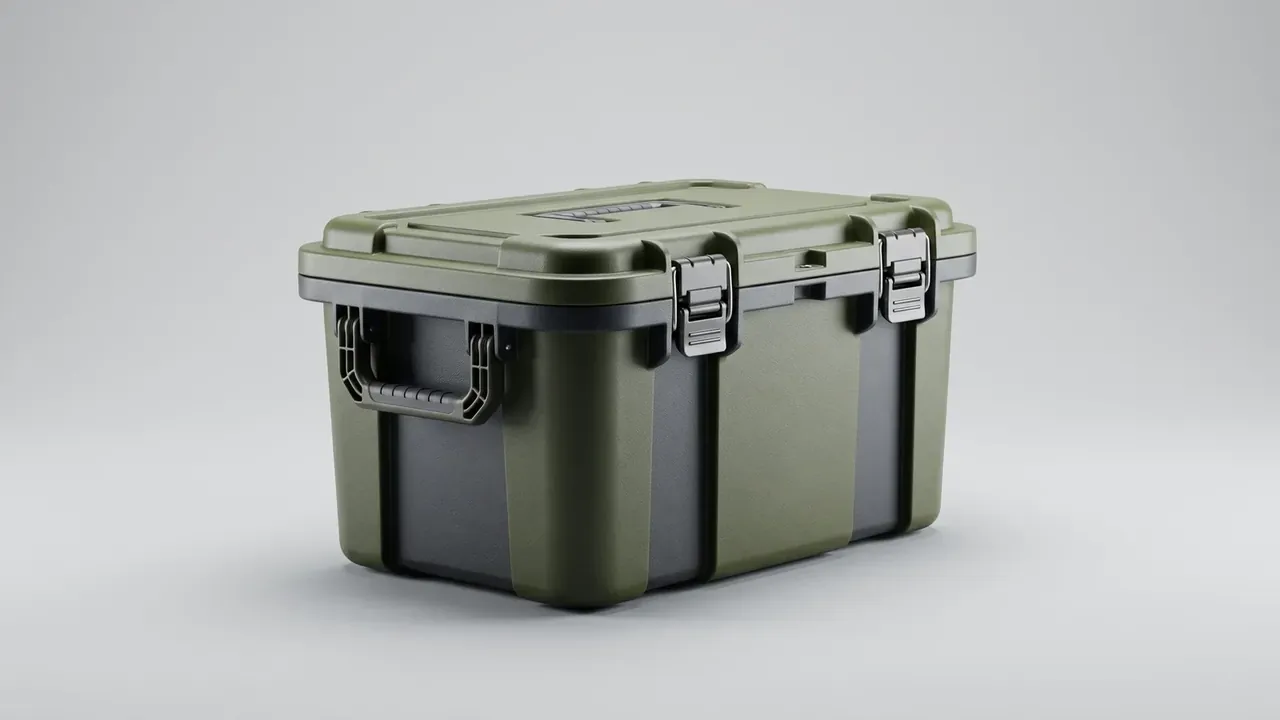
Write the clauses like this: high temperature storage to MIL-STD-810H Method 501.7 at 55 °C for 24 hours; low temperature to Method 502.7 at minus 33 °C for 24 hours; drop to Method 516.8 from 1.2 m across five faces, 26 drops; ingress protection to IEC 60529 level IP67, immersed 1 m for 30 minutes; salt spray to ASTM B117 for 480 hours without white rust. Each line needs a sample size and a pass criterion. Compliant with military standard is not a clause.
5. Payment Terms, Tooling Ownership and Drawing Rights
A workable split is 30% deposit, 20% on first article approval, 40% on completion and 10% after inspection, with tooling refunded once cumulative volume passes 1,500 units.
Tooling ownership must stand alone. Most factories assume the mould is theirs and the buyer buys use of it, so write three points: whether the tool leaves when cooperation ends, who pays freight, and who holds copyright in the drawings.
Whether a hard case manufacturer refunds tooling depends on a written refund path, not on how friendly the answer sounded.
6. Five Costs That Get Billed Twice
Paying twice for one item is common here. Compare these five line by line:
- Sampling: credited against the first order, never non refundable.
- Mould modification: small changes within drawing scope belong in tooling.
- Testing: sampled per batch, not billed monthly.
- Foam routing: per set, not per tool path.
- Export crate: fumigation is real, but it is a separate line.
Conclusion
Procurement here means turning one lump price into units that can be compared. Split the quote, walk the process, unpack the lead time, pin the clauses, and only then does the number mean anything. A hard case manufacturer worth keeping lets you take it apart.
This article discusses only the container (case body) side of specifications and design intent, and does not cover any handling, loading or use of the contents.
Related Reading
- How a supplier scorecard is scored
- Shop floor records a production audit needs
- What rotomolding does to a shell
- Factory tour route and inspection order
- Numbering and rust protection for stored moulds
Related Products
- 8 Series — Gun Cases; Military Equipment Cases; Camera Equipment Cases; Drone Cases; Watch Cases; Knife Cases; First Aid Cases; Electronics Equipment Cases
- WL8-2812 PP Gun Case — model WL8-2812
- All protective cases and toolboxes: 7 series, 158 models