

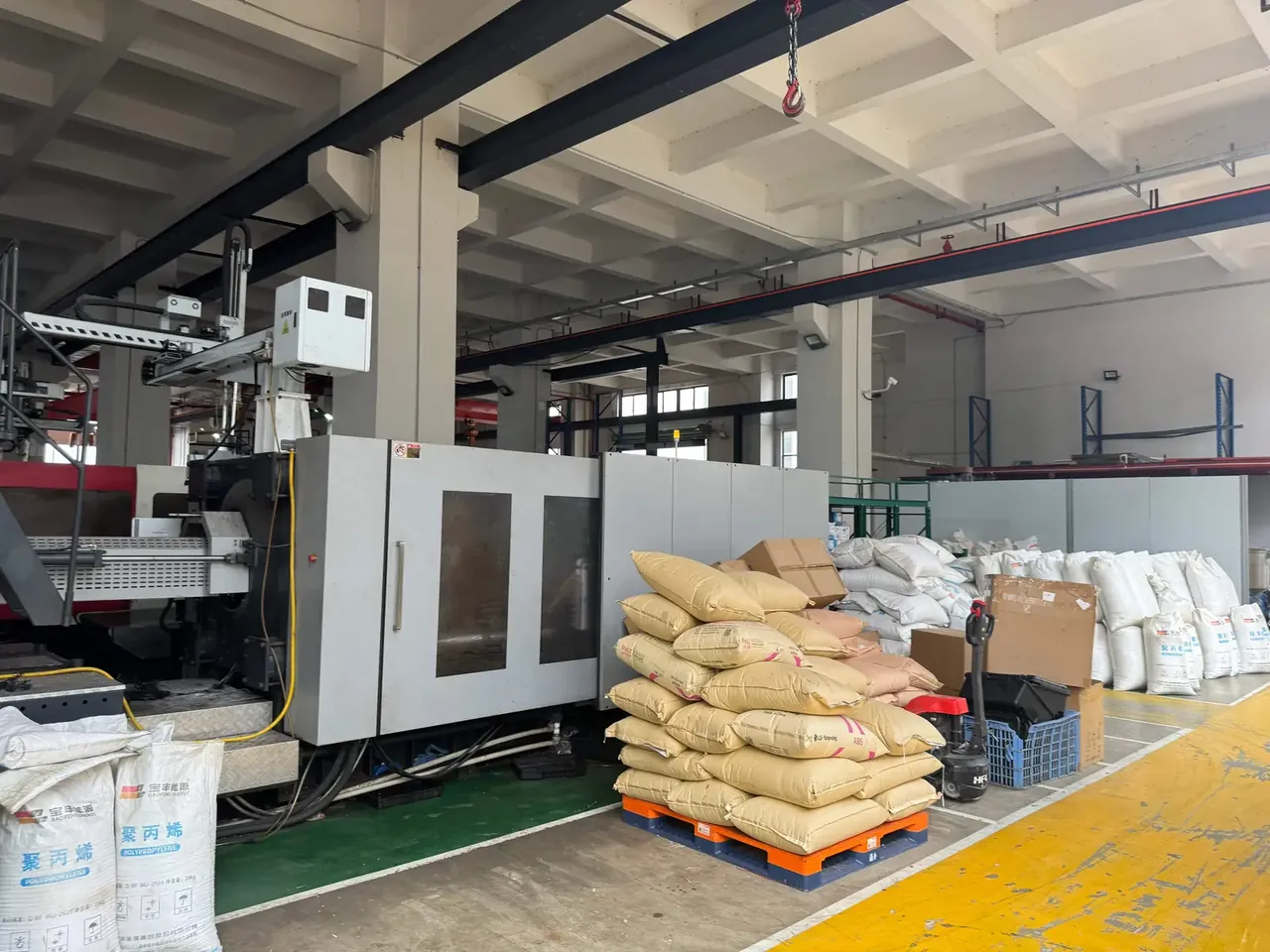
Quick answer: A Case Factory Tour needs one three-column sheet: equipment (tonnage, molds, instruments), process (five checkpoints with measured values) and samples (photos, retained parts, reference pieces). Ten items per column, a twenty-minute review before leaving, and three hours produce evidence instead of impressions.
Table of contents
- The Three Columns to Bring
- Equipment: Tonnage, Molds, Instruments
- Process: Five Checkpoints
- Samples: Photos, Retained Parts, References
- Fitting Three Columns on One Page
- FAQ
1. The Three Columns to Bring
Most Case Factory Tour notes record tidiness. A clean floor shows discipline, not whether a press holds a 3 mm wall. Carry one sheet and turn what you see into what you can check later.
Three columns carry the work: equipment for capability, process for consistency, samples for the result. Ten items each, and a half-empty column means the Case Factory Tour skipped a stage. Six tools are enough: tape, caliper, feeler gauges, infrared thermometer, flashlight and clipboard.
2. Equipment: Tonnage, Molds, Instruments
Tonnage first. Clamping force runs 350 to 500 kg per square centimetre of projected area, so a 600 by 400 mm body needs 850 to 1200 t; shops span 550 to 2800 t and case work sits near 1200 t. Ask how many presses sit in that band, not how big the largest is.
Molds next. A forty-set library usually holds a dozen case molds in P20 or 718H, and three minutes at the platens show score marks, weeping water fittings and resin behind the ejector plate. Machining decides repair speed, because a table under 1200 by 600 mm sends work outside for three to five days.
| Equipment | Where to look | Typical spec | Recording |
|---|---|---|---|
| Press | Clamp force, schedulable count | 550 to 2800 t, 1200 t workhorse | Nameplate and screen |
| Mold | Sets, steel, water lines | Dozen case molds, P20 or 718H | Mold frame number |
| Metrology | CMM travel, leak bench | 800 mm travel upwards | Calibration label |
3. Process: Five Checkpoints
Drying first: masterbatch and regrind need 80 degrees Celsius for two hours, and the dryer display must match the hopper gauge. Moulding second: a 1200 t press runs a 180 to 240 s cycle, and at 150 s the wall and internal stress deserve doubt.
Trimming third: flash you can scrape with a fingernail means the parting line seats, while flash that needs a knife means wear. Assembly fourth: torque one latch on an M6 bolt at 3 N·m. Leak and packing last: watch a 60 s hold, then check foam fit. The room reads 26 degrees Celsius, 50 percent humidity, 84 dB.
| Checkpoint | What to watch | Reference | Warning sign |
|---|---|---|---|
| Drying | Dryer setting, hopper gauge | 80 C for two hours | Caked resin |
| Moulding | Cycle, hold pressure | 180 to 240 s | Cycle at 150 s |
| Trimming | Flash thickness, method | Fingernail scrape | Knife required |
| Assembly | Latch torque | 3 N·m on M6 | Wrench without a scale |
| Leak and pack | Pressure drop, foam fit | 60 s hold | Visual check only |
4. Samples: Photos, Retained Parts, References
Photo records first: six faces, two corners, latch and hinge, ten frames, plus eight wall points, overall size and diagonal difference written beside them.
Retention second: three bodies per lot for 24 months, racked by lot number. A retained body is the only object that can be re-weighed and re-tested later, so walk to the rack during the Case Factory Tour and ask for a lot shipped last month. References third: a colour chip, a texture block and a gasket section, one physical benchmark each. Take one body and one chip with you.
| Sample | Content | Storage | Use |
|---|---|---|---|
| Photo record | Ten frames, dimensions | Filed with the order | Rebuild lot state |
| Retained body | Three per lot | 24 months, racked by lot | Re-test in a dispute |
| References | Chip, texture block, section | Dark, room temperature | Judge colour and hardness |
5. Fitting Three Columns on One Page
On a Case Factory Tour, one A4 sheet is enough: item left, measurement middle, verdict right, and only three verdicts: conforms, pending or fails. Pin a date to every pending item and a photo number to every failure.
Three hours on a Case Factory Tour split as 30 minutes at the finished-goods rack, 70 on the line, 60 at the presses and 20 for review. Walk backwards, goods first and presses last, so questions arrive with evidence. On a Case Factory Tour, thick flash in the sample column sends you back to cycle, hold pressure and clamp force.
Conclusion
The three columns turn impressions into comparable records: ten equipment items for capability, five checkpoints for consistency, three sample types for the result, plus physical pieces in your bag. The sharper the sheet, the closer a Case Factory Tour comes to an audit you can repeat.
This article discusses only the container (case body) side of specifications and design intent, and does not cover any handling, loading or use of the contents.
Related Reading
- How to Audit a Case Factory
- Drone Case Manufacturing Factory
- How to Judge Case Structure Quality
- Case Mold Trial Run Guide
Related Products
- 8 Series — Gun Cases; Military Equipment Cases; Camera Equipment Cases; Drone Cases; Watch Cases; Knife Cases; First Aid Cases; Electronics Equipment Cases
- WL8-2812 PP Gun Case — model WL8-2812
- All protective cases and toolboxes: 7 series, 158 models