

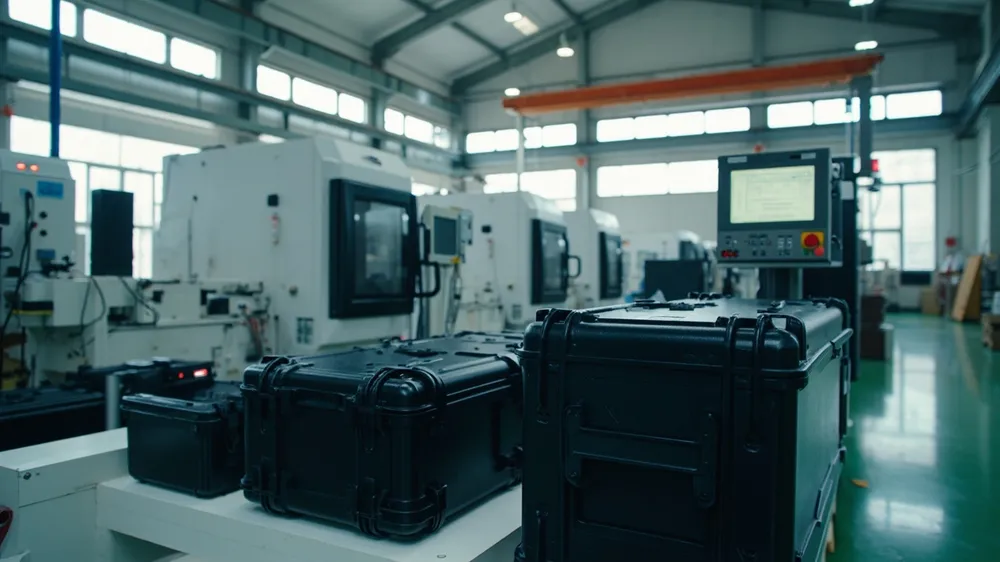
Ask a factory whether it can produce a case for your drone and nearly every one will say yes. The real dividing line is not whether they can make one, but whether unit five thousand still matches the first sample. Drone cases are a classic case of a product that looks simple and is actually tolerance-hungry: airframe, gimbal, batteries, controller and propellers each have different fragile points and dimensional constraints, and one cavity that is slightly off produces a box the customer cannot close or one that lets the contents rattle. This article sets out what a genuinely production-capable drone case factory looks like, and what to verify before you commit.
Why Drone Cases Are Harder Than Ordinary Cases
An ordinary tool case needs one usable space. A drone case has to resolve four constraints that pull against each other.
First, irregular geometry. The airframe has wheelbase, folding mechanisms, protruding antennas and landing legs; the gimbal is spherical and extremely fragile; propellers are slender and snap easily; batteries concentrate weight and are temperature sensitive. The interior therefore cannot be simple rectangular cut-outs — each component needs its own load-bearing support.
Second, wildly different fragility levels. In the same box, the airframe shell tolerates some pressure while a gimbal ribbon cable, a lens coating and a propeller tip differ by orders of magnitude. Cushioning must be designed to the most fragile item, not to the average.
Third, uneven weight distribution. Batteries are a substantial share of total weight and sit on one side. An interior that lets the centre of gravity shift means the case tips during carrying and components collide inside.
Fourth, high cycle counts in poor environments. Drones get flown outdoors, so cases meet dust, desert, coastline, vehicle transport and hiking, and are opened constantly. They cannot be specified as single-use transit packaging.
The Capability Structure That Matters
Judge a factory on whether it has a closed loop, not on floor area or machine count.
| Capability | What to look for | Why it matters |
|---|---|---|
| Design | In-house design, 3D models and assembly drawings | Turns vague requirements into manufacturable solutions |
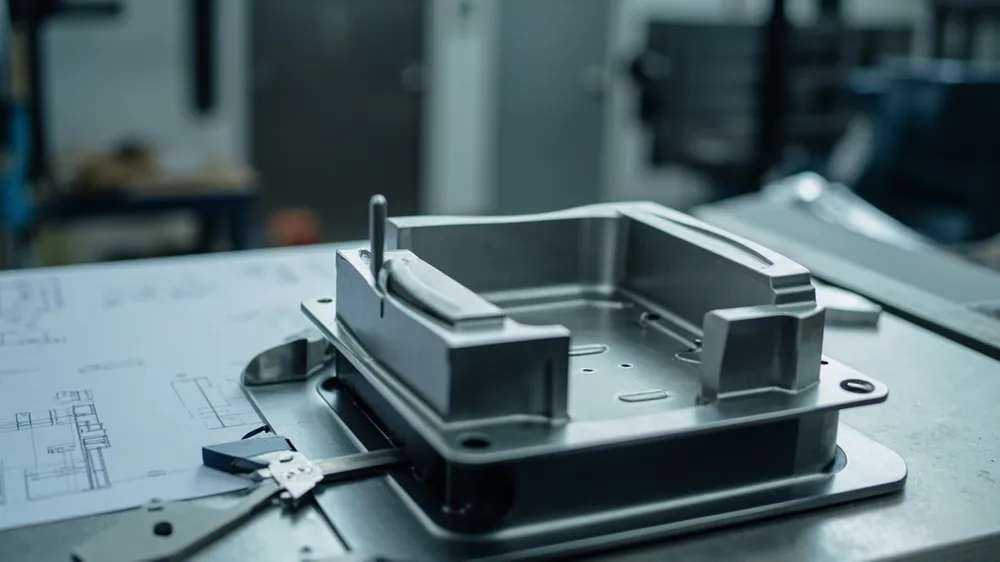
| Tooling | Machining accuracy, trial-and-correction process, tool life records | The tool determines most dimensional consistency |
| Moulding | Machine tonnage range, parameter records, batch stability | Controls wall uniformity and defect rate |
| Interior fabrication | Thermoforming, die cutting, CNC capability | Cavity accuracy drives protection performance |
| Testing | Drop, sealing and vibration capability | Proves performance with data rather than assurances |
Outsourcing any one of these adds communication cost and tolerance stack-up. A capable factory keeps at least design, tooling, moulding and interiors under its own control.
The Production Process, Step by Step
1. Requirements and payload analysis. The factory should ask for the real aircraft or an accurate model, not just outline dimensions, because cavity design needs gimbal position, folded propeller state and battery bay orientation. Boxes built from dimensions alone frequently fail at the details.
2. Design. Output a 3D model and interior layout, fixing shell material, wall thickness, latch count and placement, liner material and density, and whether a pressure valve or wheels are needed.
3. Tooling and trials. Steel selection, runner design and cooling layout all affect moulding quality. After each trial, check wall uniformity, sink marks, flash and distortion, then correct the tool. Two to three rounds are normal.
4. Material preparation and drying. Resins differ in moisture sensitivity; insufficiently dried PC produces splay, bubbles and reduced strength. A competent factory has drying equipment and moisture checks.
5. Moulding. Produce shells against recorded parameters: melt temperature, mould temperature, injection pressure, hold time and cooling time should all be logged and traceable.
6. Interior fabrication. Thermoforming, die cutting or CNC according to the chosen route. Thermoforming gives the best accuracy and durability at volume; die cutting is flexible but wears sooner.
7. Assembly. Fit latches, hinges, handles, gaskets and wheels. Torque control and assembly sequence affect sealing and service life.
8. Inspection and packing. Visual checks, dimensional sampling, functional testing of closure and sealing, then packing. Production orders should follow an agreed sampling standard.
Material Selection Logic
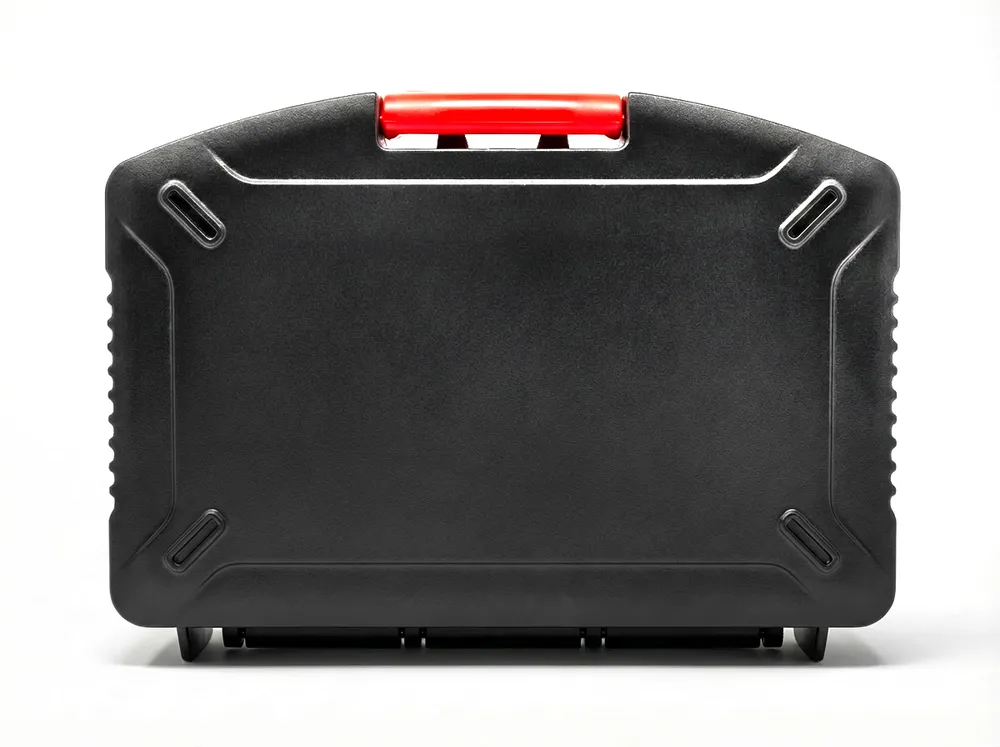
The mainstream choices are PP, ABS and PC, and the decision follows the deployment rather than the price tag.
| Material | Strengths | Trade-offs | Typical use |
|---|---|---|---|
| PP | Light, tough, chemically resistant, low cost | Lower low-temperature toughness, less rigid | General field work, portability and cost focus |
| ABS | Rigid, glossy, takes print well, dimensionally stable | Moderate cold impact, moderate weathering | Where finish and branding matter |
| PC | Outstanding impact strength, cold toughness, transparency | Stress cracking risk, lower scratch resistance, higher cost | Cold climates, high-value payloads |
In practice many factories use modified or blended grades to balance properties — glass-filled PP for stiffness, ABS/PC alloys for strength and processability. What a buyer should ask is which grade, which batch, and whether third-party test data supports it.
The Interior Does the Protecting
Attention usually goes to the shell, but the interior protects the aircraft. The parts that fail first are the gimbal and propellers, and both depend entirely on cavity design.
The gimbal should be suspended: the cavity contacts only its rigid mounting features, leaving the spherical body free with clearance around it, so an impact is not transmitted through direct contact.
Propellers need their own restrained slots, isolated from the airframe and from anything hard. Slender items fail under side loading, so laying them flat with restraint on both sides is the safe approach.
The battery bay must manage weight and heat. Batteries are heavy, so the cavity carries the load rather than letting the pack hang; where transport involves high temperatures, consider whether insulation is warranted.
Controllers and accessories get their own positions to avoid abrasion against the aircraft, with frequently used items placed for fastest access.
What Quality Control Should Cover
“We have QC” is not an answer. Ask for specific items and data.
- Dimensions: whether critical internal and external sizes are sampled against the drawing, and to what tolerance.
- Appearance: defined acceptance criteria for sink marks, flash and scratches.
- Sealing: whether air or water testing is performed, at what pressure and to what criterion.
- Drop testing: standard heights and orientations, and whether tested loaded or empty.
- Cycle life: whether latches and hinges are fatigue tested, and to how many cycles.
- Traceability: batch records that let a problem be traced back to material and process parameters.
Loaded-state testing matters most. A case that passes empty may not pass loaded, because the payload changes how the structure carries load.
Lead Time and Minimum Quantity
Lead time breaks into four parts that buyers should evaluate separately.
| Phase | Driven by | Note |
|---|---|---|
| Design sign-off | Clarity of requirement, revision rounds | Vaguer briefs and more revisions take longer |
| Tooling | Tool complexity, steel supply, trial rounds | Usually the longest single phase |
| Production | Order quantity, scheduling, process complexity | Larger runs are faster per unit but longer overall |
| Inspection and delivery | Testing standard, logistics mode | Stricter testing and special packing add time |
On quantity: existing tooling usually allows lower minimums, while new tooling requires amortising the investment. State your realistic total volume, because understating it locks in a higher unit price.
On-Site Verification Checklist
- Tool room: in-house tooling capability, equipment accuracy, numbered tools with life records.
- Material store: grade identification, batch records, proper drying conditions.
- Moulding floor: recorded process parameters, visible work instructions.
- Interior fabrication: equipment capable of complex cavities.
- Inspection area: what test equipment exists, and whether records are complete.
- Finished goods store: stacking limits and moisture control.
- Samples: ask for production-standard units rather than hand-finished display pieces, and test them yourself.
Where a visit is impossible, request a video audit, test reports and at least one referenceable customer with a comparable product.
Common Pitfalls
The first is sample versus production mismatch: a carefully selected or hand-finished sample, followed by a different production standard. Prevent it with a sealed approval sample written into the contract.
The second is material substitution: one grade quoted, a cheaper one moulded. Prevent it by naming the grade in the contract and requiring material certification.
The third is interior downgrading: an identical shell with lower foam density and reduced thickness, which quietly removes most of the protection. Prevent it by specifying density and thickness, and by weighing parts at acceptance.
The fourth is hardware downgrading: cheaper latches and hinges that look fine initially and loosen over time. Prevent it by specifying hardware models and requiring replaceability.
In Summary
Choosing a drone case factory means choosing a quality system, not buying a box. A partner worth having can explain its material sources, process parameters, test standards and traceability, and is willing to show you the data. If a factory can offer only a price and no data, the low number usually hides a cost you will discover at acceptance.
For selecting the case itself, see our drone case protection guide; for the customisation route, see OEM versus ODM and how to audit a case factory.