

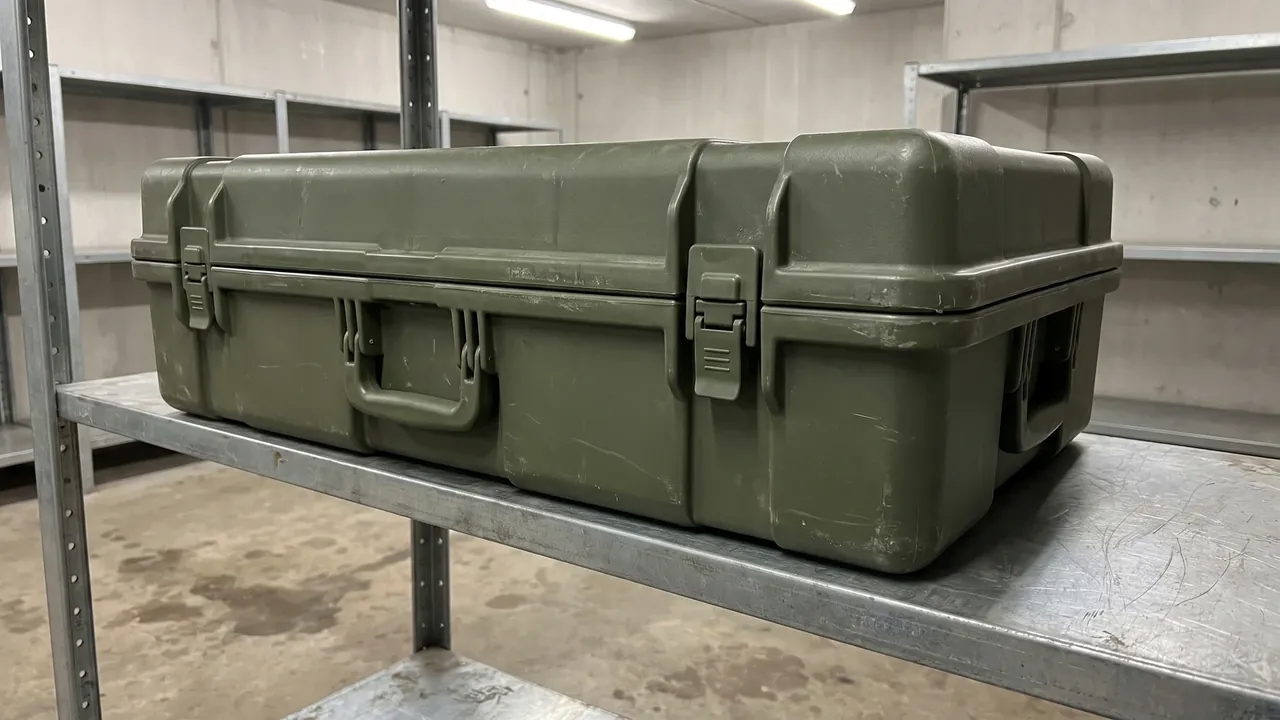
Quick answer: A rotomolded case is a protective case formed in one piece by rotational molding: plastic powder or liquid is loaded into a mold, the mold is heated while rotating on two axes, and the plastic melts in layers onto the inner wall, giving a seamless case after cooling. This brings few weld lines, even wall thickness, and good impact and weathering resistance, suiting small-to-medium batches, large or irregular container shapes. This article covers the container side only.
Table of contents
- Core definition and basic features
- The rotomolding process and its key stages
- Where the structural advantages come from
- Typical applications
- Selection checklist
- FAQ
1. Core definition and basic features
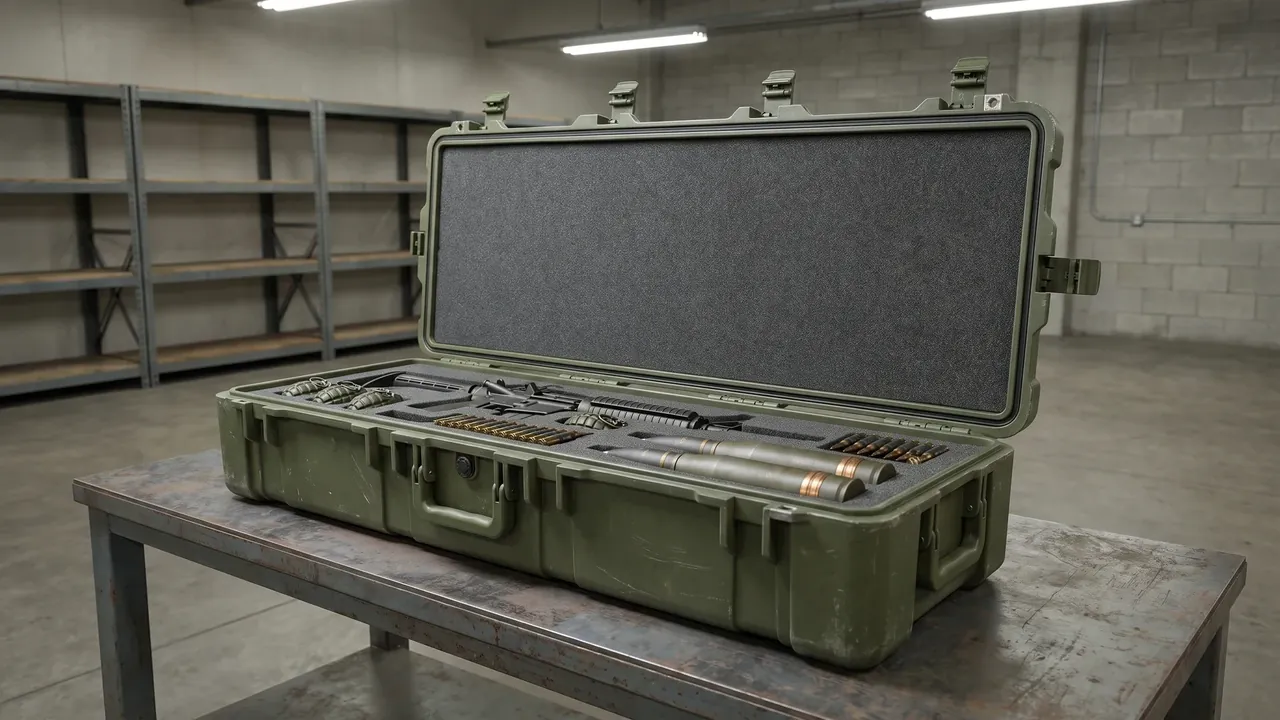
A rotomolded case, also called a rotationally molded case, is a plastic container made by rotational molding. Unlike injection or blow molding, it does not force melt into a cavity under high pressure. Instead, the mold turns slowly on two perpendicular axes while heated, so plastic powder melts, sticks and builds up in layers on the inner wall, forming a hollow, seamless, one-piece case.
First, structural continuity: the case, ribs and corners form at once, with no seams or weld lines and fewer stress points. Second, controllable, even wall thickness: powder spreads evenly as it rotates, so thick and thin areas differ little and stress is more balanced. Third, large and irregular shapes: mold cost is relatively moderate, suiting containers beyond standard mass-production shapes.
2. The rotomolding process and its key stages
The process breaks into four stages: charging, heated rotation, cooling, and demolding. In charging, a measured amount of powder goes in according to wall thickness and volume — too much overshoots thickness, too little leaves thin spots. Heated rotation is the core: the mold turns on two axes while heated, and the powder melts layer by layer onto the inner wall, with rotation speed and temperature curve together governing evenness. Cooling needs a controlled rate; too fast brings internal stress and warping. Demolding is followed by trimming and fitting latches and gaskets as needed.
The parameters are coupled: higher temperature and longer time favor full melting but can degrade the material, while rotation speed affects powder distribution and, if too fast, causes uneven build-up. Quality stability therefore depends largely on control of the process window — a supplier's process experience and batch consistency matter more than a bare equipment list.
| Stage | Key parameter | Common problem |
|---|---|---|
| Charging | Powder amount and particle size | Thickness overshoot, shortage |
| Heated rotation | Temperature curve, speed | Incomplete melting, uneven build-up |
| Cooling | Cooling rate | Internal stress, warping |
| Demolding | Trimming and assembly | Dimensional deviation, poor fit |
3. Where the structural advantages come from
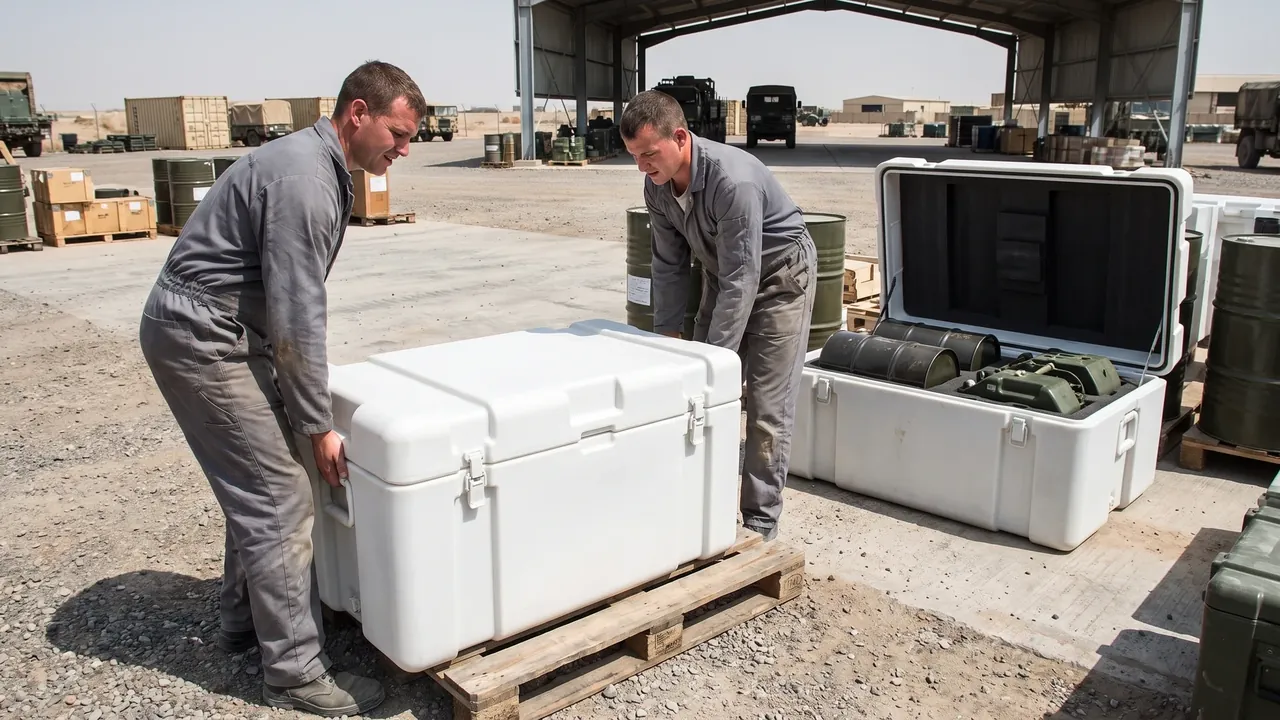
The advantages of a rotomolded case come from its one-piece construction. Because the case, ribs, corners and latch seats form in the same mold, the load path is continuous and the case does not crack along a seam under impact or stacking load. Corners can be made as thicker rounded transitions that spread stress further.
For sealing, a rotomolded case can be designed to an IP67 structure sealing against dust and short-term immersion, while the final rating is confirmed by third-party testing. Achieving this needs the post-forming sealing-face flatness, the dimensional stability of the gasket groove, and the latch clamping force all controlled in mold design and assembly. Rotomolded cases often use polyethylene (PE); the formula's weathering and UV resistance directly affect long-term outdoor performance.
4. Typical applications
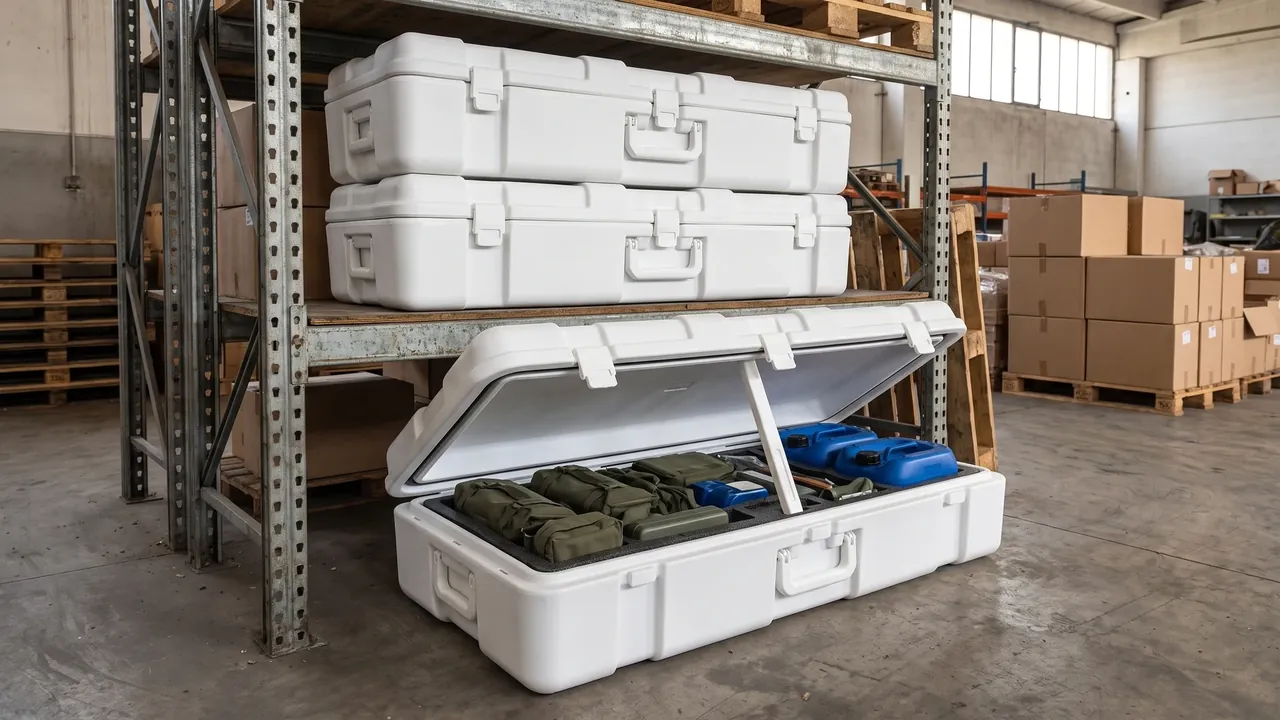
Rotomolding is not optimal everywhere; its value is greatest for small-to-medium batches, large sizes or irregular shapes. Because rotomolding molds are relatively moderate in cost and quick to change, it is often the more practical choice when the batch is too small to amortize a high-precision injection mold.
From a use standpoint, rotomolded cases commonly appear where long-term outdoor exposure, impact and temperature swings are expected, such as equipment transport cases, instrument protective cases and outdoor storage cases. The common thread is repeated handling, stacking and environmental attack, which the one-piece structure matches well.
5. Selection checklist
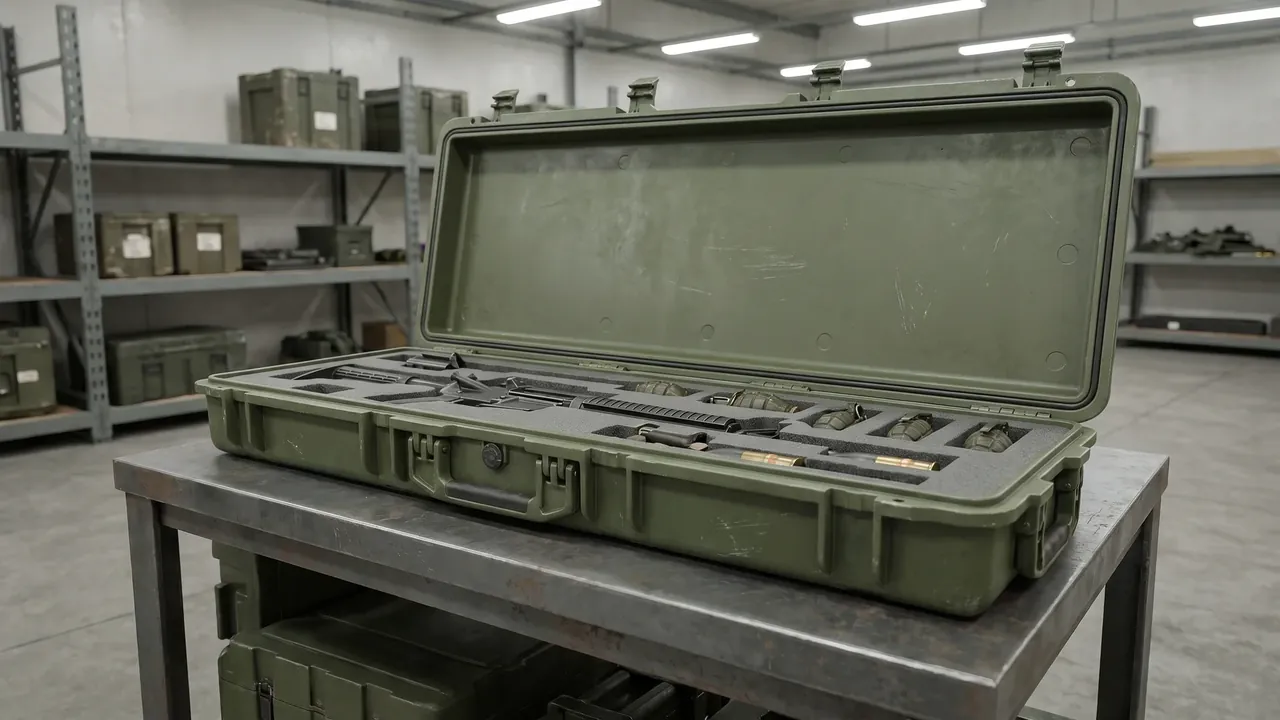
For real procurement, check each item:
- Forming method confirmed: one-piece rotomolding, with no seam or weld line;
- Wall-thickness evenness: key areas sampled within design tolerance;
- Sealing and latches: sealing-face flatness, gasket groove fit and latch condition;
- Material and formula: material type and weathering, UV-resistant formula clearly stated;
- Batch consistency: dimensions and appearance stable across production batches.
These five items form the basic acceptance surface. Where any is unclear, write the acceptance method and pass criteria into the contract's technical annex.
Conclusion
A rotomolded case is, in essence, a case whose body, ribs and corners are formed in one rotational-molding pass, yielding a seamless container with even wall thickness, good impact resistance and controllable sealing. It best matches small-to-medium batches, large sizes, irregular shapes or long-term outdoor use. When selecting, look at forming method, wall thickness, sealing and latches, material formula and batch consistency together, and put the acceptance standard into the contract's technical annex.
This article addresses the container (case body) side only; it does not concern the contents or any handling, loading or use of them.
Related Reading
- Rotomolded Case vs Injection-Molded Case: Trade-offs
- Key Points and Decision Method for Choosing a Rotomolded Case
- How Rotomolding and Injection Molding Differ
Related Products
- 8 Series — Gun Cases; Military Equipment Cases; Camera Equipment Cases; Drone Cases; Watch Cases; Knife Cases; First Aid Cases; Electronics Equipment Cases
- WL8-2812 PP Gun Case — model WL8-2812
- All protective cases and toolboxes: 7 series, 158 models