

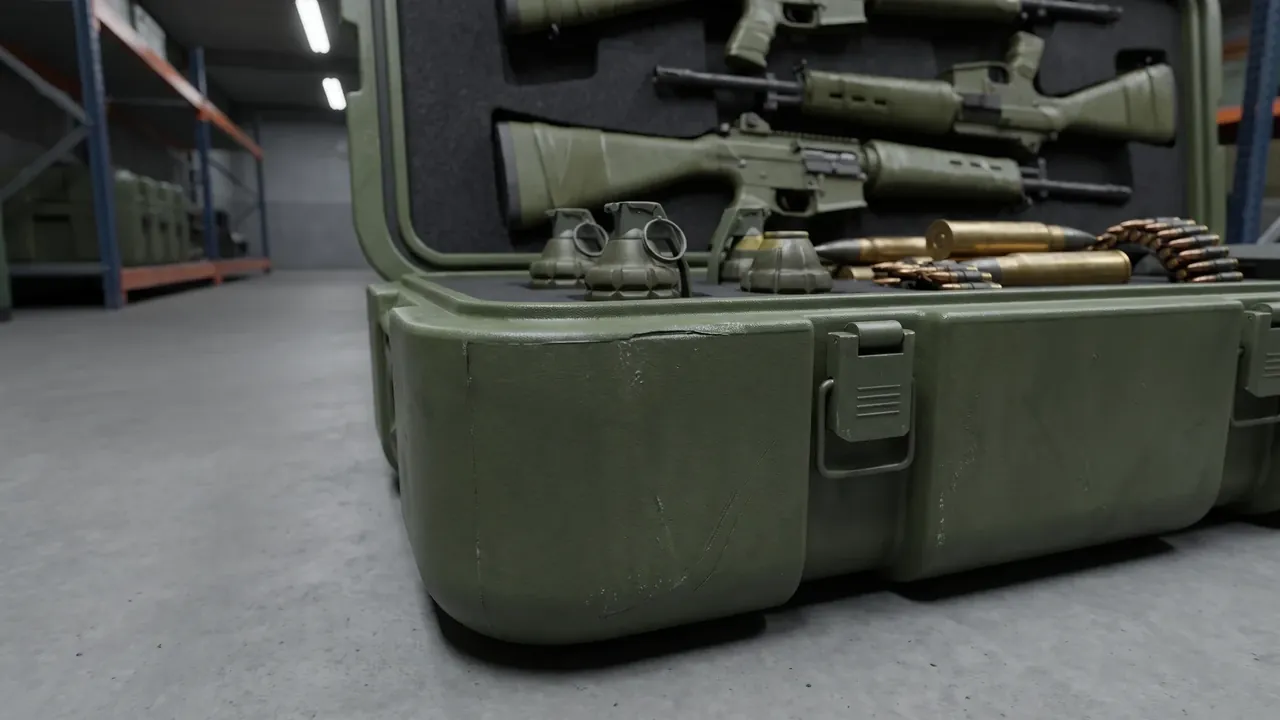
Quick answer: The core difference between a rotomolded case and an injection-molded case lies in the forming path: a rotomolded case melts powder in layers under two-axis rotation into a seamless one-piece body, while an injection-molded case forces melt into a cavity under high pressure and is often made in parts and then assembled. The former suits small-to-medium batches, large sizes and irregular shapes; the latter suits high-precision, very large volumes of standard cases. Choose by batch, size, precision and sealing needs.
Table of contents
- How the two forming methods differ
- Structural and sealing differences of one-piece forming
- Cost and volume advantages of assembled injection molding
- Choosing by batch and size
- Comparison selection checklist
- FAQ
1. How the two forming methods differ
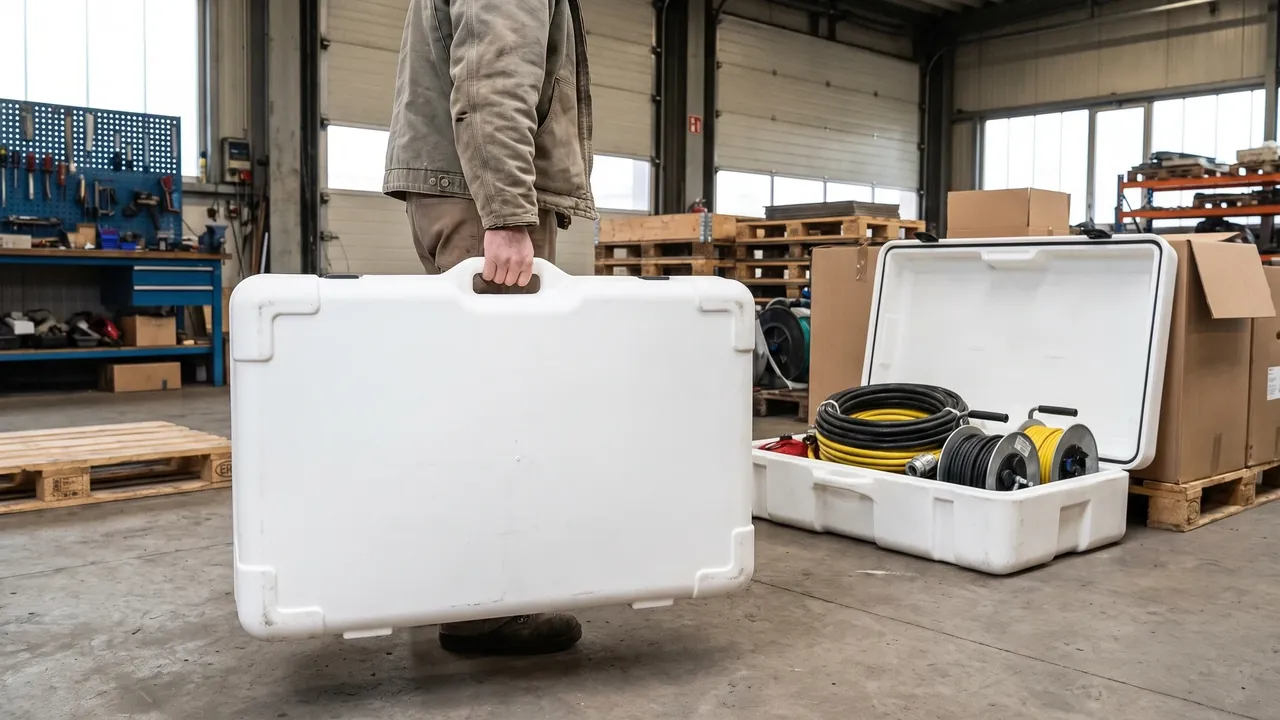
The two case types diverge at the forming path. A rotomolded case is made by charging a measured amount of powder into a mold, which is heated while rotating on two axes so the powder melts and builds up on the inner wall, giving a hollow, seamless one-piece body after cooling. An injection-molded case forces plastic melt into a steel cavity under high pressure, then demolds after cooling, usually producing separate parts that are then assembled with latches, hinges and inserts.
The split brings three differences: structural continuity, since a rotomolded one-piece body has no seam while injection parts may join at assembly lines; dimensional precision, higher for injection molding in a controlled cavity; and mold economics, with rotomolding molds relatively moderate and suited to large parts, while high-precision injection molds cost more.
| Dimension | Rotomolded case | Injection-molded case |
|---|---|---|
| Forming method | Two-axis rotation, layered melt | High-pressure cavity injection |
| Structural continuity | One-piece, seamless | Parts plus assembly |
| Dimensional precision | Medium | Higher |
| Mold investment | Relatively moderate | Higher |
| Batch fit | Small-to-medium, large parts | Very large volume, standard parts |
2. Structural and sealing differences of one-piece forming
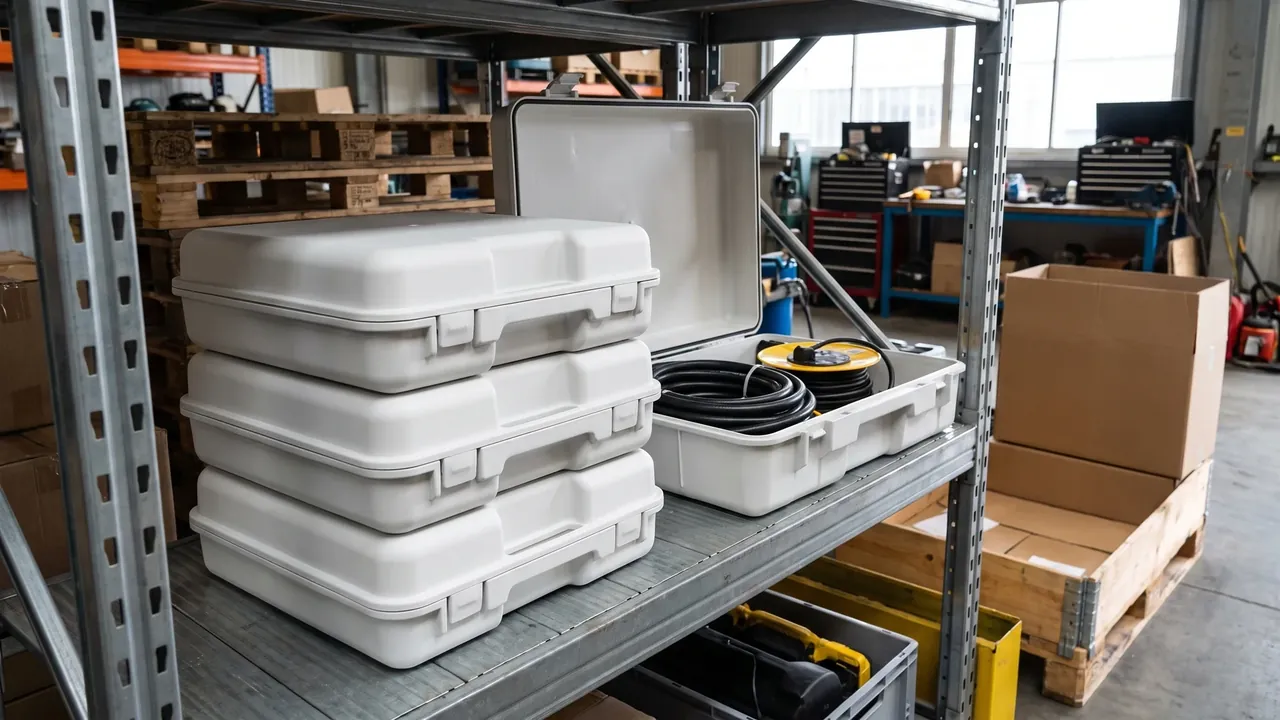
One-piece forming gives a rotomolded case a continuous load path. The body, ribs, corners and latch seats form in the same mold, so impact or stacking loads do not concentrate at a seam. Corners can be made as thicker rounded transitions that spread stress over a larger area — a key reason large cases often use rotomolding.
For sealing, both can be designed to an IP67 structure against dust and short-term immersion, with the final grade resting on a third-party test report. The difference is the path: a rotomolded case forms its sealing face and gasket groove in one molding, so flatness and dimensional stability after forming matter most; an injection-molded case relies on the fit precision of separate parts and assembly tolerance, so part-to-part contact and consistent clamping matter most.
3. Cost and volume advantages of assembled injection molding
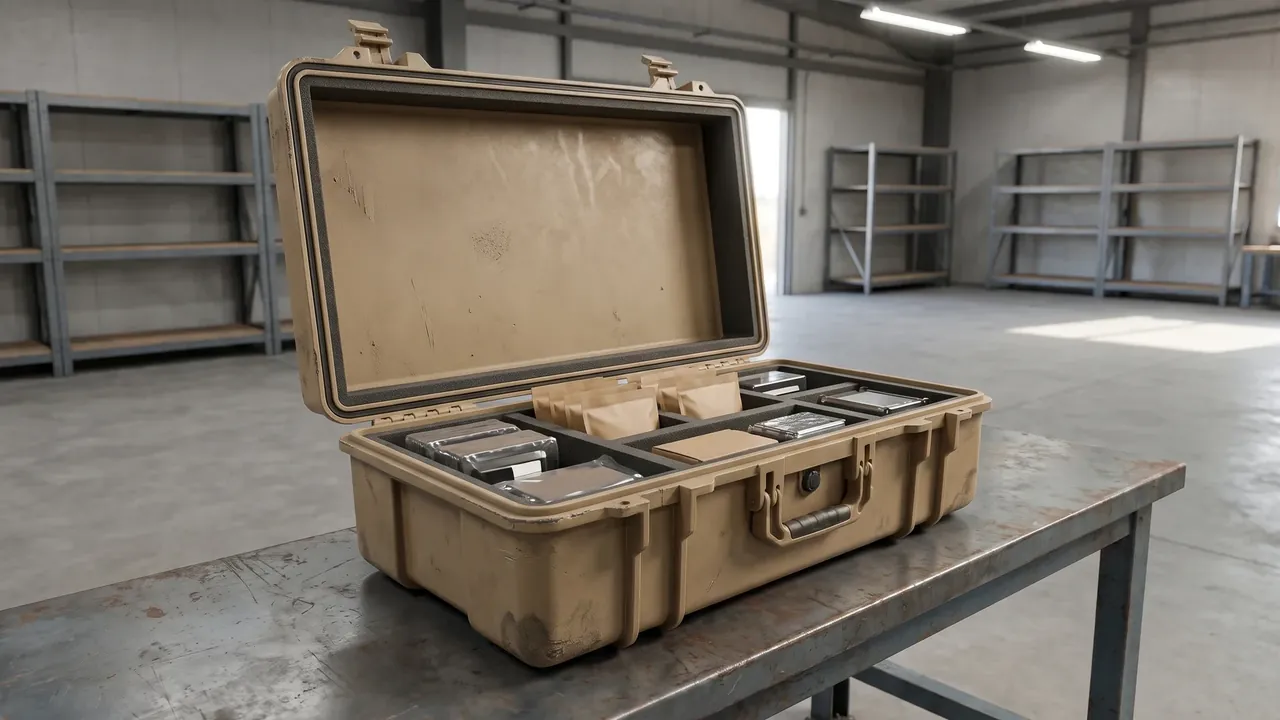
The value of an injection-molded case centers on precision and volume economics. High-pressure cavity injection makes dimensions highly consistent, suiting structures that need precise fit. When volume is large enough, the high injection-mold investment amortizes across many units, cutting unit cost.
Assembled construction adds two more points. First, functional modularity: latches, hinges and inserts can be specified or replaced as needed, and a single part can be swapped in repair. Second, more controllable appearance and detail: surface treatment, color and marking options are wider. The cost is that the joints between parts can become a weak link.
4. Choosing by batch and size

A pragmatic rule is: look at batch and size first, then precision and sealing needs. If the case is large and irregular, and the batch is too small to amortize a high-precision injection mold, rotomolding is usually the better fit. For a standardized, small case at very large volume needing precise fit, injection molding has the cost and quality edge.
The middle ground needs a trade-off: for a medium batch of large cases, compare the amortized unit cost of rotomolding against the total cost of the injection route. Listing mold investment, unit cost, maintenance method and service life beats judging by the first-unit quote alone.
5. Comparison selection checklist
To turn the process comparison into a procurement decision, check each item:
- Batch and size: for large parts and small-to-medium batches, assess rotomolding first; for small, very large-volume parts, assess injection first;
- Precision needs: for precise-fit structures, assess whether injection's dimensional consistency is necessary;
- Sealing path: rotomolding looks at post-forming flatness, injection at assembly tolerance;
- Whole-life cost: include mold investment, unit cost, maintenance and replacement;
- Maintenance method: compare modular part replacement against whole-body repair.
These five items form the basic decision surface. Where buyer and supplier read any of them differently, the contract's technical annex should state the measuring method and the pass value.
Conclusion
A rotomolded case and an injection-molded case are not better versus worse but a choice between one-piece forming and assembled construction: rotomolding leads on structural continuity and large parts at small-to-medium batches, while injection leads on dimensional precision, modularity and very-large-volume economics. The key is to fix batch, size, precision and sealing needs first, then compare mold investment, unit cost, maintenance method and service life.
Scope: this article compares container (case body) designs only; it says nothing about the contents or any handling or use of them.
Related Reading
- What Is a Rotomolded Case: Process and Structural Advantages
- Key Points for Choosing a Rotomolded Case Structure and Process
- Care and Lifecycle Management of a Rotomolded Case
Related Products
- 8 Series — Gun Cases; Military Equipment Cases; Camera Equipment Cases; Drone Cases; Watch Cases; Knife Cases; First Aid Cases; Electronics Equipment Cases
- WL8-2812 PP Gun Case — model WL8-2812
- All protective cases and toolboxes: 7 series, 158 models