

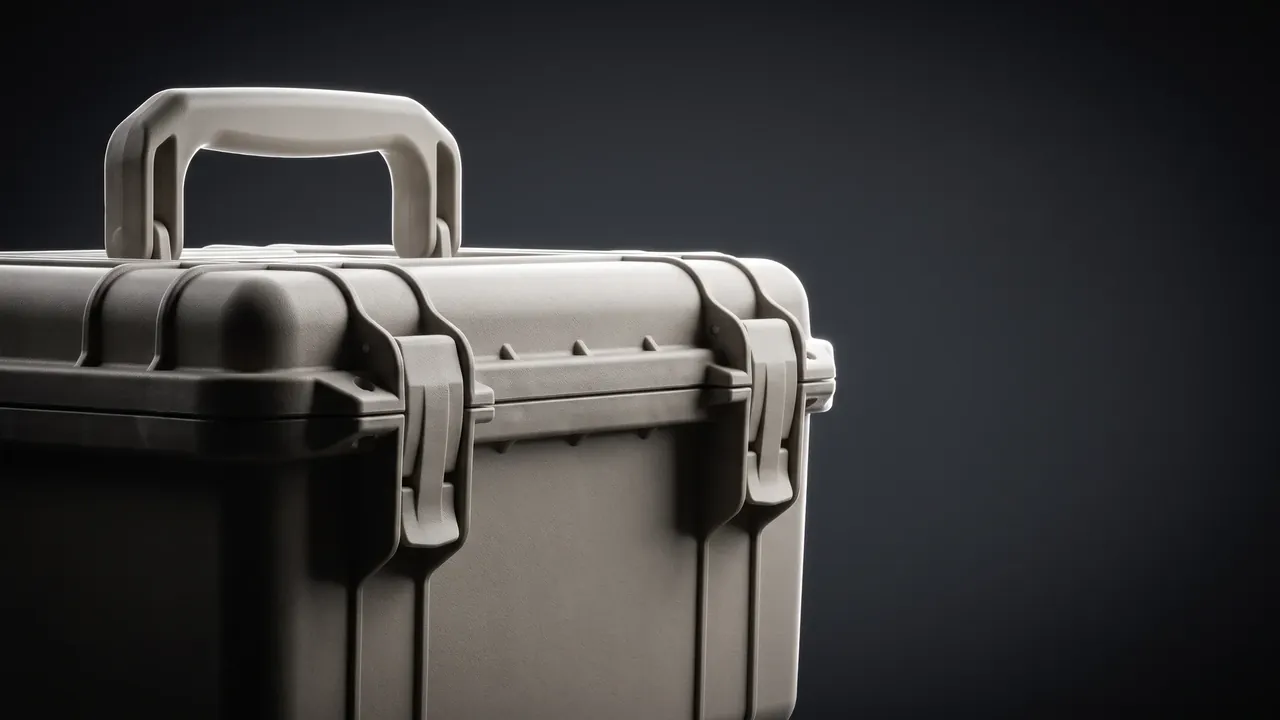
Quick answer: Weather resistance in a rotationally molded transport case comes from three design choices: a seamless one-piece shell (no joint line, so no start for water ingress or adhesive failure), a through-coloured material system (UV resistance from the formulation, not a coating), and replaceable seals and hardware (wear parts can be renewed, so the shell's life is not tied to a gasket). Upkeep means building a fixed inspection rhythm around those three.
Table of contents
- Where the weather resistance comes from
- UV, temperature cycling and humidity
- Checks and replacement of seals and hardware
- Cleaning, storage and damage repair
- Maintenance checklist
- FAQ
1. Where the weather resistance comes from
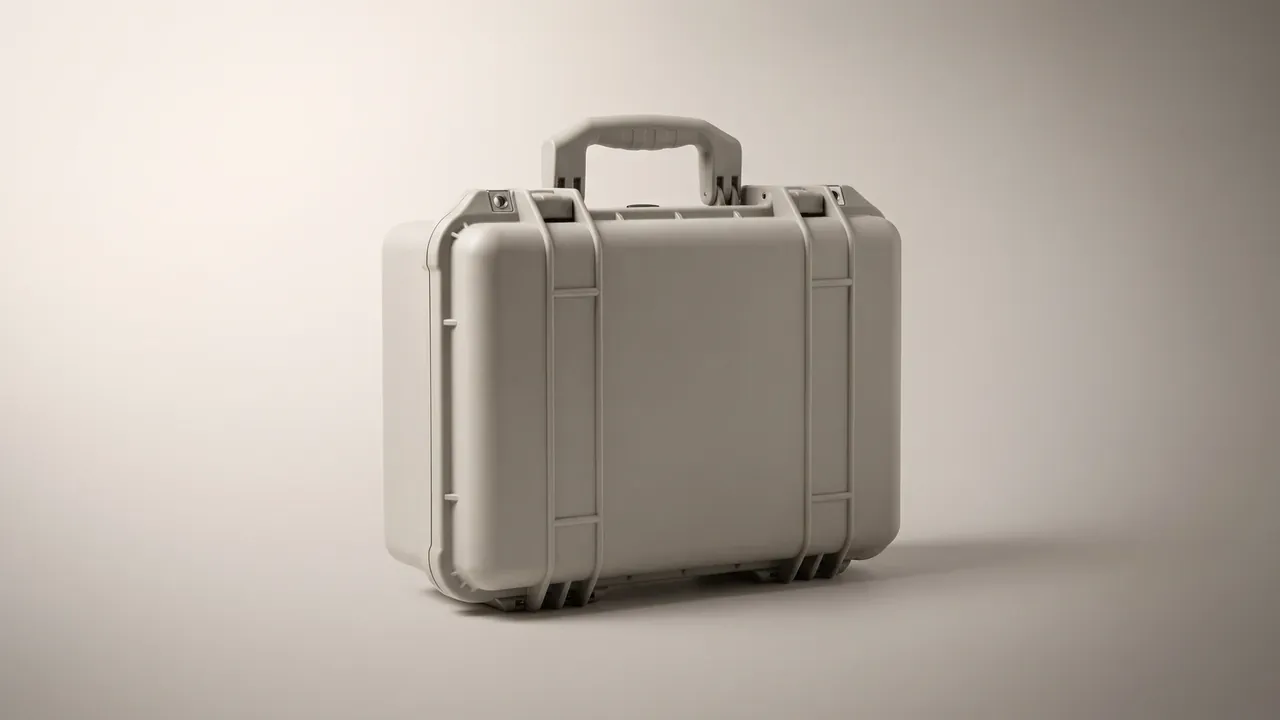
Weather resistance in a rotationally molded case is not one material property but the result of three design decisions.
- Seamless shell: rotational molding produces a one-piece body with no joint line or weld, so moisture lacks a path to creep along;
- Material and colour system: UV resistance comes from stabilisers and pigments in the formulation, and the colour runs through the material, so abrasion does not expose a bare substrate as a coating would;
- Replaceable seals and hardware: gaskets, latches and hinges are wear parts that can be renewed, so one aged component does not drag the shell into scrap.
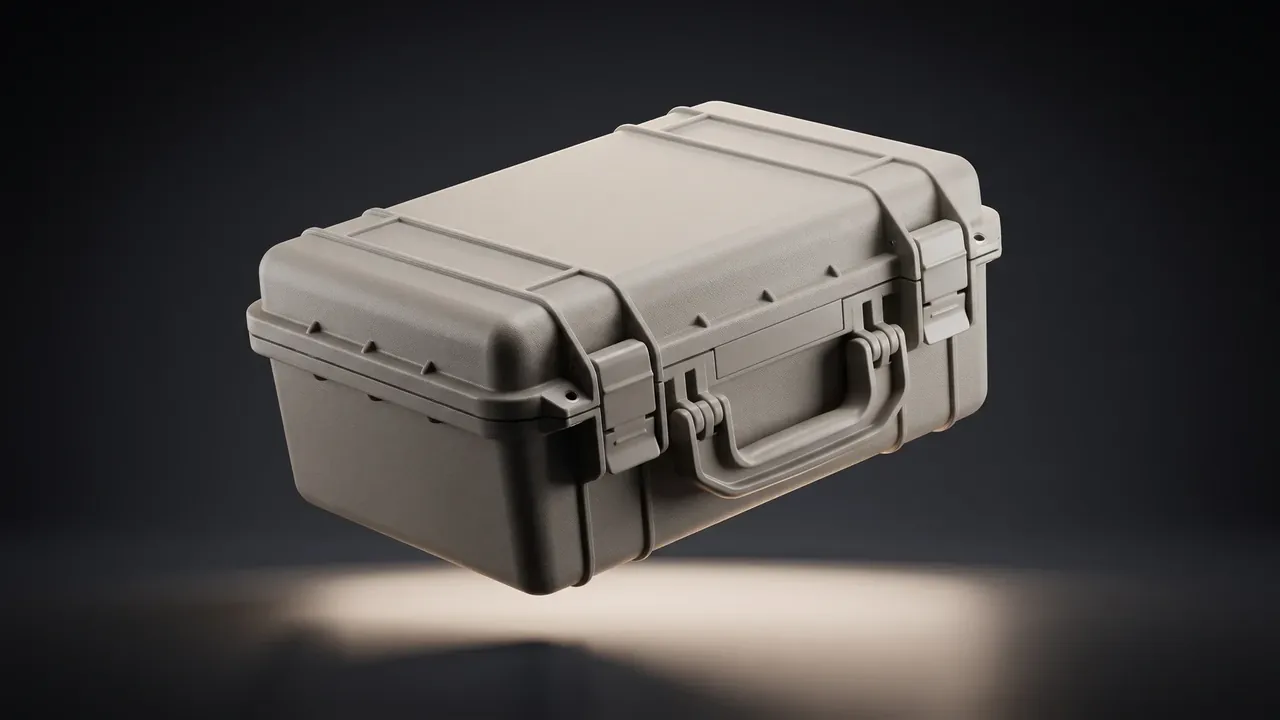
Three things show whether the design is sound: even wall thickness (a thin spot cracks first under temperature cycling), a complete rolled rim (the rim sets the deformation space available to the seal), and a separately moulded seal channel (easier to re-seal without damaging the body).
2. UV, temperature cycling and humidity
Outdoors, three environmental factors act in different ways:
| Factor | Main effect | Observable signal |
|---|---|---|
| UV | Surface chalking, fading | Rough feel, lost gloss |
| Temperature cycling | Expansion and contraction, seal hardness drift | Poorer fit at the opening |
| Humidity and standing water | Water in the seal channel, corrosion | Stiff latches, whitened gasket |
The most overlooked is temperature cycling. It does not damage the shell, but it gradually strips resilience from the seal. A rotomolded shell is thick-walled with high thermal inertia, so it deforms less across day-night swings, pushing that duty onto the seal. Upkeep should therefore focus on seals rather than re-inspecting the shell.
UV damage needs perspective: chalking and fading are surface phenomena, and as long as wall thickness is not materially reduced, load capacity is usually unaffected. Decide on downgrading from thickness data, not from how old the case looks.
3. Checks and replacement of seals and hardware
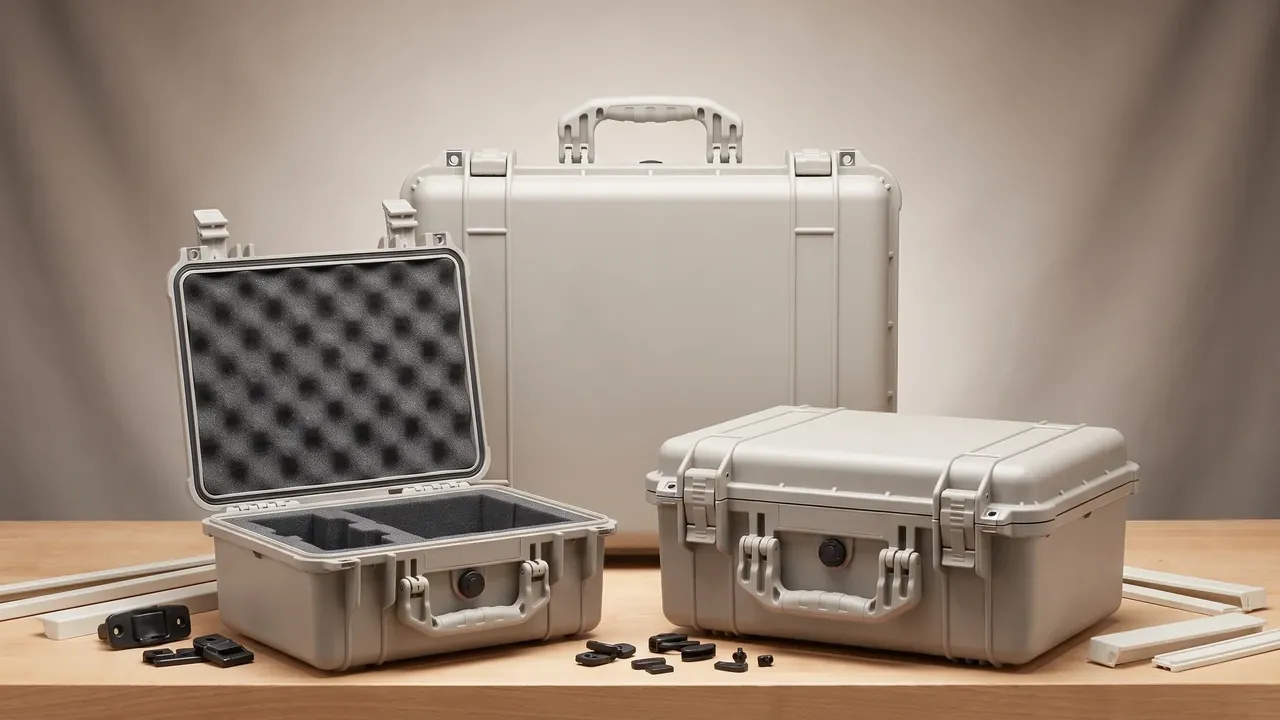
Wear parts are replaced by duty intensity, not calendar time.
- Gaskets: replace when hardened, when a compression mark no longer recovers, or when a section detaches. Clean the channel first so old adhesive residue does not spoil the fit;
- Latches: check that closing travel and clamping force are consistent; uneven force across latches means closing pressure is already unbalanced;
- Hinges: check pin wear and play; growing play lets the lid shift, concentrating pressure on part of the gasket;
- Pressure equalisation valve, if fitted: check that it breathes freely; a blocked valve makes opening hard or lets pressure pull the seal open.
Replace as a set: gasket ageing is rarely local, and renewing one section makes closing pressure distribution worse.
4. Cleaning, storage and damage repair
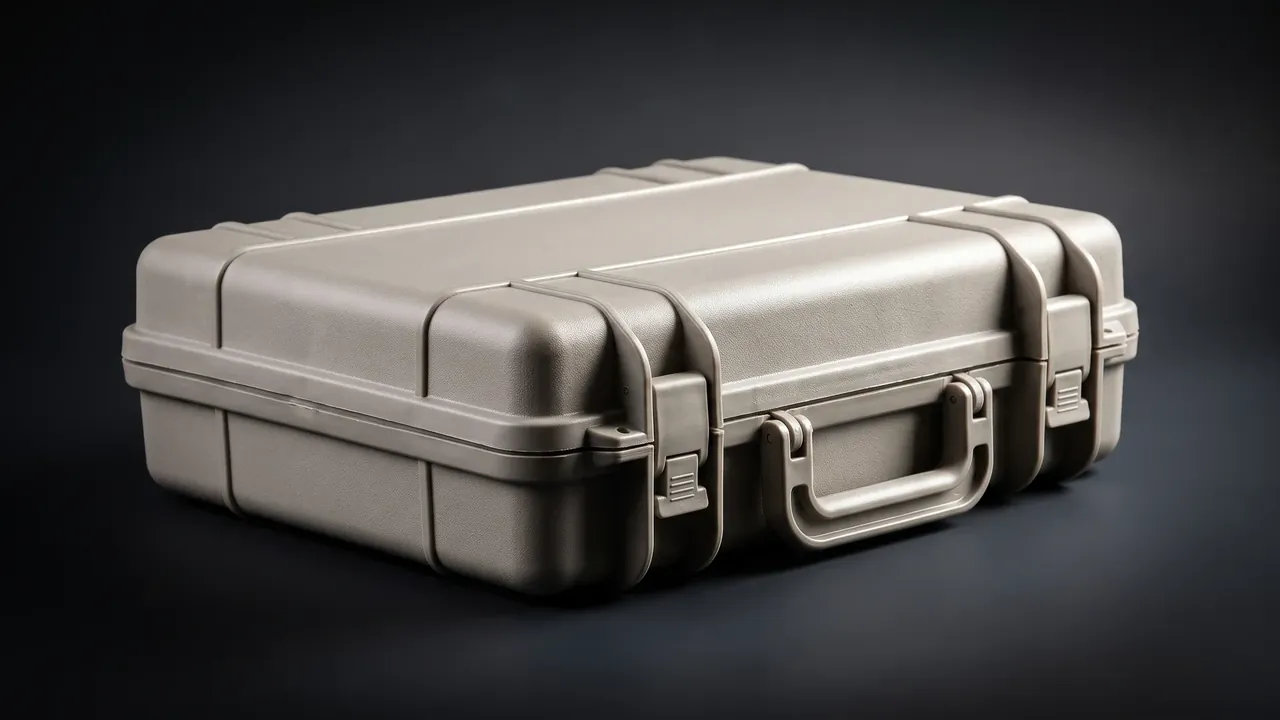
Cleaning: use a mild detergent with a soft brush; solvent cleaners accelerate ageing of the plastic and the gasket. Priorities are residue and standing water in the seal channel.
Storage: avoid prolonged direct sunlight, stacking beyond the rated layer count, and storing cases with the gasket under permanent compression, which sets a mark; loosen the latches or leave them not fully clamped.
Damage repair: a small crack can be welded locally, after which the seal and load capacity of that zone must be re-verified. With structural corner damage the case no longer has its original load capacity and should be downgraded or retired.
5. Maintenance checklist
- Check gaskets quarterly for hardening, cracking or detachment;
- Check quarterly that latch clamping force is consistent;
- Check hinge pin wear and play half-yearly;
- Sample wall thickness at corners and the opening half-yearly;
- Clean the seal channel on every return and confirm no water remains;
- Keep a wear-part replacement log for gaskets, latches and hinges.
The checklist replaces fix-it-when-it-breaks with a fixed rhythm: quarterly for the first two items, half-yearly for the next two.
Conclusion
The weather resistance of a rotationally molded transport case rests on a seamless shell, a through-coloured material system and replaceable wear parts, and upkeep follows the same lines: judge the shell from thickness data, replace seals and hardware as a set by duty intensity, and avoid solvent cleaning, permanent latch compression and over-stacking. A quarterly and half-yearly inspection rhythm with replacement records on file extends working life well beyond a fix-it-when-it-breaks regime.
This discussion stays on the container and case-body side, covering specification and upkeep only. Nothing here addresses the handling, filling or use of anything held inside the case.
Related Reading
- Setting wall thickness and load capacity when selecting a rotomolded case
- Structural differences between rotomolded and injection molded cases over time
- Typical applications and configurations for military rotomolded cases
Related Products
- 8 Series — Gun Cases; Military Equipment Cases; Camera Equipment Cases; Drone Cases; Watch Cases; Knife Cases; First Aid Cases; Electronics Equipment Cases
- WL8-2812 PP Gun Case — model WL8-2812
- All protective cases and toolboxes: 7 series, 158 models