

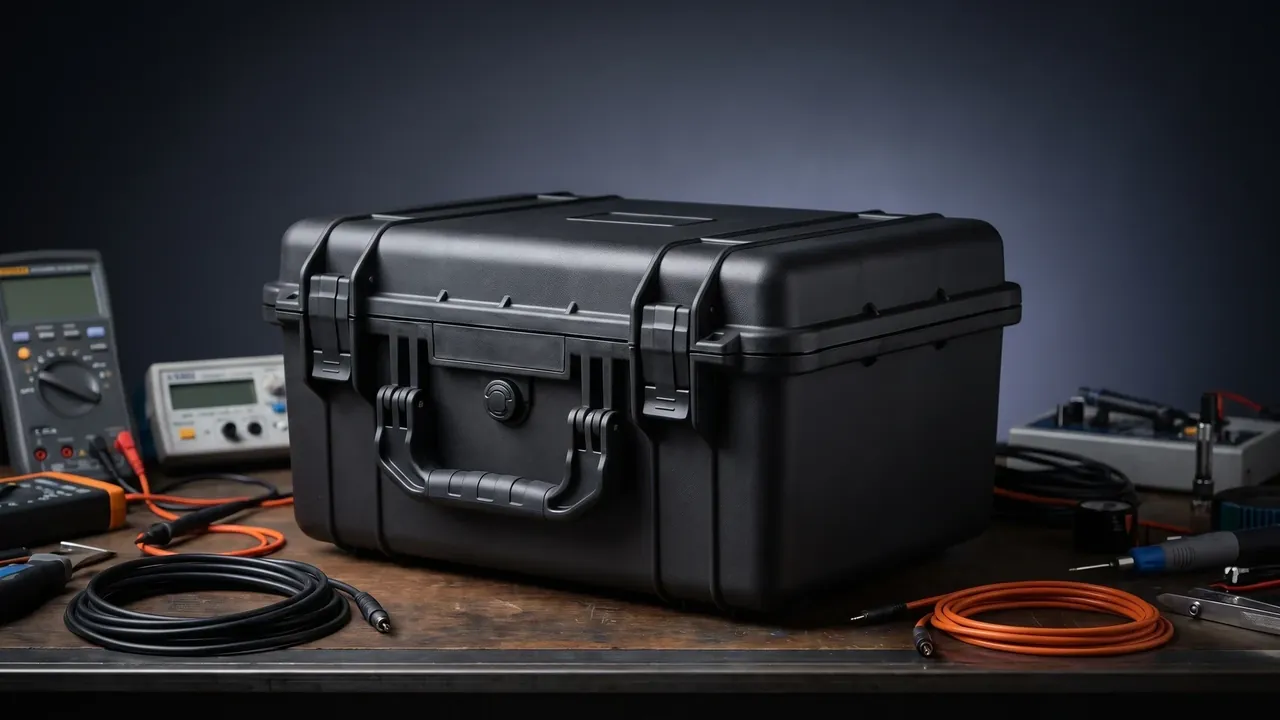
Quick answer: A military rotomolded case suits both field and sea-freight work because rotomolding forms a large, thick-walled, seamless shell with reinforcement ribs in one piece, delivering impact resistance and corrosion resistance together. In the field the demands center on drops and stacking; at sea they center on salt spray, moisture and container stacking. Set the baseline from the stricter side, then configure for the other. This article covers container-side application logic only.
Table of contents
- Why a military rotomolded case suits both field and sea freight
- Field use: impact, stacking and fast transfer
- Sea freight: salt spray, moisture and container stacking
- Where the two scenarios conflict, and the trade-off
- A scenario-fit checklist
- FAQ
1. Why a military rotomolded case suits both field and sea freight
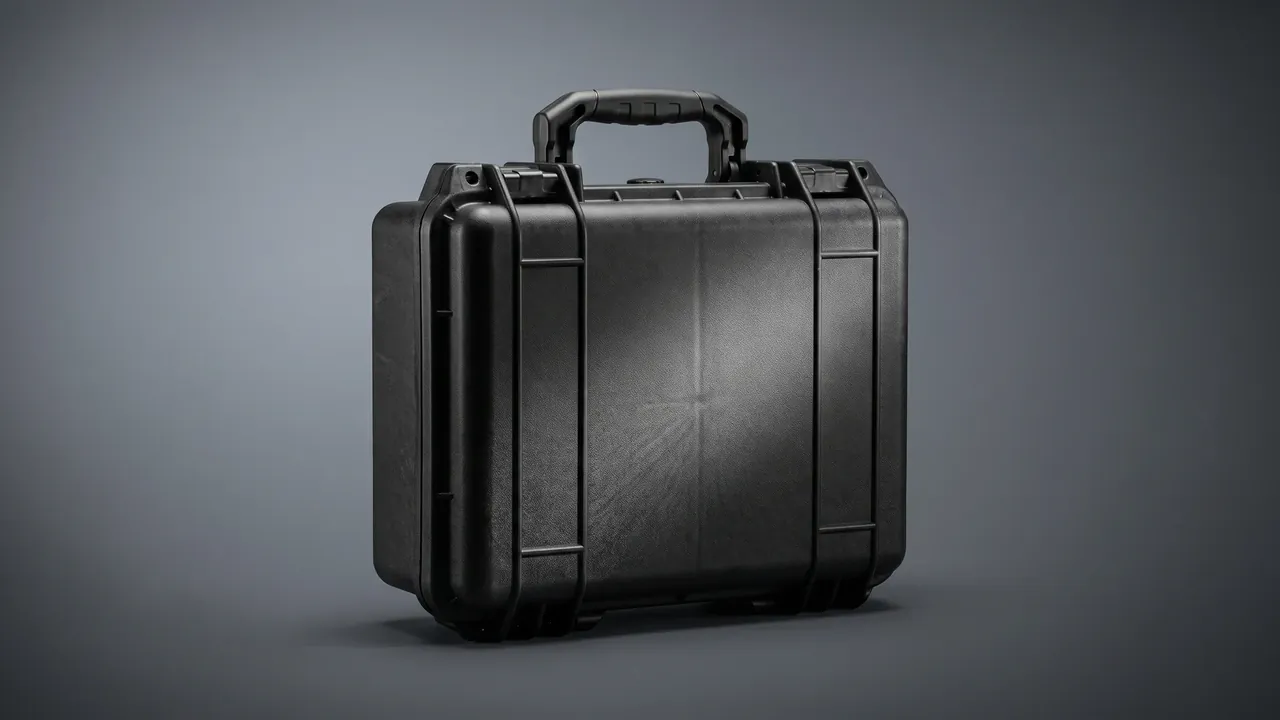
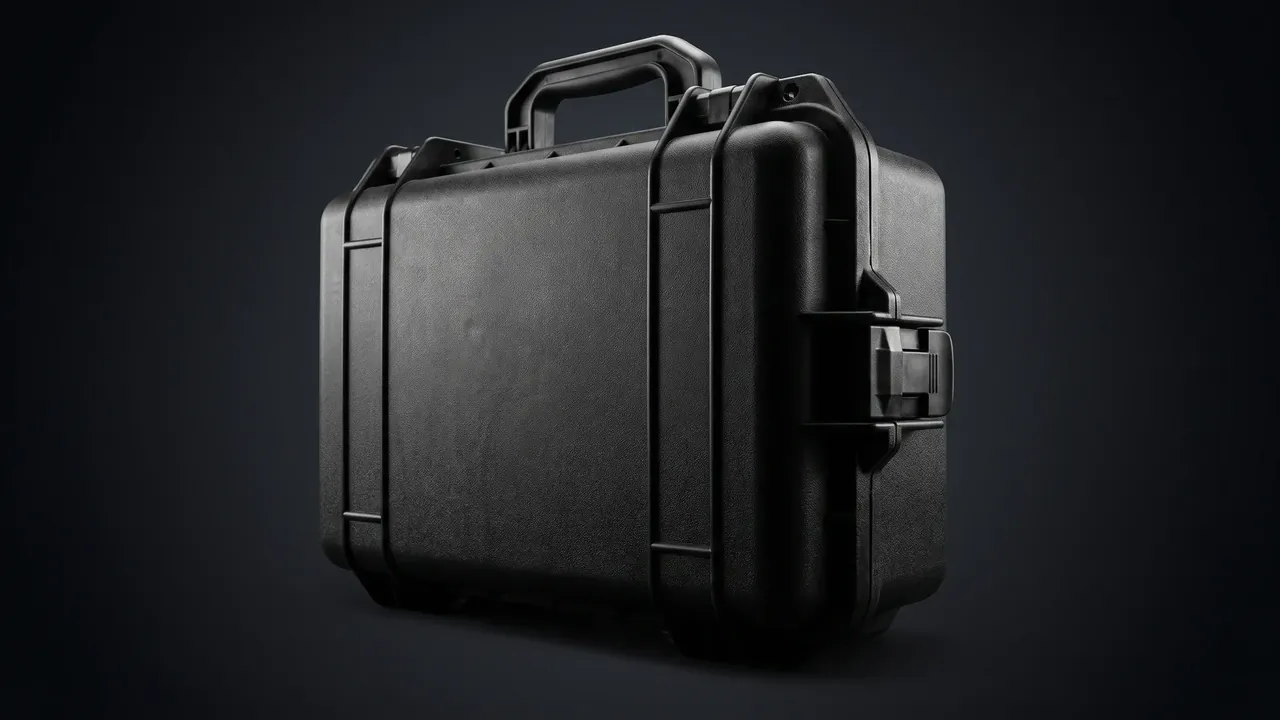
Rotomolding rotates and heats the mold so plastic powder fuses layer by layer against the walls. The shell is therefore one piece, weld-free, relatively thick and able to carry reinforcement ribs. Those three traits map directly onto what field and sea-freight use demand: one-piece forming removes the joint as a weak point, thick walls give impact margin, and ribs raise stiffness without adding much weight.
- No seams: the process creates no welds, cutting stress concentration and leak paths;
- Adjustable thickness: charge weight controls wall thickness, so load-bearing zones can be thickened;
- Large sizes feasible: rotomolding suits medium and large cases that hold bulky items;
- Weather resistance: polyethylene resists water and many chemical media, suiting long outdoor exposure.
2. Field use: impact, stacking and fast transfer
Field demands reduce to three words: it takes a drop, it stacks steadily, and it moves fast.
| Field demand | Main condition | Container-side design |
|---|---|---|
| Takes a drop | Drop on loading, vehicle vibration | Thick walls, rounded corners, ribs spreading impact |
| Stacks steadily | Temporary stockpiles, stacked storage | Flat top, locating recess, static load margin |
| Moves fast | Manual carry, forklift and lifting | Side grips, forklift openings, lifting points |
Of the three, impact resistance leans on structural margin, stacking leans on top geometry and static load design, and handling leans on hardware layout.
3. Sea freight: salt spray, moisture and container stacking
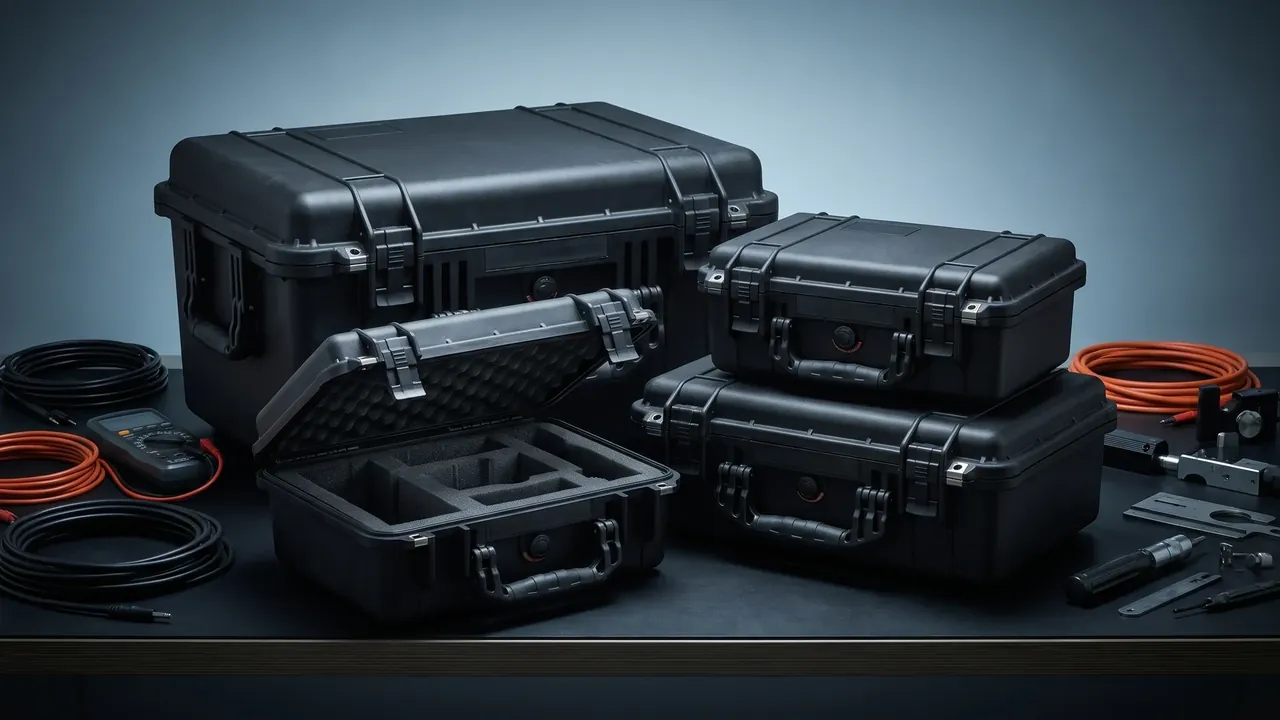
Sea freight places a container in a long, damp, saline environment, turning the problem from short shock into sustained attack.
- Salt spray: metal parts such as latches and hinges are the main affected items, while the plastic shell itself resists salt spray;
- Moisture and condensation: day-night temperature swings and cabin humidity condense inside a sealed cavity, and sealing plus pressure balance are the answer;
- Long stacking: container stacking runs tall and long, so static load becomes the controlling condition;
- Temperature cycling: voyages across latitudes span a wide temperature range, so the material's temperature range needs assessment.
For wording, state that the case is designed to the relevant structural grade, and note that the actual grade is subject to third-party test reports.
4. Where the two scenarios conflict, and the trade-off
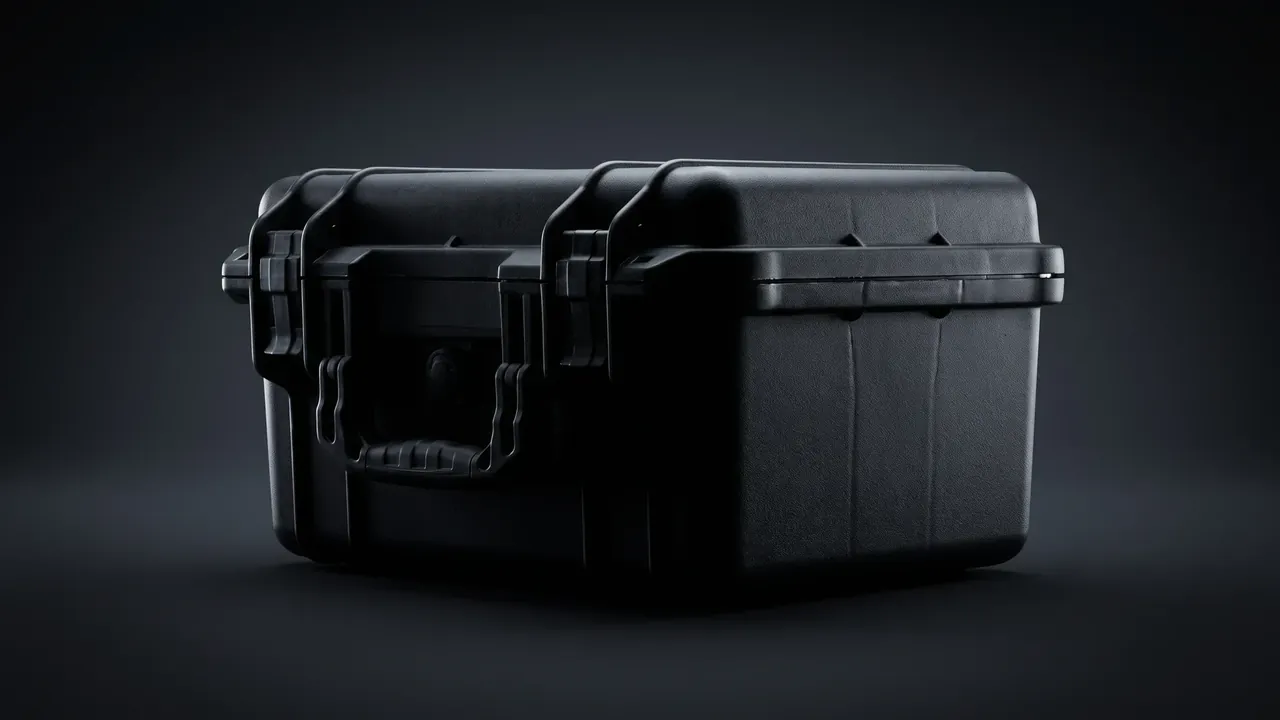
Field and sea-freight needs are not fully compatible. Three tensions stand out.
- Sealing versus opening speed: tighter seals and higher latch clamping force open harder, while field use stresses fast access;
- Wall thickness versus weight: impact resistance needs thickness, but excess weight weakens manual handling;
- Venting versus sealing: sea freight needs pressure balance to cut condensation, yet the balance valve is an extra opening in the sealing structure.
The trade-off is to rank priorities by scenario share. A sea-freight-led route should protect sealing and stacking first and compensate opening speed with better grip design; a field-led route should protect impact resistance and handling first and compensate environmental attack with upgraded gasket material.
5. A scenario-fit checklist
- Main scenario stated (field-led or sea-freight-led) with its share
- Impact requirement taken from the poorer operating condition, not the ideal one
- Pressure balance included where sea-freight condensation applies
- Metal parts anti-corrosion treated and kept to a minimum
- Static stacking requirement checked against the longest stacking duration
- Handling method matched to grips, forklift openings and lifting points
The first two fix the baseline, the middle two target the sea environment, and the last two target field and logistics work.
Conclusion
A military rotomolded case covers field and sea freight because one-piece forming, thick walls and reinforcement ribs satisfy both scenarios' basic demands at once. Field work centers on impact, stacking and handling efficiency; sea freight centers on sealing, salt-spray resistance and long-cycle stacking. Three tensions sit between them, over sealing and opening, thickness and weight, and venting and sealing. Handle them by ranking priorities from scenario share and compensating the secondary side through configuration. Write the share into the requirement and raise targeted demands for gaskets and metal parts.
The scope here is the container (case body) alone: its dimensions, structure and the wording of its grade. Nothing about how items inside are handled, loaded or used falls within it.
Related Reading
- Sealing, impact and low-temperature problems in military rotomolded cases
- Structure and process of a military rotomolded case
- Protection points for cases in sea-freight environments
Related Products
- 8 Series — Gun Cases; Military Equipment Cases; Camera Equipment Cases; Drone Cases; Watch Cases; Knife Cases; First Aid Cases; Electronics Equipment Cases
- WL8-2812 PP Gun Case — model WL8-2812
- All protective cases and toolboxes: 7 series, 158 models