

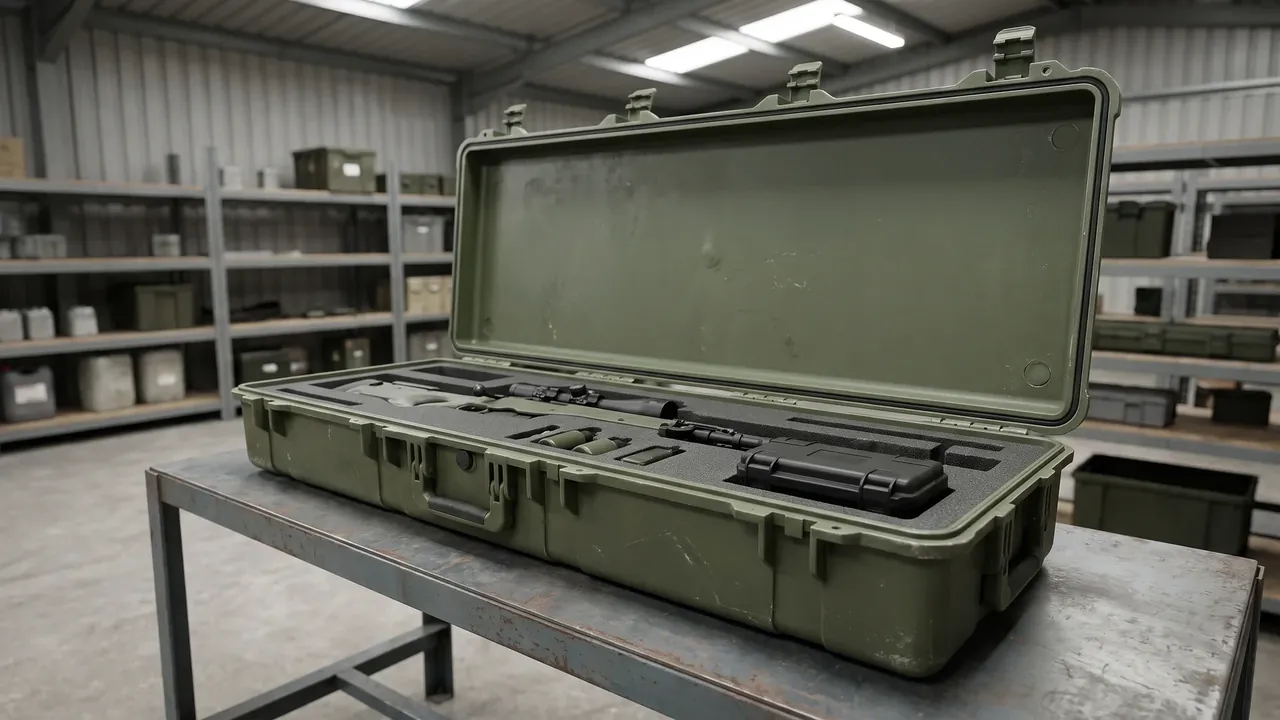
Quick answer: Choosing a rotationally molded transport case comes down to three decisions made first: wall thickness (setting dead weight and impact resistance, where evenness matters more than the maximum figure), load capacity (static load governs stacking, dynamic load governs carrying and lifting, and the two are not interchangeable), and hauling method (carry, wheeled, forklift or crane, each imposing different demands on the base and handles). Size and inserts follow.
Table of contents
- Three decisions come first
- Wall thickness: evenness and reinforcement
- Load capacity: static, dynamic and stacking
- Hauling method drives base and handle structure
- Selection checklist
- FAQ
1. Three decisions come first
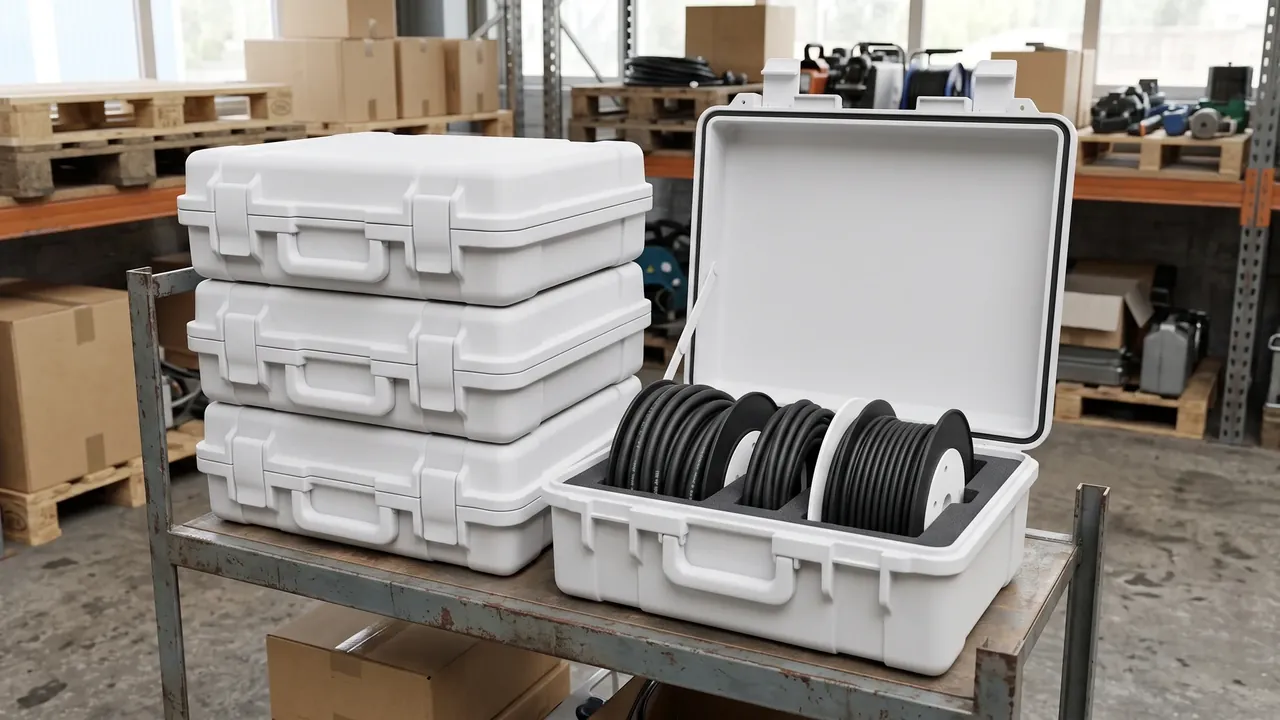
A rotationally molded case is not specified like an injection molded box, because the mould rotates and powder fuses layer by layer into one seamless hollow shell, which pushes three decisions to the front.
- Wall thickness: it sets dead weight, impact resistance and cost; for a rotomolded part the useful figure is the evenness of the wall, not the maximum;
- Load capacity: the most confused pair of numbers; static load serves stacking, dynamic load carrying and lifting;
- Hauling method: hand-carried, wheeled, forklift or crane — this decides whether a base, caster mounts and reinforced handles must exist.
Fix load capacity and hauling method first, work back to thickness and reinforcement, and only then discuss size and inserts. Reversed, the result is a case that fits but cannot be moved, or one too heavy.
2. Wall thickness: evenness and reinforcement
Wall thickness is asked about most and misread most.
- Evenness: powder fuses as the mould rotates, so uneven heating at corners or inserts produces thin spots, the weak point in a drop. Ask for a multi-point thickness record;
- Distribution: wall need not be uniform everywhere. Corners, hinge seats and caster mounts need more; flat panels can be thinner, trading structure for weight;
- Reinforcement: ribs, corner columns, steel frames and a rolled rim raise stiffness with little weight, and the rim holds the opening in shape.
Thicker is not always stronger: dead weight consumes dynamic load allowance, and once the empty case approaches the payload, handling and lifetime cost worsen. Set thickness at the lower limit satisfying drop and stacking, then add stiffness structurally.
| Zone | Loading | Treatment |
|---|---|---|
| Corner | First contact in a drop | Corner columns |
| Opening | Closing and stacking | Rolled rim |
| Base | Forklift contact | Base skids, wear ribs |
| Handles, casters | Concentrated load | Steel backing |
3. Load capacity: static, dynamic and stacking
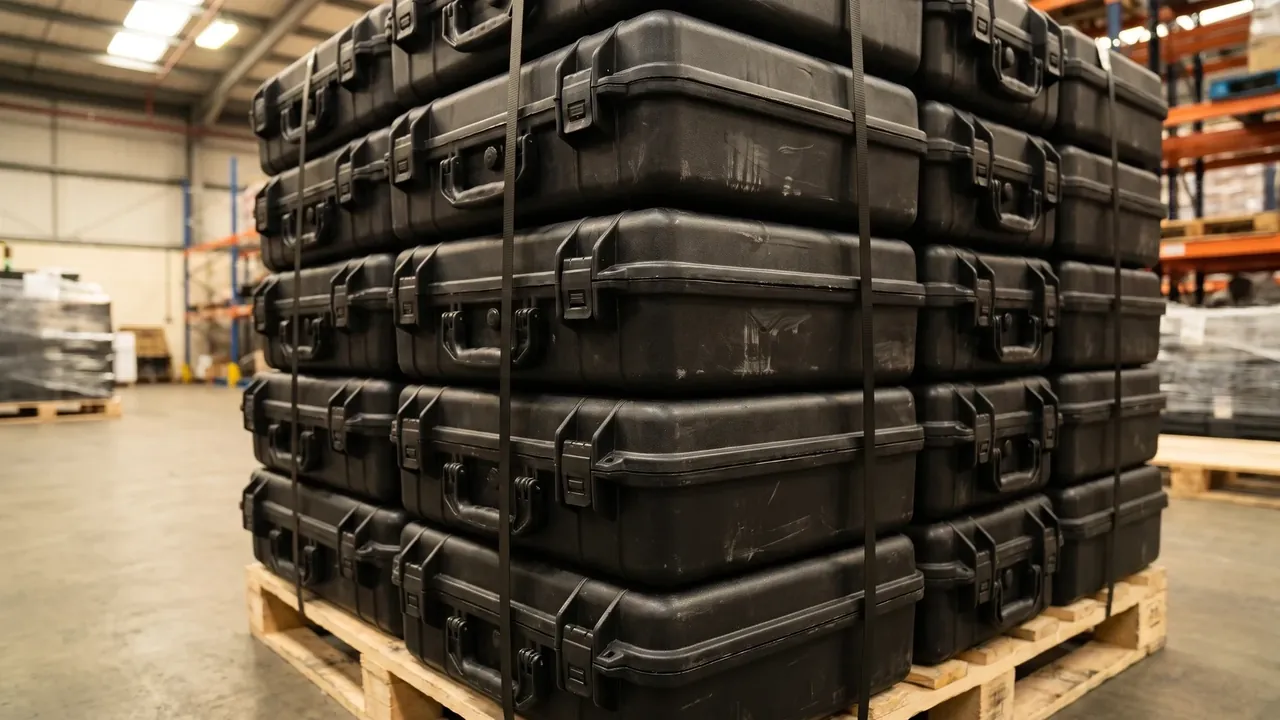
Load capacity most often goes wrong because it combines two figures with different meanings: static load is the long-term pressure at the bottom of a stack, setting the layer count, while dynamic load is the weight limit for carrying, lifting and drop shock once loaded.
Stack layer count is a division:
Max stack layers ≈ static load of the bottom case ÷ loaded weight per case
A 400 kg static load with 50 kg loaded weight gives 8 theoretical layers, rated 5–6. Confirm that load-bearing zones fall on the rim and corner columns, whether offset stacking is allowed, and whether locators are present.
Because a rotomolded case is seamless, its load path is continuous, a clear advantage over assembled boxes; failures from a thin spot or poor base concentrate at the bottom corners, which must be measured at acceptance.
4. Hauling method drives base and handle structure
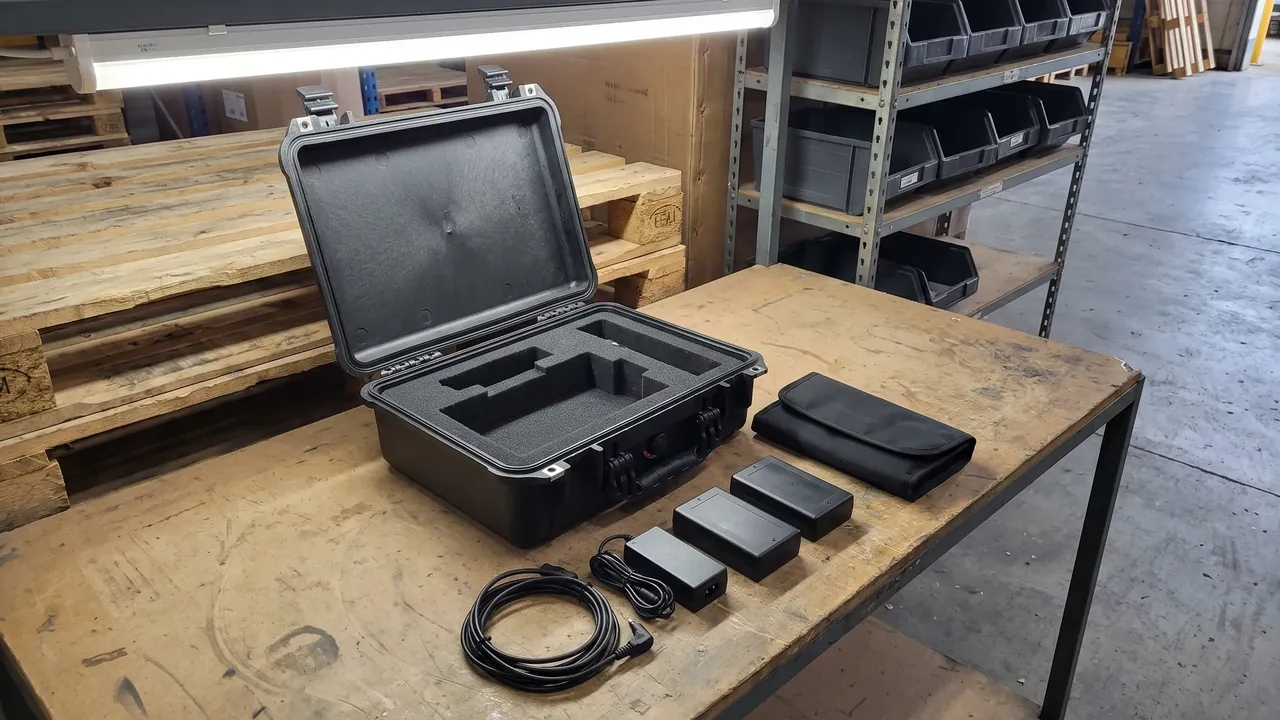
Hauling method is often deferred, yet it shapes structure most.
| Hauling method | Minimum structure | Selection note |
|---|---|---|
| Carried by hand | Reinforced handle zone, light weight | Change plans if the load needs two people |
| Wheeled | Reinforced caster mounts, tow bar | Caster mounts need steel backing |
| Forklift | Base pockets or clearance | Pocket spacing must match forks |
| Crane lift | Lift points or sling path | Lift points set the tilt |
Hauling method feeds back into thickness and capacity: casters and a base raise dead weight, while thinning the wall to save weight undermines the caster mounts. All three belong in one selection table.
5. Selection checklist
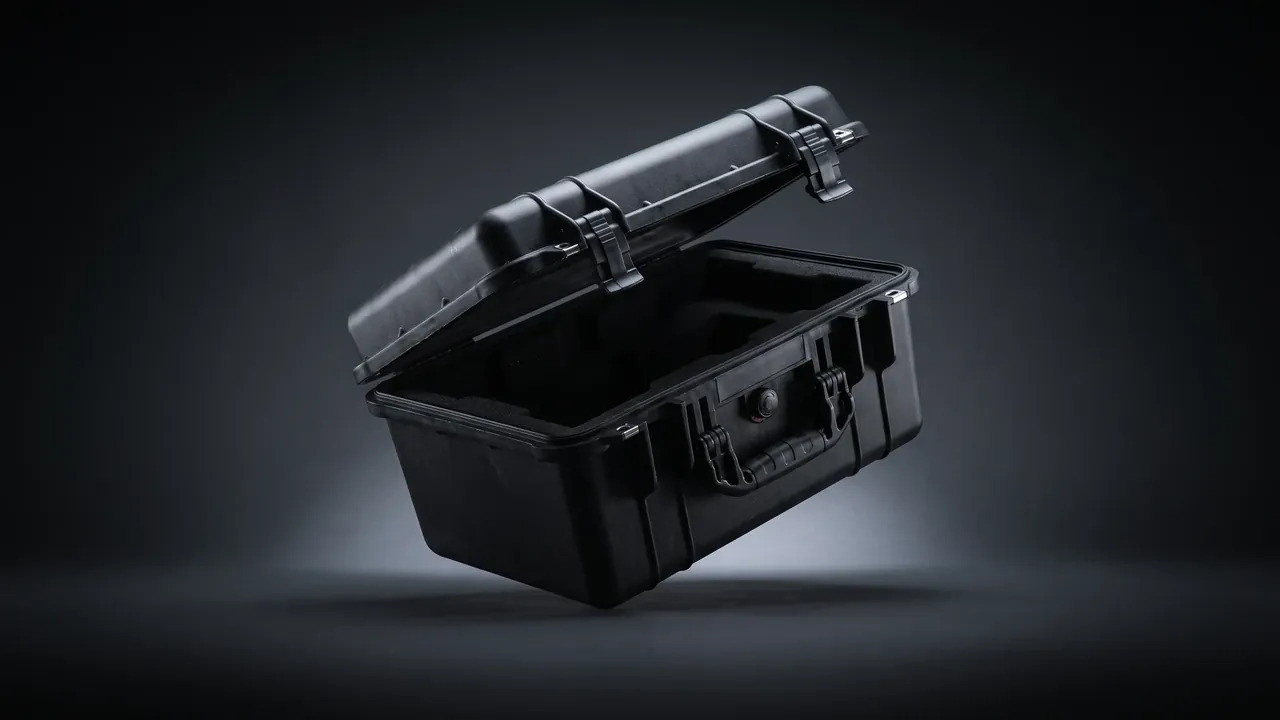
- A multi-point thickness record is supplied, not a nominal figure;
- Static and dynamic loads are stated separately, with the stacking formula;
- Load-bearing zones and stack orientation come with a drawing;
- Base, caster mounts or lift points match the hauling method;
- Handle and latch reinforcement is described structurally;
- Empty weight and reference loaded weight are stated separately.
All six present makes the table comparable; gaps close at sampling.
Conclusion
Selecting a rotationally molded transport case reduces to one chain: fix load capacity and hauling method first, then wall thickness and reinforcement, and only then size and inserts. Thickness need only meet the drop and stacking floor, with stiffness from ribs and corner columns; loads must be split into static and dynamic and stack layers calculated, not guessed; hauling method decides whether a base and handle exist. Put those three in one table and walk the checklist.
This article addresses the container and case-body side of specification and design only. It does not cover any handling, filling or use of the items placed within the case.
Related Reading
- One-piece versus assembled case bodies: structural trade-offs
- Weather resistance and long-term maintenance points for case bodies
- How the rotational molding process shapes case structure and wall distribution
Related Products
- 8 Series — Gun Cases; Military Equipment Cases; Camera Equipment Cases; Drone Cases; Watch Cases; Knife Cases; First Aid Cases; Electronics Equipment Cases
- WL8-2812 PP Gun Case — model WL8-2812
- All protective cases and toolboxes: 7 series, 158 models