

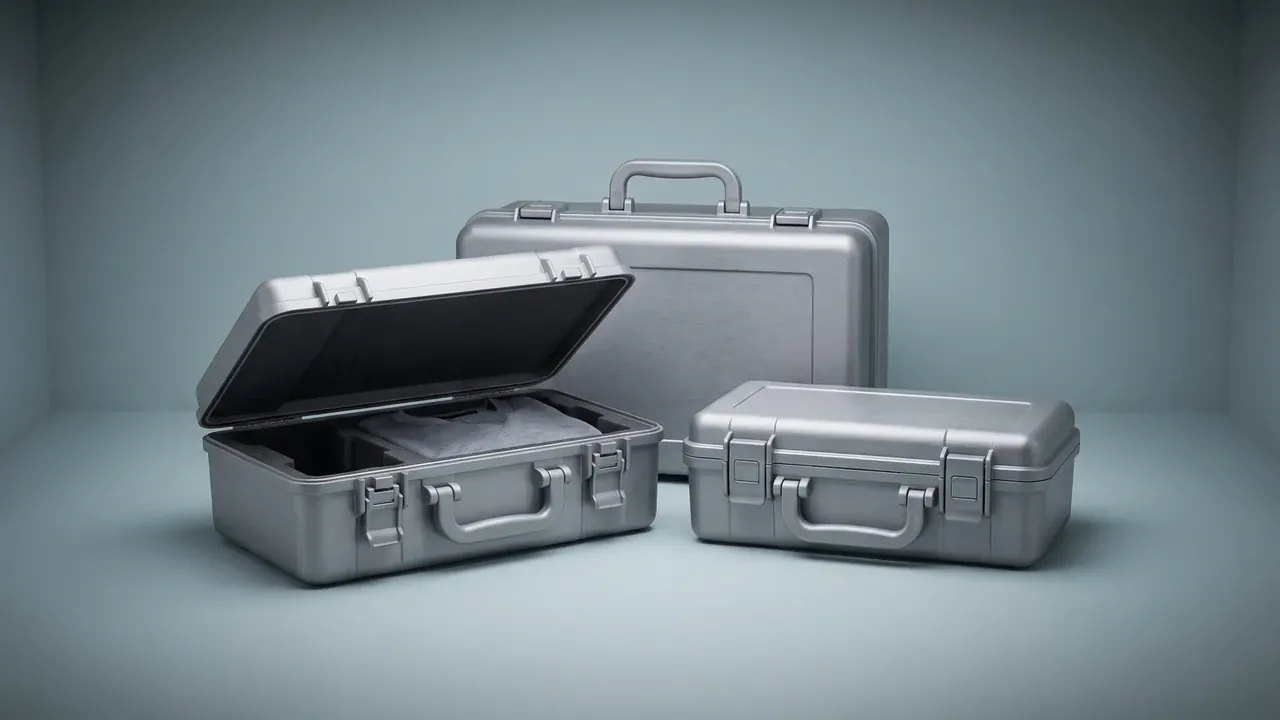
Quick answer: Most of the spread between hardware plastic tool box supplier quotations sits in mold ownership, surface treatment and packing, not molding time. Split the quote into three lines, fix four lead-time gates in the contract, and prices become comparable.
Table of contents
- Three quote lines behind a hardware plastic tool box supplier price
- Minimum pack quantity and mixed loading
- Private label, neutral packing and mold ownership
- Four lead-time gates
- Payment terms, returns and three quote traps
- FAQ
1. Three quote lines behind a hardware plastic tool box supplier price
Send one drawing to three factories and unit prices can differ by more than 20 percent. The gap rarely sits in molding time but in three items folded into one number: mold charging, surface finishing, packing.
| Quote line | Covers | Basis | Typical swing |
|---|---|---|---|
| One: box body | Molding, latch and handle assembly, masterbatch | Per piece, stepped at 3,000 and 5,000 | ±8 percent |
| Two: surface and packing | Screen print, hot stamp, liner, colour box, marks | Per piece plus one-off plate fee | ±25 percent |
| Three: mold and sampling | Tooling, trials, first sample, two changes | One-off, per set | Bought out or amortised |
Line one needs two figures: wall thickness and piece weight. A 2.8 mm PP copolymer body with two press latches lands near 940 g; the same shape in regrind often hits 810 g, the missing 130 g being mostly ribbing under the latch seats.
Line two carries the most water. One factory quotes screen printing at 0.35 per piece plus 600 per colour for plates; another says printing is included, then bills four colours. Four plates cost 2,400 once, or 0.48 per piece at 5,000 units; at 800 units the same plates add 3.00 each and the ranking flips.
Line three sets the hidden cost of the next three years. A mold at 96,000 with the first sample included can be amortised into the piece price, but ask how many units it covers and who owns the tool afterwards, or it gets paid for twice. Few open this line.
2. Minimum pack quantity and mixed loading
At a hardware plastic tool box supplier, minimum pack quantity decides whether a mixed load works at all: 12 pieces per carton, carton 620 by 420 by 330 mm, roughly 1,850 pieces in a 40-foot high cube.
A real load never runs to the ceiling; accessory cartons fill the gaps. Four points to confirm:
- A 620 mm carton fits two rows across and one along the side, under 40 mm spare.
- Whether odd lots below 12 pieces may be broken out.
- Whether the load stays within four models, or marks go on wrong cartons.
- Whether gross weight stays under 18 kg, or staff start dropping them.
3. Private label, neutral packing and mold ownership
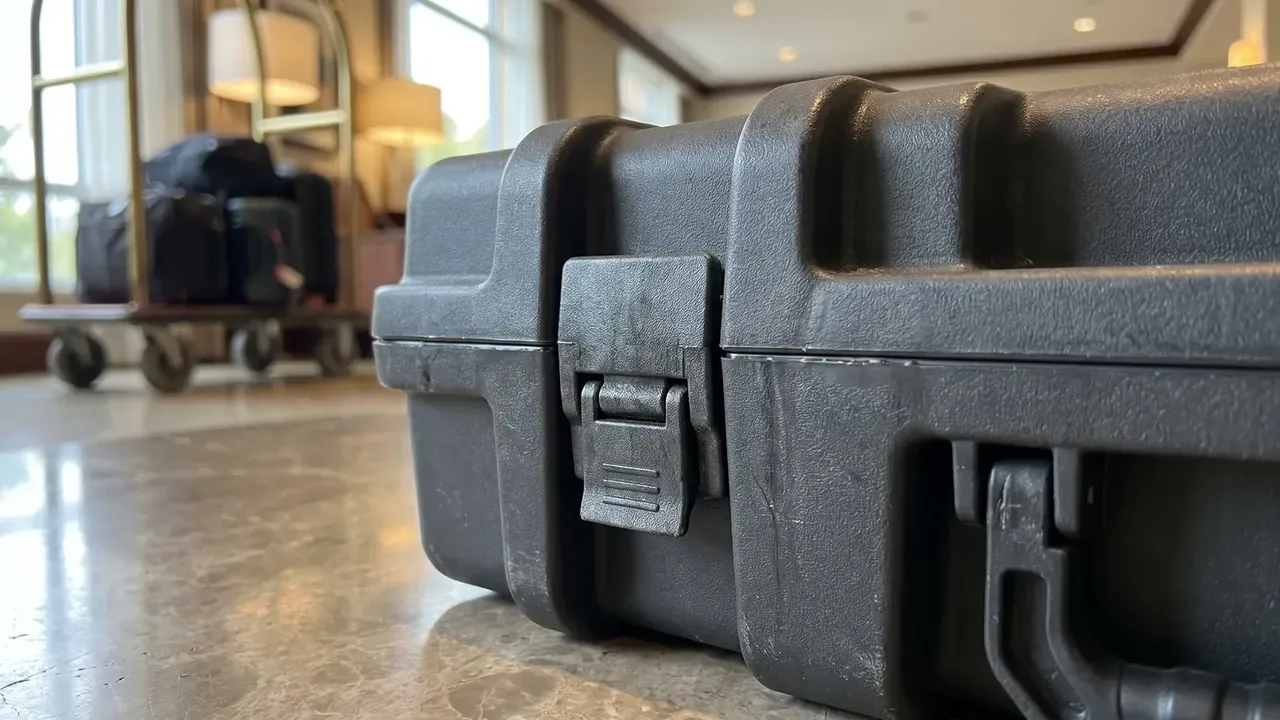
Private label comes in three depths: screen print at 600 per colour plate, hot stamp over print that needs corona treatment first, and in-mold labelling that requires an insert pocket in the tool.
Neutral packing is the other route: no marking on the body, a plain carton label, lowest cost, brandable later. The drawback is traceability: two channels fed from one batch differ only by lot number.
Mold ownership deserves its own clause. Who pays owns is not enough; storage site, transport on relocation and the return window after a line stops belong in writing. Some suppliers fold tooling into the piece price on a three-year no-transfer condition, 96,000 over 30,000 units is 3.20 each, and a 15 percent market drop in year two wipes that out.
4. Four lead-time gates
A quoted date is not one number but a chain of four gates; split them and the slow link shows.
| Gate | Starts when | Duration | Where it stalls |
|---|---|---|---|
| Sampling | Drawing and colour chip approved | 7 days | Chips mailed back and forth, sign-off slips |
| Tooling | Sample signed | 22 days | Tool steel arrival, trial queue |
| Production | Mold accepted | 28 days | Masterbatch delivery, latch matching |
| Inspection | Production finished | 1 day | Acceptance criteria agreed too late |
The four add up to 58 days; planning holds 10 days of buffer because tooling squeezes hardest. A two-cavity tool needs three trials before flash is held under 0.15 mm. Ordering before peak season means a 20-day buffer.
5. Payment terms, returns and three quote traps
Payment terms are a price lever for a hardware plastic tool box supplier: sixty days against thirty usually moves the unit price by 1.8 percent on the same box.
Returns need a written ratio: cosmetic defects commonly accepted up to 0.8 percent with whole-lot return beyond, while functional failures such as a dead latch or cracked hinge should carry zero tolerance.
Three traps recur:
- Tooling charged twice: the first quote includes the mold, then a colour change needs a new set.
- No salt-spray figure for plated parts: latches should survive 48 hours of neutral spray without white rust, not 24.
- Loose trade terms: EXW and FOB differ by inland freight and clearance, so the term belongs on the sheet.
Conclusion
Choosing a hardware plastic tool box supplier means unpacking one quotation into three cost lines and four time gates. Split the lines and you learn whether the cheaper 8 percent came out of wall thickness or plate fees; split the gates and you see which part of the 58 days has no buffer. Writing both into the contract beats two points off the price from any hardware plastic tool box supplier.
This article discusses only the container (case body) side of specifications and design intent, and does not cover any handling, loading or use of the contents.
Related Reading
- Tool box series and model index
- Trolley case sourcing: molds against case formats
- Choosing a hardware tool box by load and latch type
Related Products
- 8 Series — Gun Cases; Military Equipment Cases; Camera Equipment Cases; Drone Cases; Watch Cases; Knife Cases; First Aid Cases; Electronics Equipment Cases
- WL8-2812 PP Gun Case — model WL8-2812
- All protective cases and toolboxes: 7 series, 158 models