

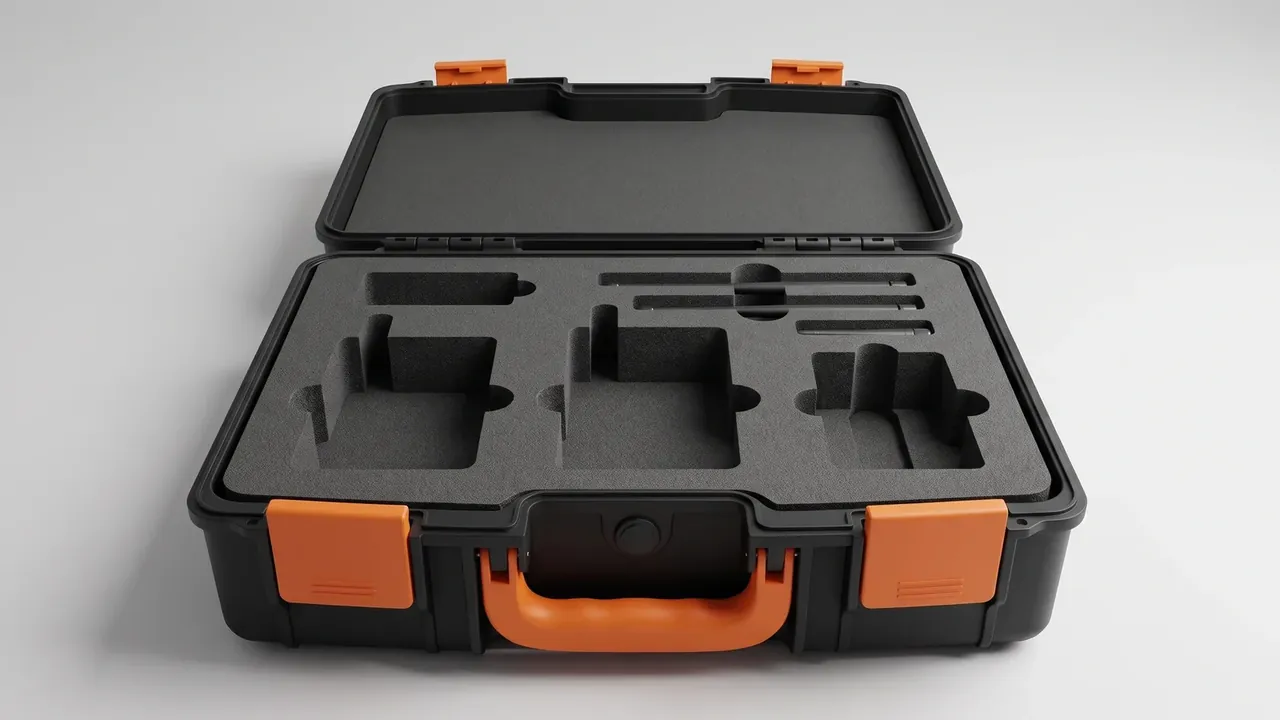
Quick answer: A custom tool box is specified backwards from the packing list: fix the cell grid and clear cell width, then the wall and ribs, then load, stacking and handle pull.
Table of contents
- Custom tool box cavity layout and divider grid
- Wall thickness and rib pattern
- Load rating and stacking limits
- Handle and latch force specifications
- Specification sheet fields and first article checks
- FAQ
1. Custom tool box cavity layout and divider grid
A custom tool box is laid out from the packing list backwards. Two bodies at 480 mm outer length differ by 12 percent in usable volume once one carries three cells and the other eight, because each divider takes 3 mm plus 1 mm of draft clearance on both flanks.
Divider choice follows how often the list changes. Moulded dividers share the body material and carry load into the base, but a new grid means a new mould. Drop-in polypropylene panels let one body serve several grids, at a 3.5 mm slot wall rather than 2.5 mm.
| Divider type | Min cell width mm | Cost to change |
|---|---|---|
| Moulded in body material | 32 | High, new mould |
| Drop-in polypropylene | 28 | Low, swap panel |
| Foam cut-out insert | 25 | Medium, new tool path |
Clear cell width bottoms out at 32 mm; below that a gloved finger cannot reach in and the box gets tipped out.
2. Wall thickness and rib pattern
For a custom tool box, 2.5 mm is the economical wall. Moving from 2.0 mm to 2.5 mm adds 22 percent mass and close to 45 percent stiffness; going to 3.0 mm adds only 18 percent while mass and cooling time keep climbing. Past 30 kg, ribs buy more than thickness.
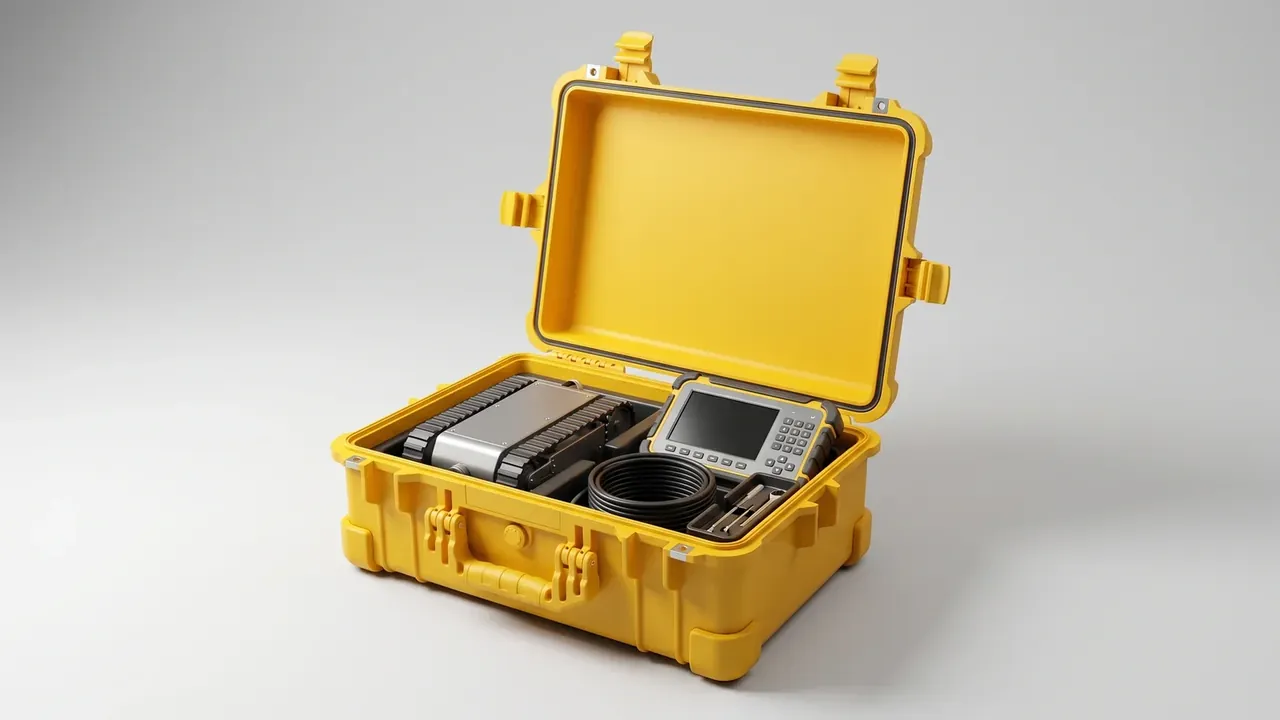
Three numbers do the work on the rib drawing: 60 mm pitch, 4 mm height, 1.5 mm root fillet. Widen the pitch past 80 mm and the panel dishes inward; take the fillet below 1 mm and the drop test cracks exactly there. Above 520 mm outer length the mould needs 650 tonnes of clamp force and a 55 second cycle.
3. Load rating and stacking limits
The load rating of a custom tool box is the weakest of three parts: base, side wall and rim. Cross ribs under the base set local pressure, side ribs set bulge, and the rim carries whatever sits above it.
| Outer length mm | Wall mm | Load kg | Stacked high |
|---|---|---|---|
| 400 to 450 | 2.2 | 15 | 6 |
| 450 to 520 | 2.5 | 25 | 5 |
| 520 to 600 | 3.0 | 40 | 4 |
Five high, the bottom box carries 100 kg across an 18 mm rim. At 40 °C polypropylene modulus falls about 25 percent and deflection doubles, so state the hold time with the load.
4. Handle and latch force specifications
The handle is the item most often left off a custom tool box sheet, yet it decides whether anyone dares lift a full box. A lift carries a dynamic factor of 1.5 to 2 plus a side pull while walking, so static pull is set at four times the loaded weight.
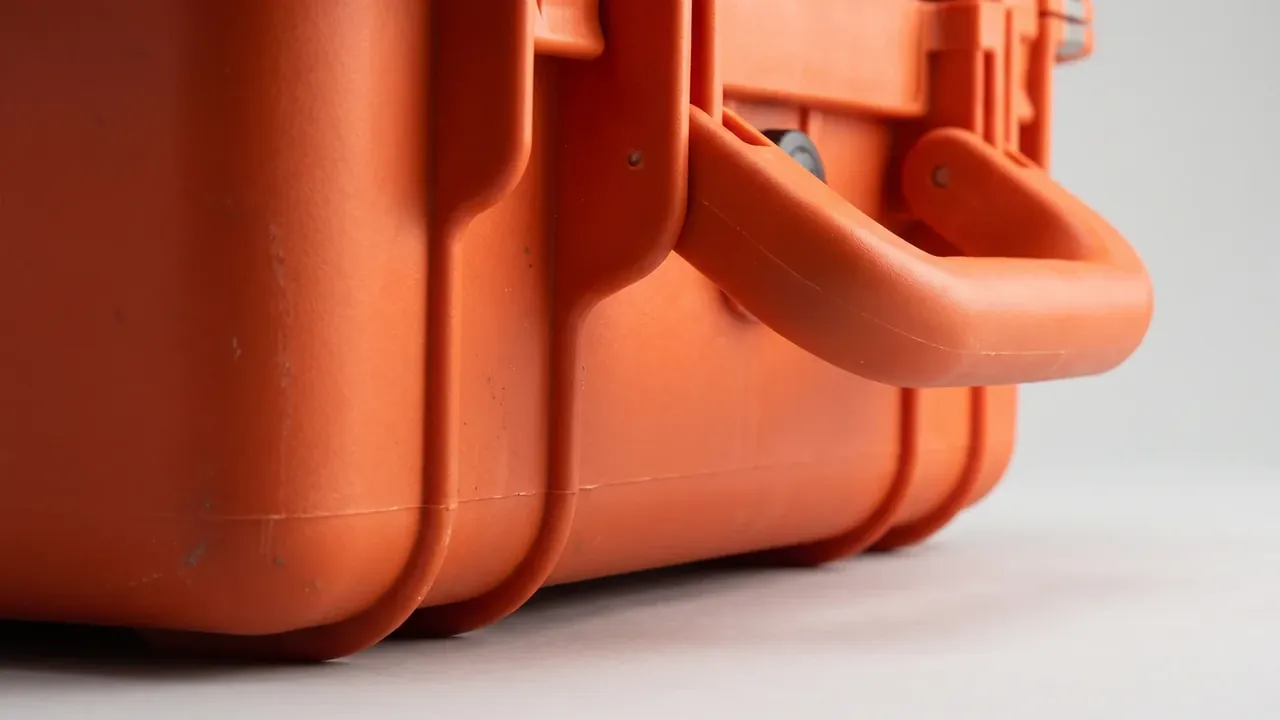
Latches share the job by count: one latch at 120 N gives 240 N across a pair, a full margin over 25 kg, and on a drop the latches pop before the body cracks. Opening force sits between 60 N and 90 N. The hinge pin is the only part needing salt spray, and 48 hours without white rust is the bar.
5. Specification sheet fields and first article checks
One page is enough for a custom tool box sheet, but every field must be measurable; sturdy or comfortable gives an inspector nothing to judge. Cavity size carries plus or minus 1.0 mm, wall a 0.15 mm minus deviation read on an ultrasonic gauge, stacking five high for 48 hours under 2.0 mm.
First article checks come down to three actions: weigh it, gauge the cavity, carry it loaded for 20 metres. A weight more than 3 percent off theory means the wall has drifted, and whitening at the handle root sends the rib layout back for revision.
Conclusion
Grid, wall, ribs, load and handle form one chain: the grid sets the cavity, the cavity sets the outer size, and the outer size with the load sets the wall that the handle must then survive. Ask about the packing list first and the price last, and the custom tool box will hold up.
This article discusses only the container (case body) side of specifications and design intent, and does not cover any handling, loading or use of the contents.
Related Reading
- How a tool box divider grid is laid out
- Common problems with lids, latches and hinges
- Choosing a wheeled tool case
- Hardware packing scenarios for tool boxes
Related Products
- 8 Series — Gun Cases; Military Equipment Cases; Camera Equipment Cases; Drone Cases; Watch Cases; Knife Cases; First Aid Cases; Electronics Equipment Cases
- WL8-2812 PP Gun Case — model WL8-2812
- All protective cases and toolboxes: 7 series, 158 models