

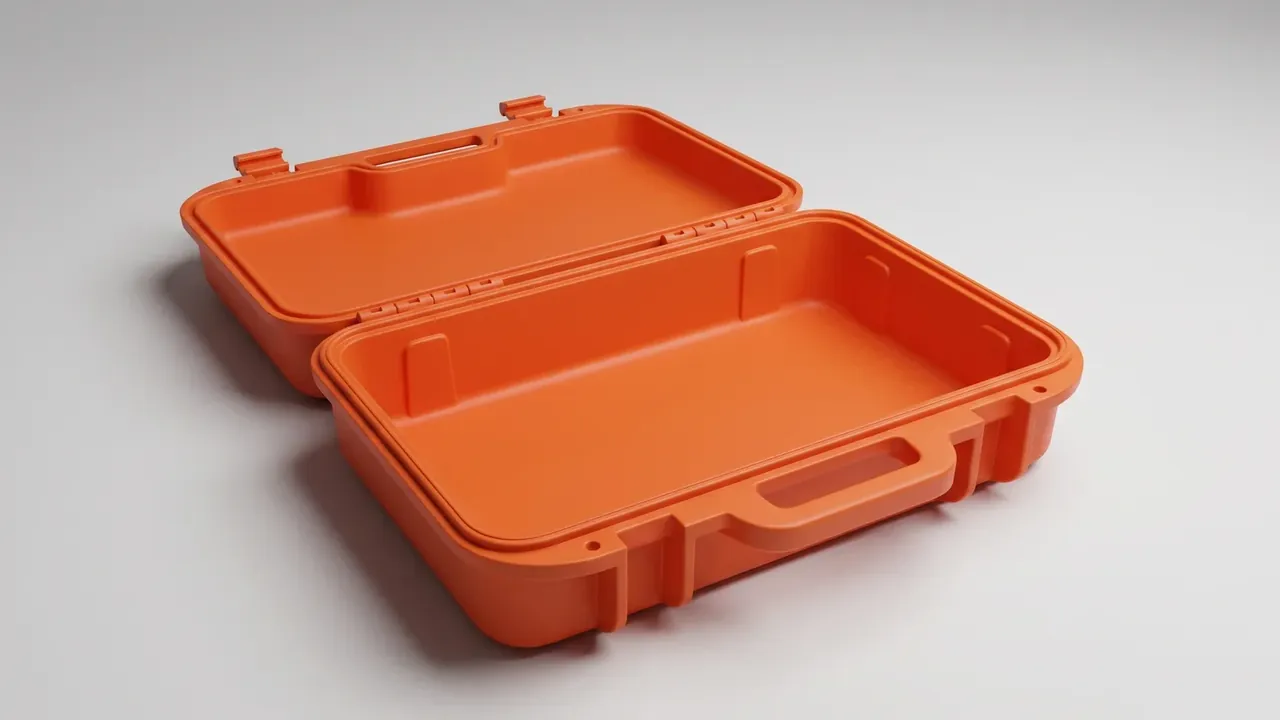
Quick answer: A portable tool case earns its place by matching the rhythm of the site: fast access on repair work, no mixed fasteners on installation, one-handed opening on inspection routes.
Table of contents
- How a Portable Tool Case Splits Three Field Roles
- Repair Bays and the Order of Access
- Installation Sites and Mixed Fasteners
- Inspection Routes: Meters and Log Sheets
- Shared Hardware and the Build Sheet
- FAQ
1. How a Portable Tool Case Splits Three Field Roles
The same box meets three rhythms: a repair bay wants a part within twelve seconds, an installation site wants sizes that cannot be confused, an inspection route wants one-handed opening through a work glove. A portable tool case therefore carries three layer plans, and a compromise version suits none of them.
Empty weight splits the same way: about 3.6 kg for repair, 4.8 kg for installation, 2.4 kg for inspection. Every extra kilogram is paid for by a crew climbing stairs all day.
| Site | Load per trip | Openings per shift | Access pattern | Structural focus |
|---|---|---|---|---|
| Repair | 12 to 18 kg | over 40 | part out in 12 seconds | lid pouch, pull-out tray |
| Installation | 15 to 25 kg | around 15 | kits by work stage | divided and labelled cells |
| Inspection | 5 to 8 kg | 6 to 10 | one-handed opening | single latch, upright meters |
2. Repair Bays and the Order of Access
A repair bay repeats one loop: open, take one item, close, work. A portable tool case puts the six most-used items where the lid falls open and ranks the rest by frequency, which takes a single pick from 45 seconds to 12 seconds in most shops.
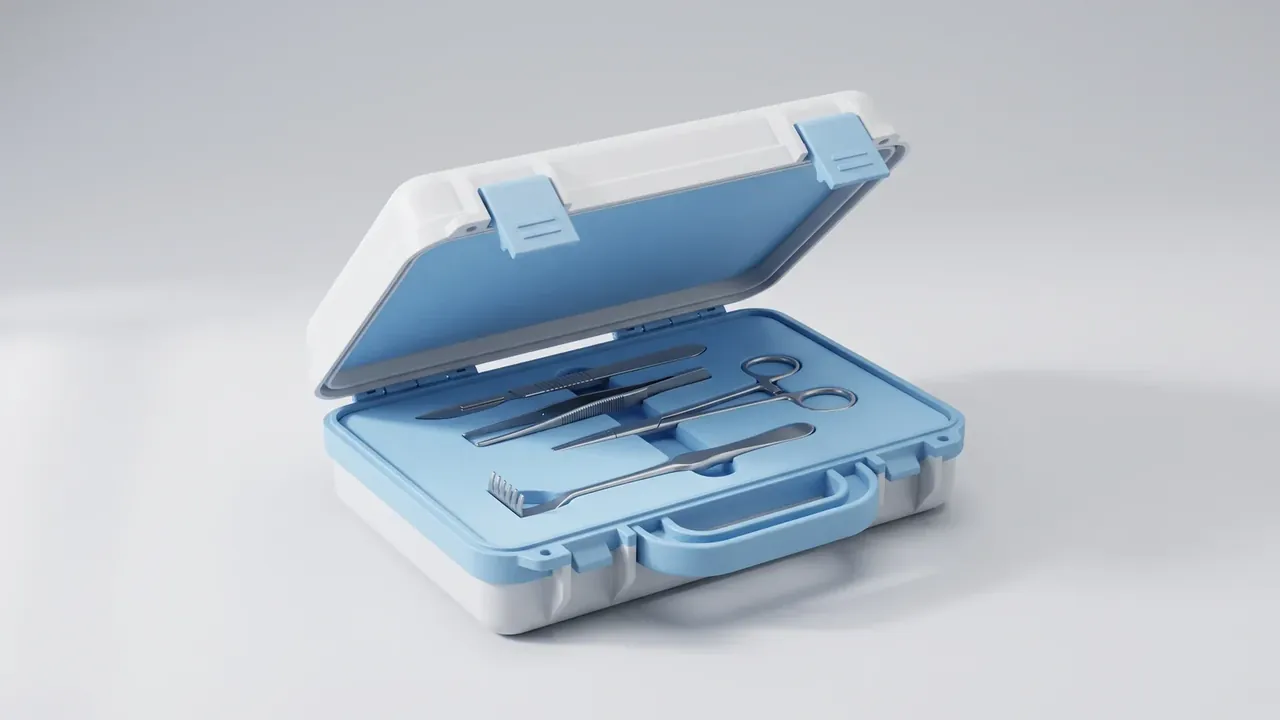
An elastic pouch in the lid holds screwdrivers and hex keys, a pull-out tray holds sockets and bits, and an open well takes bulky items. The tray runs on 8 mm PP hollow sheet, which survives twenty thousand pulls without delaminating in damp air.
3. Installation Sites and Mixed Fasteners
Installation sites fear mixed size and mixed batch: an M6 bolt in the M8 cell is found halfway through a run, and the rework costs more than a second box. Removable dividers hold each cell at 80 mm square, one size per cell, closed again after every pick.
Labels go on the cell floor with size and quantity, and a master list inside the lid turns a shortage into something visible at the end of the shift; matt faces survive oily hands.
4. Inspection Routes: Meters and Log Sheets
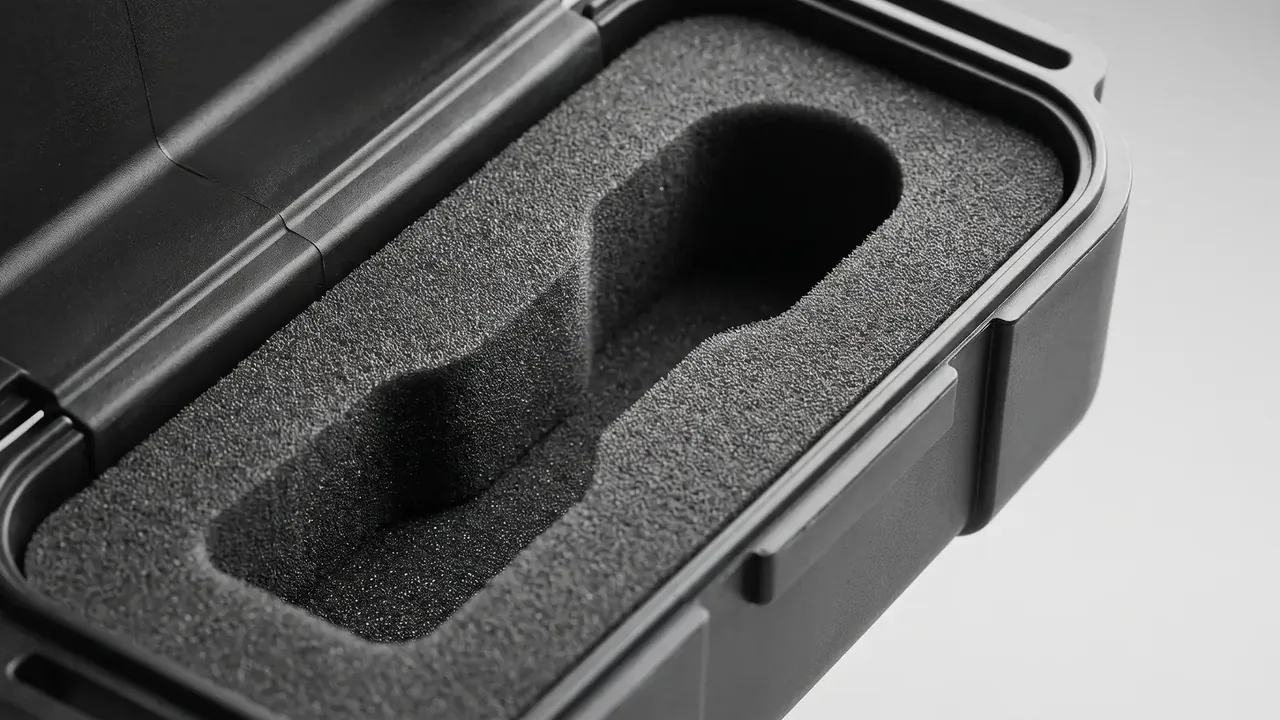
An inspection route often runs about 6.8 km, and the box rides a scooter rack the whole way. Meters suffer from sustained low-amplitude vibration rather than one hard drop, so this version of the portable tool case swaps foam for EVA upright slots, leaving screen and probe free of load.
Log sheets hang in a waterproof pouch inside the lid, and the pen gets its own hole. The temperature band is set for vehicle duty, minus 15 to 55 C, with no distortion of the shell and no embrittlement at the latch.
5. Shared Hardware and the Build Sheet
Three parts are shared and are the first to go when a quote is squeezed: the latch, the handle, the hinge. A single latch suits inspection, a double latch suits installation, and a metal hinge pin holds the gap under 0.3 mm after twenty thousand cycles.
A build sheet runs four lines: shell, liner, labels, spares pouch. Size the shell from the weight band, cut the liner to the tools, and the portable tool case can be ordered without a verbal description.
| Check | Target | Method | Cost of skipping |
|---|---|---|---|
| Pick time | one item in 12 seconds | stopwatch, three picks | crew switches to an open tote |
| Cell labels | 8 mm characters, matt face | write with oily hands | sizes guessed, wrong bolt fitted |
| Hinge gap | under 0.3 mm at 20,000 cycles | fatigue rig, feeler gauge | lid sags, seal misaligns |
Conclusion
A portable tool case is judged by how the work flows, not by how many compartments it has: one less reach at the bench, one less rework on site, one less lid opened on the route. Set the site type first, the layer count second, then run the checks at acceptance, and the portable tool case arrives matched to the job it was bought for.
This article discusses only the container (case body) side of specifications and design intent, and does not cover any handling, loading or use of the contents.
Related Reading
- Tool box organizer applications
- Vehicle tool case applications
- Rolling tool case applications
- Hardware tool box applications
Related Products
- 8 Series — Gun Cases; Military Equipment Cases; Camera Equipment Cases; Drone Cases; Watch Cases; Knife Cases; First Aid Cases; Electronics Equipment Cases
- WL8-2812 PP Gun Case — model WL8-2812
- All protective cases and toolboxes: 7 series, 158 models