

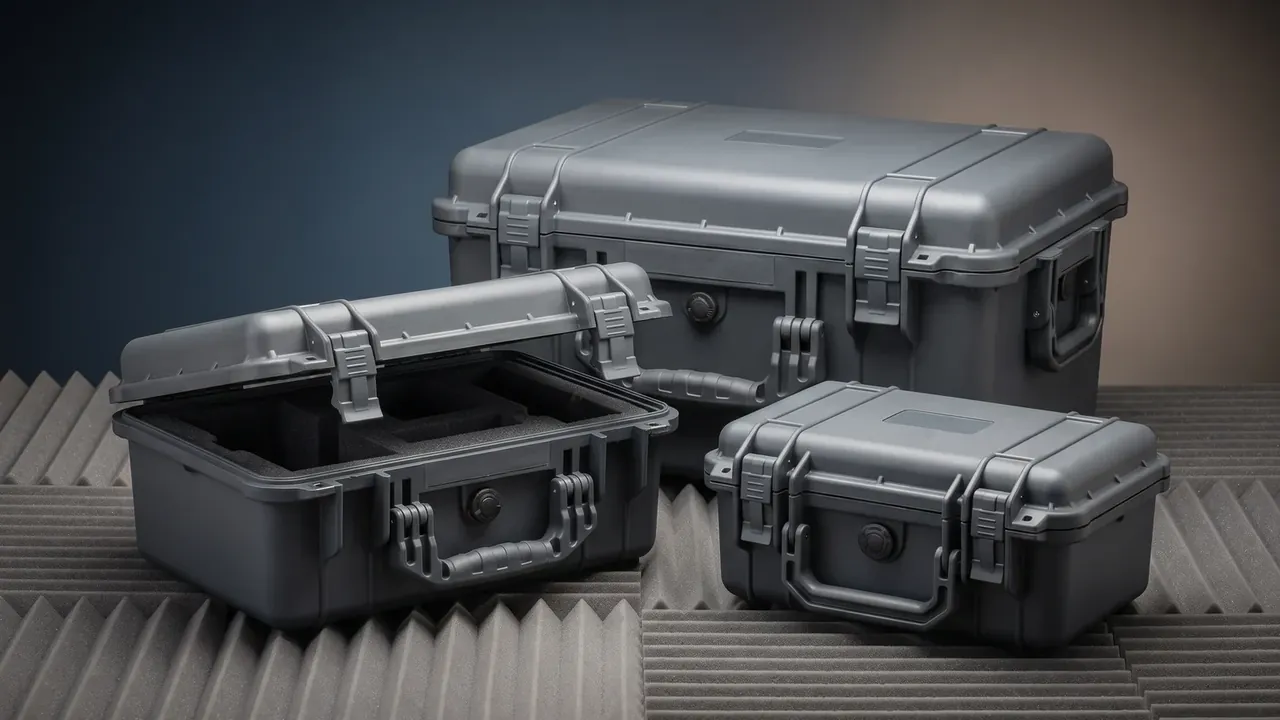
Quick answer: A large capacity plastic tool box starts near 60 litres of cavity and a 40 kg static load. Most demand sits in shop floor spares, field and vehicle transfer, warehouse picking, and kit delivery. Fix the tier, then the base ribbing, liner and wheels.
Table of contents
- Capacity Tiers and How to Read Them
- Shop Floor and Line-Side Spares
- Field Use and Vehicle Transfer
- Warehouse Picking and Stacking
- Liners and Options by Scenario
- FAQ
1. Capacity Tiers and How to Read Them
Three numbers set the tier: cavity volume, static load and opening width. A large capacity plastic tool box begins where the body needs two hands or wheels, and past 130 litres the base load path changes. Nominal volume runs 8 to 12 percent above the cavity, so tier on measurement.
| Tier | Cavity reference | Static load | Usual form |
|---|---|---|---|
| 60 to 75 L | 620×420×280 mm | 40 kg | two handles |
| 76 to 95 L | 720×450×310 mm | 50 kg | wheels optional |
| 96 to 130 L | 780×480×330 mm | 60 kg | four wheels |
The base takes the load: above 96 litres come grid ribs, 5.5 mm corners and a 3 mm PP floor plate. A body over 90 litres needs 1600 tonnes of clamping force, or the weld line lands on the corner.
2. Shop Floor and Line-Side Spares
A repair bay wants one case, one kit. A 780×480×330 mm cavity splits into four bays with three 8 mm PP dividers, and 28 kg rolls on 50 mm wheels.
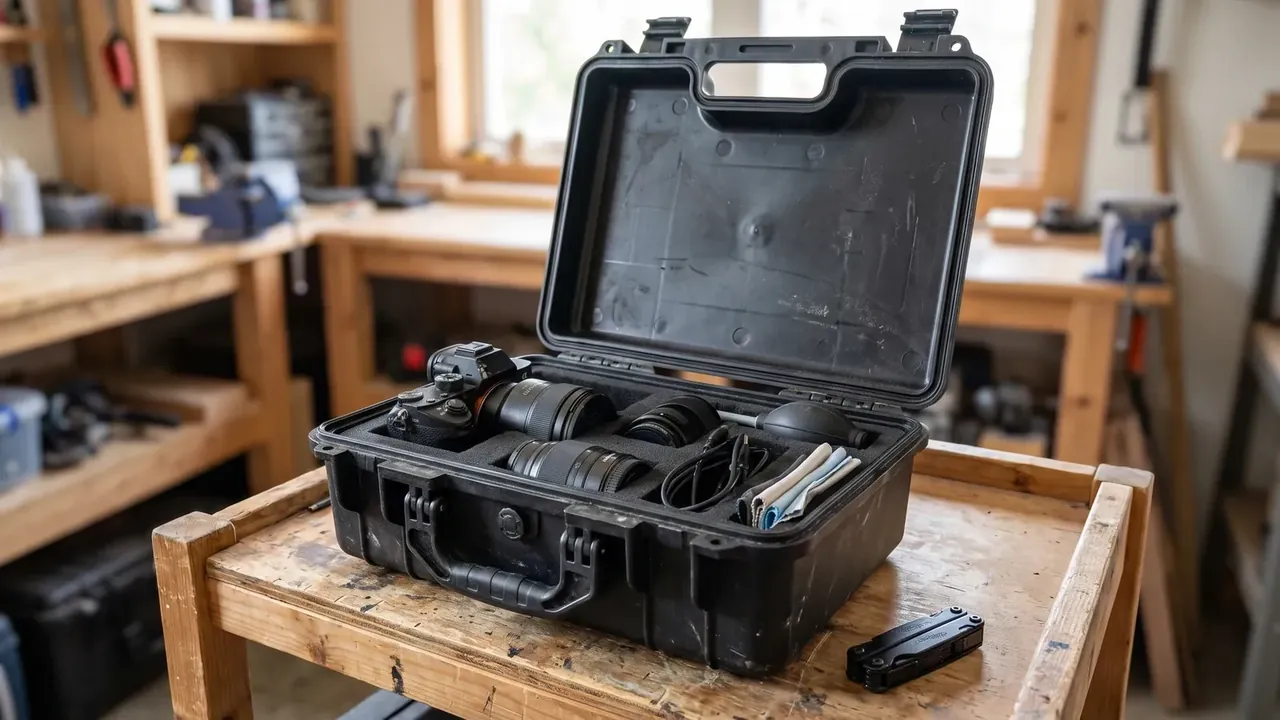
Line-side duty is the opening count. Twelve a day over 300 days is 18,000 cycles in five years, so the nylon catch is tested to 20,000 and must hold 70 percent of its closing force. A full-length hinge pin keeps the lid gap within 0.8 mm.
3. Field Use and Vehicle Transfer
A large capacity plastic tool box in a vehicle must not move: a 40 mm base lip and a 30 mm gap filled with rubber mat hold movement under 20 mm in a turn. Service runs from −20 °C to 60 °C, and PP loses about 30 percent of its notched impact strength in the cold, so corner radii stay above 8 mm.
Sealing separates the ratings: IP65 with a 6 mm silicone gasket at 30 percent compression sheds dust and rain, while IP67 needs 45 percent and two extra seconds per opening.
Drop comes third: 28 kg from 1.0 m on six faces, three edges and a corner, ten drops, with no crack or bent bracket. Four M6 inserts at 8 N·m hold where two screws loosen by the third drop.
4. Warehouse Picking and Stacking
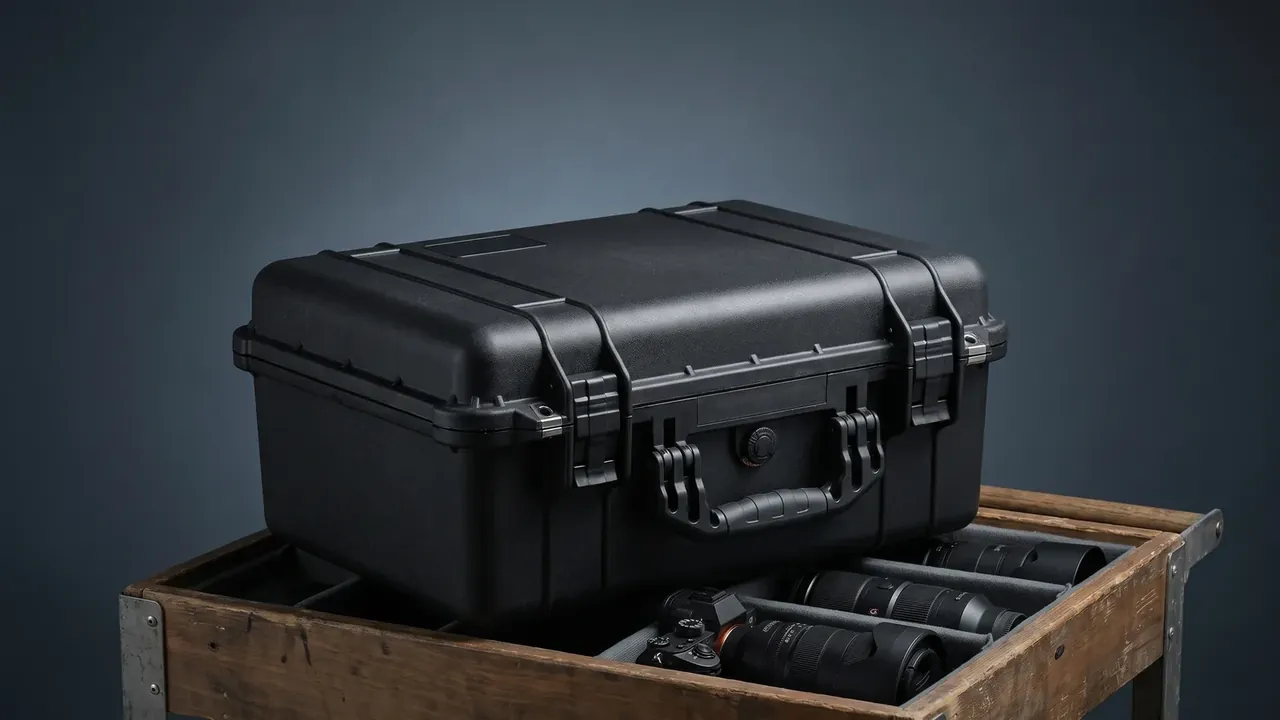
Stacking a large capacity plastic tool box is about the bottom case. At 45 kg and five high the base carries 180 kg, and lid flatness error above 1.2 mm lets the stack lean; four 6 mm locating recesses keep the fifth tier aligned.
Pallet maths sets throughput. A 1200×1000 mm pallet takes six cases per layer on a 780×480 mm footprint, five layers to 30 units and 1.4 tonnes. A 720×450 mm footprint fits eight but carries only 50 kg each, losing a tenth of the load at four layers.
5. Liners and Options by Scenario
The liner decides whether a cavity works as compartments. Four options for a 96 litre body run from 18 to 95 yuan and differ more in life than in price.
| Liner | Thickness | Best for |
|---|---|---|
| EPE foam | 30 mm | short transfers |
| EVA foam | 20 mm | daily shop use |
| ABS tray | 1.5 mm | fixed part numbers |
| PP dividers | 8 mm | mixed loads |
Wheels earn their cost: a 50 mm PP wheel wears 0.6 mm over 5 km at 45 kg, a 63 mm rubber wheel 0.3 mm but needs 0.5 mm more base. Handles are tested at 1.5 times rated load.
Two keyed latches beat one, with a 6 mm padlock hole and an 80×40 mm print area that survives 50 ethanol wipes. These small items decide how long a large capacity plastic tool box lasts.
Conclusion
Scenario differences end in four measurable places: the tier sets base ribbing, the load sets wall thickness and tonnage, the opening width decides usability, and the liner and wheels decide service life. Sized for its job, a large capacity plastic tool box closes squarely, rolls straight and keeps its markings.
This article discusses only the container (case body) side of specifications and design intent, and does not cover any handling, loading or use of the contents.
Related Reading
- Large protective cases by scenario
- Wheeled tool cases in service
- Hardware tool box applications
- Stackable container specifications
Related Products
- 8 Series — Gun Cases; Military Equipment Cases; Camera Equipment Cases; Drone Cases; Watch Cases; Knife Cases; First Aid Cases; Electronics Equipment Cases
- WL8-2812 PP Gun Case — model WL8-2812
- All protective cases and toolboxes: 7 series, 158 models