

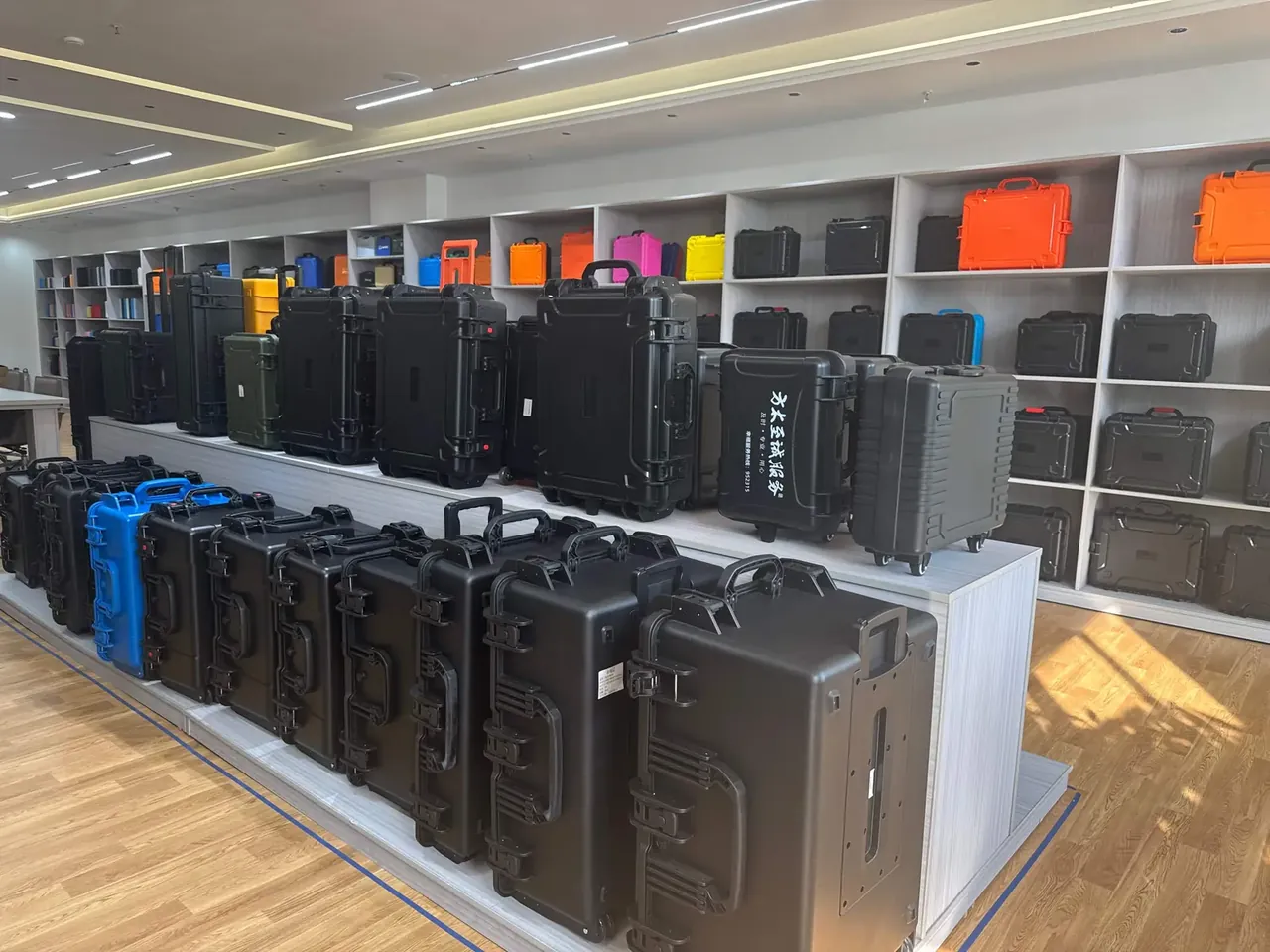
Quick answer: Large Protective Case use splits three ways by handling: a machine lowered in, long stock slid in, or bulk parts stacked in. Leave 30 to 50 mm per side around a machine, add a mid support every 600 mm under long stock, and keep a two-person case under 50 kg in total.
Table of contents
- Sorting Large Protective Case Scenarios by Handling
- Machines and Skid-Mounted Sets: Fit Allowance
- Long Stock and Oversize Parts: Dividing the Cavity
- Crew Lifting: Handles and Weight Split
- Truck Loading and Yard Storage Mix
- FAQ
1. Sorting Large Protective Case Scenarios by Handling
One outside size can serve a lab or a site, and the two are different products. A Large Protective Case is decided by three questions: which face the load enters, how often it comes out, and how many people lift it.
A machine lowered in needs a lid that comes off whole; long stock needs an end door with a 40 mm return; side access needs a 110 degree hinge, 80 mm wider than the widest part.
| Scenario | Length | Opening | Handling |
|---|---|---|---|
| Machine | 800–1200 mm | lid off | two people |
| Long stock | 1500–2100 mm | end door | four people |
| Bulk parts | 1000–1200 mm | side door | castors |
| Field service | 700–900 mm | top lid | two people |
| Storage | 1000–1500 mm | bolted lid | forklift |
2. Machines and Skid-Mounted Sets: Fit Allowance
A Large Protective Case takes allowance per side, not one scale factor: 30 to 50 mm at the sides for gloves, 60 mm at the top, 40 mm at the base for fork tines.
Feet must land on structure: base plates moulded into the case, M8 bolts at four points, 100 by 100 by 3 mm steel. On bare plastic the base wears through within a year.
A high centre of gravity needs a step: drop the base 50 mm under the machine so it sits below 0.45 of case height and stops tipping when lifted.
3. Long Stock and Oversize Parts: Dividing the Cavity
Two-metre stock cannot hang from its ends: a Large Protective Case for long stock leaves 50 mm at each end and adds a 30 mm saddle support every 600 mm.
Pitch sets sag: a 2000 mm length of 8 kg sags 1.5 mm at 600 mm, 12 mm at 1200 mm. A mid partition splits a 2100 mm cavity into two 950 mm bays.
4. Crew Lifting: Handles and Weight Split
Crew size follows 25 kg per person: two to 50 kg, four to 100 kg, castors above that. The limit is wrist load in a turn, not fitness.
Handles on a Large Protective Case sit a quarter of the length in from each end, so the centre of gravity falls between two pairs of hands; the inner pair of four stays within 800 mm. A 30 mm recess with 35 mm of clearance takes a gloved hand.
Lifting out of step multiplies load: raise one side 100 mm first and the far point of an 80 kg case peaks at 1.6 times its share.
| Total | Crew | Per person | Handles |
|---|---|---|---|
| 30 kg | 2 | 15 kg | quarter points |
| 50 kg | 2 | 25 kg | quarter points |
| 80 kg | 4 | 20 kg | quarter plus mid |
| 100 kg | 4 | 25 kg | fifth points |
| 150 kg | forklift | none | 200 by 60 mm |
5. Truck Loading and Yard Storage Mix
Pallets come first, cases second: a 1200 by 1000 mm pallet holds two 1000 by 600 mm cases exactly, 600 plus 600 across the width.
| Truck | Pallets per row | Pallets | Cases |
|---|---|---|---|
| 4.2 m van | 2 | 6 | 12 |
| 6.8 m van | 2 | 10 | 20 |
| 9.6 m van | 2 | 15 | 30 |
| 13.5 m van | 2 | 22 | 44 |
| 17.5 m flat | 3 | 30 | 60 |
A 13.5 m body carries 44 cases at 3.5 tonnes, so volume runs out before the 28 tonne limit. Fork pockets sit 200 by 60 mm, 80 mm up.
Yard stacking stops at two loaded tiers, lid boss into base recess. Outdoors, PP chalks after about 12 months of sun, so a Large Protective Case needs a cover.
Conclusion
Three routes cover most work: machines by allowance, long stock by supports, bulk parts by handles and pallets. Choose the route first and a Large Protective Case needs no rework.
This article discusses only the container (case body) side of specifications and design intent, and does not cover any handling, loading or use of the contents.
Related Reading
- How to Choose a Transit Case
- Stacking and Pallet Planning
- Protective Case Transport Marking: Handling Pictograms and…
- Packing and Truck Loading Precautions
Related Products
- 8 Series — Gun Cases; Military Equipment Cases; Camera Equipment Cases; Drone Cases; Watch Cases; Knife Cases; First Aid Cases; Electronics Equipment Cases
- WL8-2812 PP Gun Case — model WL8-2812
- All protective cases and toolboxes: 7 series, 158 models