

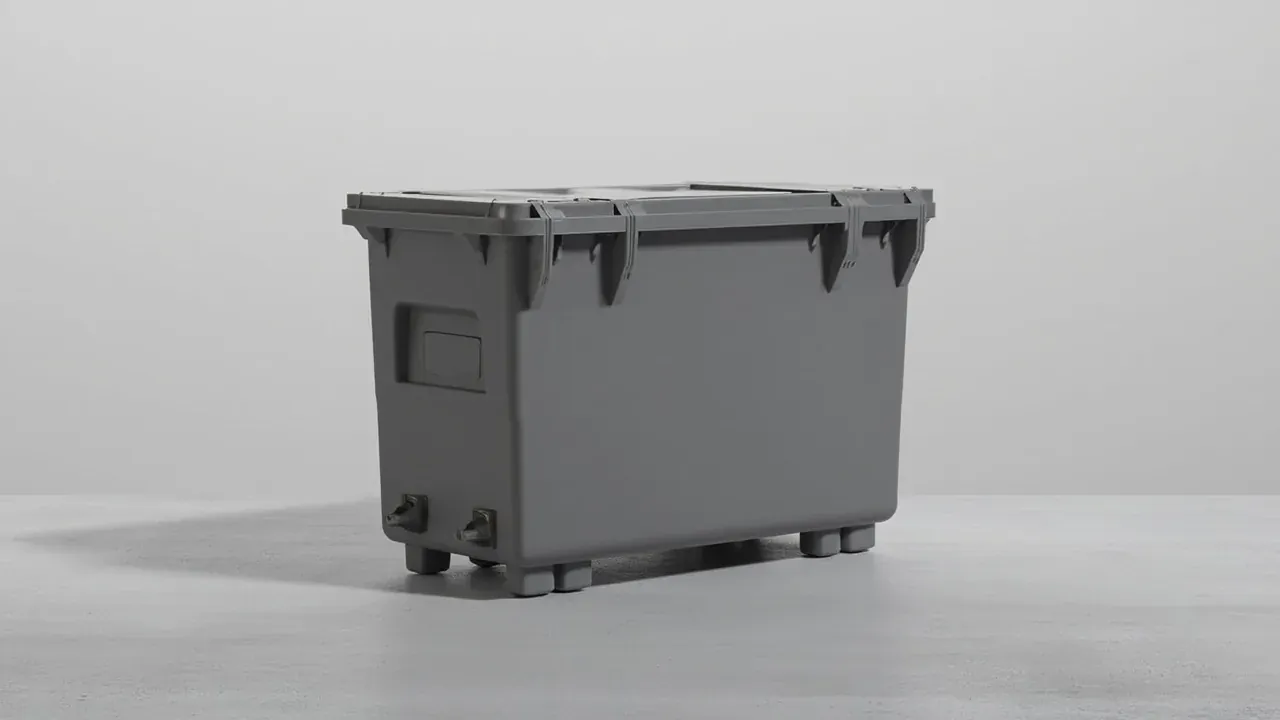
Quick answer: A stackable container holds a stacking rating only when three quantities are fixed together at once: contact pressure under the bottom layer, constraint between layers, and the stack centre of gravity. A usable sheet states the allowable static load at a named temperature, duration and deflection, names the contact area basis, and names the support surface the count assumes. Remove any one of these and the published figure is only an estimate.
Table of contents
- Three variables in stacking design: load, interlock, gravity
- Interlock geometry between lid and base
- Reading static load and creep values
- Checking the layer count
- Stacking fields a specification should carry
- FAQ
1. Three variables in stacking design: load, interlock, gravity
Stacking capacity is not one load figure but three variables resolved together. Wall thickness serves the first alone. A lid and base with no shape match leave the second at zero, and a bottom case set off centre spends the margin of both.
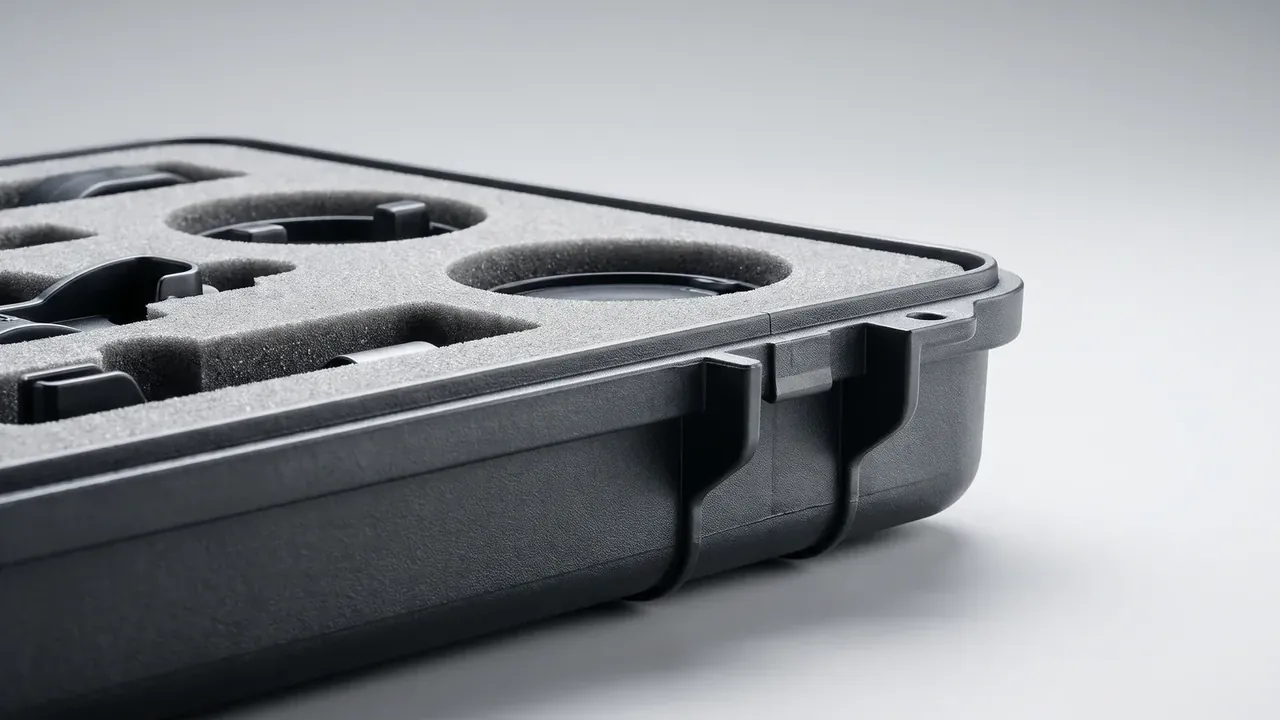
The bearing face sits on the rim of a stackable container. Here the rim is a stepped edge and only that narrow land meets the base above, while a relief cut for the catch interrupts the ring. A wider cut shortens the perimeter and raises pressure at the same load.
2. Interlock geometry between lid and base
A stackable container interlocks through three dimensions: lid boss height, base recess depth, and clearance per side. Together they set how far a layer can shift horizontally, a different question from how many layers may be stacked.
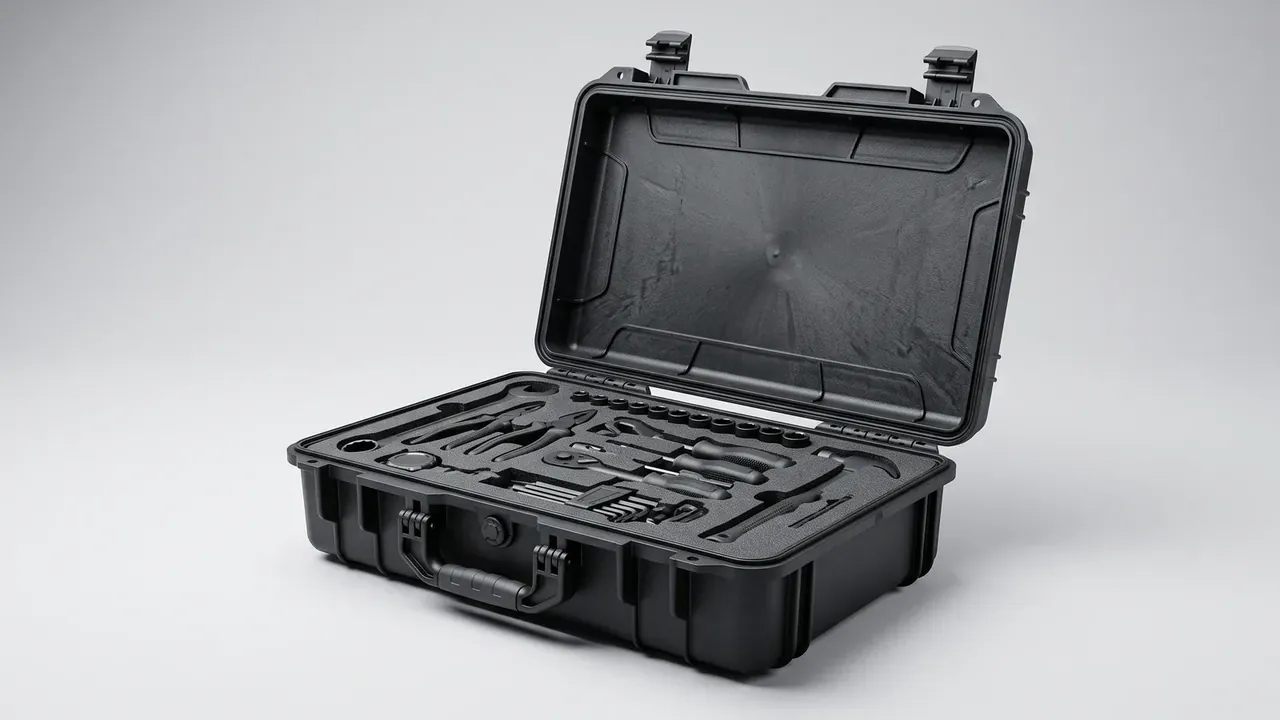
The stackable container base boss is not a part to move freely. In the photograph one moulded tray runs almost to the wall, so shifting the boss would force a new mould and the liner can only fill the space left. Boss height follows the largest transit displacement plus a wear allowance, and clearance is quoted per side or total, never bare.
3. Reading static load and creep values
A stackable container static load means nothing without temperature, duration and permitted deflection. Change one and two suppliers stop being comparable; a short-term test figure used as a warehouse value is the commonest misreading here.
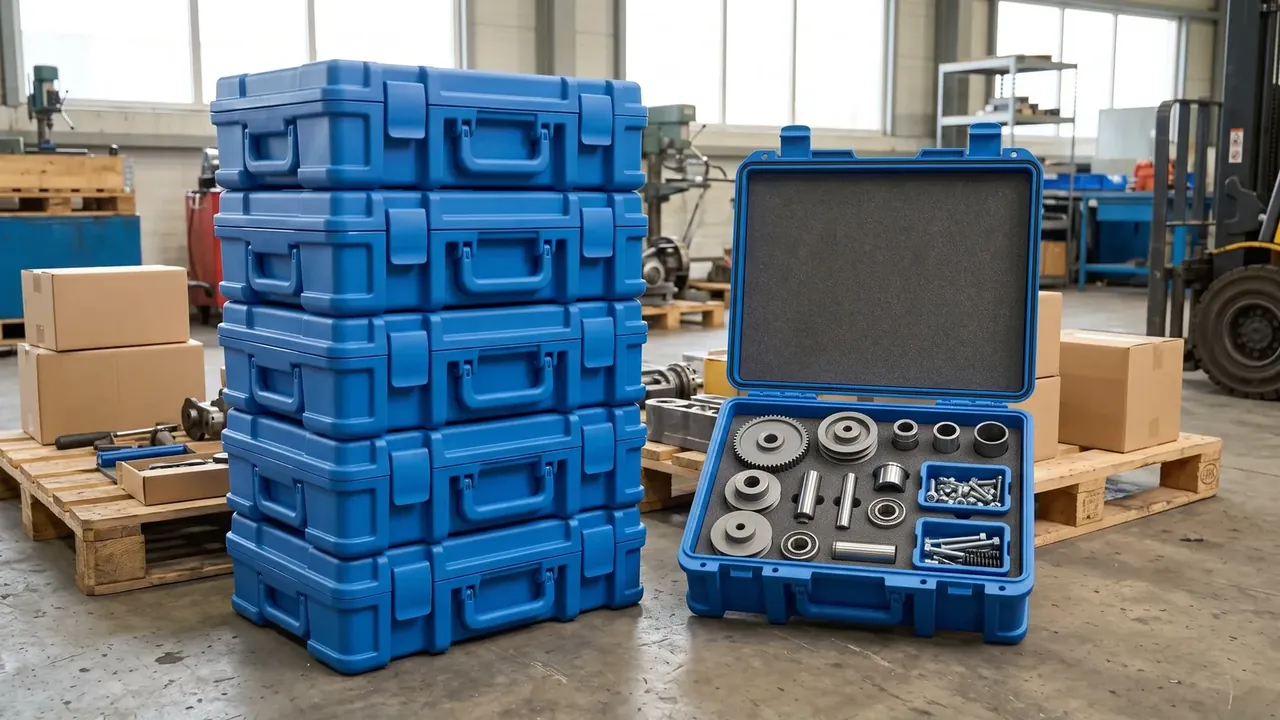
A press test runs hours; warehouse stacking runs months. Plastic creeps under standing load, quickly then slowly, so conversion needs a creep curve rather than a straight line. Five stackable containers stand directly on the floor in the photograph, so the lowest carries four; area comes from the feet, not the footprint, and a pallet deducts for board gaps.
4. Checking the layer count
The stackable container layer count reduces to one inequality: pressure at the bottom must stay below the allowable pressure for the stated temperature and duration.
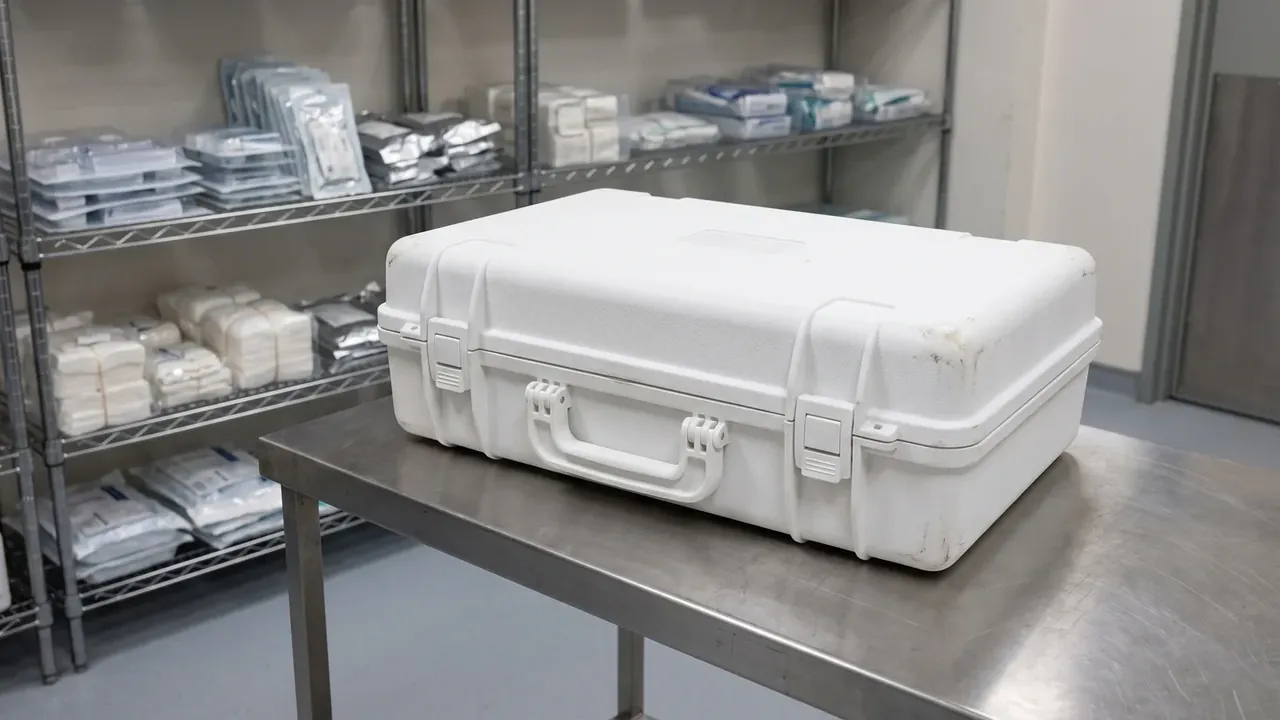
Measure before calculating. The case shown sits closed on a bench, its folding handle and two catches carrying no load, and corner scuffs show that corners touch first, so a worn pad gives less area than the drawing.
- Gross weight at its permitted maximum.
- Area as the smaller of feet or rim land.
- Layers above multiplied by gross weight.
- Allowable pressure with its three qualifiers.
- Divide, round down, drop one tier.
On a ramp, a vehicle or a pallet, drop one more tier.
5. Stacking fields a specification should carry
A stackable container sheet should let a reader run the check unaided; eight fields suffice.
| Field | Unit | Entry must state |
|---|---|---|
| Allowable static load | kg | Temperature, duration, deflection |
| Case weight | kg | Same build as the load |
| Contact area | cm² | Feet or rim land |
| Lid boss height | mm | From the highest point |
| Base recess depth | mm | Same datum as the boss |
| Clearance | mm | Per side or total |
| Layer count | tiers | Support surface, load spread |
| Permitted deflection | mm | Measuring point |
Ask of any figure: at what temperature, for how long, with what deflection, over which surface. Two of four answers make a row decoration.
Conclusion
Confirm the qualifiers behind the load, confirm how area was measured, divide bottom pressure by allowable pressure, then deduct margin for the support surface. A stackable container figure without its basis is not yet a figure.
This article covers container-side specifications and design implications only.
Related Reading
- Why stackable containers collapse, and how a stack is diagnosed
- Load ratings, wall thickness and reinforcement in heavy-duty cases
- Specialized Shipping and Storage Container: The Custom Route
- Military Rotomolded Case: Adapting Rotationally Molded Cas…
Related Products
- 8 Series — Gun Cases; Military Equipment Cases; Camera Equipment Cases; Drone Cases; Watch Cases; Knife Cases; First Aid Cases; Electronics Equipment Cases
- WL8-2812 PP Gun Case — model WL8-2812
- All protective cases and toolboxes: 7 series, 158 models