

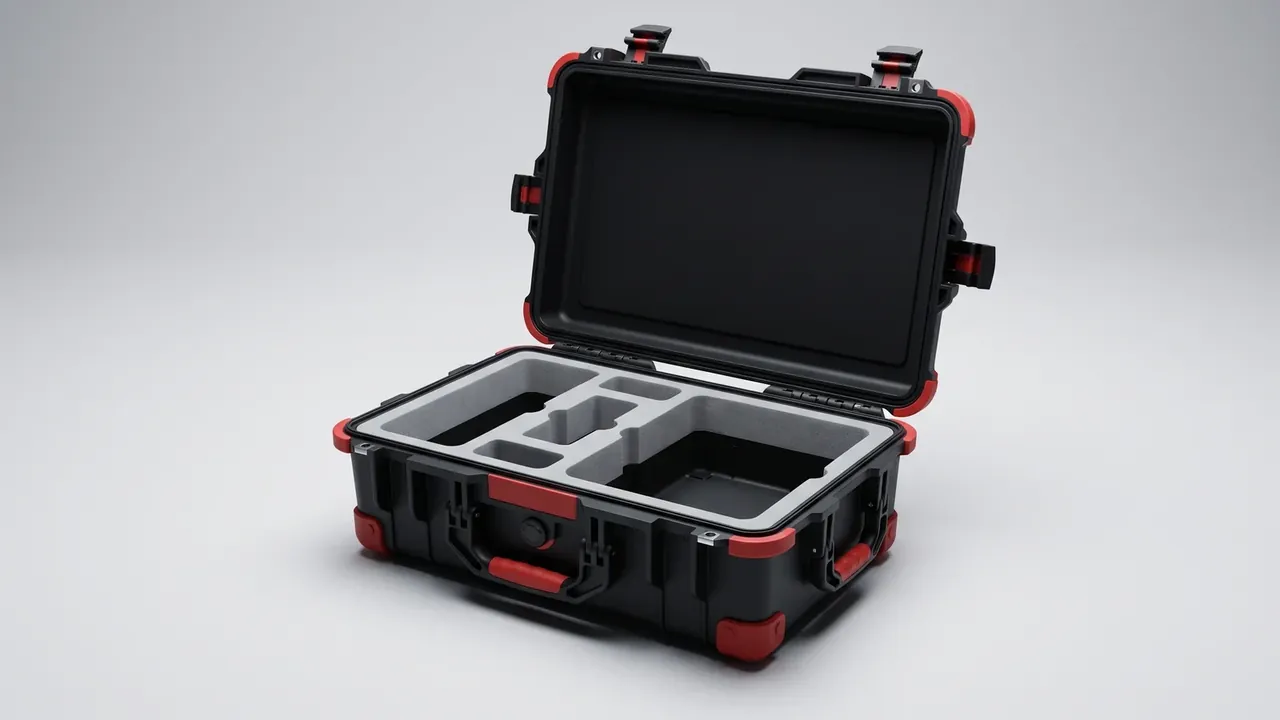
Quick answer: A mortuary transfer case seals only when three numbers agree: 25%–30% gasket compression, a 250 kg load rating and a shell rigid enough for a 1.2 m drop.
Table of contents
- Two Sealing Barriers on a Mortuary Transfer Case
- Load Rating and the Ergonomics of Lifting
- Cleaning Chemistry and Surface Finish
- What the Transport Rules Ask of the Shell
- Dimensions, Casters and Loading Fit
- FAQ
1. Two Sealing Barriers on a Mortuary Transfer Case
A seal is not one strip of rubber. A mortuary transfer case moves from a 4 °C cold room to a 35 °C apron, a 30 °C swing in pressure and humidity no single gasket absorbs alone.
The first barrier is the primary gasket, silicone or EPDM, 8 mm cord, compressed 25%–30% at closure. Below 20% it cannot spring back through a cold swing and opens a 0.2 mm gap; above 35% the 180 N closing force wears the latches first.
The second is a 3 mm labyrinth rib on the lid edge, offset against the body groove. Liquid clearing the gasket still travels an 18 mm folded path, and that path holds at a 30° tilt.
A 0.6 mm vent membrane between them opens at 15 kPa and closes below 3 kPa. Ground pressure at a high-altitude airport falls to about 65 kPa, and without the vent that difference lifts the gasket.
Leak testing runs 20 kPa for 3 minutes at 0.5 kPa drop, 0.8 kPa after a wash-down. Water on the sealing face freezes in 10 minutes at -20 °C and lifts the gasket 0.3 mm.
2. Load Rating and the Ergonomics of Lifting
Load is a structural limit and a human one. The rating is 250 kg, covering the common 200–300 kg band, with 6 ribs on the long underside, 12 mm tall and 8 mm wide.
Ribs running the full length and tightening to 4 within 150 mm of each end hold deflection to 3 mm after 24 hours at full load; short cross ribs reach 9 mm and open a gap under the tray.
Four corner handles are rated 75 kg each, 300 kg in total and a 20% margin, on a through-bolted steel core in a PP overmould with M8 bolts at 12 N·m. Clearance is 35 mm, enough for a full grip in 3 mm gloves.
3. Cleaning Chemistry and Surface Finish
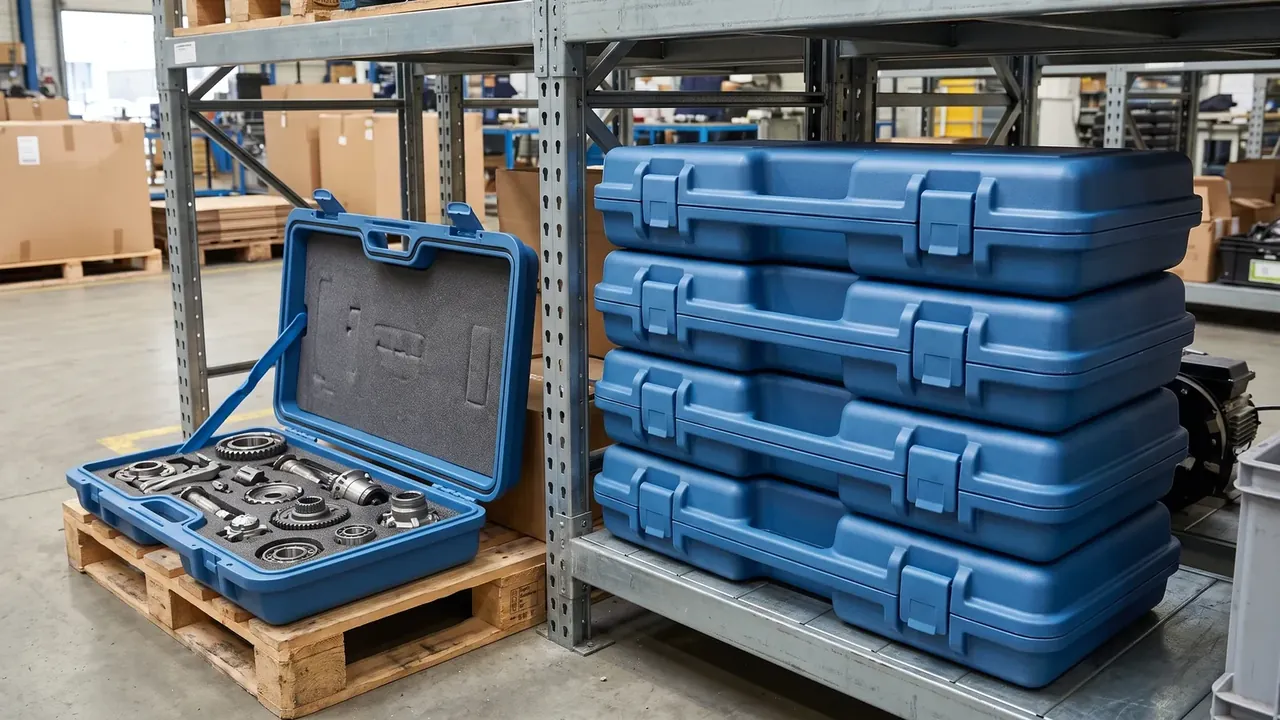
Disinfectant is the main chemical load. Mortuary rooms wipe with sodium hypochlorite at 5000 ppm, 0.5% available chlorine, a 1:10 dilution of 5% bleach; some sites use 70% ethanol.
PP copolymer takes 500 wipes in hypochlorite with gloss loss but no cracking, while ABS cracks along the weld line at 200 cycles and at 0.2 mm deep that crack is a liquid path.
The tray in a mortuary transfer case is 304 stainless, 0.8 mm, flanged 15 mm to a 40 mm lip, with a 3° fall and a φ25 mm drain at the low point.
| Material | 5000 ppm hypochlorite | 70% ethanol | 2000 ppm peracetic acid | Where used |
|---|---|---|---|---|
| PP copolymer | 500 cycles, no crack | 300 cycles, gloss loss | 200 cycles, bloom | Shell, tray frame |
| ABS | Cracks at 200 | Bloom at 150 | Cracking at 100 | Not recommended |
| 304 stainless | 1000 cycles, no pitting | No visible effect | 500 cycles, dulling | Tray, hinge pin |
| Silicone gasket | 800 cycles, +5 Shore A | No visible effect | 400 cycles, 3% swell | Primary seal |
The exterior stays untextured at 0.05 mm grain with radii at R5.
4. What the Transport Rules Ask of the Shell
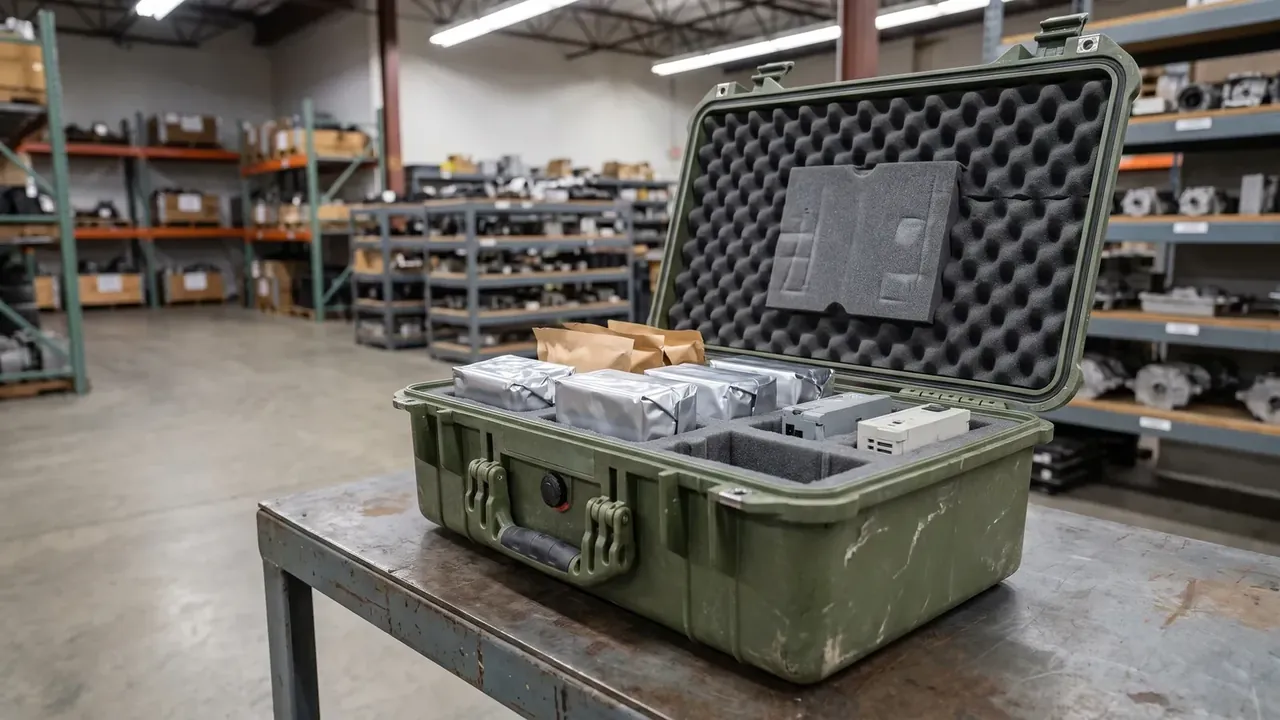
Transport rules address the package. UN 3373 covers Category B and UN 2814 Category A, a full grade apart: B runs under IATA Packing Instruction 650 and A under 620. Only the public framework is cited here, and no plant claim is implied.
Instruction 650 asks three things: a rigid outer surviving a 1.2 m free drop without leakage, a flat marking surface, and space for absorbent and cushioning.
The drop lands on corners, not faces: five positions, one drop each, and below 3 mm corner wall thickness the first failure is a split, which is why bumpers are separate parts.
A mortuary transfer case built for Category A needs UN specification packaging marked for Class 6.2, with a test report and mark sequence applied by a qualified packaging manufacturer; buyers should ask for the report, not a promise.
A 120×80 mm panel stays flat behind a 10 mm rib-free border so labels never bridge a rib, at Ra 1.6 μm. There is no window and no clear lid.
| Framework | Category | What it asks of the shell | Document to request |
|---|---|---|---|
| UN 3373 with IATA 650 | Category B | Rigid outer, 1.2 m drop, panel | Drop test record |
| UN 2814 with IATA 620 | Category A | Spec packaging, 6.2 mark | Report and mark sequence |
| General air freight | Non-dangerous | Size and stacking fit | Packing list, weight |
5. Dimensions, Casters and Loading Fit
Size follows the loading unit. A 2100×700×620 mm envelope at 0.9 m³ will not enter an LD3 unit load device, internal width 1500 mm, so air freight uses a 3180×2440 mm PMC pallet, three cases across.
Casters are φ100 mm solid PU, two fixed and two swivel with brakes; below 75 mm they stall on a 20 mm threshold, above 125 mm the centre of gravity climbs.
Each wheel is rated 100 kg, 400 kg total, a 60% margin. The empty case stays under 32 kg; past 40 kg the two-person share breaks the 60 kg line.
Conclusion
The order for a mortuary transfer case is seal, load, compliance. Fix 8 mm cord at 25%–30% compression with the 3 mm rib and the 15 kPa vent, and the shell has a stable sealing baseline; arrange 6 ribs and four 75 kg handles for a 250 kg rating; align the structure with the 1.2 m drop of IATA 650, and the 120×80 mm panel survives inspection.
This article covers the container (case) side only: specifications and design meaning, with no instruction on handling, loading or use of contents.
Related Reading
- Mortuary body transfer case structure and lining
- Funeral supply case specifications and batch supply
- Case export to the US: the compliance path
Related Products
- 8 Series — Gun Cases; Military Equipment Cases; Camera Equipment Cases; Drone Cases; Watch Cases; Knife Cases; First Aid Cases; Electronics Equipment Cases
- WL8-2812 PP Gun Case — model WL8-2812
- All protective cases and toolboxes: 7 series, 158 models