

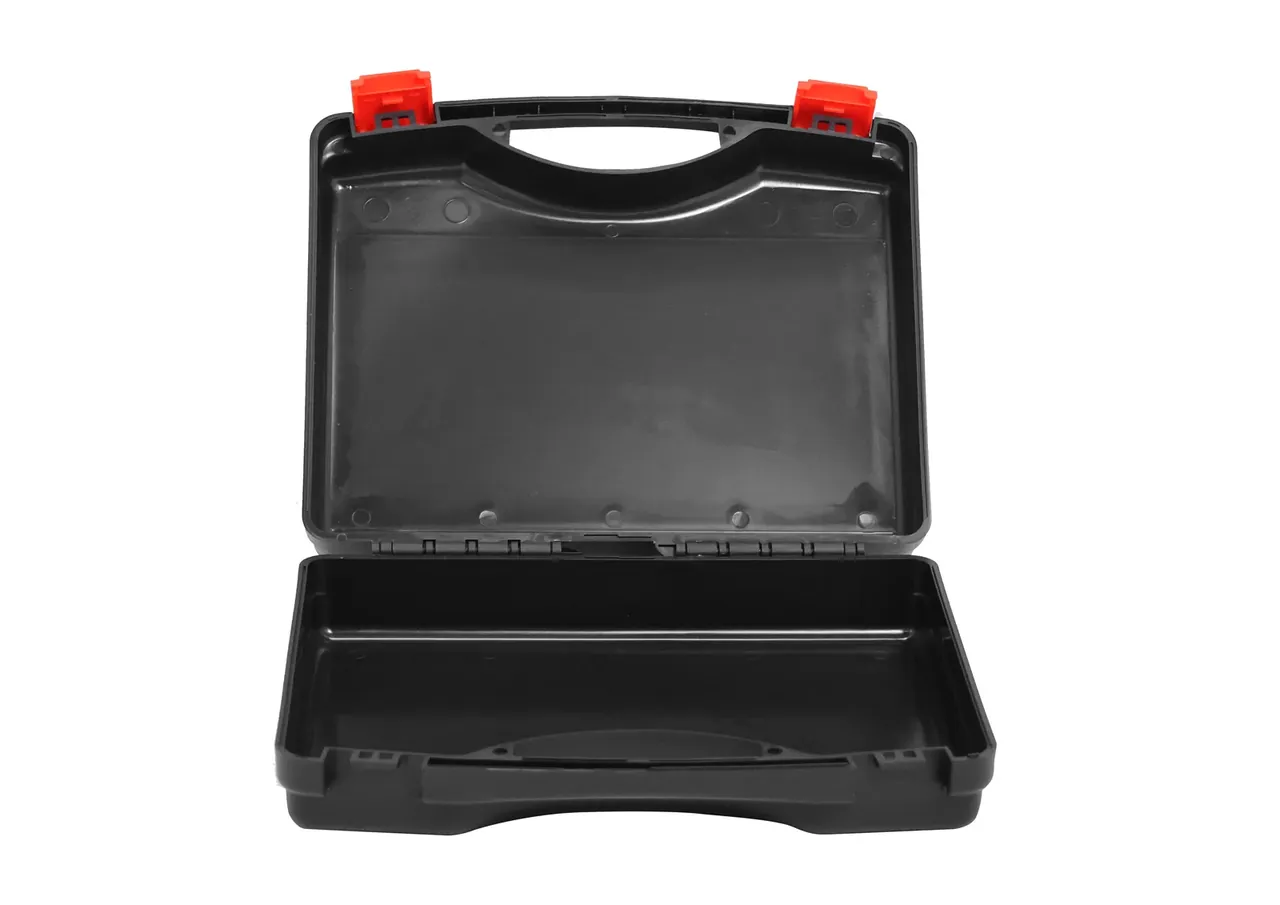
Quick answer: Case Export to US rules split three ways: FDA only where the case touches food, FCC only with electronics fitted, and UL 94 as a material grade.
Table of contents
- Which Layer Applies: Case or Unit
- FDA Only When the Case Touches Food
- FCC Part 15 Only on Units With Electronics
- UL 94 Grade vs UL Listing
- California Prop 65 and the Importer of Record
- FAQ
1. Which Layer Applies: Case or Unit
The three instruments regulate different objects: FDA whether a material may contact food, FCC emissions from a finished unit, UL flame performance of material plus assembly structure. Case Export to US work starts by placing the case in the right layer.
Start with use. A case carrying tools, instruments or cameras never touches food, so 21 CFR 174 and 177 have nothing to attach to; a food handling case enters scope at once.
Second: is there electricity? A plain plastic case has no digital circuit, so FCC Part 15 has no grip. Fit a Bluetooth module or a USB board and the unit becomes regulated equipment.
Third: which proof does the buyer want? A UL 94 V-0 result describes a specimen at 1.5 mm or 3.0 mm, not a listed product, and a material report sent as a listing fails the first audit.
| Instrument | Trigger | Applies to the case | Evidence |
|---|---|---|---|
| FDA 21 CFR 174 and 177 | Food contact surface | Food use only | Composition and migration data |
| FCC Part 15 | Digital or radio circuit | No | SDoC or FCC ID |
| UL 94 | Flame grade claim | Material level | Yellow card and thickness |
Settle all three and the test budget becomes obvious; on Case Export to US quotations the test line is the one most often left out.
2. FDA Only When the Case Touches Food
21 CFR 174 holds the general provisions for indirect additives and 177 the polymer sections, with PP and PE in 177.1520. The single precondition is that the case surface contacts food.
When it applies, two checks follow: the resin and every additive must sit on a permitted list, colorant, antioxidant and mould release each read against its own section, and the finished article then runs migration testing with simulants and conditions matched to real use.
When it does not apply, forcing a food contact report backfires: the importer reads it as a food service product.
A frequent mismatch sits in the liner: a food-grade PP shell with an EPE foam liner whose supplier cannot produce a composition statement breaks the claim, since the liner is separate.
FDA issues no certificate for Case Export to US goods, only permitted lists and a notification route, so a factory offers a composition statement plus migration data.
3. FCC Part 15 Only on Units With Electronics
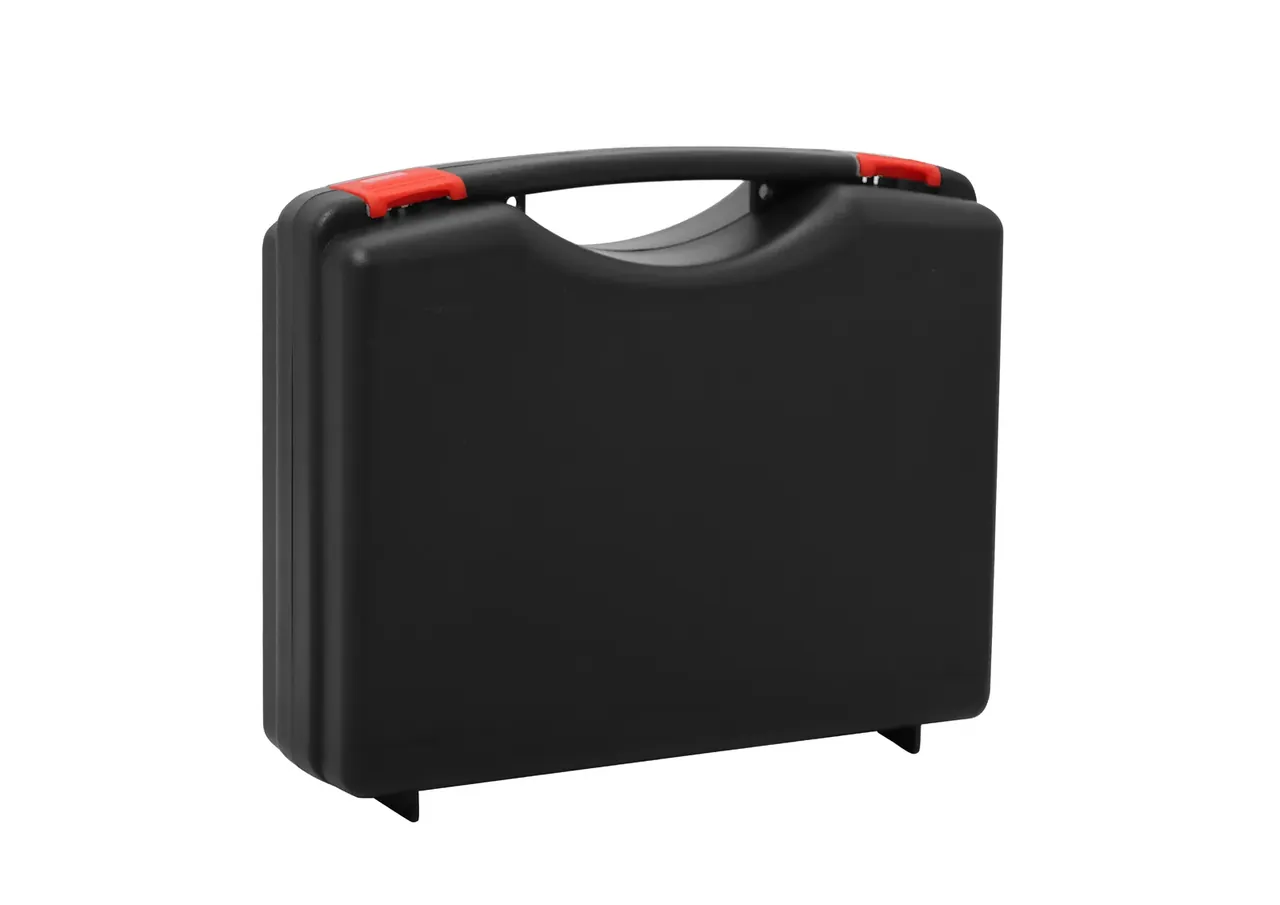
Part 15 has two halves: unintentional radiators under Subpart B and intentional radiators under Subpart C. A plain plastic case touches neither, because it is not equipment as the rules define it.
Add electronics and the analysis shifts. Digital circuitry alone goes the SDoC route, self-declared with no FCC ID; Bluetooth, Wi-Fi or wireless charging needs Certification and an FCC ID.
A module grant does not travel to the unit: it holds only while the module sits under its grant conditions, so a moved antenna forces a fresh evaluation.
For the case, the design meaning is concrete: the antenna window cannot be blocked by a foil liner, and metal latches belong at least 20 mm from the antenna, or the radiated power will not match the report.
Case Export to US purchase files often say "FCC certified case", which names nothing. The regulated object is the unit, and the model on the report is a unit model.
4. UL 94 Grade vs UL Listing
UL 94 is a material burning test, not a product certification. V-0, V-1 and V-2 are the three vertical grades, 5VB and 5VA the harsher ones, and every result carries a thickness: one compound reads V-0 at 1.5 mm and V-2 at 0.8 mm.
A UL listing addresses the unit or the structure. A case used as an industrial control enclosure is evaluated to UL 508A, which looks at enclosure strength, openings, grounding and short circuit current rating.
| Item | Level | What is judged | Covers |
|---|---|---|---|
| UL 94 V-0 | Material | Burning of a specimen at set thickness | That grade at that thickness |
| UL listing | Unit | Safety structure of the product | That unit model |
| UL 508A | Structure | Enclosure and assembly | The enclosure build |
On Case Export to US orders, put the two on separate lines: material to UL 94 V-0 at 3.0 mm, unit to UL 508A. Merged into one, the supplier delivers whichever is cheaper.
A yellow card gives the grade with its thickness, the fastest way to check a claim; a unit listing appears in the certification body's directory under the unit model. Neither substitutes for the other.
5. California Prop 65 and the Importer of Record
Proposition 65 requires a clear and reasonable warning for listed chemicals. The usual hits are DEHP in soft parts and lead in colour masterbatch, both listed.
Exposure path decides the answer. A handle gripped for hours and a case left in a hot vehicle for 6 hours assess differently, and reformulating is often cheaper than warning: swap DEHP for DINP only after confirming the replacement is not listed.
The importer of record carries the entry obligation, needs a CBP bond and answers for the declaration under reasonable care. The factory supplies the commercial invoice, packing list, origin statement and batch records.
Classification and duty belong to the importer and the broker, but any Case Export to US file needs the material breakdown exact by part, because one wrong share distorts both.
Conclusion
The judgement runs in three steps: use, circuit, structure. Use decides whether 21 CFR 174 and 177 attach at all; the circuit decides between SDoC and Certification; demand decides whether UL 94 at a stated thickness or a UL 508A evaluation is the right proof. Then the Prop 65 warning scope and the importer document set settle. The three instruments neither overlap nor substitute, so a Case Export to US file built on the wrong layer is rebuilt from the test up.
Related Reading
- Permitted lists and migration testing for food contact
- AQL 2.5 sampling and lot acceptance
- How industry requirements differ for case bodies
Related Products
- 8 Series — Gun Cases; Military Equipment Cases; Camera Equipment Cases; Drone Cases; Watch Cases; Knife Cases; First Aid Cases; Electronics Equipment Cases
- WL8-2812 PP Gun Case — model WL8-2812
- All protective cases and toolboxes: 7 series, 158 models