

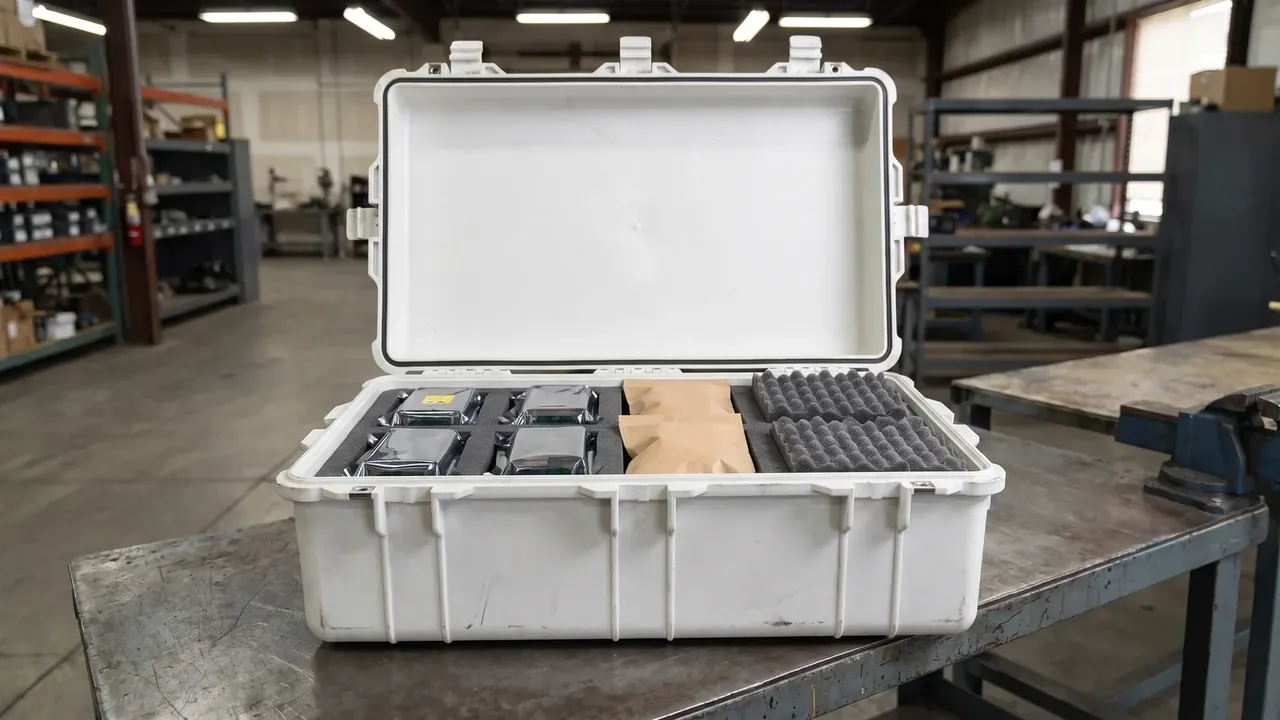
Quick answer: On small boxes a plastic box factory hides about 12% of the price in masterbatch, colour-change cleaning, screen frames and inner bags. Quote in six lines, negotiate MOQ by colour rather than by total, and split lead time into five dated nodes.
Table of contents
- Where a Plastic Box Factory Hides Cost
- Multi-Cavity Tooling and Sample Charges
- Colour, Printing and Packing Rates
- Small-Lot MOQ and Production Windows
- Auditing the Line and Agreeing Sampling
- FAQ
1. Where a Plastic Box Factory Hides Cost
Small boxes carry low unit prices, so quotations arrive as one number plus a note about tax and freight. Ask the plastic box factory to break out resin, moulding, tooling, printing, packing and freight, and a 180×120×45 mm box becomes comparable.
Resin follows net weight: a 1.8 mm wall gives 92 g, which is 0.79 yuan at 8,600 yuan per tonne and 0.83 yuan with 5% sprue loss, or 48% of the piece price. A quote of 1.35 yuan against 1.60 usually means a 1.5 mm wall or thirty percent regrind.
| Cost line | Basis | Share | Check |
|---|---|---|---|
| Resin | Net weight price | 48% | Virgin grade |
| Moulding | Rate × cycle ÷ cavities | 21% | Cavities, cycle |
| Tooling | Tool ÷ first order | 6% | Recovery stop |
| Printing | Frame + piece rate | 9% | Ownership |
| Packing | Bag, carton, label | 11% | Per carton |
| Freight | Volume or weight | 5% | Unloading |
Four items slip through: masterbatch by the kilogram, cleaning per colour change, frames per side, bags per piece. Together they reach 12% of the price, so name them in the quote.
2. Multi-Cavity Tooling and Sample Charges
Small boxes live by cavity count. An eight-cavity P20 tool at 48,000 yuan is 16 yuan per box across a 3000 piece order, and 0.02 yuan over a 300,000 shot life that yields 2.4 million boxes. Ask which basis the price uses; the swing is about 15%.
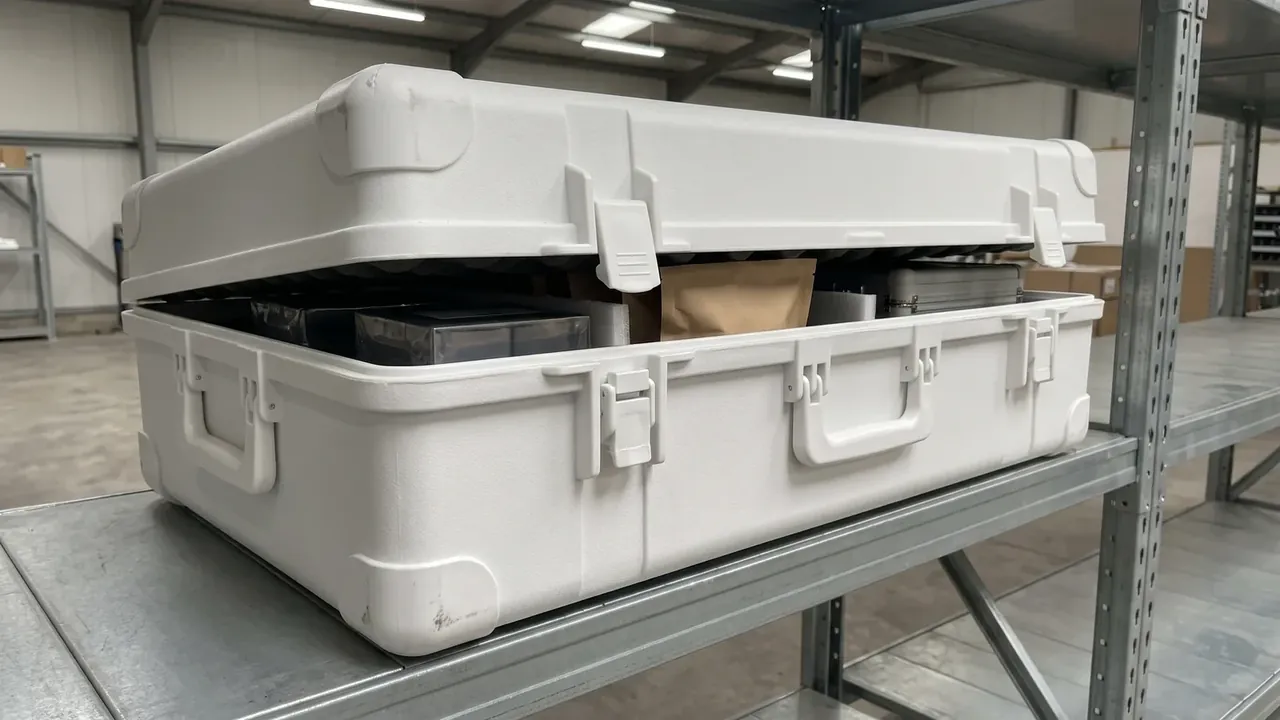
Samples come as a 3D print in three days for 800 yuan, proving fit but not shrinkage, or a sample tool in six days for 2,800 yuan, credited against production tooling. Cavities must match the press: eight on a 180 t machine at 32 seconds gives 900 boxes an hour.
| First order | Tooling per piece | Effect |
|---|---|---|
| 1000 pcs | 48 yuan | +32% |
| 3000 pcs | 16 yuan | Baseline |
| 30000 pcs | 1.6 yuan | −9% |
3. Colour, Printing and Packing Rates
Colour is a separate line. Masterbatch runs at 2% with a 25 kg minimum, enough for 1.25 tonnes of resin, and a colour change costs forty minutes of cleaning plus 600 yuan. One or two colours absorb it; a five-colour mix has to be quoted on its own.
Printing is charged per side: 350 yuan for the frame, 0.12 yuan a box, 0.10 more for a second side, 0.35 upward for hot stamping. Packing is forgotten: bags of 50 at 0.06 yuan each, cartons of 200 measuring 585×385×395 mm and weighing 18.4 kg, 8000 boxes per pallet at 35 yuan.
4. Small-Lot MOQ and Production Windows
MOQ counts by colour, not by total. Three thousand in one colour, two thousand each in two colours and five thousand across five colours are three prices, because every change costs forty minutes plus a first-article check that a short run cannot absorb.
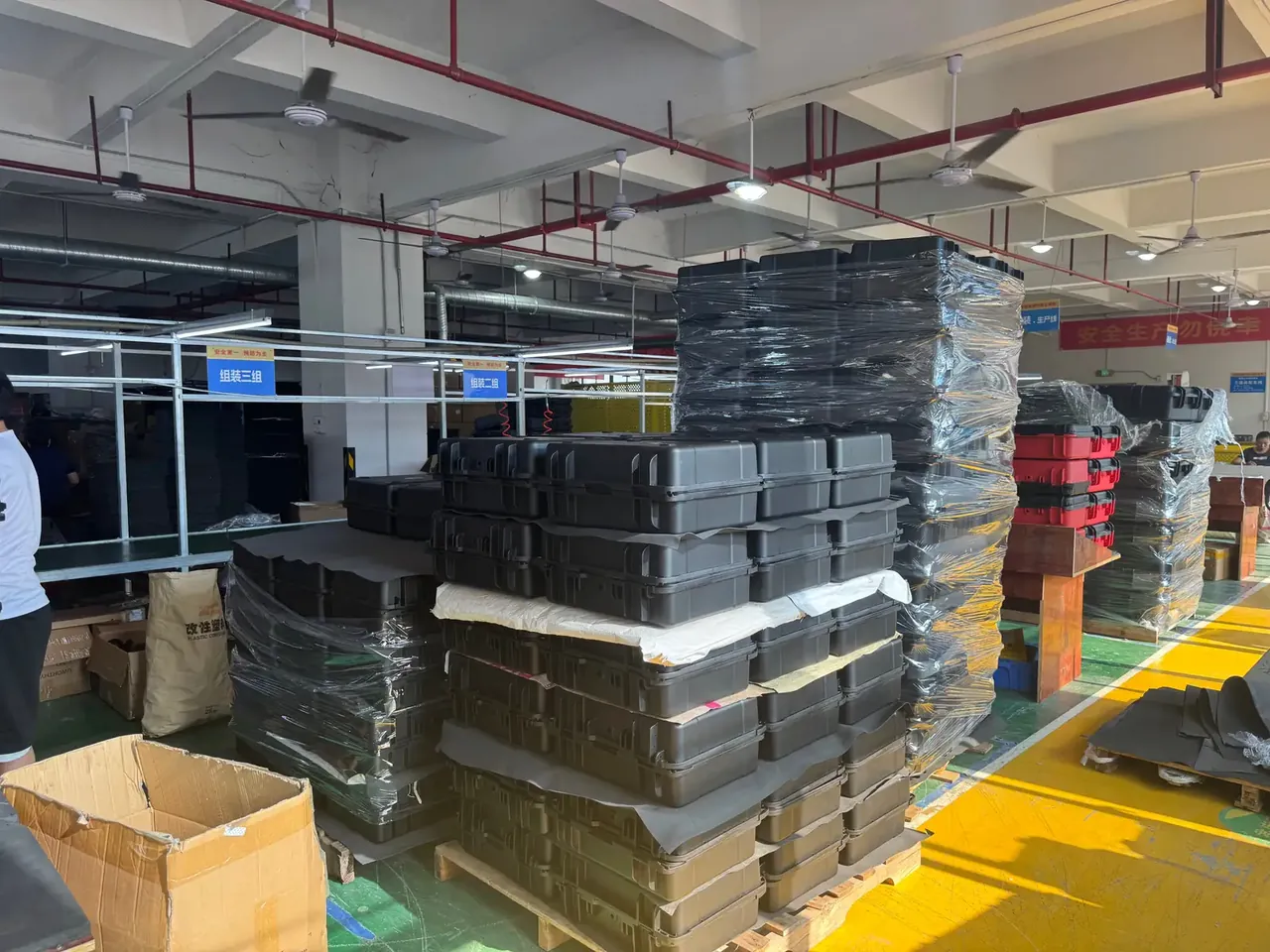
Windows matter as much. A 180 t tool change takes 2.5 hours, so plants batch them on the 5th and 20th; miss one and you wait half a month. A 3000 piece order takes 3.4 hours of press time, yet printing and packing queues turn 14 days into 20: confirmation 2, material 3, moulding 5, printing 2, packing 2, plus 25 for a new tool.
5. Auditing the Line and Agreeing Sampling
Check four things on site: cavity count against the nameplate, masterbatch scale accuracy within plus or minus 1%, tunnel temperature logged at 60 °C for eight minutes, and check-weighing at packing. If any of it lives in handwriting, batch consistency is a hope.
Sampling needs numbers: AQL 1.5 for appearance and AQL 4.0 for function, 125 boxes from a 3000 piece lot, Ac 5 / Re 6. A cross-hatch test may lose no more than 5% of print, and a 1.2 m six-face drop must leave the body uncracked. A plastic box factory that resists these figures is telling you something.
Conclusion
On small boxes the money sits in six cost lines and four hidden adders, and nothing is comparable until they are separated. Negotiate MOQ by colour, fix how tooling recovers, and split delivery into dated nodes before trusting a plastic box factory.
This article discusses only the container (case body) side of specifications and design intent, and does not cover any handling, loading or use of the contents.
Related Reading
- Mould care and maintenance
- Trial moulding and approval
- Export packing and carton rules
- Calculating line capacity
Related Products
- 8 Series — Gun Cases; Military Equipment Cases; Camera Equipment Cases; Drone Cases; Watch Cases; Knife Cases; First Aid Cases; Electronics Equipment Cases
- WL8-2812 PP Gun Case — model WL8-2812
- All protective cases and toolboxes: 7 series, 158 models