

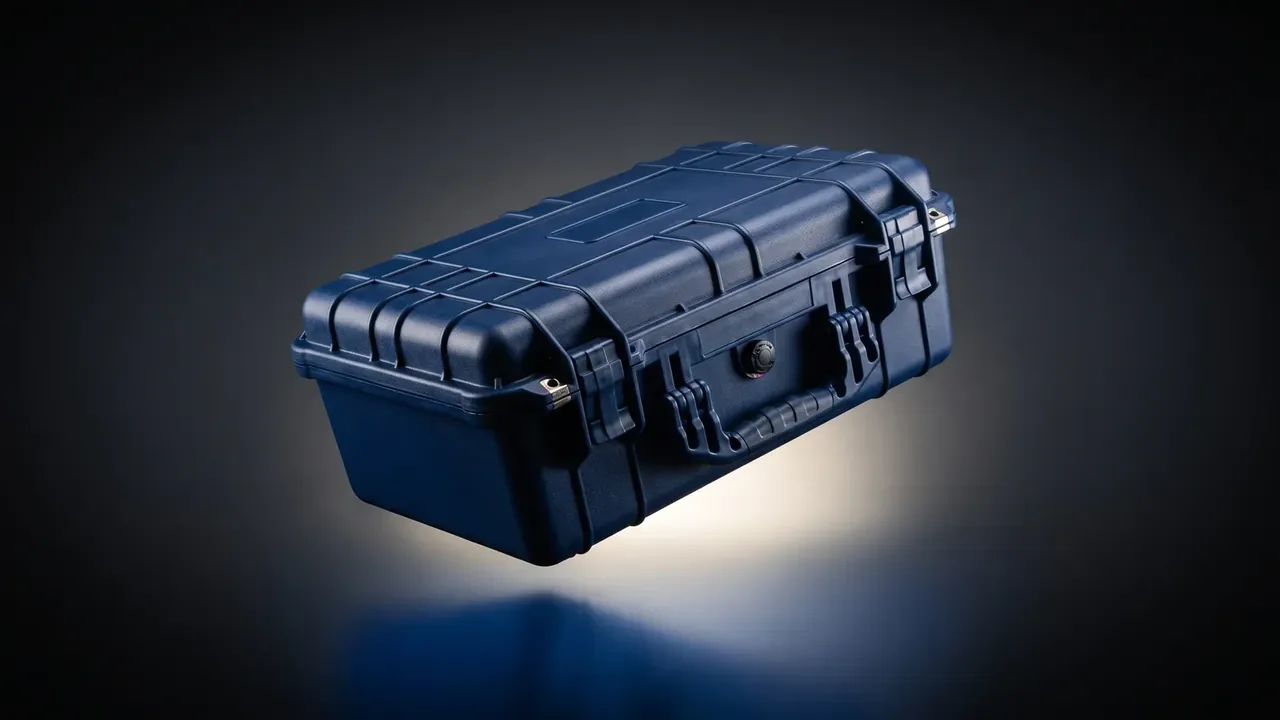
Quick answer: A plastic case with pull handle and wheels is settled by five tests in order: payload, wheel size and tread, wall and seal, static versus dynamic load, and clearance. Payload decides the other four, so 20 kg and 50 kg versions differ in wheels, tubes and base height.
Table of contents
- Five Tests That Decide a Plastic Case with Pull Handle and Wheels
- Test One: Handle Diameter and Stages
- Test Two: Wheel Diameter and Tread Hardness
- Test Three: Wall Thickness and Seal Design
- Tests Four and Five: Payload and Clearance
- FAQ
1. Five Tests That Decide a Plastic Case with Pull Handle and Wheels
Buyers usually start with litres and price, then find the handle a hand too short. A plastic case with pull handle and wheels is better chosen in the order payload, wheels, clearance, handle, body.
Payload sets the rest: a 20 kg case and a 50 kg case differ by a factor of two in wheel diameter and about thirty percent in tube wall. Wheels come next, because they decide which ground the case crosses; the handle only decides how the pull feels.
| Test | Range | Decided by |
|---|---|---|
| Handle | 22 or 25 mm, 2 or 3 stages | grip at hip |
| Wheels | 50 to 100 mm, Shore A 85 to 95 | ground, obstacles |
| Body | 2.8 to 3.5 mm wall | indoor or outdoor |
| Payload | 20 to 50 kg | what goes in |
| Clearance | 40 mm base, wide track | kerbs, thresholds |
2. Test One: Handle Diameter and Stages
Two diameters cover the market: 22 mm with a 1.2 mm wall to 20 kg, 25 mm with 1.5 mm at the 50 kg end.
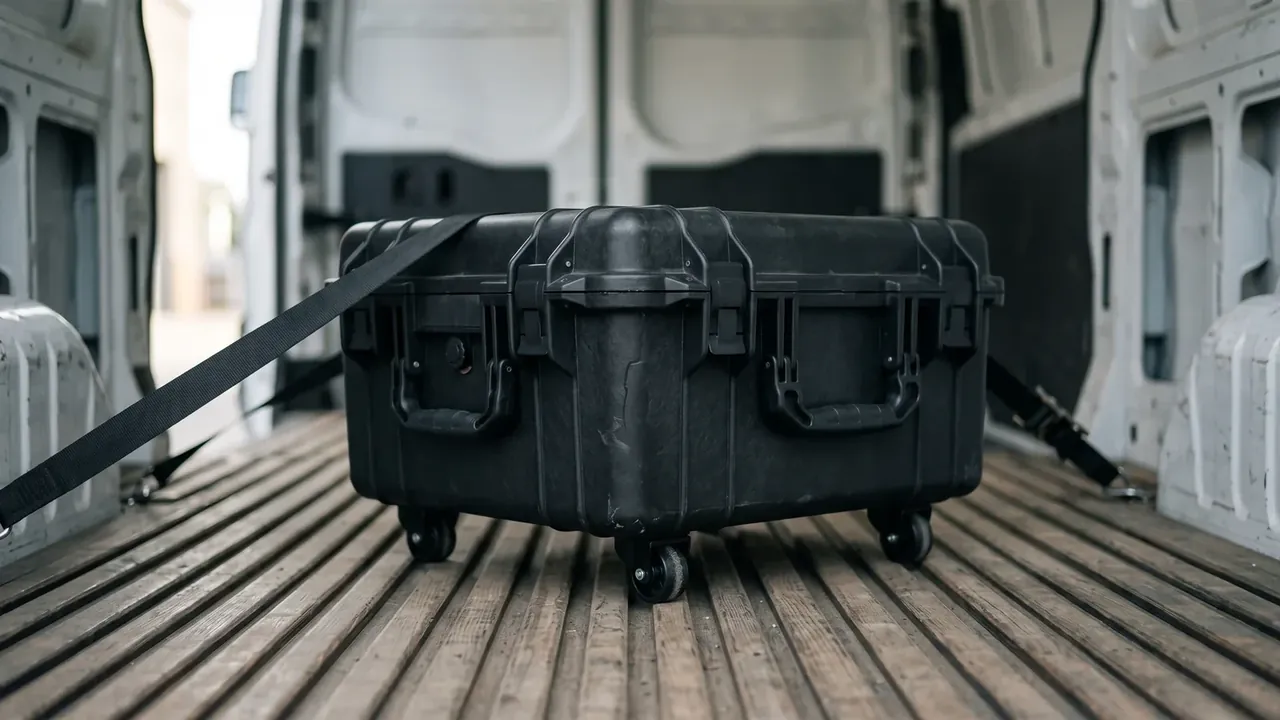
Two stages extend about 380 mm, three about 520 mm; a 170 cm user pulls best with the grip 850 to 900 mm off the floor, so a 550 mm case suits two.
Measure play under load: 4 mm at the tip is normal when full, 6 mm swings with every step. The base fails before the tube, so four screws with a 3 mm plate beat two self-tapping ones.
3. Test Two: Wheel Diameter and Tread Hardness
Diameter sets clearance and drag. 50 mm suits indoor floors but needs a lift at a 15 mm threshold; 75 mm clears it alone; 100 mm crosses kerbs to 25 mm and raises the base.
Shore A decides noise and wear: A 85 is quiet on tile but wears fast, A 95 lasts and sounds like a trolley, polyurethane leaves no black marks on epoxy.
Payload bands follow the diameter: 20 kg at 50 mm, 32 kg at 75 mm, 50 kg at 100 mm. Keep the rear track at 80 percent of case width or a side push tips it over.
4. Test Three: Wall Thickness and Seal Design
Walls come in two grades: 2.8 mm for office use, 3.5 mm for industrial duty. Judge by five readings at the rim flange; a minimum under 90 percent of nominal means short pack pressure.
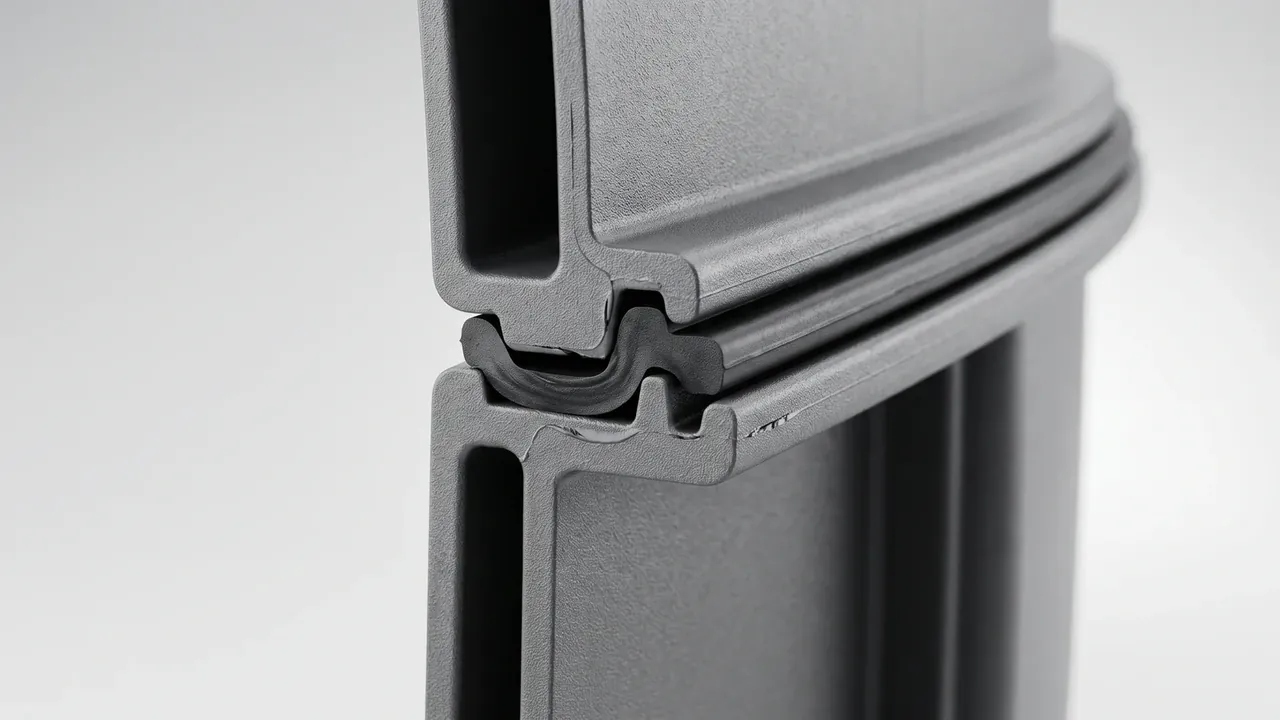
A plastic case with pull handle and wheels usually takes a gasket in a groove rather than a flat seal, because a dragged body twists and shears a flat one out of place. Compression runs 25 to 30 percent, and the handle tube penetration needs a double wall.
5. Tests Four and Five: Payload and Clearance
Payload is static or dynamic. A 50 kg rating means static; dragging is dynamic at about sixty percent, so plan on 30 kg.
Clearance means 40 mm of base height, a 15 mm threshold and a short wheelbase for lift doors.
| Check | Limit | Method |
|---|---|---|
| Wheel wear | 1 mm at 10 km | measure diameter |
| Handle life | locks at 5000 cycles | loaded fatigue rig |
| Cold drag | no crack, 500 m at −20 °C | freezer then pull |
| Plating | grade 9, 24 h spray | salt chamber |
Cold drag is the skipped test: polypropylene keeps thirty percent of its impact strength at −20 °C, so corners and bracket holes crack while a warm trial shows nothing.
Conclusion
A plastic case with pull handle and wheels is chosen by ordering five tests well: payload sets the grade, wheels set the ground, clearance sets the size, handle sets the feel, body sets the life. Get that order right and quotations for a plastic case with pull handle and wheels compare line by line.
This article discusses only the container (case body) side of specifications and design intent, and does not cover any handling, loading or use of the contents.
Related Reading
- Choosing a wheeled protective case
- Inputs for trolley tool case selection
- Choosing casters and case accessories
- Carry-on dimensions and wheel sets
Related Products
- 8 Series — Gun Cases; Military Equipment Cases; Camera Equipment Cases; Drone Cases; Watch Cases; Knife Cases; First Aid Cases; Electronics Equipment Cases
- WL8-2812 PP Gun Case — model WL8-2812
- All protective cases and toolboxes: 7 series, 158 models