

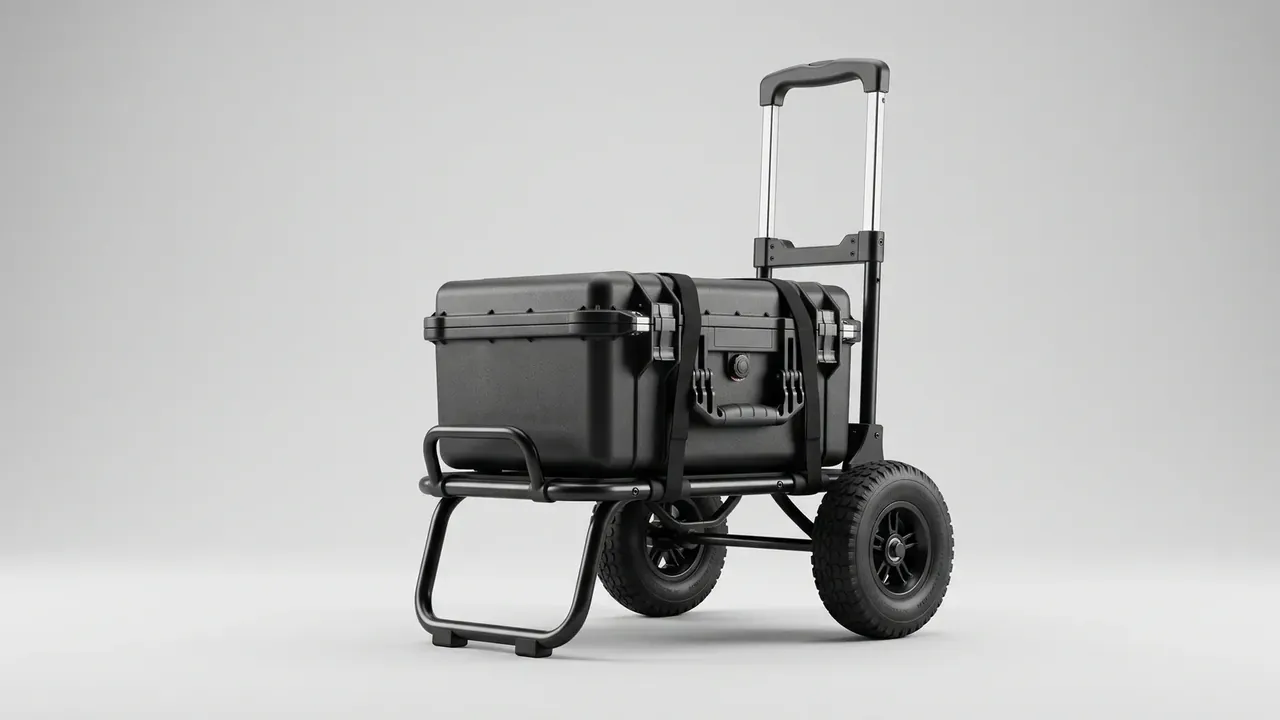
Quick answer: Fix the wheel diameter first, then the handle, then the load rating. Size wheels for the worst ground you will meet, not the best; check grip height and sideways play under three millimetres; rate wheels for two-wheel towing, not four-wheel static load.
Table of contents
- Four parameters of a Wheeled Protective Case
- Wheel diameter and tread: read the ground first
- Handle: stages, locking and grip height
- Load: weight, contents and impact together
- Acceptance and three common mismatches
- FAQ
1. Four parameters of a Wheeled Protective Case
A Wheeled Protective Case has four parameters: wheel diameter, tread, handle and load rating. They are sequential, not parallel. Diameter sets what ground the case can cross, tread sets whether it grips there, the handle sets towing effort, and the rating decides whether the first three hold.
A case rated at fifty kilograms on fifty millimetre wheels stops dead in gravel: small wheels shorten the lever arm.
2. Wheel diameter and tread: read the ground first
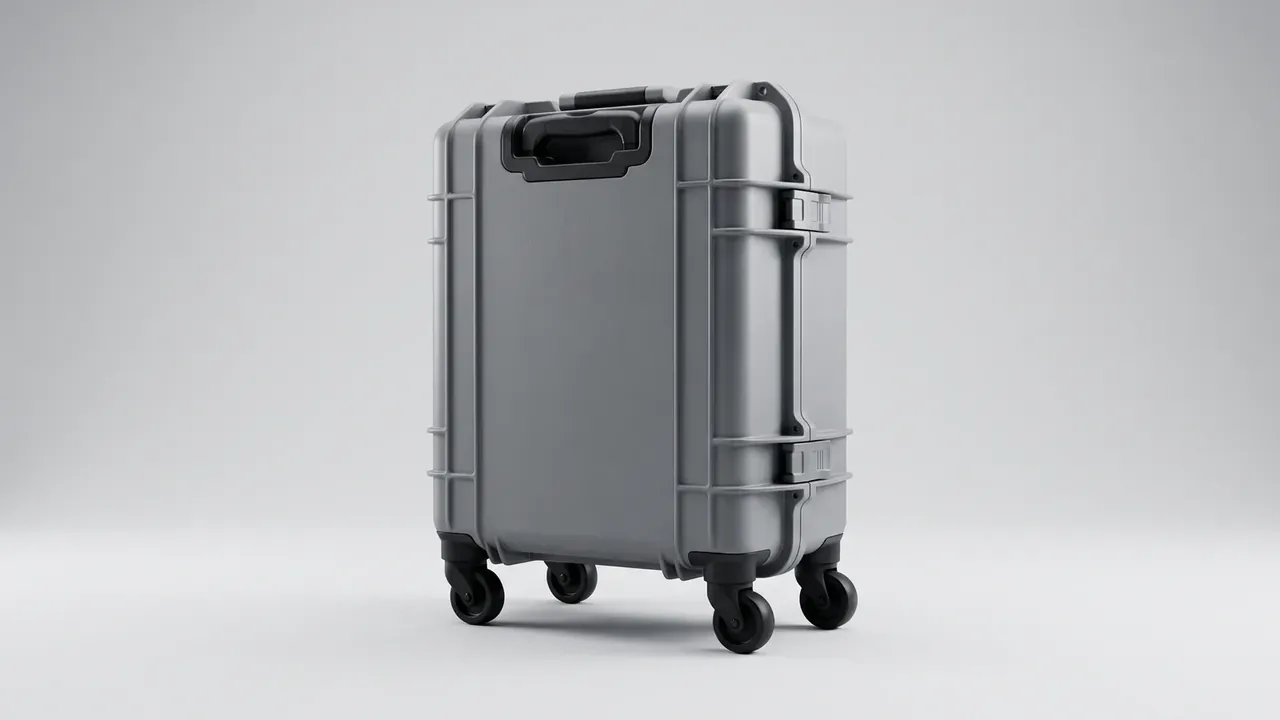
Clearance runs at about forty percent of diameter: 20 mm at 50 mm, 40 mm at 100 mm, 65 mm at 160 mm.
| Diameter | Clearance | Ground | Typical fit |
|---|---|---|---|
| 50 mm | 20 mm | indoor tile | light instrument case |
| 75 mm | 30 mm | airport tile, epoxy | cabin-style case |
| 100 mm | 40 mm | plant concrete | general equipment |
| 125 mm | 50 mm | gravel, grass | field work |
| 160 mm | 65 mm | steps, sites, sand | cart-style |
Tread is the neglected half: polyurethane wears slowly and runs near 62 dB on tile, nylon is harder but loud, rubber grips best and wears fastest. On gravel, take a tread at least 40 mm wide or the case ploughs. Polyurethane also stiffens below minus twenty.
3. Handle: stages, locking and grip height
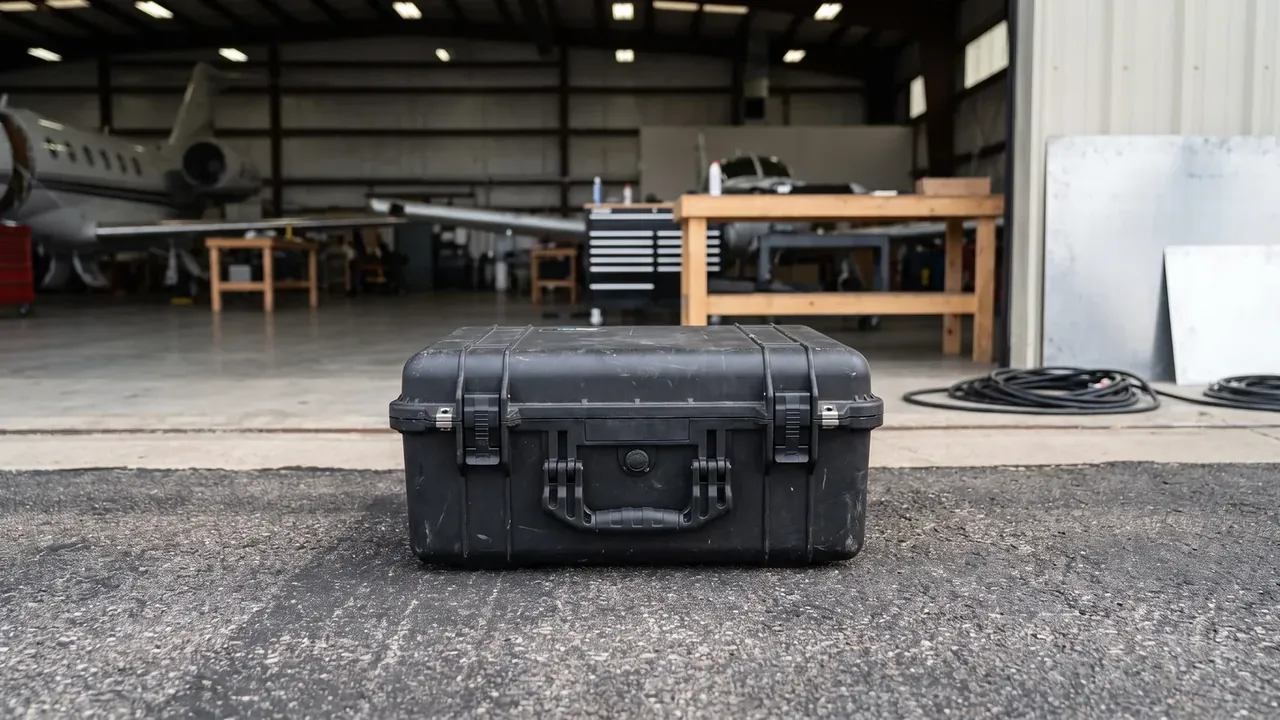
The first handle number is extended height, not stage count: the grip sits near half the user's height, about 850 mm at 1.7 m.
| Type | Extended height | Wall | Play allowed |
|---|---|---|---|
| Two-stage | 900–1000 mm | 1.2–1.5 mm | ≤3 mm |
| Three-stage | 1050–1100 mm | 1.2 mm | ≤4 mm |
| Fixed | case height | 1.5 mm | ≤1 mm |
Play is the quickest test: extend fully, push fore and aft, and beyond three millimetres the case sways as you walk. It comes from thin walls, a worn pin or an undersized mounting plate. Buttons work one-handed but resist gloves; levers clear thick gloves.
4. Load: weight, contents and impact together
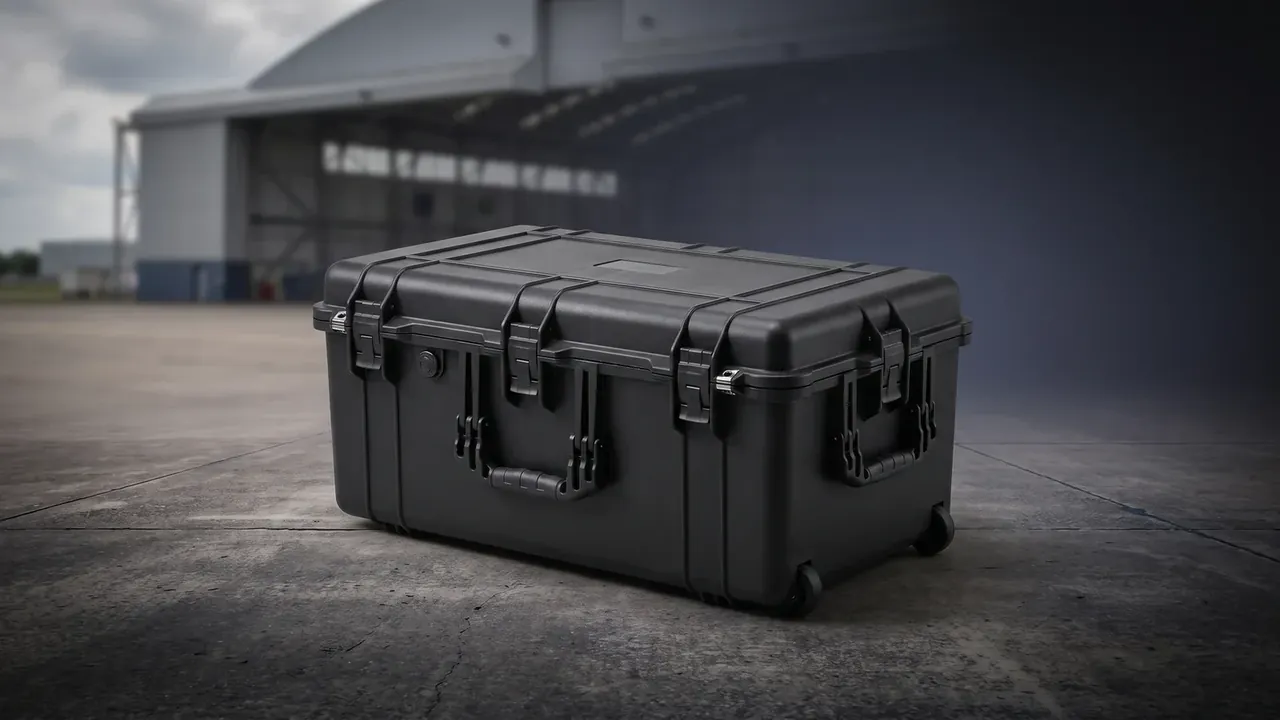
Load ratings promise more than the case can keep. Four wheels share weight only when the case stands upright; tilt it to tow and two wheels carry everything.
| Item | Example | Note |
|---|---|---|
| Case weight | 8.5 kg | wheels and handle included |
| Contents | 25 kg | actual load |
| Total | 33.5 kg | sum of the two |
| Towing, two wheels | 16.8 kg each | total divided by two |
| Wheel rating | ≥25 kg each | towing figure × 1.5 |
Impact adds on top: kerbs and drops peak near three times static load, and an 8 mm axle goes oval within six months. Without ribs under the base, a heavy load bows the floor and four wheels become two.
5. Acceptance and three common mismatches
Three checks take under a minute: push five metres straight for drift, spin the case for free rotation, extend the handle and rock it for knock.
The first mismatch is a large case on small wheels that cannot cross the plant's speed humps. The second is a heavy case on two, where the tilted tow loads one wrist. The third is a long handle on a thin wall.
Conclusion
Choosing a Wheeled Protective Case comes down to one line: diameter follows the ground, handle follows the user's height, rating follows the towing attitude. Leave the margin on diameter, because it governs clearance, noise and life, and cannot be changed after delivery.
This article covers container-side specifications and design implications only, not the handling, loading or use of the contents.
Related Reading
- Case wheels and trolley handles
- Buying guide for wheeled cases
- Wheeled versus standard toolboxes
- How to size a protective case
Related Products
- 8 Series — Gun Cases; Military Equipment Cases; Camera Equipment Cases; Drone Cases; Watch Cases; Knife Cases; First Aid Cases; Electronics Equipment Cases
- WL8-2812 PP Gun Case — model WL8-2812
- All protective cases and toolboxes: 7 series, 158 models