

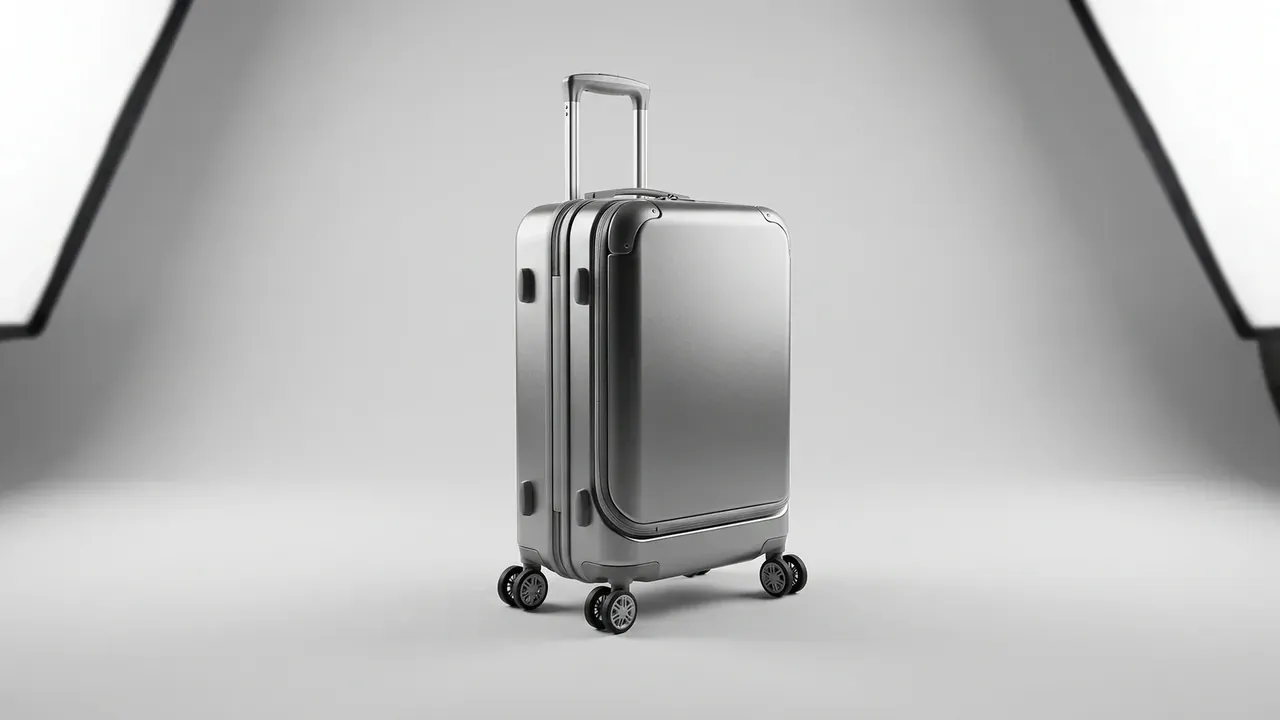
Quick answer: Four lines on a Carry-On Luggage sheet decide whether it boards: outer size, overall height with wheels, wheel set and empty weight. Line those up with the cabin bin and everything else is comfort.
Table of contents
- Four lines on a Carry-On Luggage sheet
- Outer size: the three-side sum and the bin frame
- Wheels: diameter, track and ground
- Handle and grips: height, stops and load
- Shell and interior: wall, weight and fill rate
- FAQ
1. Four lines on a Carry-On Luggage sheet
A Carry-On Luggage sheet runs to a dozen lines, but four decide the flight: outer size, overall height with wheels, wheel set and empty weight.
Outer size is length by width by height in millimetres. Overall height adds the wheel bosses, usually 20 to 35 mm; skip that line and a case measuring inside the limit jams at the door.
The nominal figure is not an inch conversion: a 20-inch case is roughly 550 mm tall outside, a 22-inch about 560.
| Line | Usual value | What it decides |
|---|---|---|
| Outer size | 550 × 400 × 200 mm | Fits the bin frame |
| Overall height | Outer height plus 20 to 35 mm | Bin door clearance |
| Wheels | Four doubles, 50 to 60 mm | Roll and stability |
| Empty weight | 2.6 to 3.6 kg | Payload left |
2. Outer size: the three-side sum and the bin frame
The three-side sum is the common filter. Length plus width plus height usually caps at 115 cm; some carriers allow 118 or 120, so check the rule.
Include the wheels. Makers often quote the shell alone, and the wheel bosses add 20 to 35 mm to the same case, right at the limit.
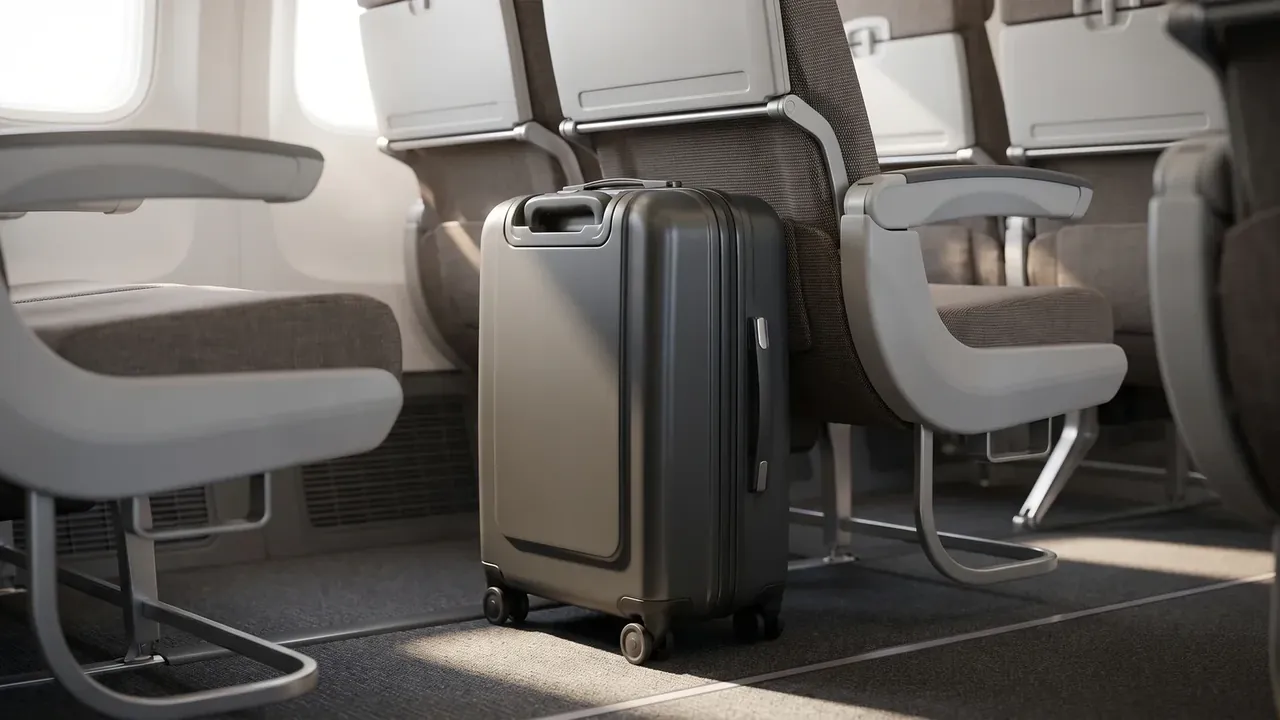
A bin is a rectangular opening, not a volume: 230 to 280 mm high and 350 to 400 mm deep. A case thicker than 230 mm goes in at an angle, and a soft shell squeezes where a hard one does not.
| Nominal | Outer size (L × W × H) | Three-side sum | Weight |
|---|---|---|---|
| 20 inch | 355 × 225 × 550 mm | 1,130 mm | 2.6 to 3.2 kg |
| 22 inch | 390 × 230 × 560 mm | 1,180 mm | 3.0 to 3.8 kg |
3. Wheels: diameter, track and ground
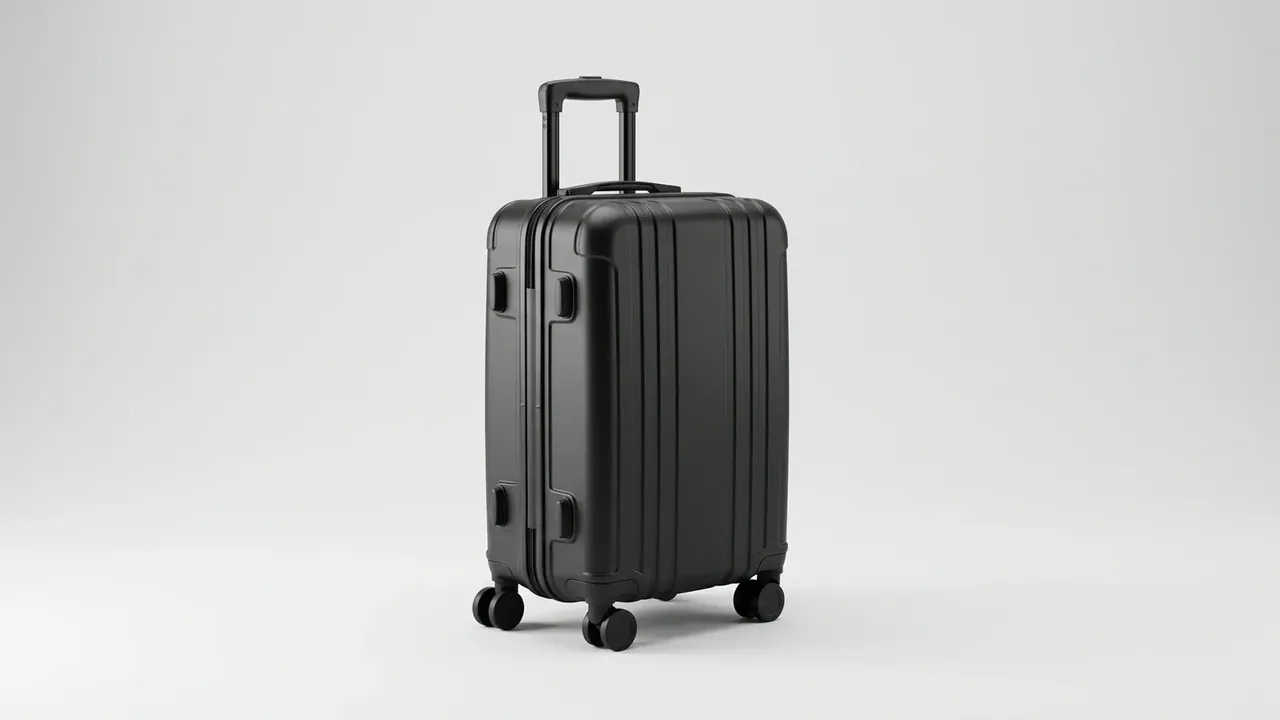
Diameter sets where the case rolls. Fifty to 55 mm suits terminal floors; 55 to 60 mm crosses gaps; above 70 mm handles paving at a cost of 0.4 to 0.8 kg.
Track sets stability: 300 to 360 mm front to back, 180 to 220 mm side to side; narrower tips more easily.
Doubles take less load per housing; singles turn tighter. Castors pull easily, fixed wheels hold a slope.
4. Handle and grips: height, stops and load
Check three things on the handle: stops, tube wall, play. Three stops sit at 100, 200 and 300 mm; tube walls run 0.8 to 1.2 mm.
Write the tolerance into acceptance: at full extension, play stays under 10 mm, or the case sways.
Rate grips at full load. A top grip carries 20 to 25 kg in one hand; a side grip, used to lift the case off a rack, is often rated 15 kg.
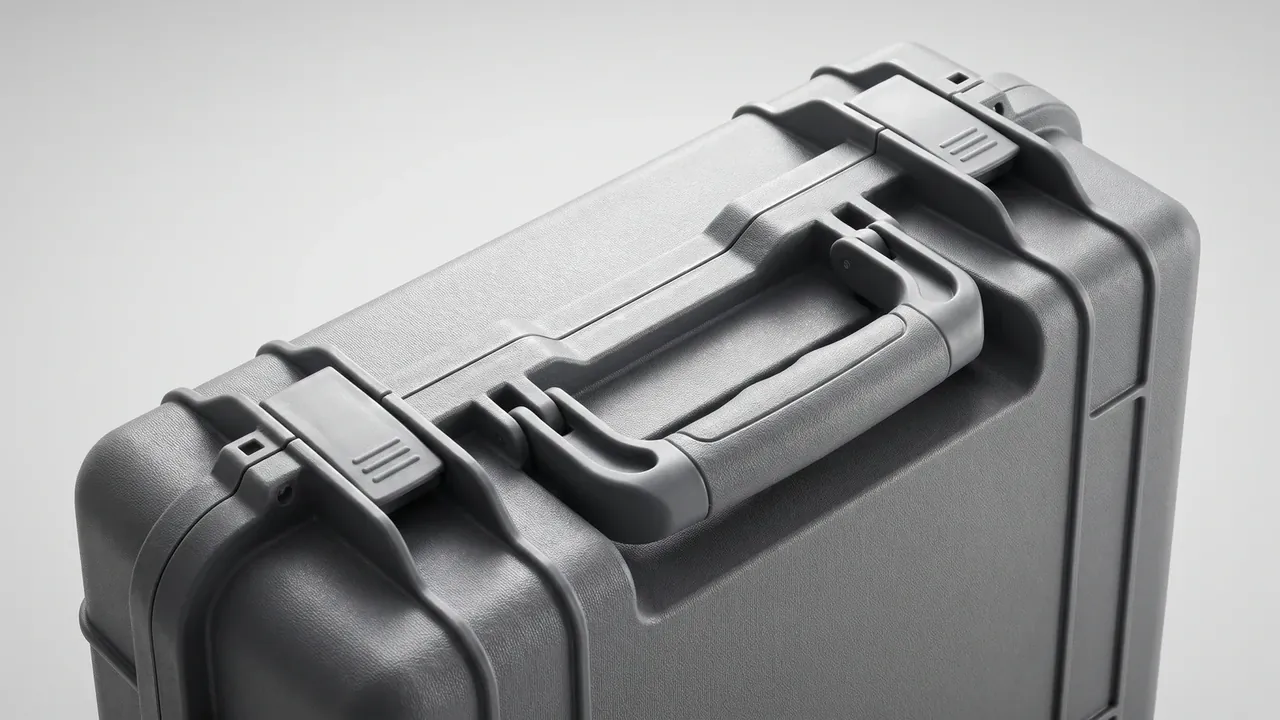
A hand-carry hard case is the other route: under 200 mm overall and one to two kilos lighter.
5. Shell and interior: wall, weight and fill rate
Wall thickness follows the material. PC runs 1.2 to 2.0 mm and springs back; ABS 2.2 to 2.8 mm is stiff but brittle; PP 1.8 to 2.5 mm takes impacts.
Thickness and weight trade off: at 20 inch a PC shell is 2.6 kg, ABS 3.2 kg, aluminium four and up; on a 10 kg limit, 600 g is a jacket.
Fill rate sits at 70 to 80 percent. A 20-inch case holds 35 to 40 litres, so 80 percent is about 28 litres. Inside, X straps, a divider and a compression panel do the work.
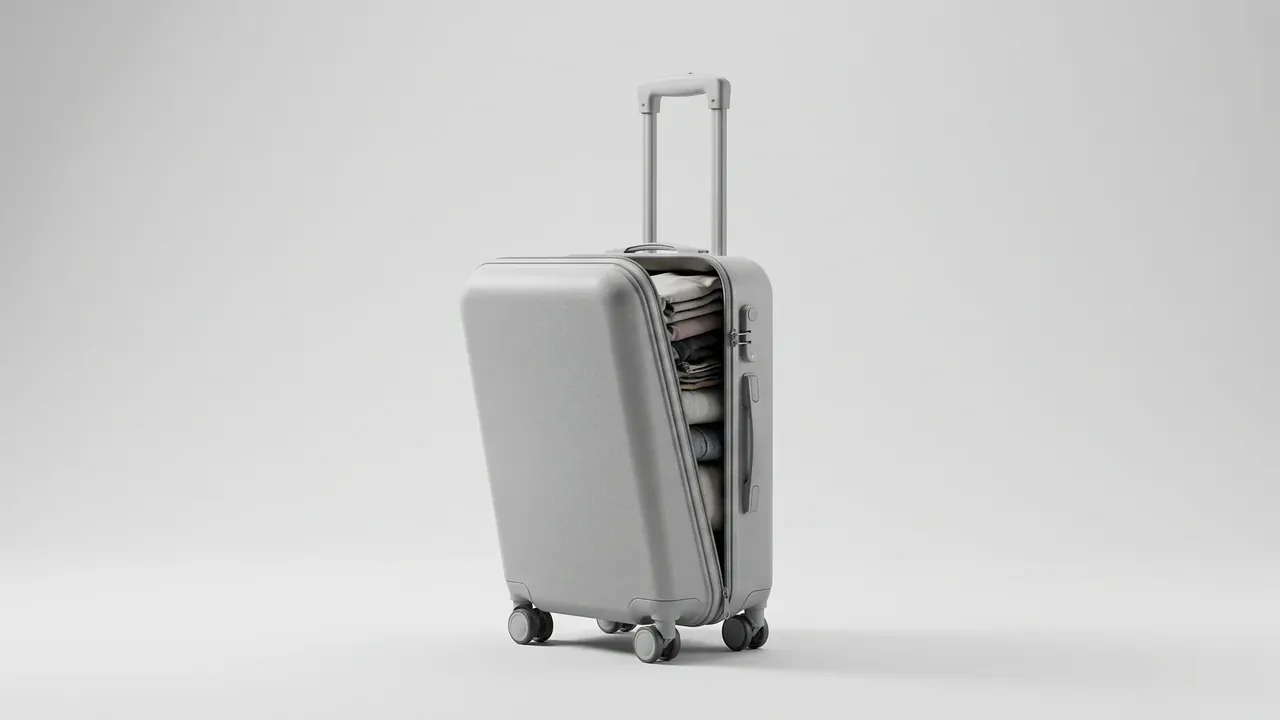
Conclusion
Carry-On Luggage specifications form a chain: outer size fixes the bin, wheels push the height up, empty weight comes out of the allowance.
This article covers container-side specifications and design implications only, not the handling, loading or use of the contents.
Related Reading
- Structure and materials of luggage shells
- Travel case specifications and buying points
- ATA 300 standard for airline transit cases
- Wheel sets and telescopic handles on cases
Related Products
- 8 Series — Gun Cases; Military Equipment Cases; Camera Equipment Cases; Drone Cases; Watch Cases; Knife Cases; First Aid Cases; Electronics Equipment Cases
- WL8-2812 PP Gun Case — model WL8-2812
- All protective cases and toolboxes: 7 series, 158 models