

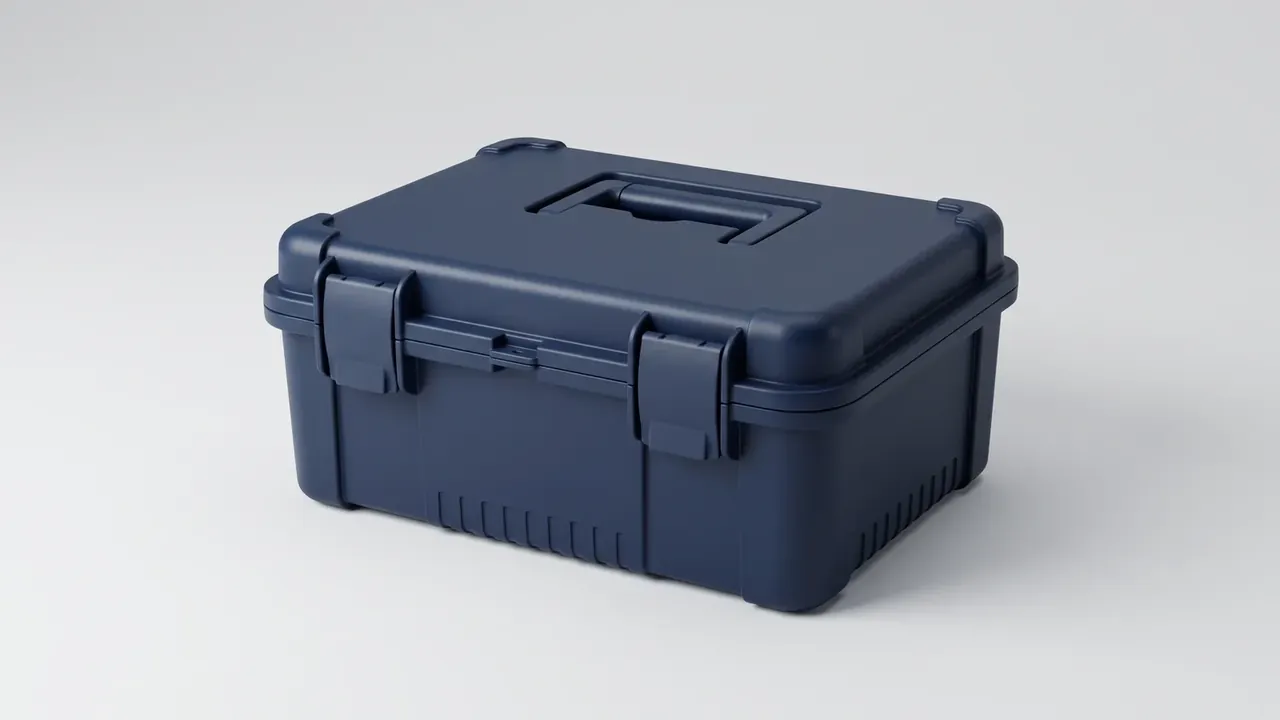
Quick answer: Plastic cases for tools are chosen by duty cycle, not litre count. Count openings per shift, weigh the load, then fix latches and layout; those numbers place a case in one of six sites.
Table of contents
- Where Plastic Cases for Tools Fit Across Six Sites
- Line Walks and Hinge Life
- Installation and Service Call Loads
- Field Work and Vehicle Carry
- Six Sites Collapse into Three Builds
- FAQ
1. Where Plastic Cases for Tools Fit Across Six Sites
A case beside a moulding machine and one riding in a pickup bed are different products, even when both sell as plastic cases for tools.
| Site | Volume | Load | Opens per shift | What wears |
|---|---|---|---|---|
| Line walk | 12 L | 8 kg | over 30 | hinge clearance |
| Machine install | 24 L | 20 kg | 8 | handle root |
| Service call | 18 L | 12 kg | 15 | tray retention |
| Field repair | 30 L | 25 kg | 6 | gasket, feet |
| Spare parts store | 40 L | 35 kg | 2 | stacking strength |
| Vehicle kit | 22 L | 15 kg | 4 | latch release |
Mismatches show fast: a 12 L walk case packed with six installation tools will not close, so its latches go slack in three months.
2. Line Walks and Hinge Life
Line walking is the hardest duty: eight rounds a shift, four openings each, 32 a shift and eight thousand a year on two latches and one hinge.
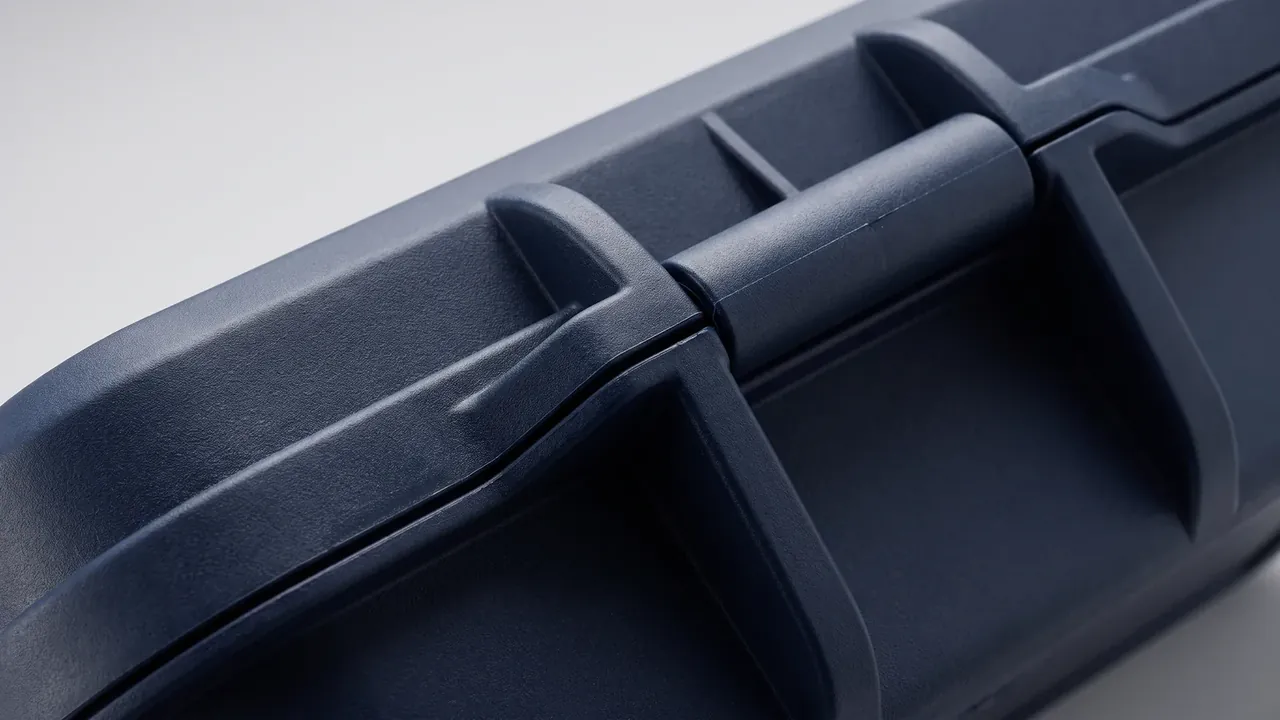
A 4 mm pivot pin rated at fifty thousand cycles lasts six years at that rate; a 3 mm pin falls to twenty thousand, about three years. Twelve litres with nine compartments and 1.5 mm gaps is enough. A snapping latch also hits 82 dB against a 75 dB line limit; a silicone pad brings it to 74 dB.
3. Installation and Service Call Loads
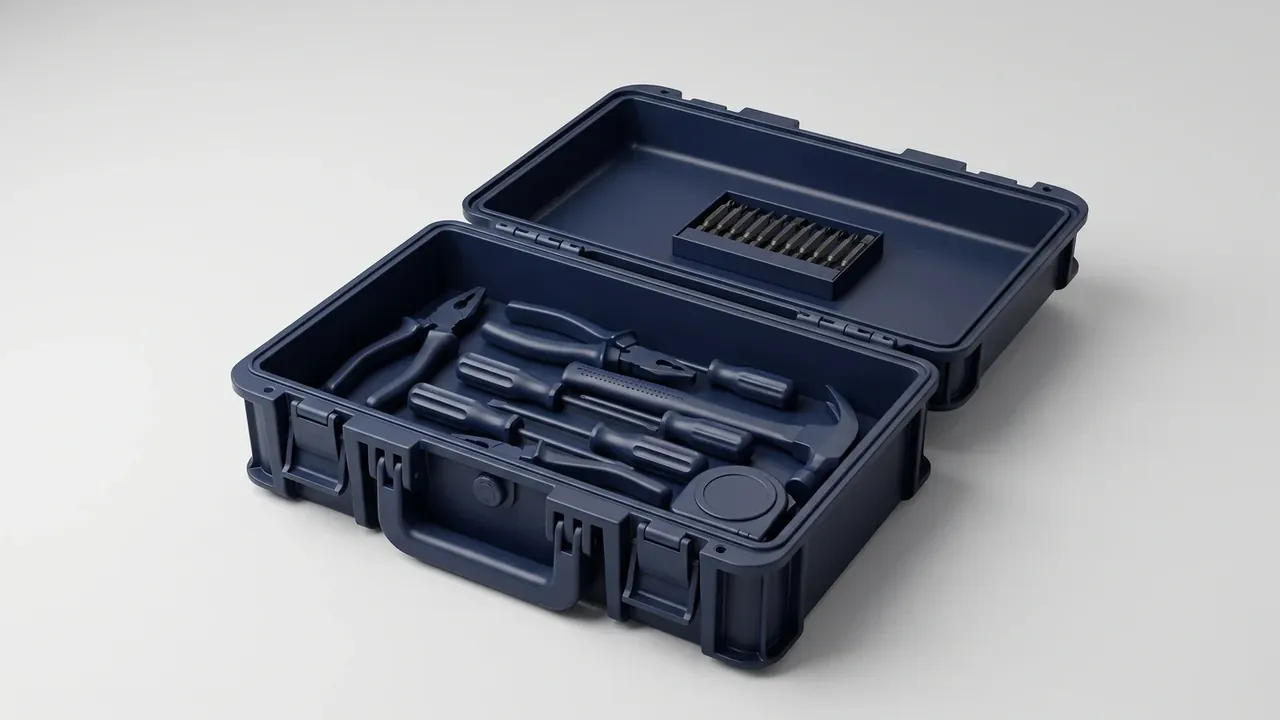
Installation crews pack in work order, not weight order: what comes out first rides on top. A machine install runs twelve steps, and the first four consume sixty percent of all reaches.
A 24 L case holds six tools plus a fastener box at 20 kg net, with handle load on two rivets. Keep the rivet pitch under 60 mm; at 90 mm the lid bows 2 mm under a full lift.
| Tier | Contents | Used at | Requirement |
|---|---|---|---|
| Top tray | four frequent tools | steps 1 to 4 | lifts out, 25 mm rim |
| Middle | specials, adaptors | steps 5 to 9 | three dividers |
| Bottom | fasteners | close-out | flat floor |
Service calls take 18 L with two trays: a 40-minute visit opens four times, and the latches must work one-handed.
4. Field Work and Vehicle Carry
Field work pushes plastic cases for tools between -20 °C and 60 °C. Polypropylene loses thirty percent of its drop strength at -20 °C, and corners crack first, so field builds carry a corner band 1.8 times the wall thickness.
On paved roads bed energy sits between 5 and 15 Hz, where a latch hook walks out of engagement; either add a 1.2 mm retaining rib or fit a cam latch with a second clamp. Drainage matters too, so each corner gets a 3 mm hole and the base centre stays solid.
5. Six Sites Collapse into Three Builds
Six sites do not need six moulds. Three builds cover them, sharing latch and hinge tooling and differing in wall and interior.
| Item | Light walk | Medium call | Heavy field |
|---|---|---|---|
| Resin | homopolymer PP | copolymer PP | copolymer PP, 15% talc |
| Wall | 1.8 mm | 2.2 mm | 2.8 mm |
| Latches | two hooks | two hooks, rib | two cams |
| Base | flat | flat, four feet | raised feet, drains |
| Volume | 12 to 15 L | 18 to 24 L | 30 L and up |
Above 30 openings a shift take the light build, since hinge precision beats wall there; above 25 kg loaded, take the heavy build. Anything riding in a vehicle gets feet and drains.
Conclusion
Choosing plastic cases for tools is measurement, not catalogue browsing: openings per shift, kilos at load, hours on the road. Duty cycle decides the hinge, load the wall, transport the feet and drains. Get those columns right, and plastic cases for tools become equipment rather than packaging.
This article discusses only the container (case body) side of specifications and design intent, and does not cover any handling, loading or use of the contents.
Related Reading
- Hardware tool box on the workshop floor
- Tool box interior and dividers
- Rolling tool case applications
- Portable tool box selection guide
Related Products
- 8 Series — Gun Cases; Military Equipment Cases; Camera Equipment Cases; Drone Cases; Watch Cases; Knife Cases; First Aid Cases; Electronics Equipment Cases
- WL8-2812 PP Gun Case — model WL8-2812
- All protective cases and toolboxes: 7 series, 158 models