

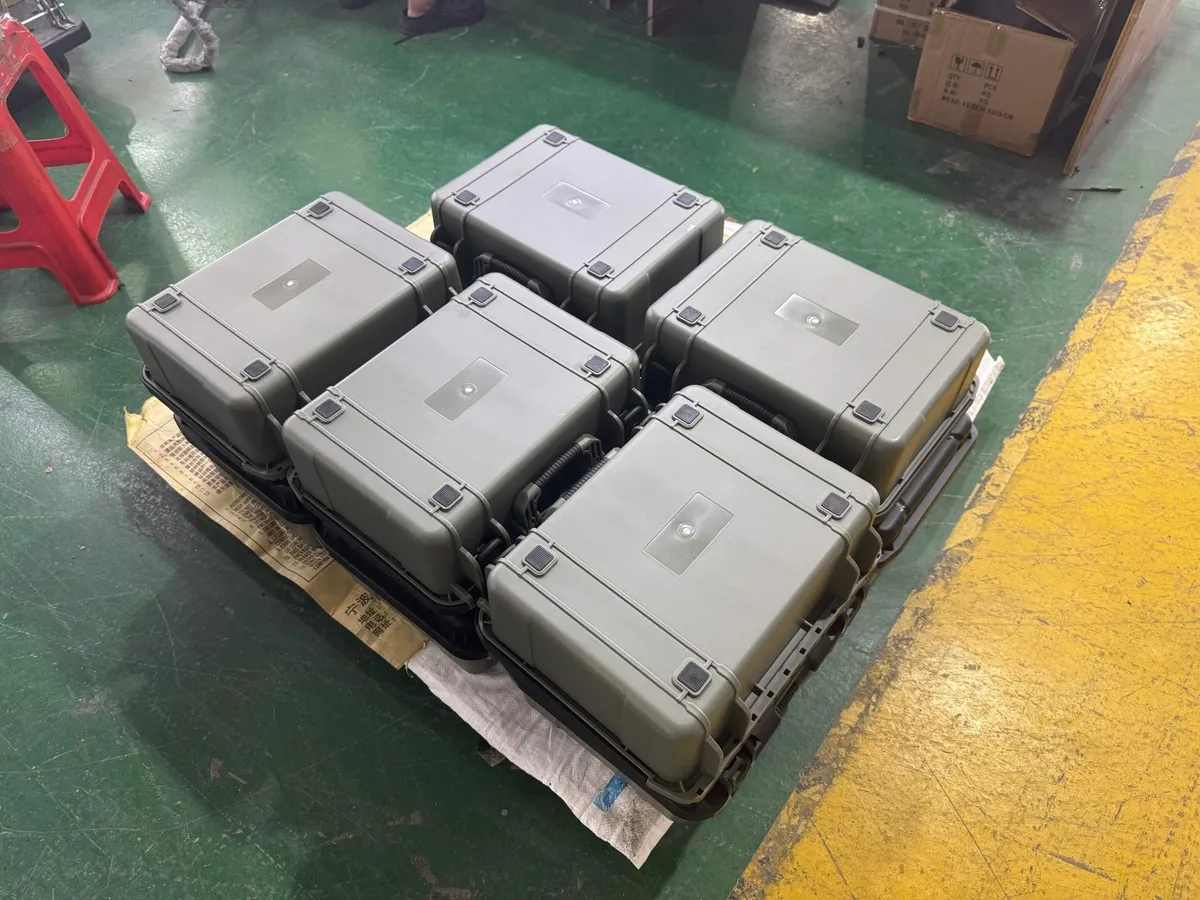
MOQ and lead time are the two numbers buyers most often accept without question, and the two that most often cause disappointment later. Both are consequences of how a case is actually made. Once you can name the setup step behind each number, you can usually change the number.
What MOQ is really paying for
A protective case order carries two kinds of cost. Variable cost scales with quantity: resin, cycle time on the machine, foam sheet, carton. Fixed cost does not: it is incurred once per production run. MOQ exists because fixed cost per unit falls as quantity rises, and the supplier sets the minimum at the point where the run stops losing money.
The four fixed costs that set the floor
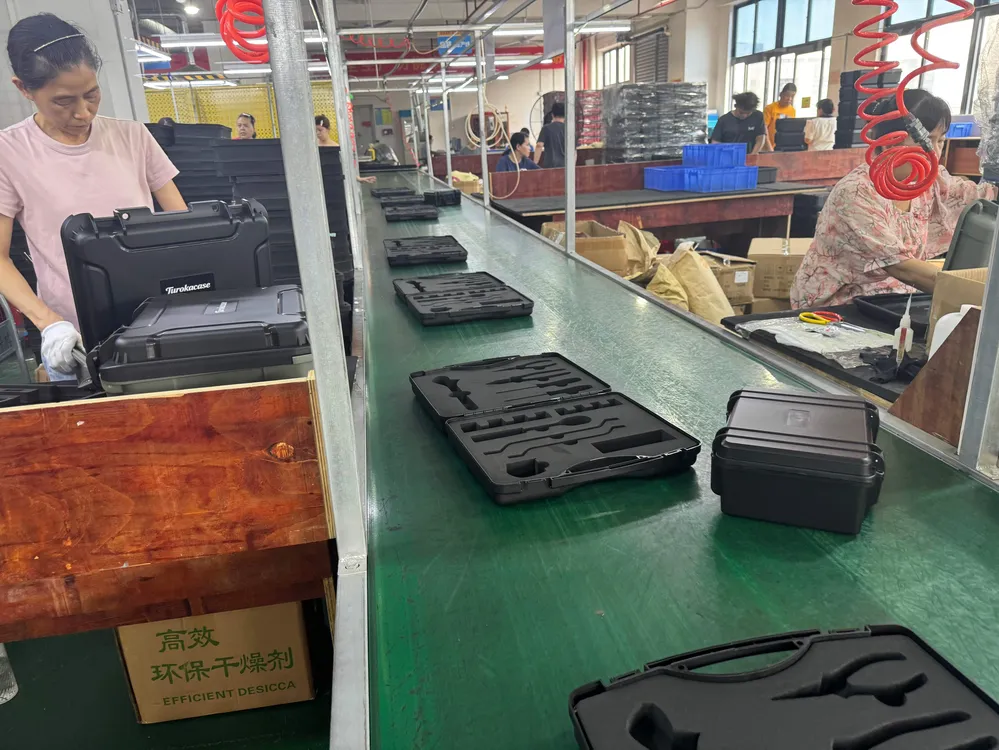
- Colour changeover. An injection machine running a previous colour must be purged until the new colour runs true. The purged material is scrap, and the machine is not producing saleable parts while it happens. This is why a stock colour usually carries a much lower MOQ than a matched custom colour.
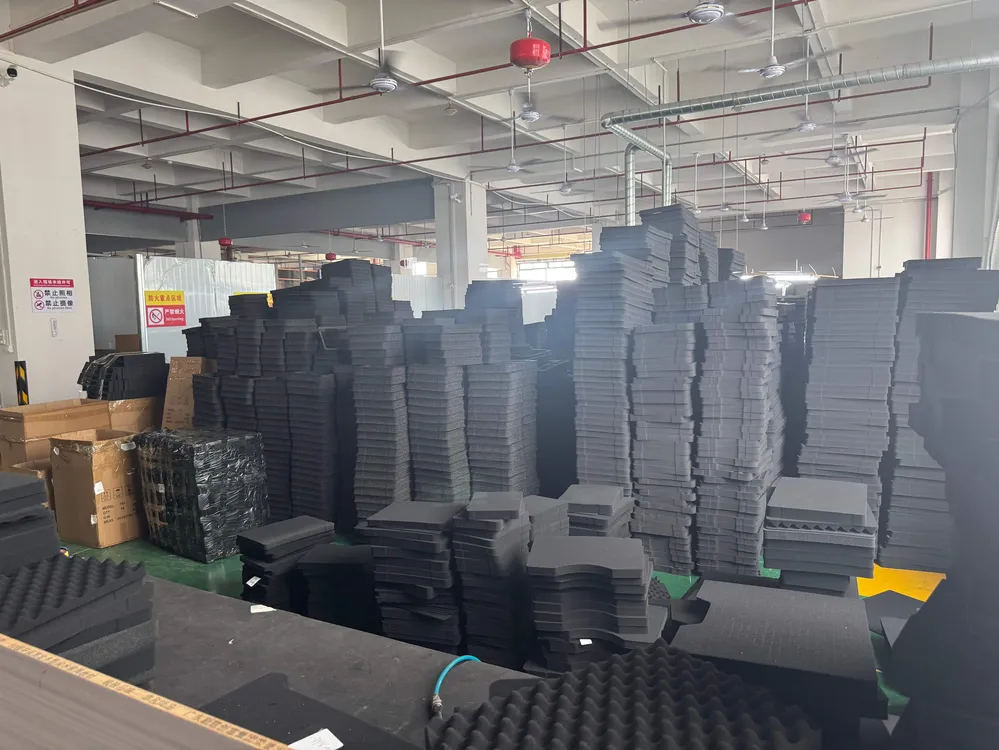
- Foam converting setup. Pick-and-pluck foam needs no tooling - it is scored grid that the user tears by hand. A custom die-cut cavity needs a die, a cutting programme, and setup time on the machine. Small quantities of die-cut foam are disproportionately expensive for this reason.
- Printing preparation. Screen printing needs a screen per colour per position; heat transfer and pad printing have their own plate requirements. The preparation is identical whether you print 50 or 5,000.
- Hardware minimum packs. Latches, hinges, wheels and seals are frequently bought in. Suppliers sell them in minimum pack quantities, and a case order smaller than one pack still costs one pack.
Practical test: ask the supplier which of these four applies to your order. If the answer is "none of them" - stock colour, pick-and-pluck foam, no printing, stock hardware - then a high MOQ is not justified by setup cost and is worth challenging.
Three tiers of order, three very different economics
| Order type | Setup required | What typically drives MOQ | Cost behaviour |
|---|---|---|---|
| Stock case, stock colour | Picking and packing only | Order handling efficiency | Unit price close to list; falls slowly with volume |
| Stock case, customised | Colour, foam die, printing | Each added setup step | Setup amortised over the run; unit price falls noticeably with volume |
| New mould | Tool design and manufacture | Total lifetime volume, not order size | High one-off tooling; unit price falls steeply with cumulative volume |
Buyers frequently try to apply first-tier expectations to a third-tier project. A brand-new shell geometry is a tooling investment, and the right question is not "what is your MOQ" but "at what cumulative volume does this tooling pay back". Conversely, a buyer paying for a custom colour should know that the colour change is a real setup cost, not a sales tactic.
How lead time is actually built up
Lead time is a chain. The order is only as fast as its slowest link, and the links are sequential rather than parallel for most of the process.
- Raw material. Resin in the specified grade and colour, plus any masterbatch. Stock grades are available immediately; a speciality grade or a matched colour may need to be ordered in.
- Production slot. Injection machines run to a schedule. Your order occupies capacity, and during peak season the queue to get onto that schedule can exceed the time the order actually takes to run.
- Moulding and assembly. Shell, lid, latches, hinges, handles, seals, wheels. Assembly is labour-intensive and is where quality escapes are most common.
- Foam converting. Cutting, and if the design is complex, fitting and adjustment. Custom cavities often need a physical trial against the real equipment.
- Printing and curing. Printing itself is fast; curing and handling before packing is not, and printed parts cannot be stacked until they are fully cured.
- Inspection and testing. Dimensional checks, latch cycling, and where specified, IP67 submersion or drop testing. Testing consumes calendar days regardless of outcome.
- Packing and loading. Individual packing, carton packing, palletising, and waiting for the vessel.
The two stages buyers underestimate most are production slotting and testing. Both are waiting time rather than work time, which makes them invisible in a quote that only lists manufacturing days.
Shortening both numbers without paying more
- Choose a stock colour instead of a Pantone match - removes changeover scrap and the masterbatch order.
- Use pick-and-pluck foam for the first order - removes die cost and die lead time, and lets you learn the real cavity layout before committing to tooling.
- Print only what you must - one colour in one position, or a label for the first run.
- Consolidate sizes into one container - avoids the consolidation wait built into less-than-containerload shipping.
- Book the slot before artwork is final - the two are independent, and only one of them needs to be finished.
- Keep repeat orders specification-identical - an unchanged specification may need no setup at all, which collapses both MOQ and lead time.
What to confirm in writing before you order
- Whether the quoted MOQ is per size, per colour, or per order - these are very different commitments.
- Which specification changes would reset the MOQ on a repeat order.
- Whether lead time is quoted in working days from order confirmation, from artwork approval, or from deposit - the clock starts at three different moments.
- Whether any stage is outsourced, and whether transit between facilities is included in the stated time.
- What happens to the schedule if a test fails and parts must be reworked.
None of these questions are adversarial. A supplier who can answer them precisely has a production plan; one who cannot is quoting a number rather than managing a schedule. For a JUNZHIJIA project the specific figures for your specification - the applicable minimum, the current production slot, and the testing your application requires - are confirmed case by case on the quotation, because they depend on the shell size, material, colour and foam design you choose.
Related Products
- 8 Series — Gun Cases; Military Equipment Cases; Camera Equipment Cases; Drone Cases; Watch Cases; Knife Cases; First Aid Cases; Electronics Equipment Cases
- WL8-2812 PP Gun Case — model WL8-2812
- All protective cases and toolboxes: 7 series, 158 models