

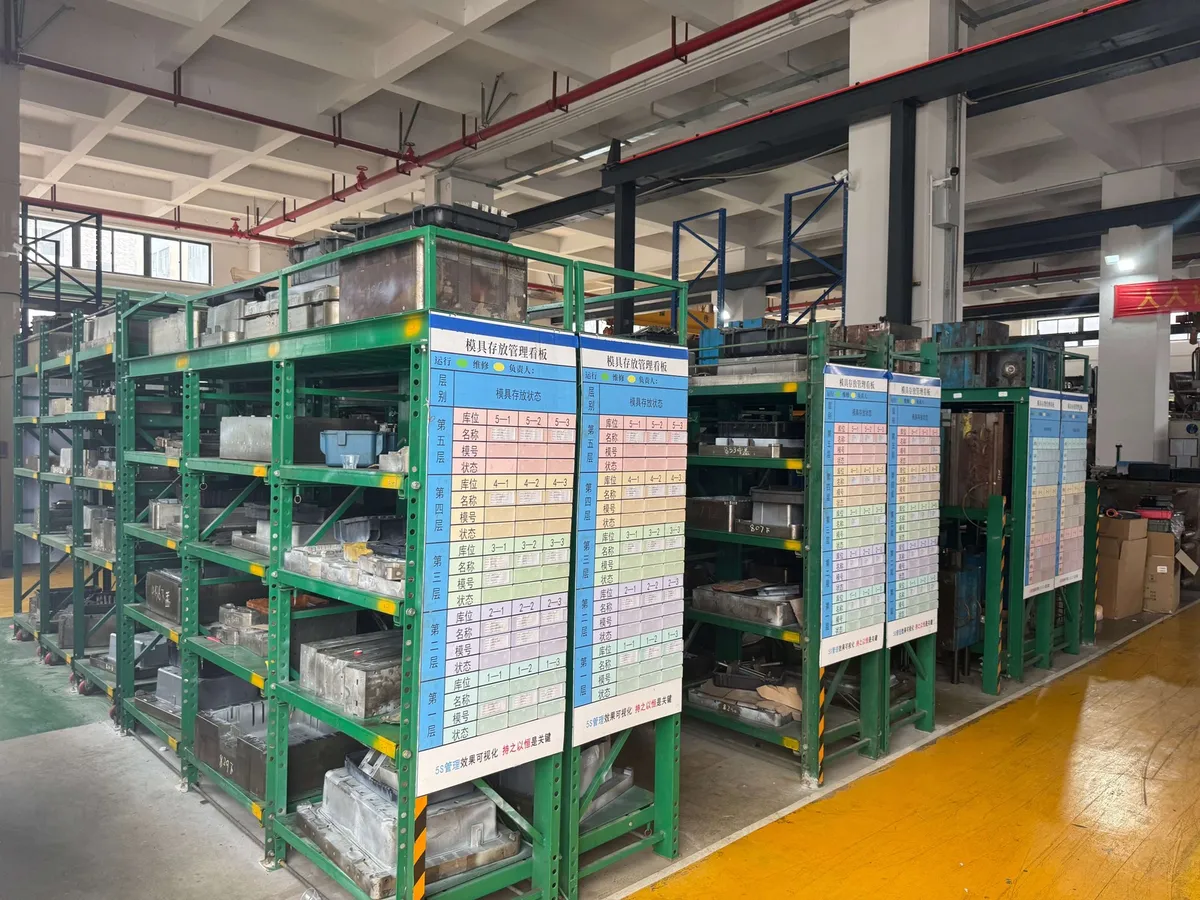
Tooling is the moment a case project stops being a purchase and becomes a capital decision. The arithmetic is simple; the discipline is in being honest about volume and in retiring design risk before steel is cut.
What you are actually buying
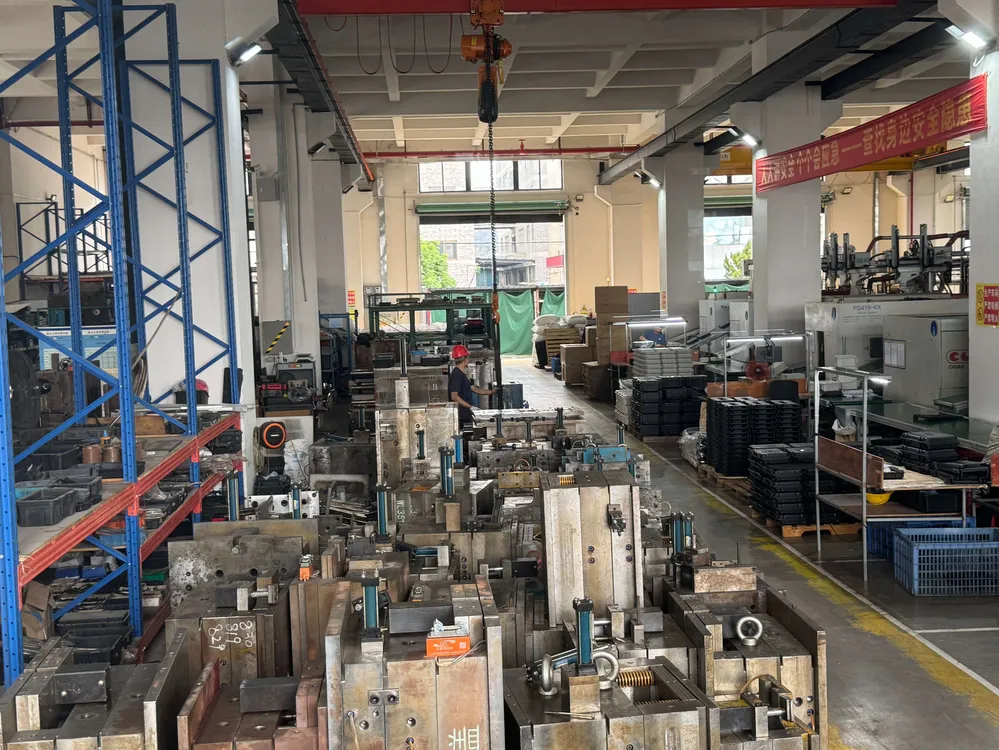
A case mould is a precision tool built to hold a dimensional tolerance for a defined number of shots. Its cost is dominated by three things: the size of the part, the complexity of the geometry, and the steel specified - which in turn is chosen for the expected tool life and the abrasiveness of the material running through it.
| Cost driver | Why it costs | What you can do about it |
|---|---|---|
| Part size | More steel to machine, larger machine required, longer cycle time | Design to the smallest shell that genuinely fits the equipment plus foam |
| Undercuts and side features | Each needs a slider or side action - a moving assembly inside the tool | Redesign to pull straight from the mould, or add the feature by secondary machining |
| Wall thickness variation | Causes sink marks and warpage; forces lower injection speed and longer cooling | Keep walls uniform - the cheapest quality improvement available |
| Tolerance and surface finish | Tight tolerances need more finishing passes and more inspection | Specify tolerance only where function demands it, not across the whole part |
| Cavity count | Machining scales with cavities; output does not scale linearly with cost | One cavity for validation, multi-cavity only once demand is proven |
| Tool steel and expected life | Hardened tool steel costs more but survives abrasive and high-volume running | Match steel to realistic lifetime volume, not to an aspirational one |
Amortisation done honestly
The most common error in tooling decisions is amortising over forecast volume rather than committed volume. A tool paid back over an optimistic three-year forecast is a liability the moment the forecast moves.
- Write down the all-in tooling cost - tool, any trial shots, any design changes after first sampling, and secondary fixtures.
- Identify the best stock-case alternative and price it honestly, including any compromise it forces you to accept.
- Compute the per-unit difference between the two. Include saved components, saved assembly labour, and saved freight if the new geometry packs better.
- Divide step 1 by step 3. That is your break-even unit count.
- Convert that unit count into time using your actual, not aspirational, sales rate. If the answer is longer than your product's expected life, do not cut steel.
A tool that pays back in 18 months of real orders is a good decision even if the absolute cost looks high. A cheap tool that pays back in six years is not a saving.
Retiring risk before the steel is cut
Every design change made after steel is cut costs more than the same change made before it, and the ratio is steep. The sequence that minimises spend is deliberately low-tech at the start.
- 3D data and fit check. Verify the equipment fits the proposed internal envelope with foam, before anything physical exists.
- Machined or printed prototype. A shell produced from the same data by CNC or additive manufacturing costs a fraction of a tool and catches fit, latch feel, handle balance and stacking problems.
- Mould flow analysis. Simulation of how the cavity fills predicts weld lines, air traps and warpage while geometry is still cheap to change.
- Prototype or aluminium tool. Parts in the real production material, for drop testing, seal compression testing and latch cycling.
- Production tool. Hardened steel, built only after the above three have passed.
Buyers often want to skip to the last step to save time. In practice the intermediate steps are what make the last step fast, because a production tool built from validated geometry usually samples correctly first time.
The contract questions that matter more than the price
- Who owns the tool, in writing, and is the ownership conditional on reaching a volume?
- May the tool be used to produce cases for other customers?
- Where is the tool stored, who maintains it, and who pays for refurbishment at end of life?
- What is the quoted tool life in shots, and what happens at the end of it?
- Can the tool be transferred to another moulder, and is there a charge for that?
- How many trial shots are included, and who owns the resulting parts?
These are the terms that determine what your tooling money actually bought. Two quotes that differ on price but are identical on these points are genuinely comparable; two quotes that differ on these points are not comparable at any price. For a JUNZHIJIA project, the figures that apply to your geometry - tool cost, expected tool life, and the volume at which the tool pays back - are established during engineering review, because they follow from your part design rather than from a price list.
Related Products
- 8 Series — Gun Cases; Military Equipment Cases; Camera Equipment Cases; Drone Cases; Watch Cases; Knife Cases; First Aid Cases; Electronics Equipment Cases
- WL8-2812 PP Gun Case — model WL8-2812
- All protective cases and toolboxes: 7 series, 158 models