

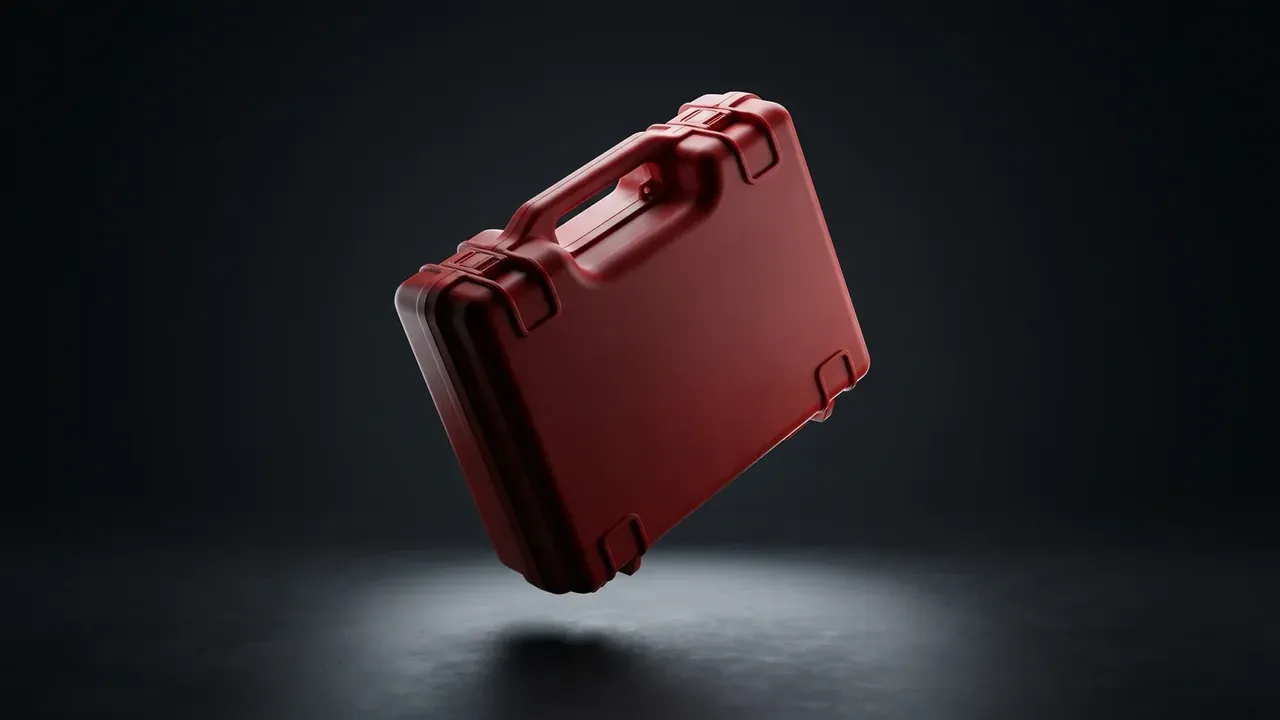
Quick answer: Judge a rolling hard case with wheels by four pairings: wall against mount, mount against axle, axle against ground, handle stages against user height. The run below tests a 620×490×310 mm body at 28 kg with checks you can repeat in ten minutes.
Table of contents
- Three sample cases on the bench
- Wall thickness and wheel mount
- Handle stages and grip height
- Axle load on two kinds of ground
- A checklist after the sample run
- FAQ
1. Three sample cases on the bench
Last October I followed a sample order for a rolling hard case with wheels at a moulding plant: 620×490×310 mm outside, 28 kg inside, half the year in airports and half in the field. Three cases came off one mould, differing only in wall thickness.
| Sample | Side wall | Mount pad | Axle | After 200 tows at 28 kg | Weight |
|---|---|---|---|---|---|
| A | 3.2 mm | 46 mm | 6 mm | Whitening at tow 60 | 5.6 kg |
| B | 4.0 mm | 58 mm | 8 mm | Light whitening at tow 150 | 6.5 kg |
| C | 4.6 mm | 58 mm | 8 mm | None, bolts still torqued | 7.4 kg |
We ballasted each case to 28 kg and towed it over a thirty-metre apron. Whitening, the first sign of plastic flexed too often, showed at the mount edge, not on the wheel. The buyer took B: the 4.6 mm body felt dead when lifted by the rim.
2. Wall thickness and wheel mount
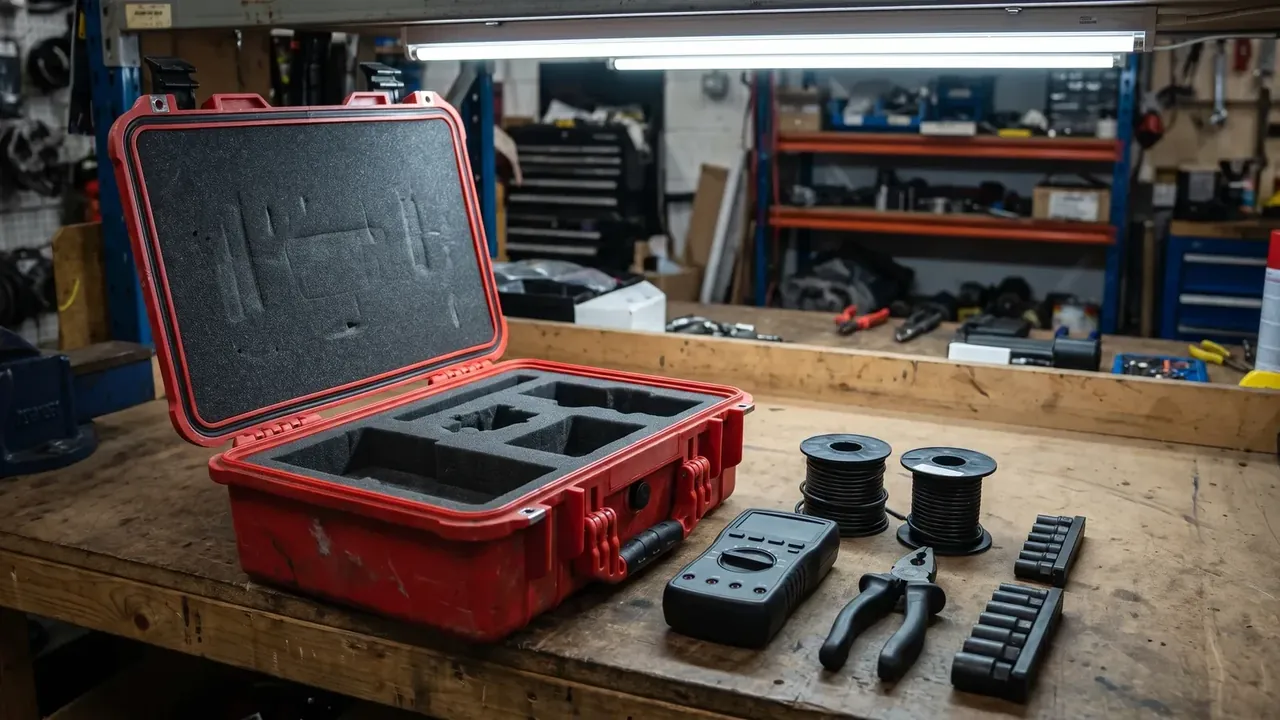
The mount spreads axle load into the side wall. At 46 mm the force sits inside a circle under five centimetres across, and no wall survives that long. Widen the pad to 58 mm and 4.0 mm is enough.
Three checks take five minutes. Press the wall opposite the mount and listen for a click, a rib leaving the skin. Push a 0.05 mm feeler into the joint; if it enters, the faces fret in transit. Then check the four M5 screws, nominal 8 N·m. Thickness and mount multiply, which is the first thing to settle on a rolling hard case with wheels: a 3.2 mm wall on a 58 mm pad outlasts a 4.6 mm wall on 46 mm.
3. Handle stages and grip height
The handle carries reversing load for the whole tow. Two stages reach 900 mm, three reach 1080 mm, and each extra stage thins the tube: 1.4 mm against 1.2 mm. Overlap ran 120 mm on two-stage samples and 85 mm on three-stage.
Wobble is read with the handle extended and the case upright: hold a steel rule against the back and push the grip five times each way. Under 3 mm passes. Grip height sits near half of body height, 900 mm at 1.80 m, since counters stand at 1.1 m. After four hours at minus 18 °C a nylon pin stiffens and push force climbs from 18 N to over 30 N; a POM pin only reaches 22 N.
4. Axle load on two kinds of ground
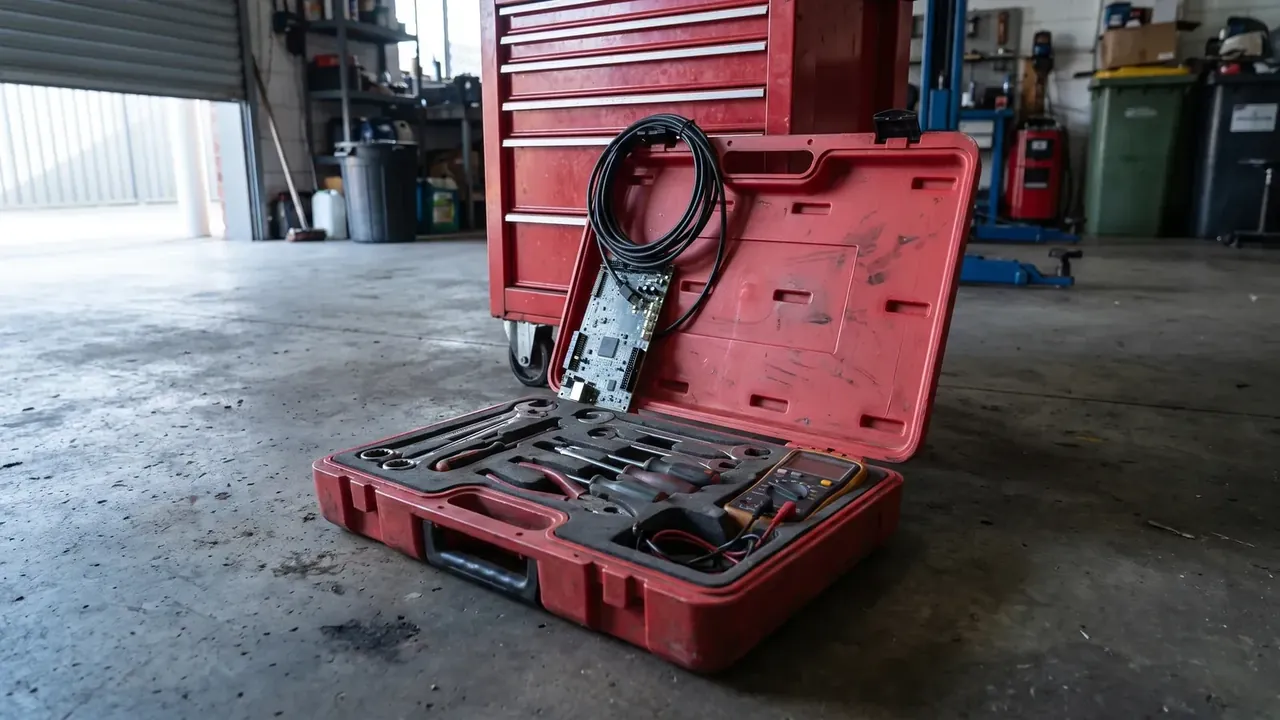
Towing loads two axles, plus sideways force in a turn. At 28 kg inside and 6.5 kg of case, each wheel carries about 17 kg static; double it at a threshold and 35 kg lands on an 8 mm shaft. A 6 mm shaft bends twice as far, which is why sample A whitened at tow 60.
| Ground | Joints and obstacles | Wheel | Tread | Stages | Tow per trip |
|---|---|---|---|---|---|
| Terminal | Tile joints 6–8 mm, thresholds 25 mm | 75 mm | 28 mm | Two | 300–800 m |
| Plant concrete | Joints 20 mm, ramp 8 degrees | 100 mm | 32 mm | Two | 100–300 m |
| Field gravel | Stones 20–40 mm, slope 15 degrees | 125 mm | 40 mm | Two or three | 50–200 m |
In a terminal distance matters more than the obstacle: polyurethane pulls at about 25 N on polished tile where rubber needs 40 N. In the field a 125 mm wheel clears a 50 mm stone. Go up one axle size before one mount size on a rolling hard case with wheels.
5. A checklist after the sample run
Once the samples were signed off, the order points went onto one sheet:
- Wall: within 0.2 mm of nominal, five points across the base.
- Mount: pad 58 mm or more, 0.05 mm feeler refused.
- Axle: 8 mm, stainless or zinc plated, no rust after 96 hours of salt spray.
- Fasteners: four M5 at 8 N·m, none below 6 N·m.
- Handle: wobble under 3 mm, grip height banded by market.
- Lock: under 25 N after four hours at minus 18 °C.
- Seal: gasket compressed 30 to 40 percent at each corner.
- Drop: 1.2 m on six faces loaded, no cracking at mount or handle block.
Nine out of ten failures on a rolling hard case with wheels happen around the mount.
Conclusion
A sample run tells you more than a page of specifications. The 4.0 mm wall, 58 mm pad and 8 mm axle came out of 28 kg and two hundred tows; another body size means testing again. Settle the circle around the mount, and a rolling hard case with wheels comes down to price.
This article discusses only the container (case body) side of specifications and design intent, and does not cover any handling, loading or use of the contents.
Related Reading
- How to compare rolling tool cases
- Configurations for hard cases in transit
- Three things that decide a gun case
- The right order to inspect cases in a showroom
Related Products
- 8 Series — Gun Cases; Military Equipment Cases; Camera Equipment Cases; Drone Cases; Watch Cases; Knife Cases; First Aid Cases; Electronics Equipment Cases
- WL8-2812 PP Gun Case — model WL8-2812
- All protective cases and toolboxes: 7 series, 158 models