

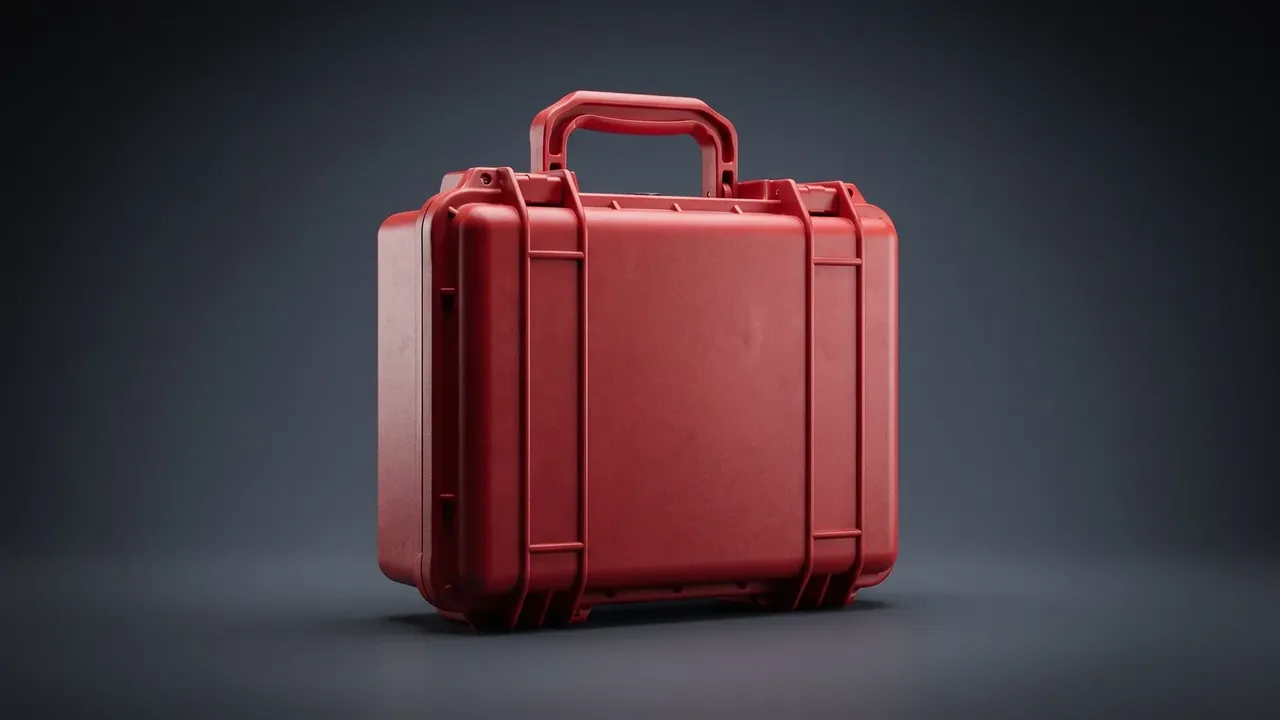
Quick answer: Judge a Rolling Protective Case by the trolley mount first, then by where the centre of gravity sits when the case is towed, and only then by weight ratio, parking and latches. The first two decide whether it can be towed for years; the rest whether it stays upright.
Table of contents
- Five criteria for a Rolling Protective Case
- How the trolley mount meets the case body
- Centre of gravity when the case is towed
- The weight-to-volume ratio
- Standing and lid stability
- FAQ
1. Five criteria for a Rolling Protective Case
A Rolling Protective Case is bought on wheel size, yet the part that ends its life is the trolley mount. A worn wheel can be swapped; a cracked mount means a new case. The five criteria follow the load path: mount, gravity, weight ratio, parking, latch.
With the handle out, case, handle and floor form a triangle resting on two wheels. The further back the apex, the lighter the push, so measure axle-to-gravity horizontally.
| Criterion | What to measure | Usual mistake |
|---|---|---|
| Trolley mount | plate area, screw count | judging by tube diameter |
| Centre of gravity | axle-to-gravity distance | counting total weight |
| Weight ratio | kilos per litre | lighter must be better |
| Parking | pads, friction face | ignoring slopes |
| Latch and hinge | load direction, pin size | counting latches only |
Parking is skipped most: towing lasts minutes, standing lasts months.
2. How the trolley mount meets the case body
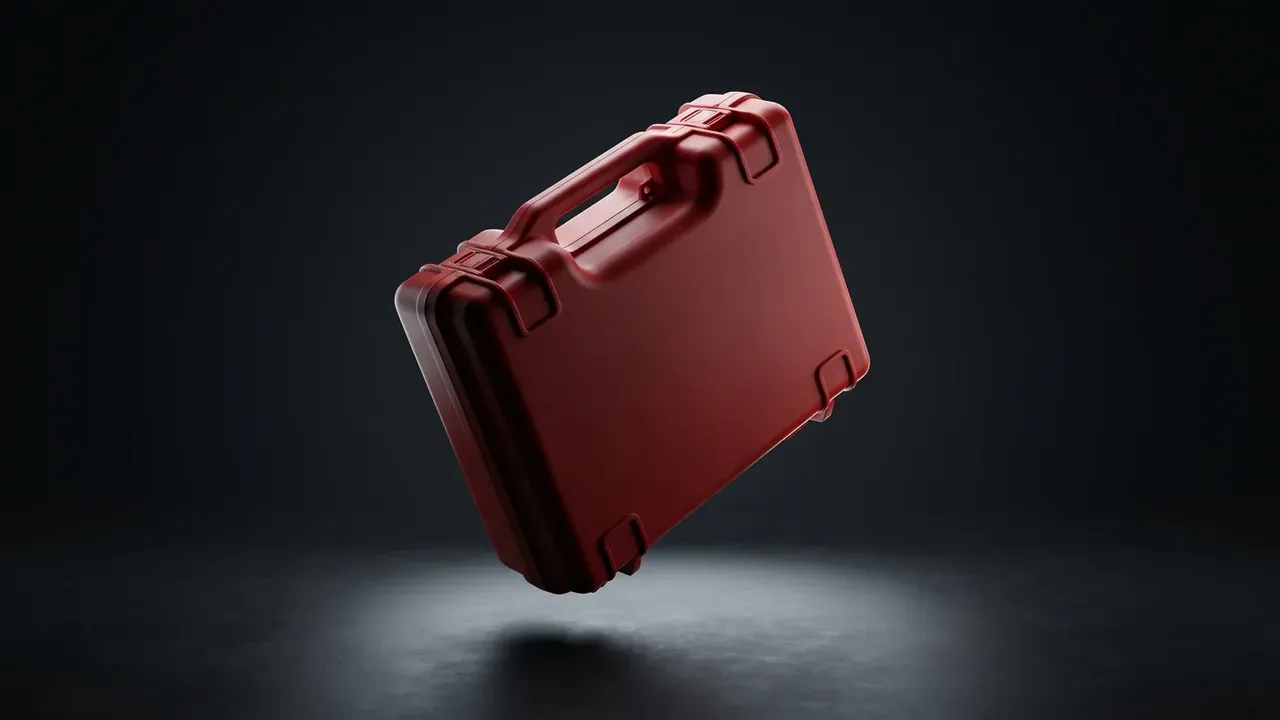
The mount on a Rolling Protective Case is a plate moulded into the wall, drilled and tapped, spreading bending moment over an area. Shrink the area and stress concentrates; the moulding whitens at minus ten before it cracks.
Strip one down: a plate under four millimetres lets the tube mouth loosen, fewer than six screws caps torque at eight newton metres, spacing beyond sixty millimetres lets the wall bulge. The plate also needs a flange lifting the wall from 3.5 mm to five, plus a rubber lip at the tube entry.
3. Centre of gravity when the case is towed
The case never travels upright. The body tips back and gravity moves rearward, so the wrist carries weight, not just the push.
A forty litre body puts its empty centre 320 mm above the base. At 28 degrees it shifts about 150 mm forward in plan, leaving 90 mm between axle and gravity; at 35 degrees only 55 mm remains and the wrist takes 22 percent of the weight, so the case wanders.
Gravity height follows the internal layout: heavy parts low, foam lifting equipment high.
4. The weight-to-volume ratio
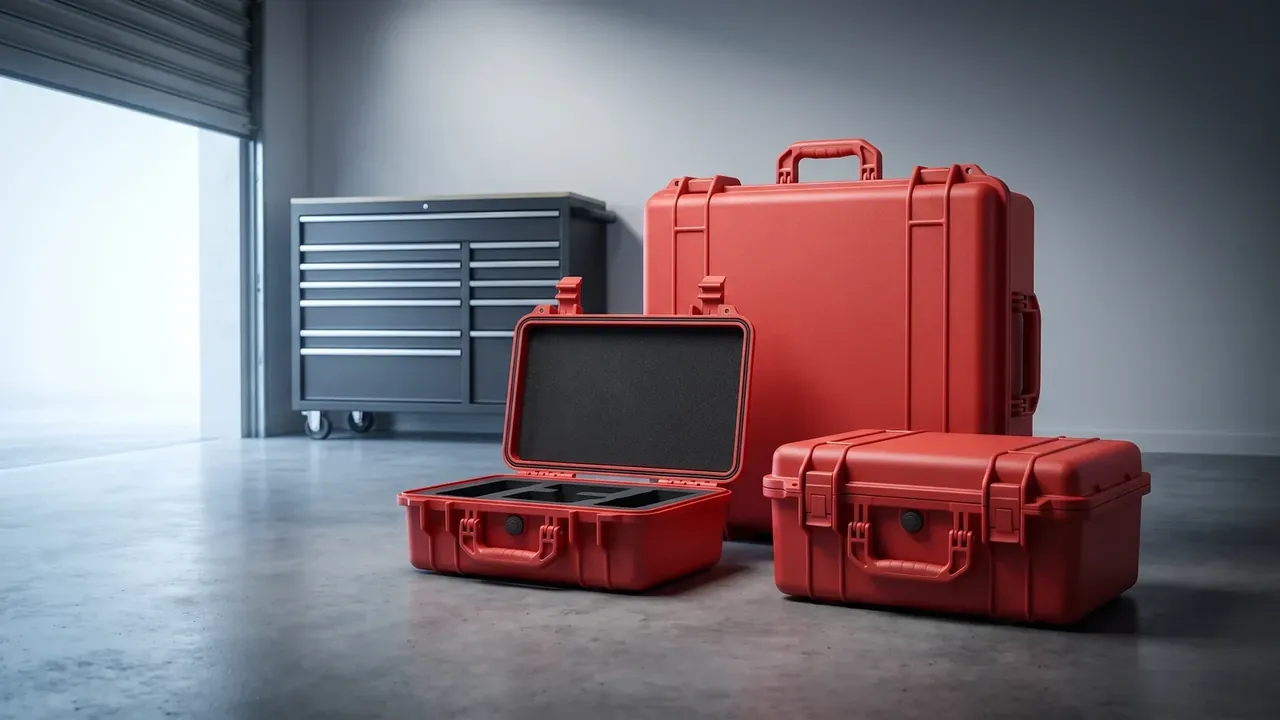
Weight ratio is the most misread figure on a datasheet. Empty weight over volume gives kilos per litre: moulded bodies land between 0.075 and 0.115, and below 0.07 something left the wall.
A 42 litre body at 3.2 kg gives 0.076; the same volume at 4.8 kg gives 0.114. The extra 1.6 kg sits in the mount, wheel bosses and base ribs, invisible on paper, obvious by year three.
Ratio against total weight matters too: at 12 kg the case is a fifth of the whole, at 25 kg a tenth.
5. Standing and lid stability
A Rolling Protective Case stands on four pads, not wheels. Wheels touch along a line, so a case standing on them finds its own direction.
Four pads of 22 mm diameter and 5 mm thickness reach friction near 0.5 on epoxy screed; polished tile falls to 0.3 and five degrees moves the case.
| Check | Pass | Fail |
|---|---|---|
| Pads | four level, no rocking | three touch, case sways |
| Lid angle | self-supporting at 105 deg | falls back past 90 |
| Hinge pin | 5 mm steel | plastic, loose in months |
| Latches | two, with a detent | closed but gapped |
Self-supporting angle comes from hinge position: ten millimetres forward adds a dozen degrees. A trolley takes the rear face, so hinges move forward, invisible in a three-view drawing. Latches see repeated shear, so a metal core outlasts plastic.
Conclusion
The five criteria reduce to one line: the mount decides whether it can be towed, gravity how tiring, the ratio for how many years, pads and hinges whether it stays put. Checked in that order, a Rolling Protective Case datasheet finally matches the corridor it travels.
This article discusses only the container (case body) side of specifications and design intent, and does not cover any handling, loading or use of the contents.
Related Reading
- Wheel size and handles on wheeled cases
- Choosing a rolling tool case
- How to specify case accessories
- Day-to-day care for hard-shell cases
Related Products
- 8 Series — Gun Cases; Military Equipment Cases; Camera Equipment Cases; Drone Cases; Watch Cases; Knife Cases; First Aid Cases; Electronics Equipment Cases
- WL8-2812 PP Gun Case — model WL8-2812
- All protective cases and toolboxes: 7 series, 158 models