

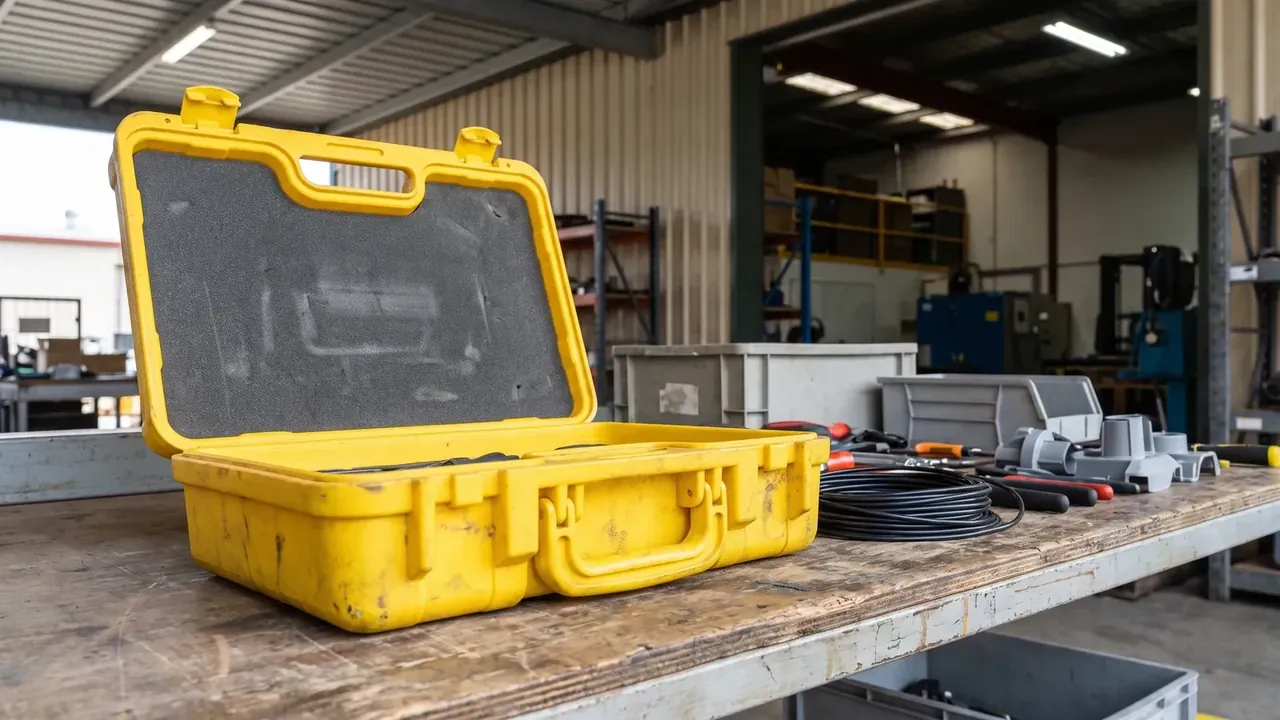
Quick answer: Unit price hides the real difference: load path and sealing. A carton on a timber frame carries top load through four posts and breathes at the joints; export packing is used once; a tote is open; steel is heavy. A shipping case pays only where cycles and dryness are both needed.
Table of contents
- How a Shipping Case Compares on Load Path and Sealing
- Compression and Stacking: Layers Depend on Temperature
- Sealing and Moisture: Vapour Transfer and Condensation
- Repair and Replacement Lines: What Sets the Cycle Count
- Cost per Tonne-Kilometre and the Empty Return Ratio
- FAQ
1. How a Shipping Case Compares on Load Path and Sealing
Sort the five options with two questions: where does top load enter the shell, and where does moisture enter the cavity. A shipping case uses a one-piece moulded shell and a continuous gasket on the parting line. A timber frame hands the load to four posts, export packing to cushions, a tote is open, steel works through welds.
| Option | Load path | Sealing | Empty return |
|---|---|---|---|
| Shipping case | Moulded shell and ribs | Continuous gasket | Nests to 30% |
| Carton on frame | Four posts and base | Joints, breathable | Flat packed |
| Export packing | Cushions, outer box | Film and desiccant | Not returned |
| Plastic tote | Walls, open top | No sealing face | Nests to 20% |
| Steel box | Welds and frame | Door gasket | Full volume |
The interface matters too: moulded bosses let a stack align by geometry, while frames depend on nails. That decides whether the stacking figure is delivered at all.
2. Compression and Stacking: Layers Depend on Temperature
At 800 × 600 × 460 mm, one case carries 900 kg uniformly on the lid and stacks four high at 23 °C. Held at 45 °C for six months, it should go two high. Thermoplastics creep, so a layer count without temperature and duration cannot be checked.
A timber frame can be built six high, yet board loses about 40% of its edge crush strength above 80% humidity, so the softened carton sets the limit. Steel stacks honestly and pays in tare: at equal cavity it weighs more than double.
3. Sealing and Moisture: Vapour Transfer and Condensation
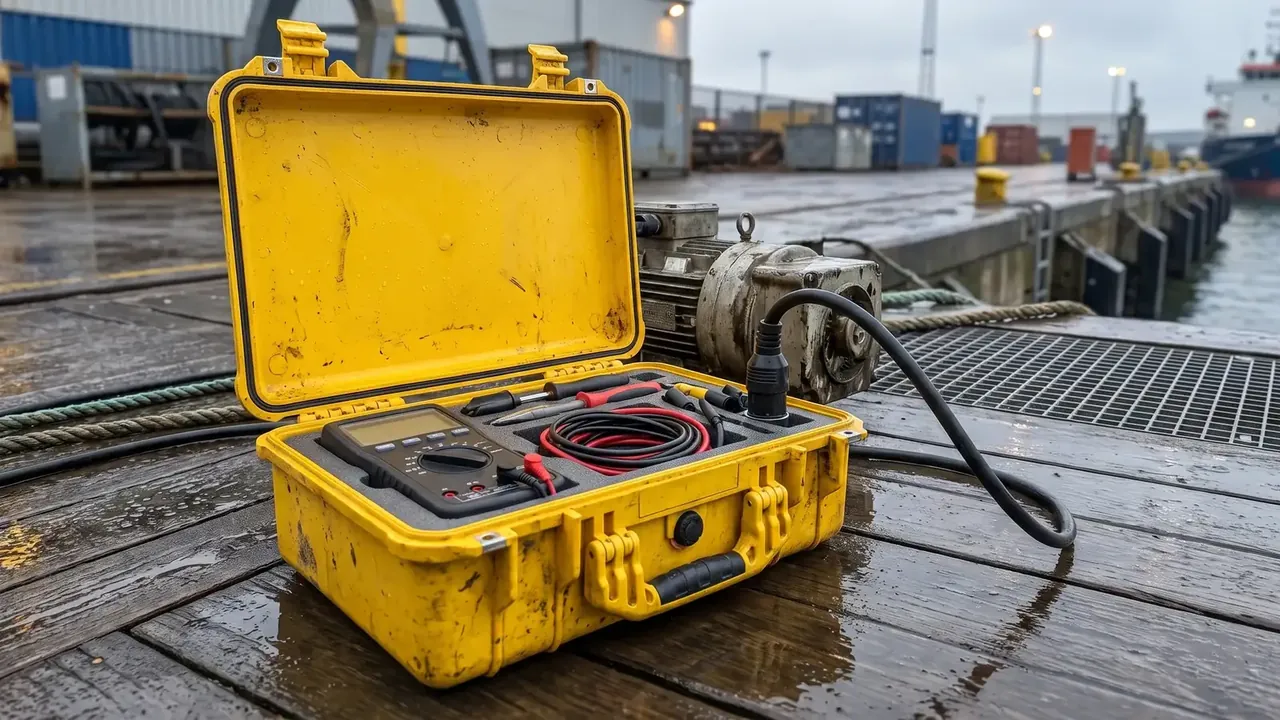
A gasket plus a pressure equalisation valve held the cavity to a 2 g moisture gain after 48 hours at 40 °C and 90% humidity. Timber shows 3 mm joints, and plywood at 12% moisture releases water inward. Wet board sags at the thinnest point of the seal.
Condensation is harder than rain: a trailer at 35 °C by day and below 10 °C at night leaves water on the inner wall, while a desiccant works only until saturated.
4. Repair and Replacement Lines: What Sets the Cycle Count
The shell is designed for 800 closures, but a latch pair lasts around 200 and a gasket 18 months, both replaceable in the field. A tote has no parts, so a crack is scrap; at 3% a month a third of the fleet goes yearly. Steel fails at welds, costing two days.
5. Cost per Tonne-Kilometre and the Empty Return Ratio
| Option | Tare and cavity | Empty return | Cost per tonne-km |
|---|---|---|---|
| Shipping case | 11.2 kg, 0.15 m³ | About 30% | Baseline |
| Carton on frame | 18 kg, 0.16 m³ | About 40% | Slightly higher |
| Export packing | 9 kg, 0.14 m³ | None | Highest per trip |
| Plastic tote | 6 kg, 0.11 m³ | About 20% | Lowest |
| Steel box | 24 kg, 0.13 m³ | Full volume | Highest |
On a round trip, moving empties back can cost as much as the loaded leg. A nesting case cuts that volume to about 30%, so two legs bill closer to one and a half; a one-way lane returns nothing. Load factor matters too: 12 cases per pallet, 24 pallets in a 13 m trailer, 10 per pallet for steel.
Conclusion
Each alternative wins somewhere: the frame on price and flat returns, export packing on never coming back, the tote on weight, steel on compression. A shipping case sits above the middle: stacking, moisture control and repeated opening at once, paid for in tare and price.
Check three things: whether the lane runs both ways, how much of the year is wet, and what the layer count becomes once temperature is applied. Two bad answers point elsewhere; three good ones are where a shipping case costs least.
This article discusses only the container (case body) side of specifications and design intent, and does not cover any handling, loading or use of the contents.
Related Reading
- Shipping Case Selection: Sizing, Rating and Latches
- How One-Way Export Packing Is Built and Costed
- How Case Requirements Differ by Industry
- PP Against ABS: What the Two Materials Change
Related Products
- 8 Series — Gun Cases; Military Equipment Cases; Camera Equipment Cases; Drone Cases; Watch Cases; Knife Cases; First Aid Cases; Electronics Equipment Cases
- WL8-2812 PP Gun Case — model WL8-2812
- All protective cases and toolboxes: 7 series, 158 models