

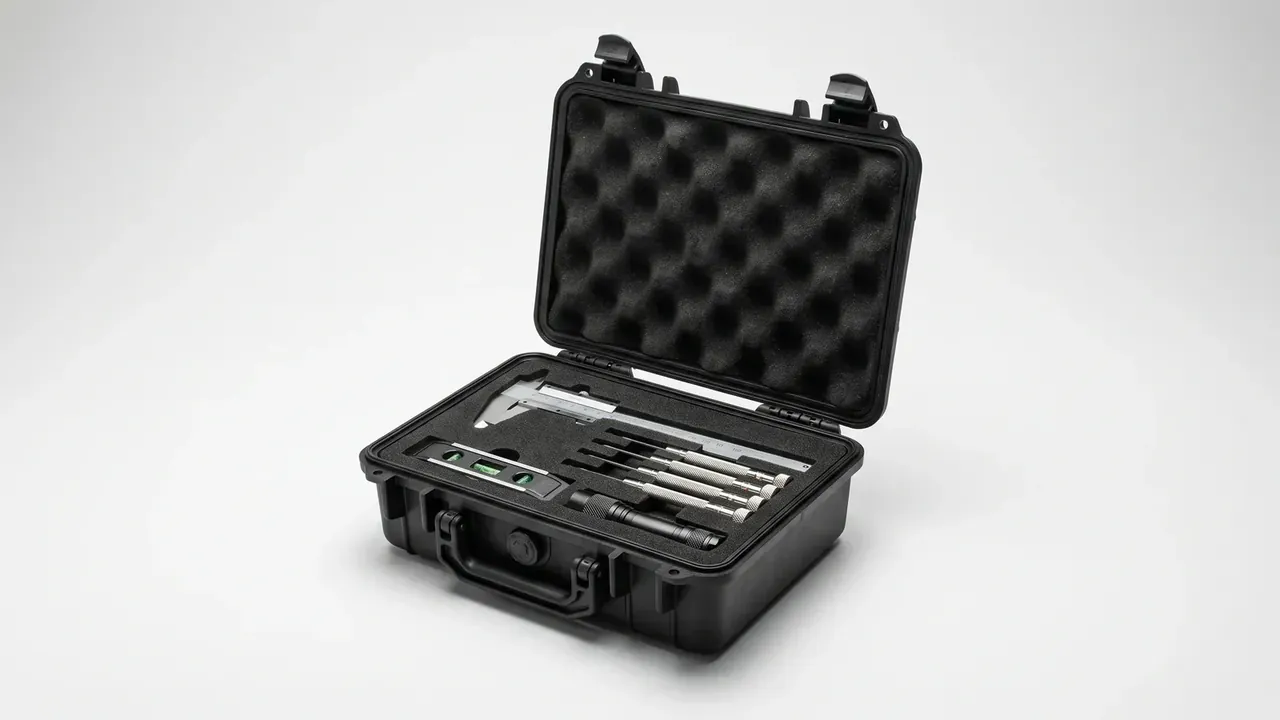
Quick answer: Start a shipping case selection with total weight, not dimensions. Weight sets the base structure, tier count and lifting hardware, while dimensions only fill in what those limits allow. Add shell mass, equipment mass and liner, apply a dynamic factor, then check foot contact area, top-face rating, fork entry height and lifting capacity. If any of those checks fails, redistribute the load or change the base rather than ordering a larger case.
Table of contents
- Shipping case selection: start with total weight, not dimensions
- Base structure: feet and pallet fit
- Stacking: top-face geometry and tier checks
- Forklift apertures and lifting points
- Dimensions and pallet modules
- FAQ
1. Shipping case selection: start with total weight, not dimensions
A shipping case carries load through contact area, not through a datasheet figure. Forty kilos over half a square metre presses half as hard as the same mass over a quarter. Sizing by height alone yields a case that fits the space and dents at the base.
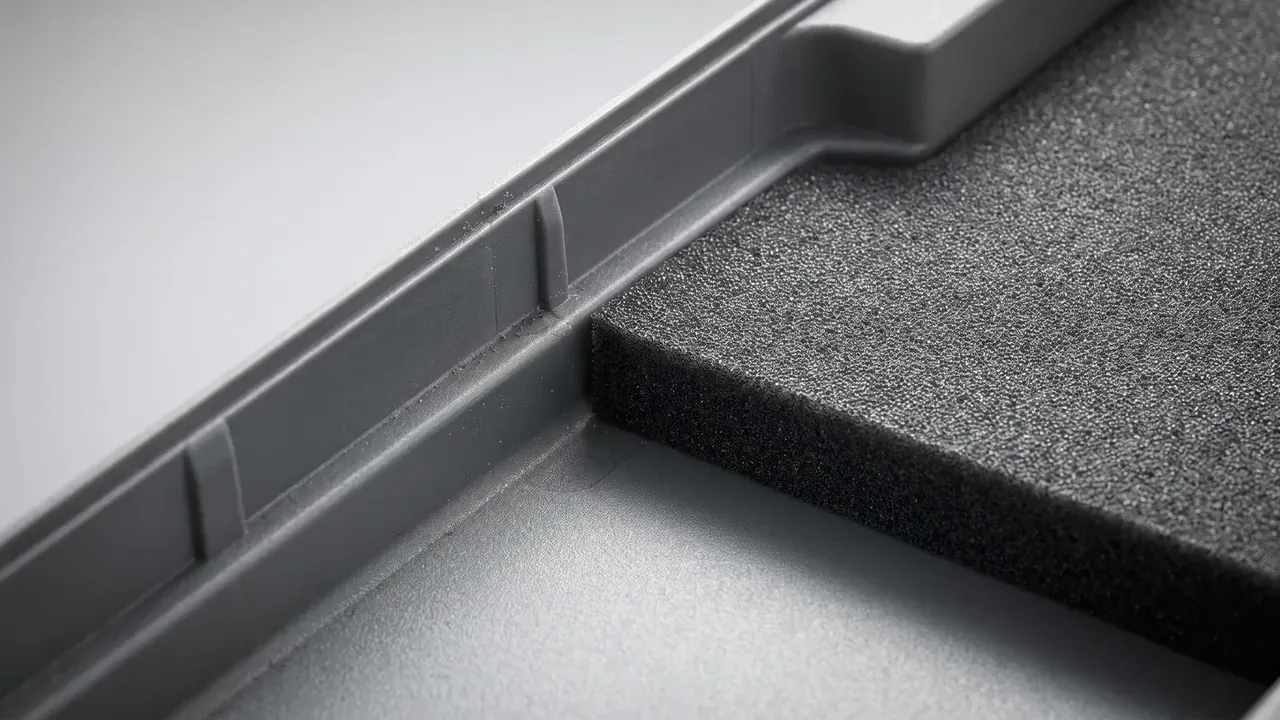
Build total weight from shell, equipment and liner, then apply 1.5 for manual handling or 1.3 for pallet work. Foam, dividers, straps and casters all count, and a thick set can add fifteen kilos. Compare the result with foot contact area and the top-face rating before choosing a size.
2. Base structure: feet and pallet fit
The base decides which floors a shipping case can sit on and who moves it. A flat bottom suits pallet support, feet suit fork entry, casters suit indoor runs. Fitting two raises the centre of gravity and steals the clearance a fork needs.
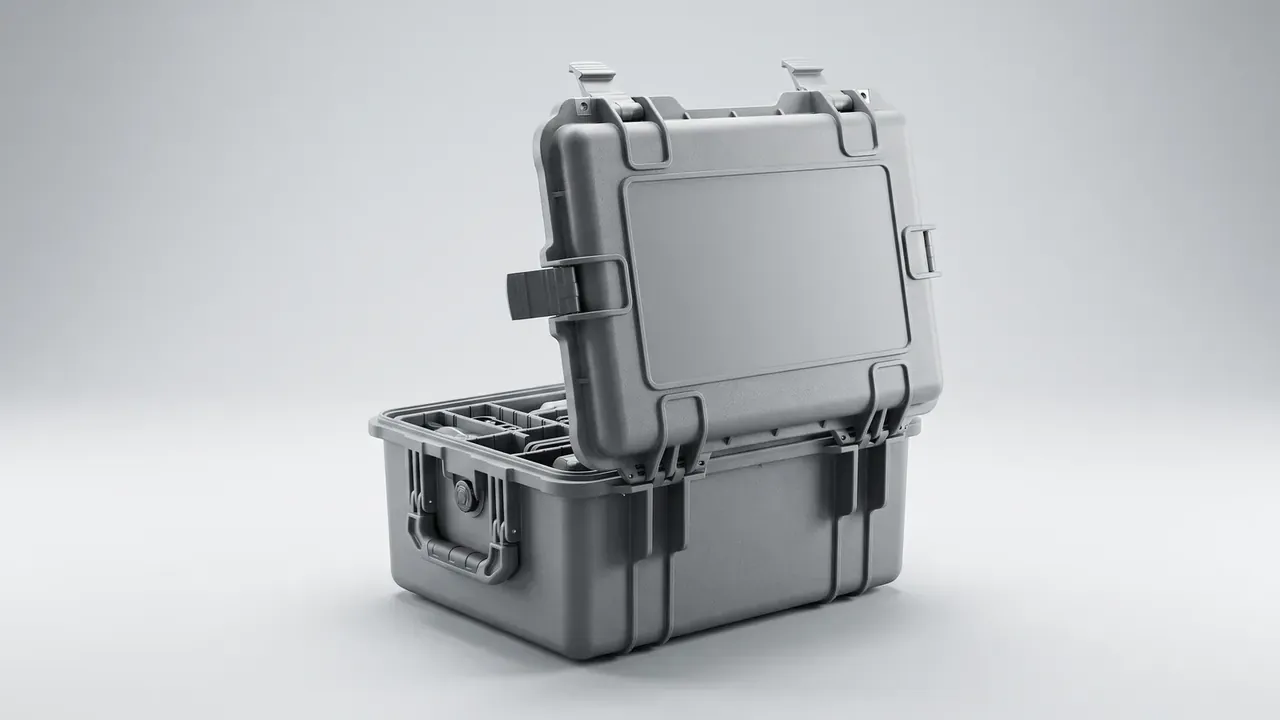
Foot height must clear fork thickness plus ten millimetres and the entry tilt. Below a hundred millimetres, forks scrape the floor and shear the foot root. Put feet under corners and long-side midpoints, and keep the bottom flat enough to sit level on a pallet.
3. Stacking: top-face geometry and tier checks
Tier count follows the rated load on the top face, not the impression that a shipping case looks solid. Loaded weight times tiers minus one must stay under that rating. Keep one tier in reserve for ramps and off-centre loads.
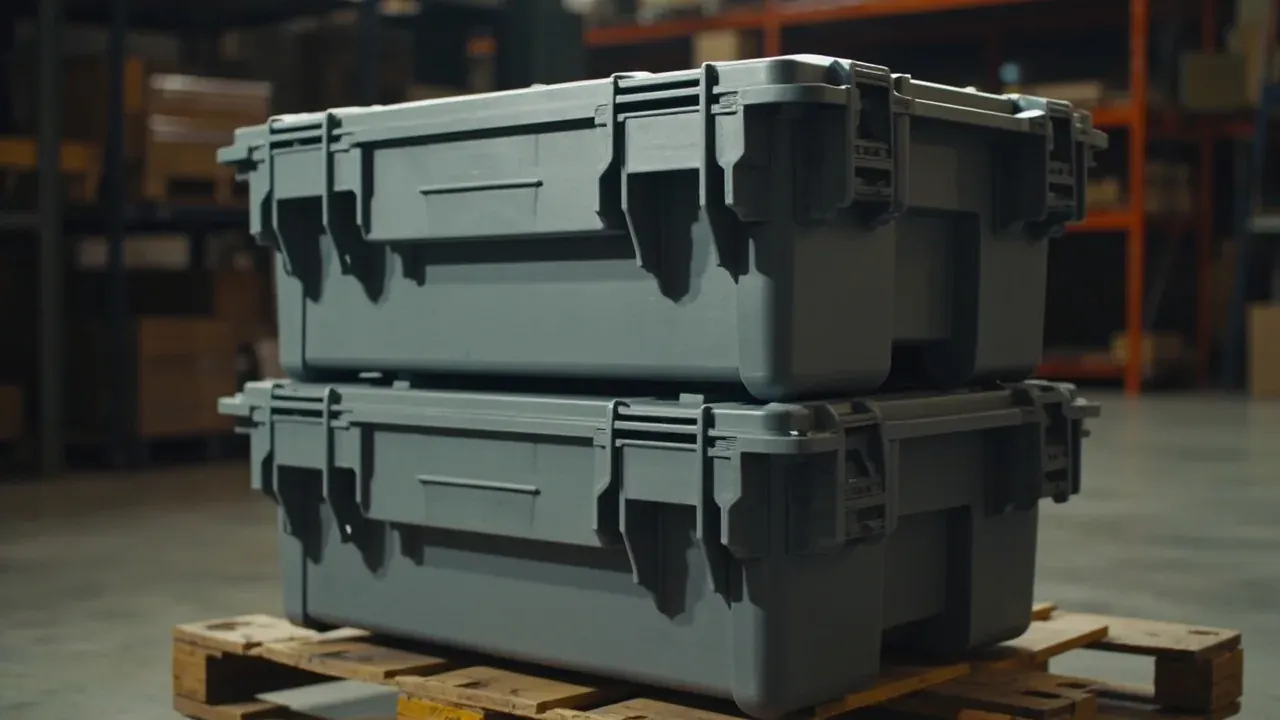
Top-face geometry handles alignment and slip together. A recess mated to a boss stops movement but leaves only a ring of contact, while flat anti-slip ribs carry more area. Mixed stacks follow the smaller contact face, and the projected centre stays inside the middle third.
4. Forklift apertures and lifting points
Forklift apertures and lifting points are the only load paths built into a shipping case for machinery. Pockets run along the entry direction with the centreline over the projected centre of gravity. Offset pockets load one fork and tip the case in a turn.
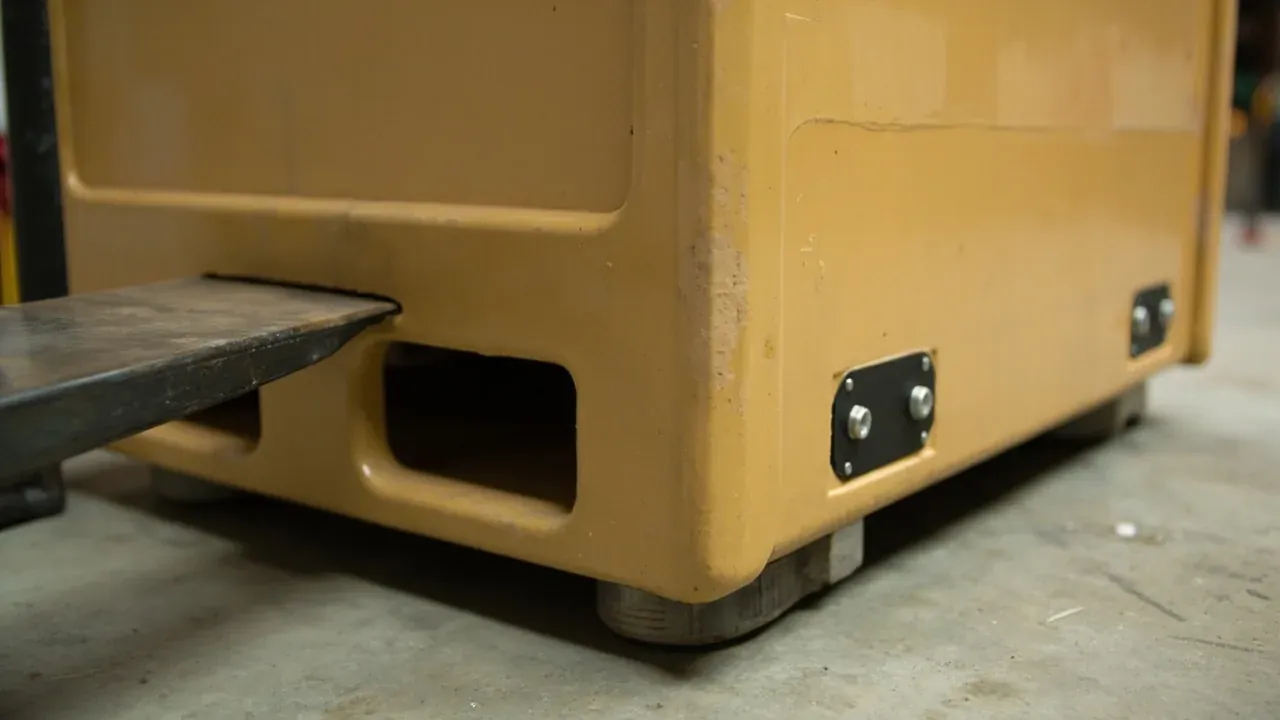
Lifting points sit in a four-point pattern with the line between them above the centre of gravity. Dropping the sling angle from sixty to thirty degrees adds seventy per cent to each leg. Fit metal inserts, and keep entry depth at two thirds of fork length.
5. Dimensions and pallet modules
Dimensions are calculated, then aligned to a module. Add two cushion layers for internal size, twice the wall plus rib height for the envelope, then round to the pallet module and absorb the remainder in the liner. Always round up, never down.
| Step | Basis | Error |
|---|---|---|
| Internal size | Equipment plus cushion | Cushion counted once |
| Envelope | Internal plus two walls | Ribs left out |
| Footprint | Outer length by width | Feet ignored |
| Module | 1200 by 1000, 1200 by 800 | Odd size wastes corners |
| Stack height | Tiers plus pallet | Pallet missed |
Two formats dominate, 1200 by 1000 and 1200 by 800 mm. A case sized to an exact fraction of either fills the pallet without dead corners. Odd sizes look generous inside and cost at loading and at the rack.
Release checks:
- Weight includes liner and fittings
- Foot height exceeds fork thickness
- Top rating exceeds the stack load
- Pocket centreline passes the centre
- Lifting points are symmetrical
Conclusion
Work in this order: total weight, base structure, tier check, fork and lifting detail, then pallet module. Weight runs through all five, so a failed check returns you to the load.
This article covers container-side specifications and design implications only.
Related Reading
- Where a transit case sits in the logistics chain
- Configuring a transit case for sorting and field transfer
- Stacking design: load, interlock and stability
- Heavy-duty protective case specifications and load ratings
Related Products
- 8 Series — Gun Cases; Military Equipment Cases; Camera Equipment Cases; Drone Cases; Watch Cases; Knife Cases; First Aid Cases; Electronics Equipment Cases
- WL8-2812 PP Gun Case — model WL8-2812
- All protective cases and toolboxes: 7 series, 158 models