

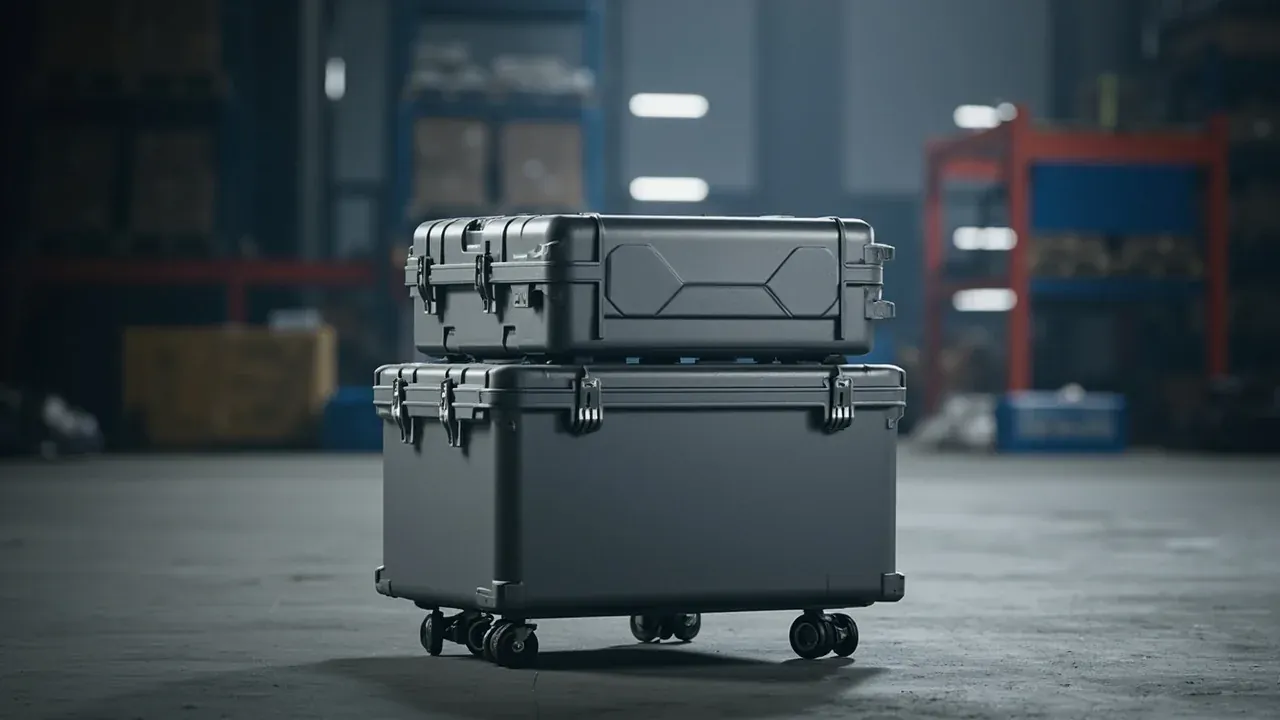
Quick answer: A transit case serves two duties. In warehouse sorting it competes on openings per hour and fit against shelving; in field transfer it competes on load density and handover speed on the ground. One build rarely wins at both, so fix the primary duty, then rank opening style, stacking face, handling hardware, sealing and marking. Sorting starts at the base, field work at the handles and the lid stop.
Table of contents
- Transit case in warehouse sorting: high open rates and temporary stacking
- Field transfer: mobility and fast handover
- How the two duties differ
- Numbering, labels and handover records
- Configuration checklist
- FAQ
1. Transit case in warehouse sorting: high open rates and temporary stacking
A transit case on a sorting floor opens dozens of times a shift but travels a few dozen metres on casters or a pallet. Wear collects at the keeper, latch pin and hinge rather than in the shell. A case specified for impact alone loses its latches first.
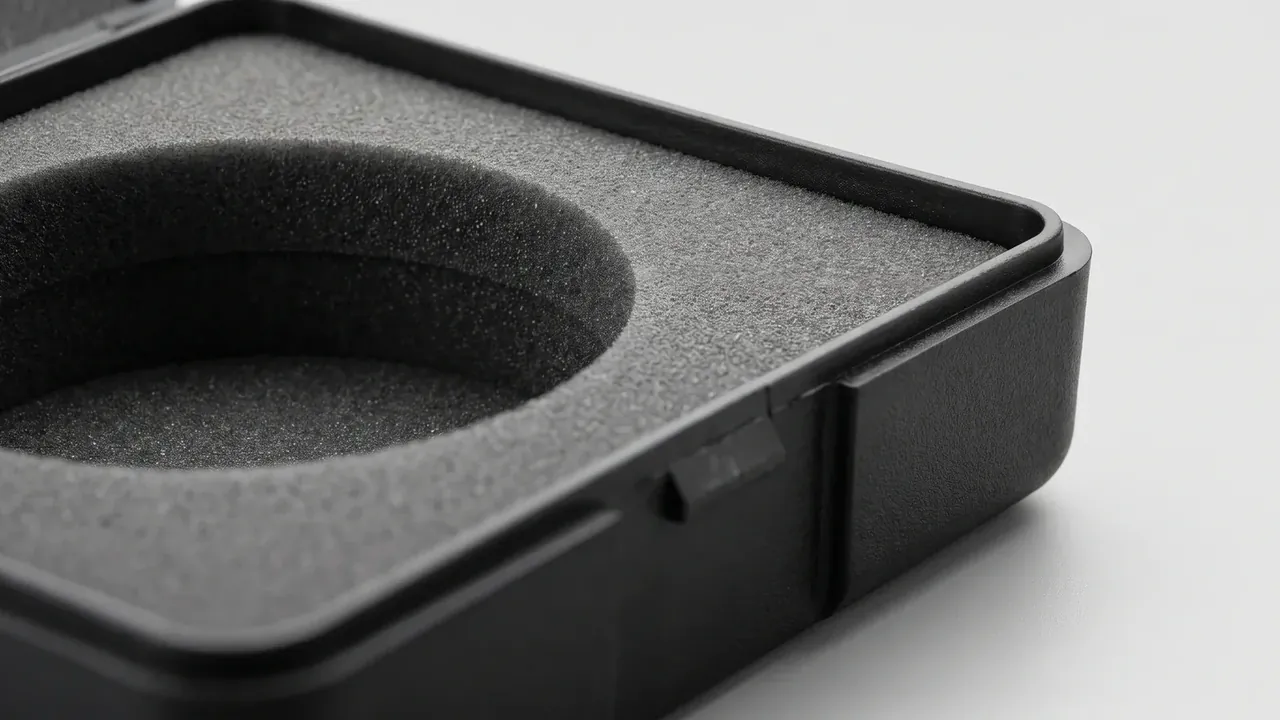
Lid travel matters as much as latch strength. Under a rack beam a ninety-degree lid forces a forearm shove that loads the latch sideways. A stop past one hundred degrees removes that abuse. The base then needs one answer: casters or a pallet, never both, because combining them lifts the centre of gravity and makes a three-high stack unstable.
2. Field transfer: mobility and fast handover
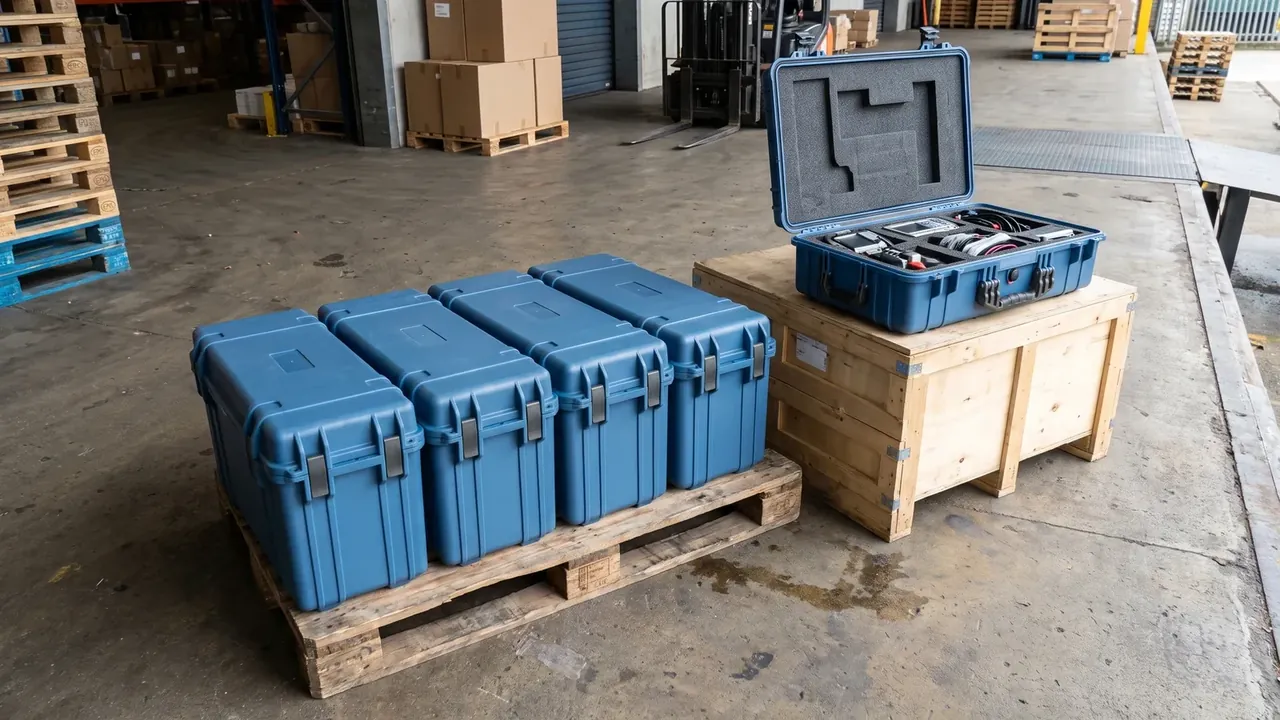
Field handover happens without a bench. The case lands on whatever surface is available, opens, is checked and goes back aboard, so self-standing geometry and two-person handling outweigh speed. Handles and the lid stop are settled before latches.
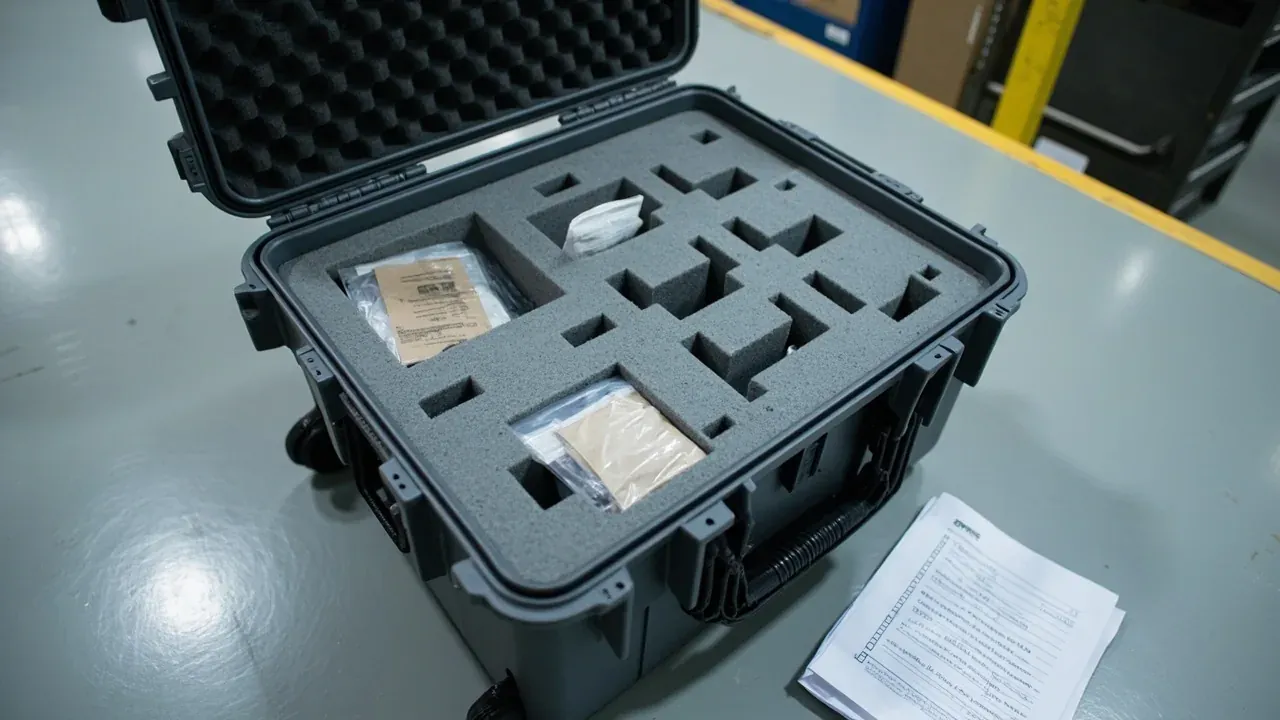
Load density follows the outer envelope. A clean rectangle lets cases sit side by side, stand on end or stack two high in a vehicle, while a bulge wastes volume. Ribs along edges and base buy stiffness at lower mass than uniform thickening.
3. How the two duties differ
The gap sits in six hardware decisions, not in an overall rating.
| Item | Warehouse sorting | Field transfer | Cost of covering both |
|---|---|---|---|
| Opening | Wide lid, fast cycle | Limited travel, half-open | Extra hinge drag |
| Latches | Two, one-handed | Four or more, anti-release | Slower cycles |
| Handles | One side pair | Two pairs, end handles | Volume loss |
| Base | Casters or pallet | Flat, sits on ground | Blocks pallet stacking |
| Stack face | Recess for alignment | Recess plus anti-slip ribs | Traps dirt |
| Liner | Loose dividers | Zoned foam, open cells | Foam reduces volume |
Sorting counts life in openings, field work in lifts; the first build fails at the latch, the second at handles and corners.
4. Numbering, labels and handover records
A number identifies a transit case after several handovers; a label does it without opening. Both depend on a fixed position. When a batch labels the same face and corner, edge to the aisle, a checker reads a row at a glance.
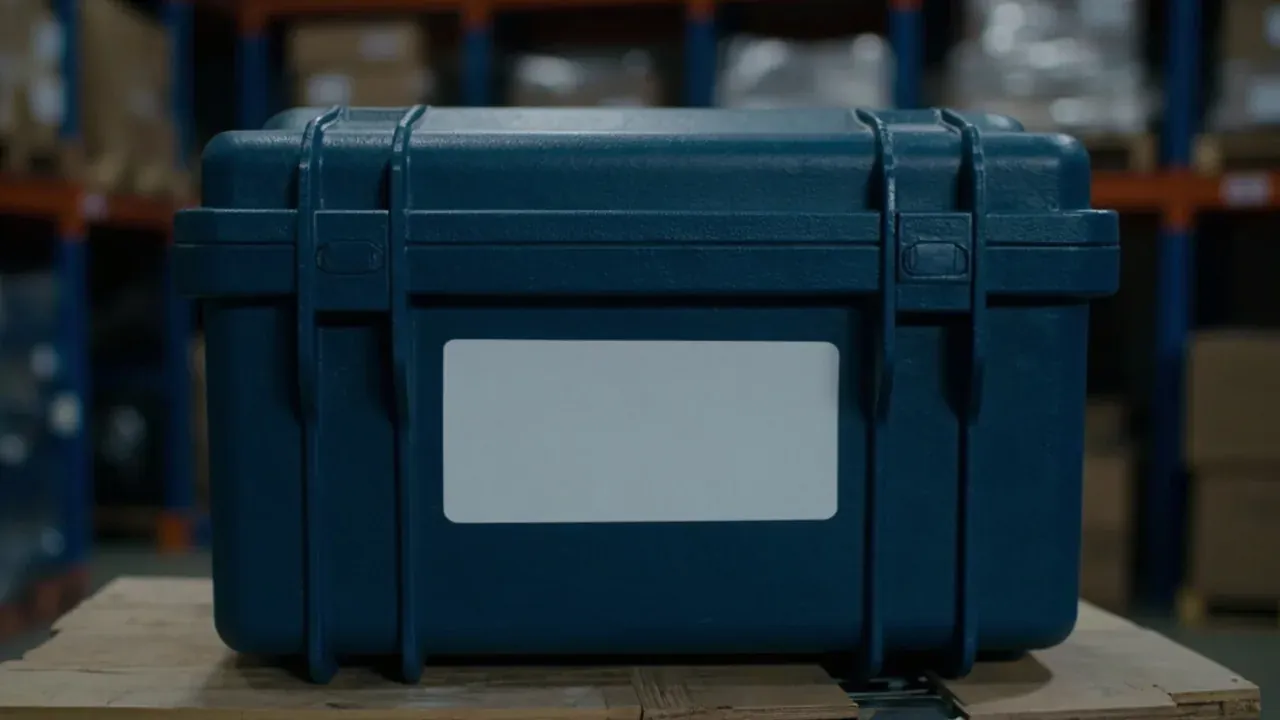
Three locations defeat any label: around the latch keepers, across the lid split line, and the heaviest wear zone. A recess in the top right of the lid, slightly deeper than the label, keeps the surface flush. Keep numbers short and site-independent.
5. Configuration checklist
Set the primary duty, fix five items, then add the rest. Each line maps to a working condition.
| Item | Warehouse sorting | Field transfer |
|---|---|---|
| Envelope | Low and wide | Stacks on end |
| Opening | Past 100 degrees | Damped stop |
| Latches | Two, one-handed | Four, anti-release |
| Base | Casters or pallet feet | Flat, reinforced corners |
| Handles | One recessed pair | Two pairs, end handles |
| Liner | Loose dividers | Zoned foam |
| Marking | Lid recess | Two-face label |
| Sealing | Dust and splash | Raised for open ground |
Release checks:
- The lid holds half-open when loaded
- Label recesses align across the batch
- Casters and pallets are not combined
- Handle count matches the crew
- Stack height keeps a tier on slopes
- Case numbers match the handover sheet
Handles and a damped stop cover most field work; casters only pay off on flat indoor floors. Sealing follows exposure.
Conclusion
Configure in this order: primary duty, handling method, then opening and marking. Sorting is decided at the base, field work at the handles and lid stop. Marking comes before ordering; retrofitting numbers destroys traceability.
This article covers container-side specifications and design implications only.
Related Reading
- What a transit case is and where it sits in the logistics chain
- Choosing a shipping case: load, stacking and lifting
- Stacking design for stackable cases: load, interlock, stability
- Heavy-duty protective case applications on site
Related Products
- 8 Series — Gun Cases; Military Equipment Cases; Camera Equipment Cases; Drone Cases; Watch Cases; Knife Cases; First Aid Cases; Electronics Equipment Cases
- WL8-2812 PP Gun Case — model WL8-2812
- All protective cases and toolboxes: 7 series, 158 models