

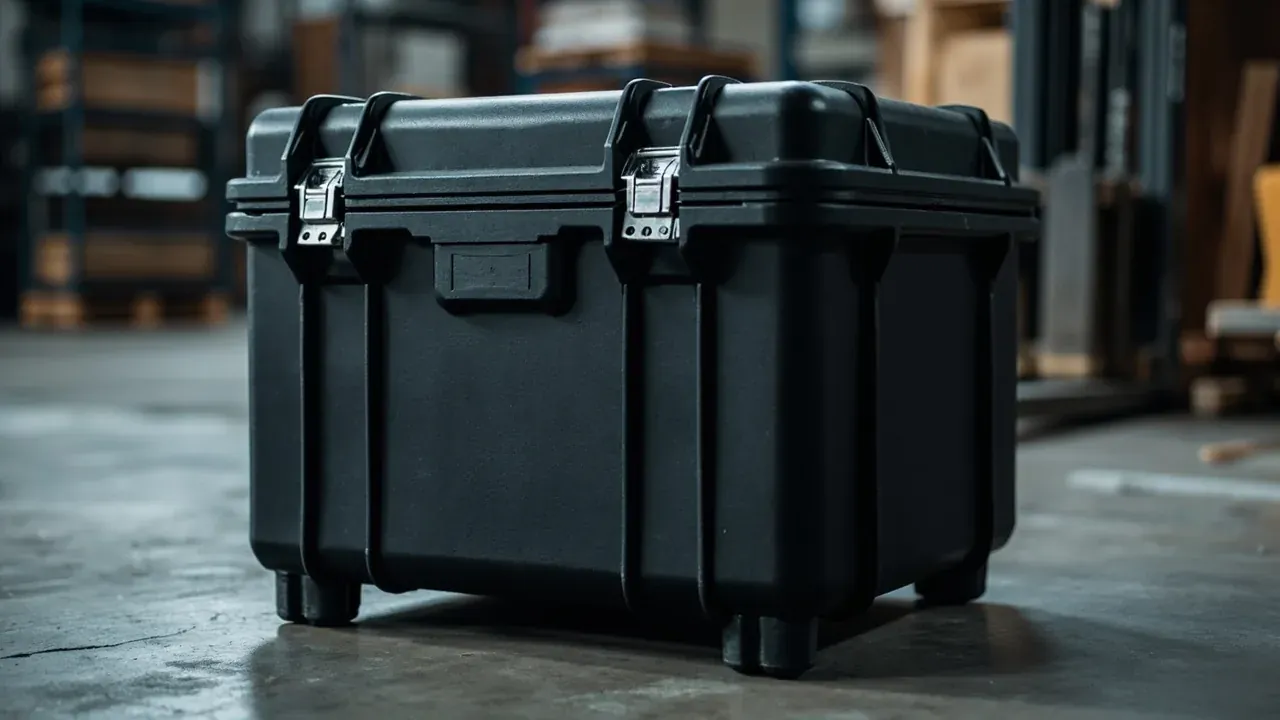
Quick answer: Large equipment travels with concentrated weight, machine-only handling and several handover points between sites. A heavy-duty protective case answers that duty by spreading point load into the base, giving cranes and forklifts a standard interface, and holding closure pressure after repeated opening. Judge one in order: whether cavity and envelope fit, whether the base is reinforced at the feet, and whether lifting points, pockets and latches match the handling machines already on site.
Table of contents
- Four requirements large equipment transport sets for a heavy-duty protective case
- Loading pattern: whole-unit or split fixing
- Lifting, forklift and roll-on work
- Vibration, temperature and humidity
- Opening on site and restoring the case
- FAQ
1. Four requirements large equipment transport sets for a heavy-duty protective case
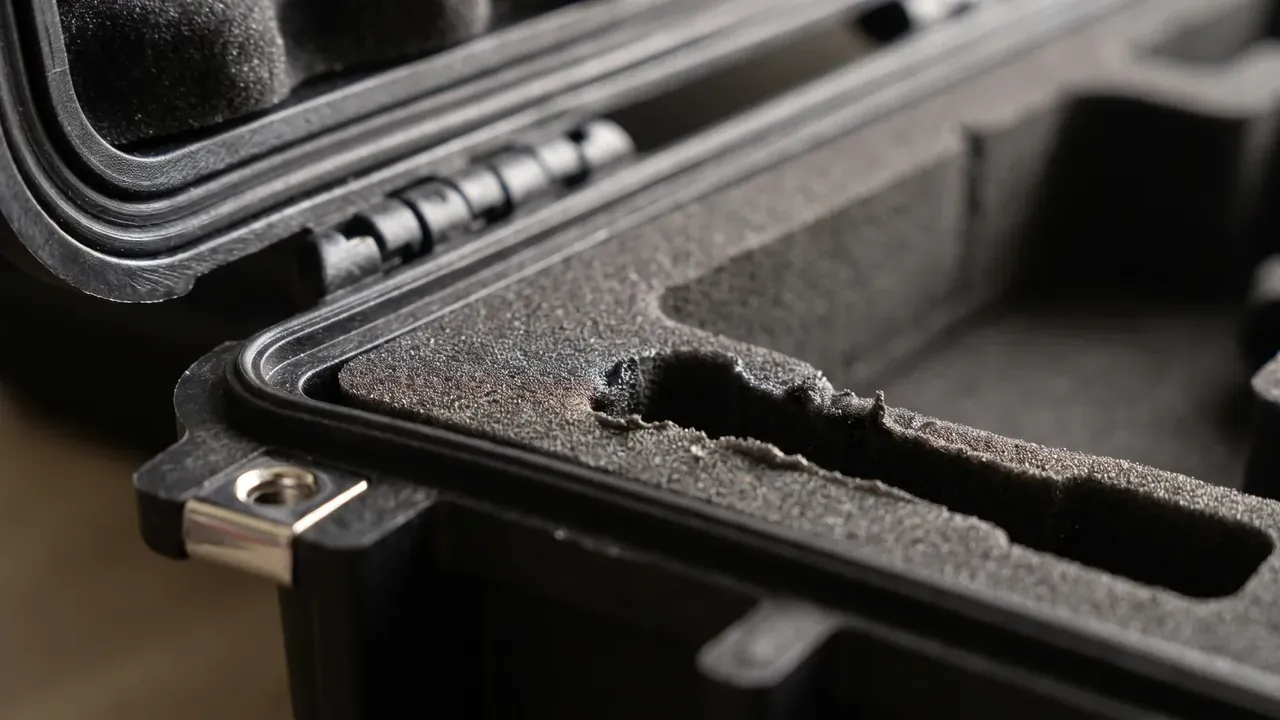
A large-equipment haul differs from general freight in three ways. Mass lands on a few feet, handling is machine-only, and the case opens more than once. That sets four requirements a heavy-duty protective case must meet at once, and failing one weakens the rest.
Cavity and envelope must both fit: tailgate and hatch set the outside, the profile sets the inside. The base takes point load from four to six feet. Eyes and fork pockets belong on the centre of gravity. Closure survives repeated opening, so latches are judged by cycle count.
2. Loading pattern: whole-unit or split fixing
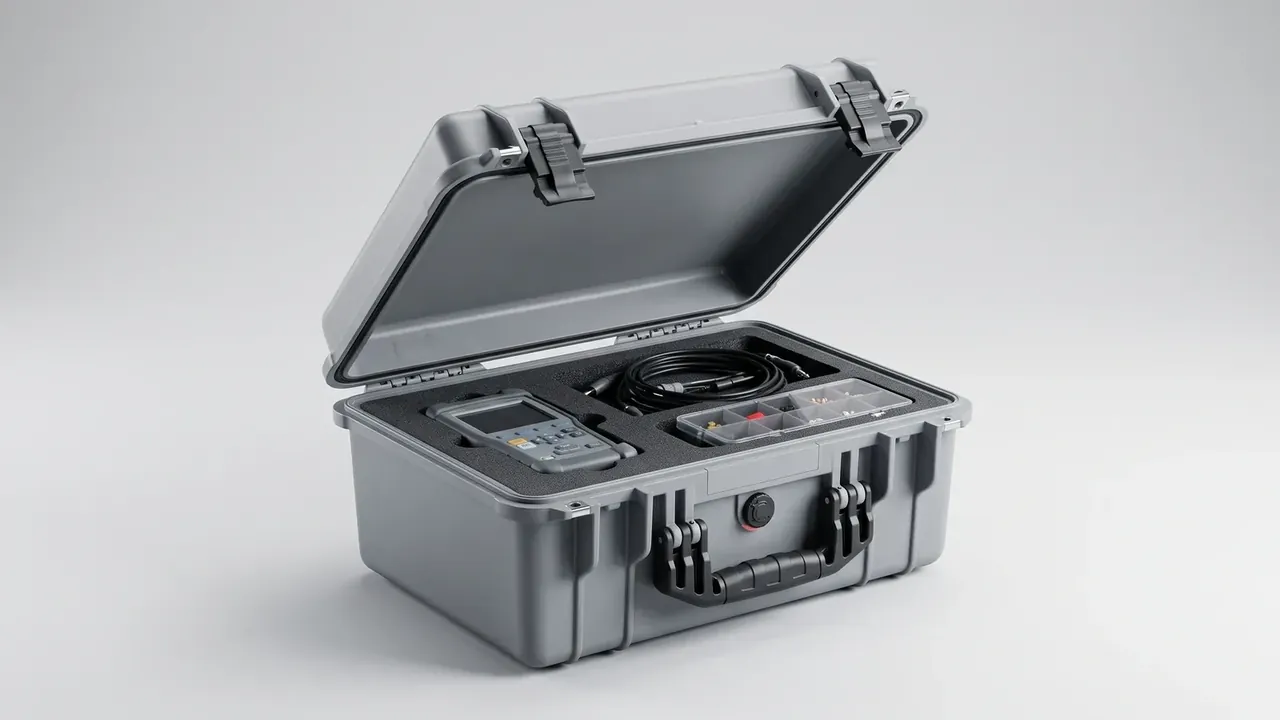
Fixing a heavy-duty protective case follows site logistics, not size. Whole-unit fixing uses the shell as an outer frame, so case and load act as one body. Split fixing cuts the cavity into stations and leaves the shell to stack and seal.
Choose whole-unit when the item beats a two-person lift, lands once, or carries its centre of gravity above a third of case height. Choose split fixing when parts must reach different floors. Either way a heavy-duty protective case cannot rely on foam alone, since it creeps and loses its preload.
3. Lifting, forklift and roll-on work
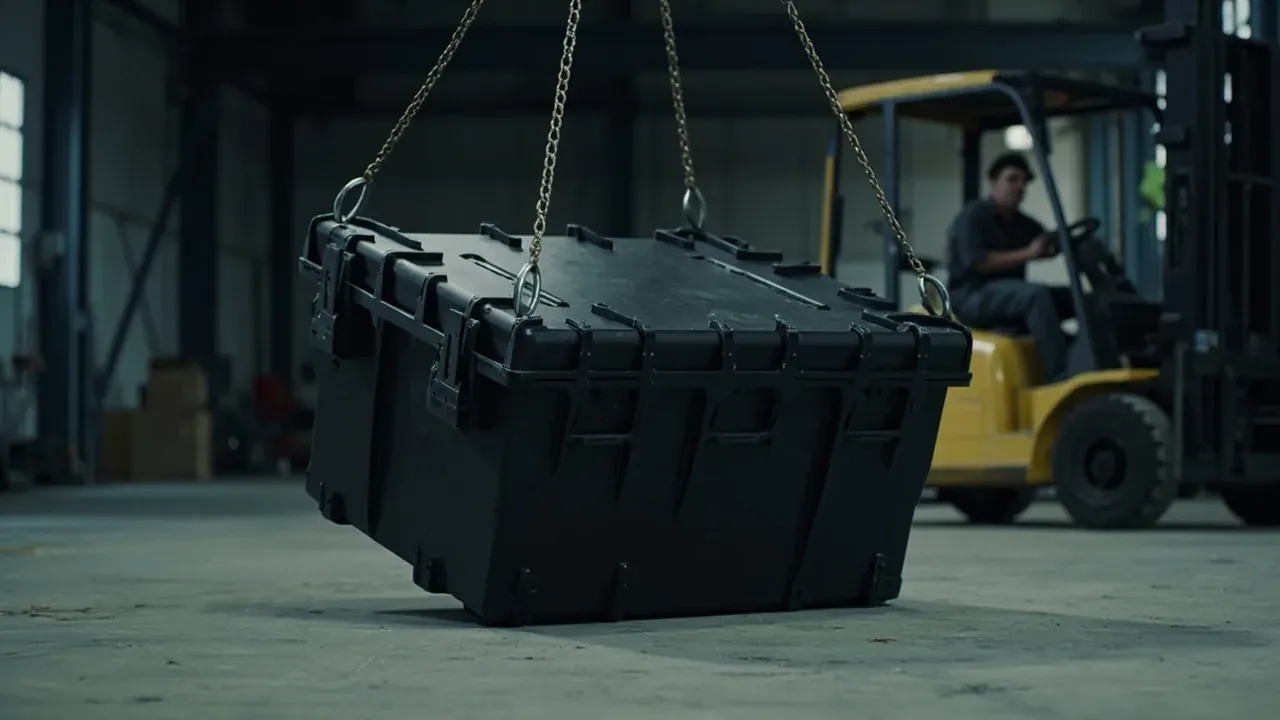
Each method loads a different part of the shell. A crane pulls through the eyes into the side walls. A forklift pushes through the pockets into the base, and a roll-on move loads the rear edge.
| Method | Load path | Case needs |
|---|---|---|
| Crane | Eye plates, rim | Four points, sling under 60° |
| Forklift | Pockets, base | Through pockets |
| Roll-on | Feet, rear edge | Wear pads, corner wrap |
Banding several heavy-duty protective cases into one unit is a fourth pattern. The photo shows a single-case four-point lift with the centre of gravity below the hook; banding two or three together raises it, so the hook offset is recalculated.
4. Vibration, temperature and humidity
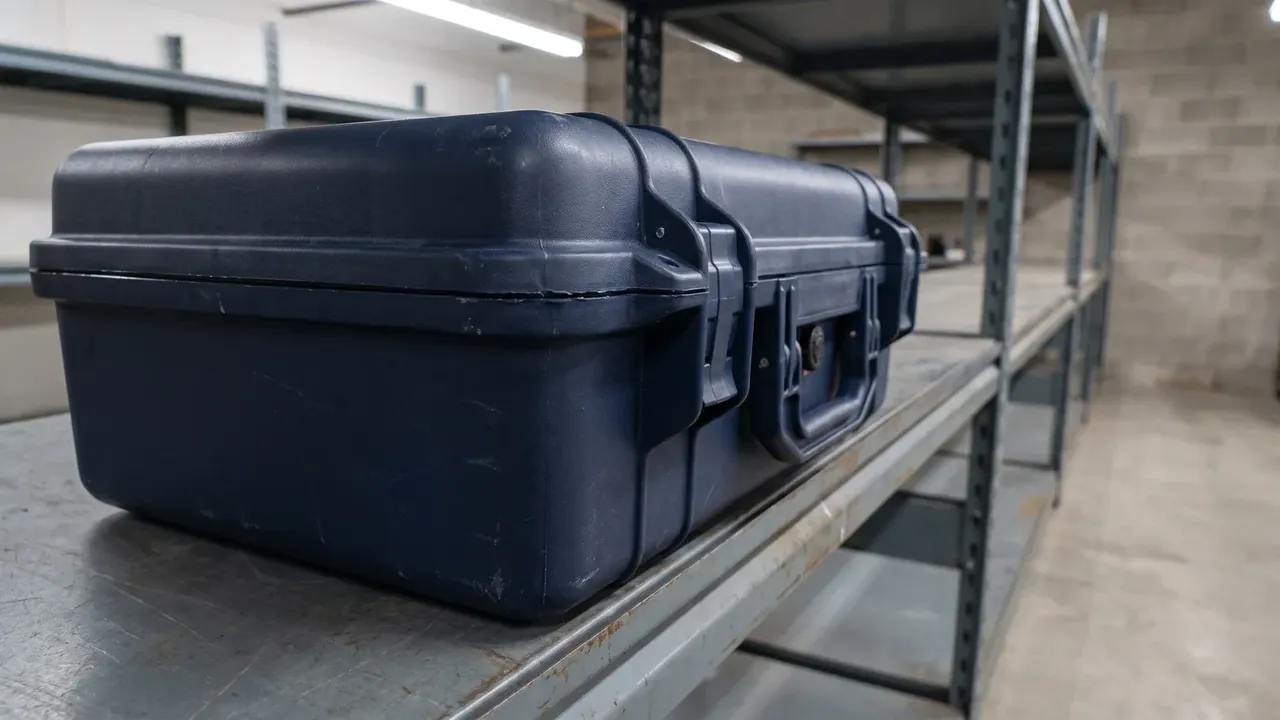
Vibration and moisture meet on the closure face. A latch backs off, gasket compression drops, and the next humidity cycle enters through the gap. What predicts a long haul is the preload held after hours of low-frequency input; the case shows lid ribs and four latches splitting the rim into short spans.
When road input matches the mass-spring system of case and liner, the liner settles and load moves to latches and hinges. Cut the liner with pre-compression, add anti-back-off, fit an anti-slip pad, and vent air expansion through a pressure-equalisation valve. Rate the heavy-duty protective case by class design, with figures from a third-party report.
5. Opening on site and restoring the case
The first task on arrival is reading the case, not opening it. Shell, corners, feet, latches, hinges and sealing face are six checkpoints. Any anomaly means the trip exceeded design.
- No cracks at corners or rear edge
- Feet evenly worn, base not bulged
- Every latch on its keeper, hinge pins seated
- Sealing face clean, gasket not flattened
- Valve clear, no water trace
Opening follows pressure: vent, release latches diagonally, lift to the hinge limit, not past it. Beyond that angle the mount becomes a pry point. Restoring a heavy-duty protective case reverses the order: wipe the sealing face, seat the gasket, close latches in two passes, confirm an even gap.
Conclusion
Order matters more than numbers: size the cavity, reinforce the base at the feet, pick lifting points from the site's machines, set latches by handover count, then sealing from the route. A heavy-duty protective case earns its place through those interfaces, not through wall thickness.
This article covers container-side specifications and design implications only.
Related Reading
- Heavy-duty protective case load ratings and reinforcement
- Shipping case selection: load, stacking, forklift and lifting
- Rotomolded Cases: Rotational-Moulded Shell Structure & Pro…
- Stackable case design: load, interlock and stability
Related Products
- 8 Series — Gun Cases; Military Equipment Cases; Camera Equipment Cases; Drone Cases; Watch Cases; Knife Cases; First Aid Cases; Electronics Equipment Cases
- WL8-2812 PP Gun Case — model WL8-2812
- All protective cases and toolboxes: 7 series, 158 models