

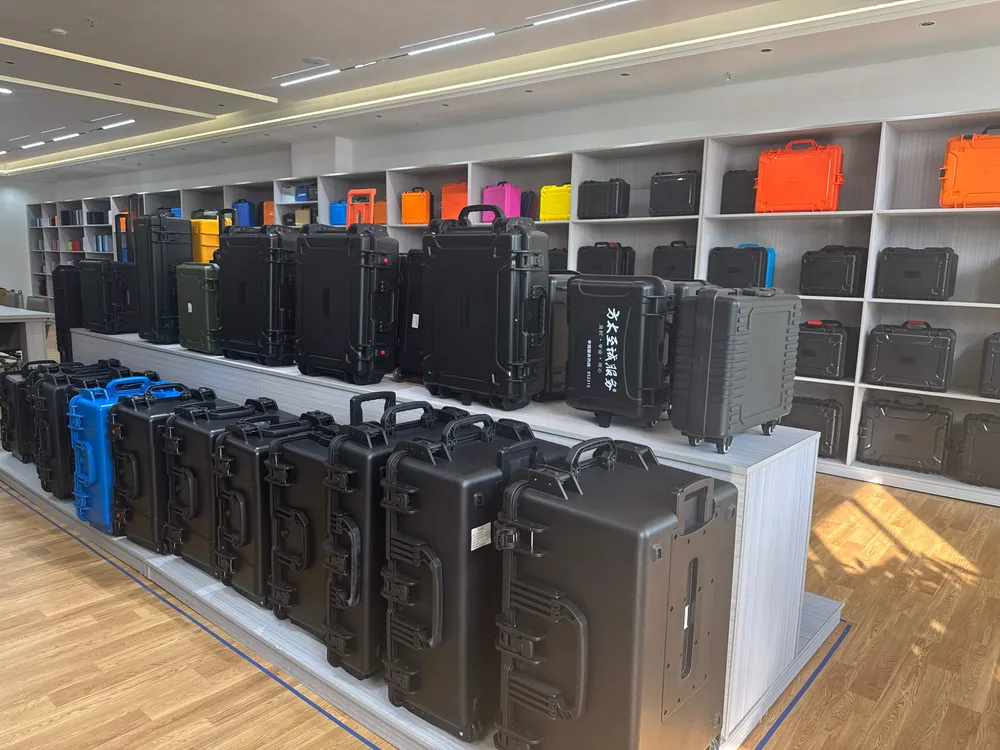
New energy work — solar installation, battery storage, inverter and monitoring equipment — pushes protective cases toward their limits in three directions at once: they get larger, they stay outdoors for years, and they carry electronics that cost far more than the case.
Why Large Format Changes the Engineering
Sealing gets harder as size grows. A longer lid flexes more under its own weight and under load, and the gasket has to maintain compression along a longer line. This is why a seal design proven on a small case cannot simply be scaled up: the case needs more stiffness, more latch points, or both.
- More latch points, distributed to hold compression along the whole seal line.
- Stiffer lid geometry, often using ribs or a formed profile rather than a flat panel.
- Corner reinforcement, because corners take the impacts and stiffen the structure.
- Realistic handling provisions — a large loaded case needs proper handles and, often, wheels.
Weather: The Long-Term Load
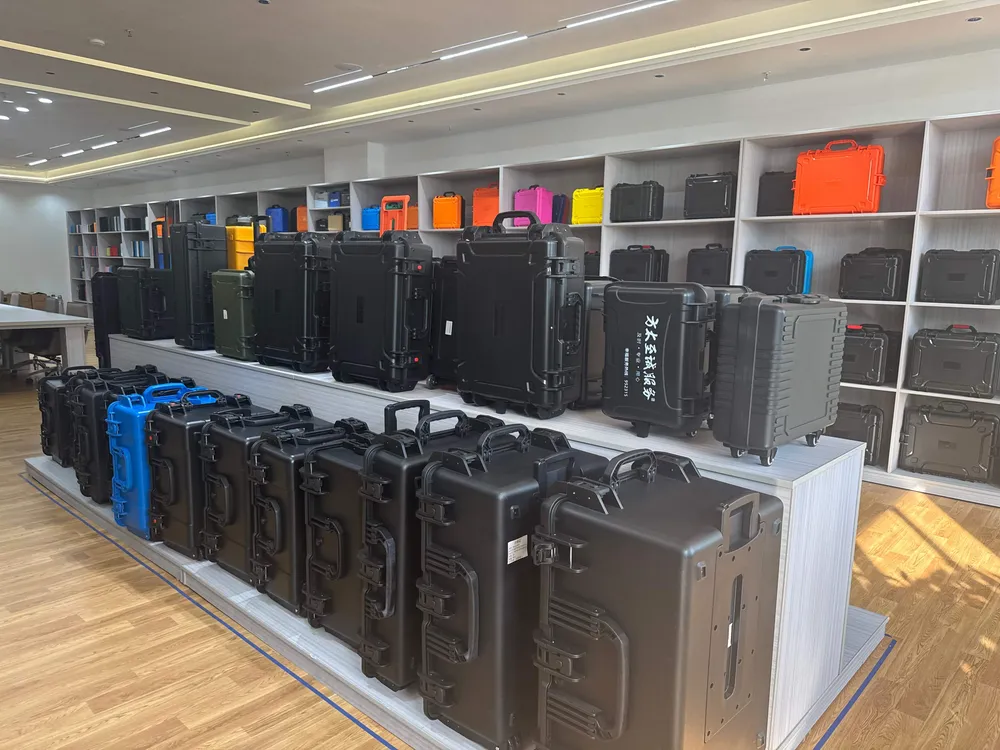
Outdoor deployment means continuous ultraviolet exposure, daily temperature cycling, and repeated wet-dry cycles. Each attacks something different: UV degrades the polymer, temperature cycling works on the seal and the hardware, and moisture finds any path that capillary action can exploit.
Practical specification follows from that list. Choose a shell material with a stabiliser package suited to the site, prefer dark colours where appearance allows, specify hardware compatible with the environment, and design so water drains rather than pools. We cover the degradation mechanism in more detail in UV weathering of protective cases.
Interior: Support, Not Just Cushion
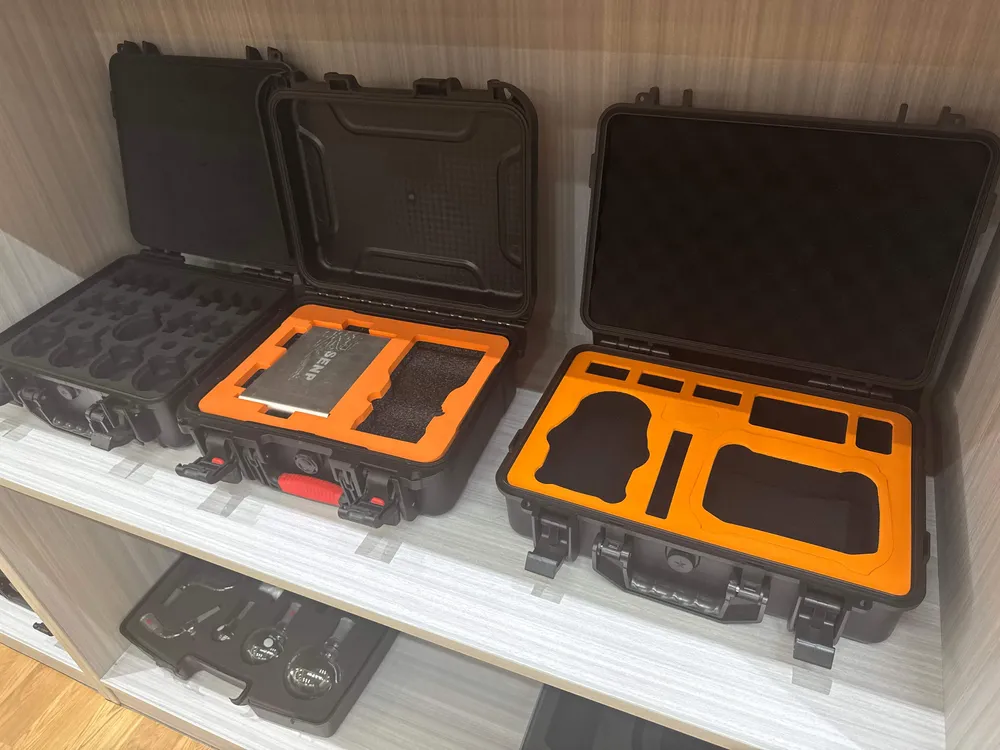
Heavy items such as inverters, battery modules and test instruments need support at their designated mounting points or strongest structure, not soft foam that compresses and lets the load settle onto the shell. In a large case carried over rough ground, the interior is carrying the payload continuously, not only during a drop.
| Payload type | Interior approach |
|---|---|
| Electronics and monitoring units | Support at mounting features, clearance above connectors, ESD-considered liner |
| Battery modules | Firm support, restraint against movement, separation between units |
| Tools and consumables | Durable skinned cavities, colour-coded grouping |
| Cables and accessories | Dedicated compartments so they cannot abrade main equipment |
Ventilation and Pressure
A sealed case left in the sun builds internal pressure, and one that cools at altitude or overnight pulls a partial vacuum. Over many cycles that stresses seals and can make lids hard to open. Where the contents permit, a pressure equalisation valve relieves this; where the case must stay sealed, allow for the pressure swing in the seal and latch design.