

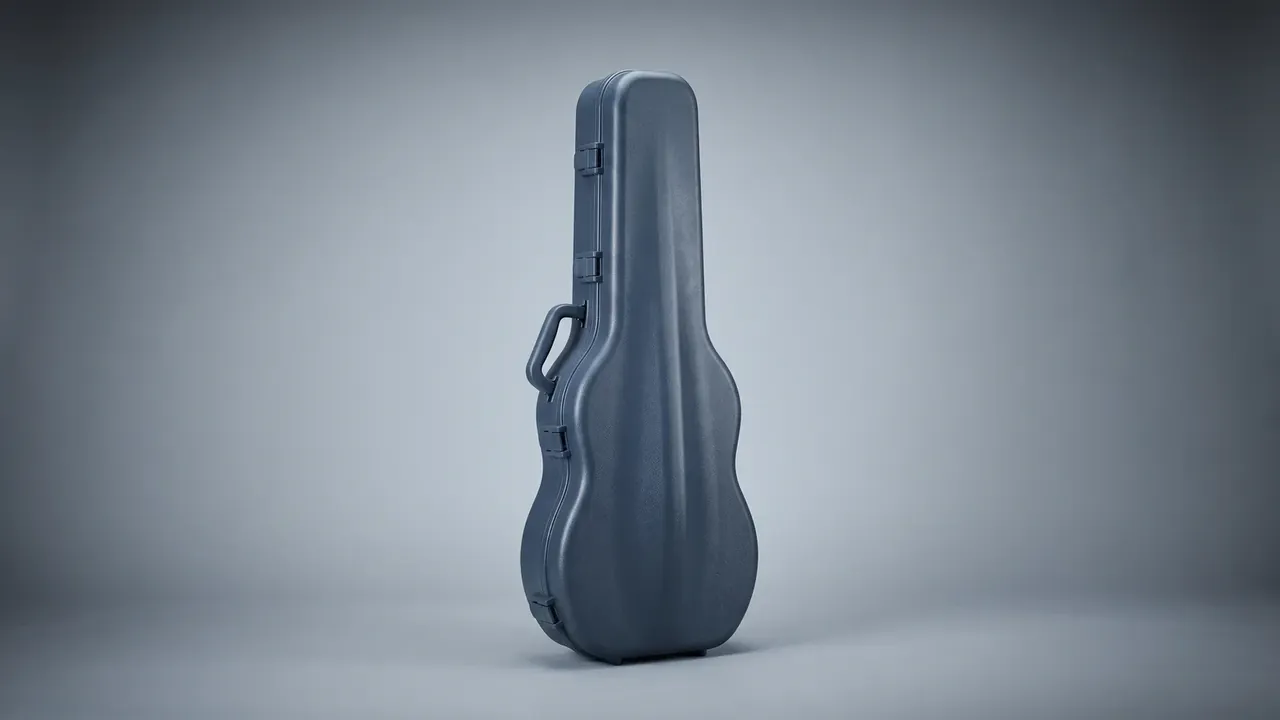
Quick answer: Choose a storage case backwards from retrieval: how often it opens, how many parts leave it at once, whether one hand stays free. Those three set dividers, lid and opening.
Table of contents
- Five Criteria for Choosing a Storage Case
- Internal Dividers: Cell Count and Slot Pitch
- Lid Space: Pockets, Ribs and Closing Gap
- Opening, Hinge and Seconds per Retrieval
- Stacking, Handle Load and Own Weight
- FAQ
1. Five Criteria for Choosing a Storage Case
Start from the retrieval action. How often a storage case opens, how many pieces leave it at once, and whether the other hand is occupied decide the dividers, the lid and the opening.
Over-dividing is the commonest mistake: below 25 mm of clear cell width, small parts cannot be pinched and the case gets tipped out. The second is reading only the outside, where a 300 mm case loses wall and divider space and leaves about 40 mm per cell.
| Criterion | Check | Practice | Cost when wrong |
|---|---|---|---|
| Use frequency | Opens per day | 4 to 20 | Dividers fight the hand |
| Cells | Clear cell width | 25 mm or more | Fingers cannot reach |
| Lid space | Depth, ribs | 20 to 40 mm | Lid presses parts |
| Opening | Hinge angle | 105 degrees | One hand cannot hold |
| Stacking | Weight, handle | 1.9 kg | Three tiers warp |
2. Internal Dividers: Cell Count and Slot Pitch
Cell count follows the parts, not the look of the grid: six cells suit tools, twelve suit connectors, twenty-four suit screws.
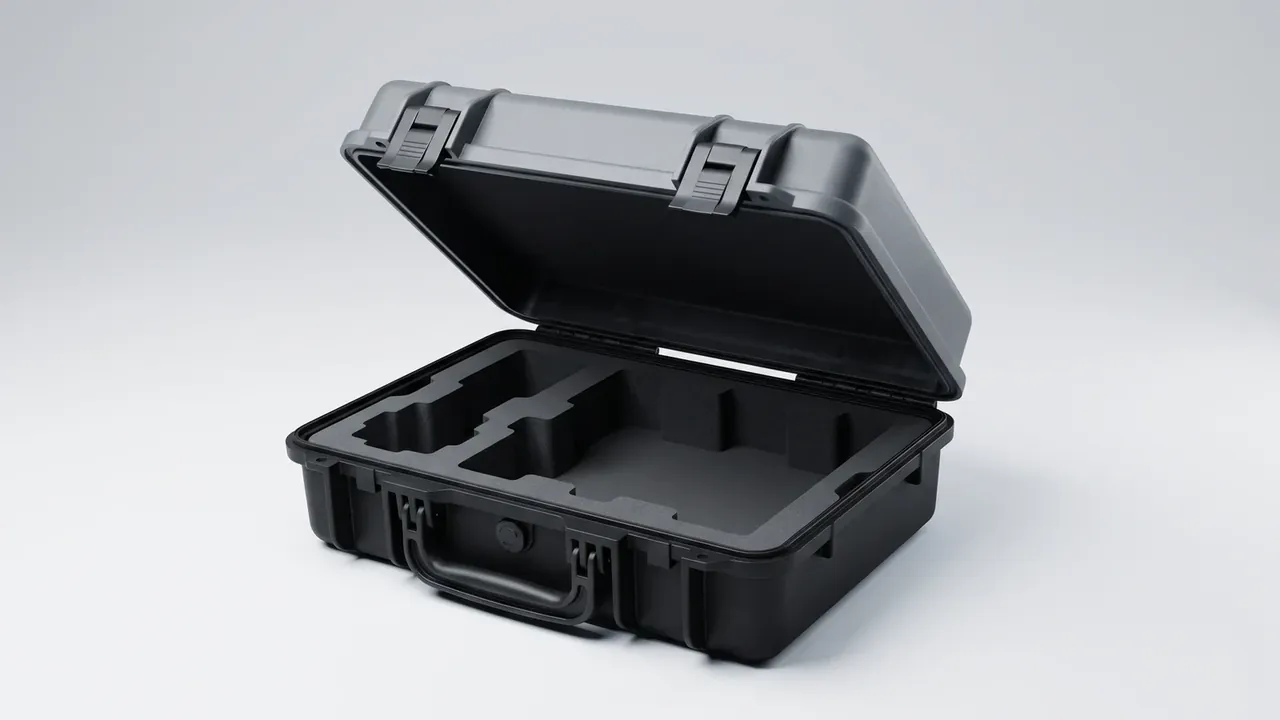
Slot pitch decides whether the layout changes: a 25 mm pitch lets a storage case run six to twelve cells, while 12.5 mm is finer but loosens after a dozen changes. A 4 mm hollow-board divider bends less than a 2 mm solid one.
3. Lid Space: Pockets, Ribs and Closing Gap
The lid interior of a storage case is usable volume. Between 20 and 40 mm of depth fits a mesh pocket or moulded recesses for labels and spares. Once something sits there, the closing gap must be recalculated: an 8 mm lid rib plus a part standing 6 mm above the rim gets pressed when the case shuts.
Three to five millimetres is a safe gap: tighter and loose parts lift the lid, wider and parts jump cells in transit. The gap comes from the step in the rim, not from foam compression. Ribs milled to the cell pattern, 1.5 mm deep and one cell wide, hold parts still.
4. Opening, Hinge and Seconds per Retrieval
Opening ratio is the share of the cavity left exposed with the lid up. At 92 percent, corner cells can be reached directly; at 70 percent the case must be shifted first.
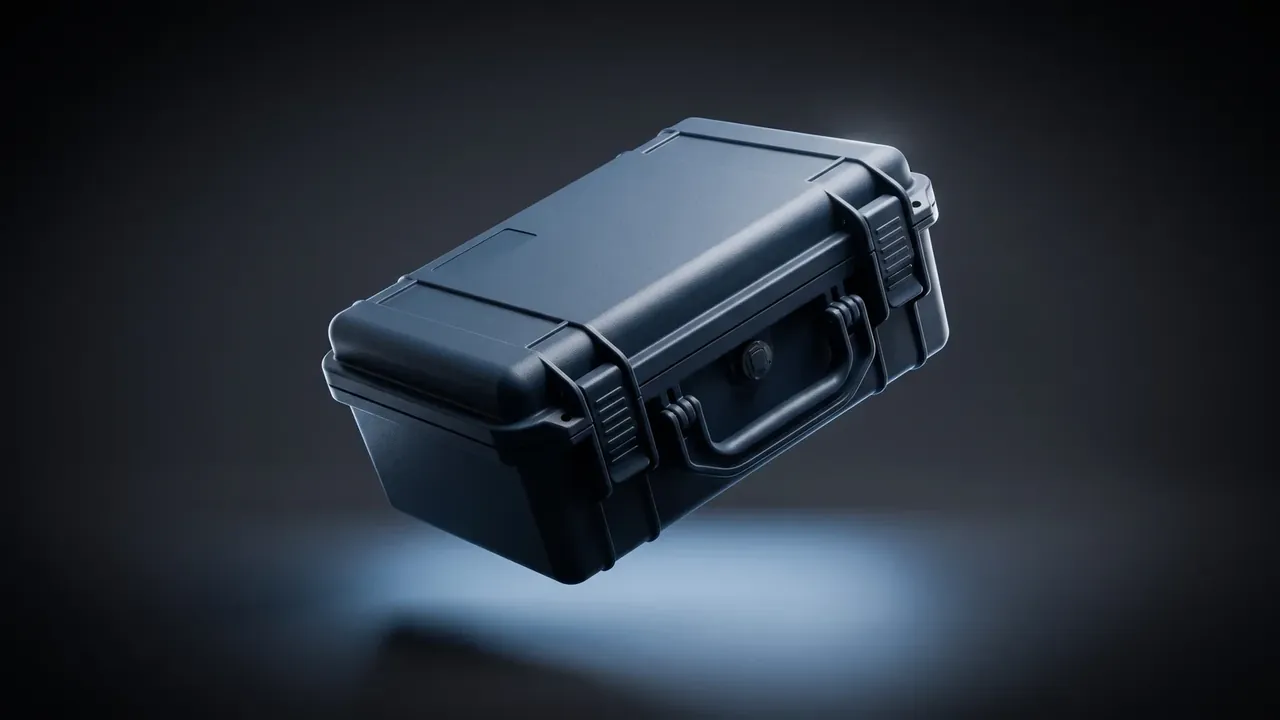
A 105-degree hinge stop is the practical choice: the lid centre of gravity stays behind the hinge, so one hand can load and unload. A 180-degree stop lets the lid fall back and needs a second hand.
Latches follow length: a 300 mm storage case takes two, 200 mm apart; past 400 mm, three, with the middle one opposite the handle.
Retrieval time is measurable: four seconds for a well-divided case, eleven for narrow cells that must be tipped out, six minutes over fifty retrievals a day.
5. Stacking, Handle Load and Own Weight
A 1.9 kg storage case holding 12 kg, stacked five high, puts 48 kg on the bottom unit. Ribs on the lid with feet that drop inside them hold five tiers; a flat lid leans at three.
Handles are rated on the full load: a 12 kg static rating is comfortable to about 8 kg, and beyond that the root whitens. Standard resin embrittles at -15 °C and latches break first; above 60 °C thin walls soften.
| Tiers | Full case | Load at base | Condition |
|---|---|---|---|
| 2 | 12 kg | 12 kg | Flat lid |
| 3 | 12 kg | 24 kg | Ribs on lid |
| 5 | 12 kg | 48 kg | Ribs meet feet |
Conclusion
Three checks settle it on the spot: pinch a part out of a cell, lift the lid and see where it stops, push a stack of three and watch for lean. Pass all three and the case is used daily; fail one and every retrieval reminds you. A storage case is not better for more cells, but for every cell being reachable.
This article discusses only the container (case body) side of specifications and design intent, and does not cover any handling, loading or use of the contents.
Related Reading
- Divider structure and how to specify it
- Compartment layout inside a tool box
- Case fittings and how to choose them
- Small plastic case sizes and uses
Related Products
- 8 Series — Gun Cases; Military Equipment Cases; Camera Equipment Cases; Drone Cases; Watch Cases; Knife Cases; First Aid Cases; Electronics Equipment Cases
- WL8-2812 PP Gun Case — model WL8-2812
- All protective cases and toolboxes: 7 series, 158 models