

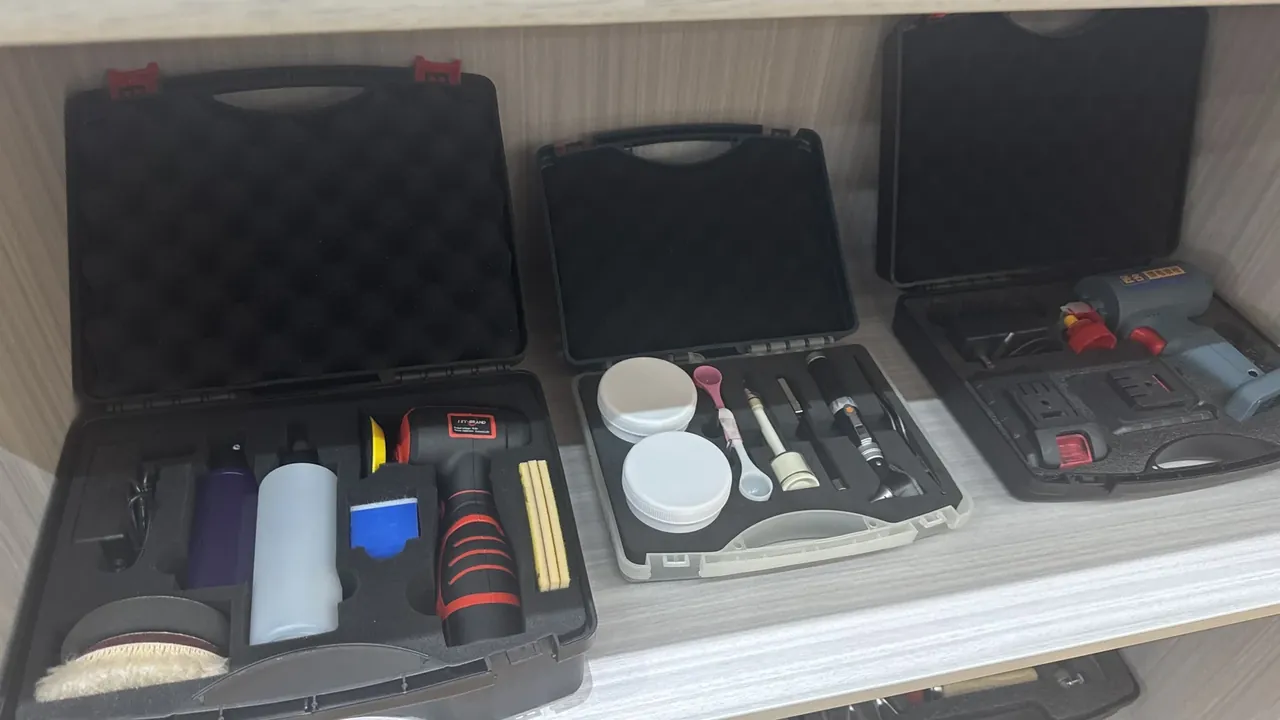
Quick answer: Choose a Case Internal Divider by volume, then tolerance. Slats need no tooling, cost 6–12 per set and ship in three to five days. EVA liners pay off from 200 units at 22–40 per set, with the best cushioning. Blister trays start near 1,000 units, where a 3,500–9,000 tool spreads thin and accuracy reaches ±0.3 mm.
Table of contents
- Three Routes and Their Boundaries
- Adjustable Slats Without Tooling
- EVA Die-Cut Liners From 200 Units
- Blister Trays From 1,000 Units
- A Decision Tree by Volume and Tolerance
- FAQ
1. Three Routes and Their Boundaries
A Case Internal Divider is quoted as slats, EVA liners or blister trays. Slats interlock from grooved sheet, EVA is punched and stacked, and a tray is vacuum-formed over a tool. The route fixes tooling, batch floor and accuracy before price.
The costly mistake is revision, not unit price. A layout change means a new drawing for slats, a new die for EVA, a repair for trays. Small batches feel that most, so Case Internal Divider projects fail on change orders, not quotes.
| Route | Tooling | Economic batch | Unit cost | Accuracy | Lead time |
|---|---|---|---|---|---|
| Adjustable slats | none | 1–100 | 6–12 | ±2.0 mm | 3–5 days |
| EVA die-cut liner | 800–1,800 | 200–800 | 22–40 | ±0.8 mm | 8–12 days |
| Blister tray | 3,500–9,000 | 1,000+ | 9–16 | ±0.3 mm | 15–20 days |
| Slats plus EVA | 800–1,800 | 100–300 | 26–48 | ±1.0 mm | 9–14 days |
2. Adjustable Slats Without Tooling
Slats are the cheapest Case Internal Divider: grooved sheets interlocking on a fixed pitch. No tool is needed, quotes follow sheet area and cutting time. Six compartments in 3 mm PP hollow sheet use 0.35 square metres and cost 6–9 per set; 5 mm raises it to 9–12.
The strength is revision: shift one slat or add spares when the layout changes.
The weakness is fit. Slots need clearance, joints leak, stack-up reaches ±2 mm, and vibration lets compartments drift; long parts need a foam strip. Ask for slot pitch and spare slats.
3. EVA Die-Cut Liners From 200 Units
An EVA liner is punched to the outline and stacked. A die costs 800–1,800 and takes 3–4 days; production runs 8–12 days.
The curve breaks near 200 units. With a 1,200 die and 18 per set, fifty sets carry 42 each, two hundred 24, five hundred 20.4, one thousand 19.2. Past 200 the line flattens.
| Batch | Tooling per set | Unit cost |
|---|---|---|
| 50 | 24.0 | 42.0 |
| 200 | 6.0 | 24.0 |
| 500 | 2.4 | 20.4 |
| 1,000 | 1.2 | 19.2 |
Closed-cell EVA spreads impact across the contact face; a tray of the same wall concentrates it on ribs, where a sharp corner punches through. Cameras and instruments default to this Case Internal Divider style. A new outline re-cuts the die from 800.
4. Blister Trays From 1,000 Units
A tray is formed by heating PETG or PET sheet onto an aluminium tool. Tooling runs 3,500–9,000; a prototype tool lasts a few hundred cycles. Lead time is 15–20 days.
Accuracy is what the buyer gets: the locating face holds ±0.3 mm, and the thousandth tray matches the first. A Case Internal Divider for automated loading has no other option at this tolerance.
With a 6,000 tool and 7 per tray, 200 trays cost 37 each, 500 cost 19, 1,000 cost 13 and 3,000 cost 9. 1,000 is the gate; above 3,000 the price undercuts slats.
5. A Decision Tree by Volume and Tolerance
Two questions come first: annual sets and tolerance. Under 300 sets at ±2 mm, take slats. At 200–800 sets needing cushioning at ±1 mm, take EVA. Above 1,000 at ±0.5 mm, take a tray.
Bands overlap between 300 and 500 sets. Build a hybrid: EVA body with a tray insert under the critical part, or slats as a frame with EVA on six faces.
| Scenario | Annual volume | Recommended route |
|---|---|---|
| Prototype | 1–20 | Adjustable slats |
| Pilot build | 50–200 | Slats plus EVA |
| Stable mid-batch | 200–800 | EVA die-cut liner |
| Production | 1,000+ | Blister tray |
| Precision run | 3,000+ | Blister tray plus EVA lid |
Give five facts in every enquiry: annual and first-batch volume, tolerance, cushioning, case model and revision frequency. A bare quantity forces the most conservative quote, so most Case Internal Divider quote spreads come from missing information.
Conclusion
Pick a Case Internal Divider by volume, then tolerance, then price. Under 300 sets, slats keep revisions free. From 200–800, EVA balances cushion and cost. Above 1,000, a tray amortises its tool. Know both thresholds, and Case Internal Divider selection stops being guesswork.
This article discusses only the container (case body) side of specifications and design intent, and does not cover any handling, loading or use of the contents.
Related Reading
- How dividers and foam liners split work
- Comparing case foam materials
- Pick-and-pluck foam: uses and limits
- A guide to custom foam lining
Related Products
- 8 Series — Gun Cases; Military Equipment Cases; Camera Equipment Cases; Drone Cases; Watch Cases; Knife Cases; First Aid Cases; Electronics Equipment Cases
- WL8-2812 PP Gun Case — model WL8-2812
- All protective cases and toolboxes: 7 series, 158 models