

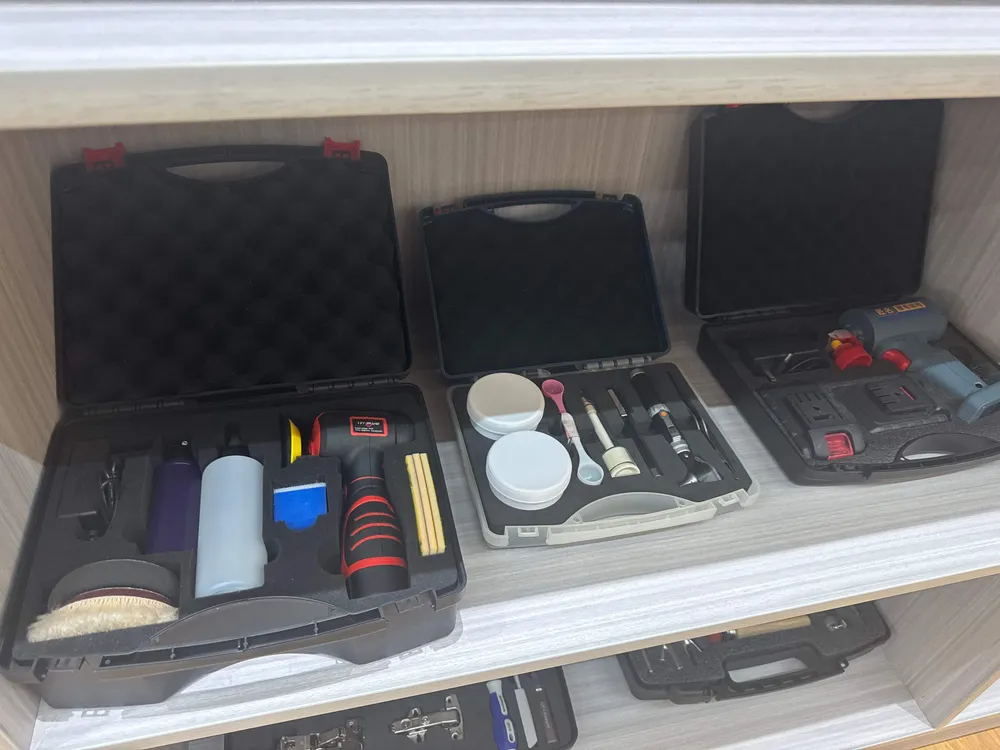
A telecom technician's case is not a shipping container. It is opened dozens of times a week, often on the tailgate of a van, on a rooftop, or beside a roadside cabinet. That usage pattern changes what matters: protection still counts, but so does the ability to find, use and return tools quickly.
What Is Actually at Risk
| Item | Primary risk | Design response |
|---|---|---|
| Calibrated test instruments | Shock shifting calibration, moisture on connectors | Support at the instrument body, clearance above connectors |
| Fibre tools and cleavers | Impact damage, contamination of precision edges | Dedicated cavity, kept away from heavy items |
| RF adapters and attenuators | Loss, damaged threads | Small-part compartments with defined locations |
| Test leads and patch cords | Tangling, crushed connectors | Separate cable compartment, coiled and restrained |
| Power supplies and batteries | Heat, movement, terminal shorting | Retained cavities with terminal protection |
The expensive failure is the quiet one: an instrument that still powers on but has drifted out of calibration. That is why the interior should support instruments by their body or designated mounting points, not by their connectors or displays.
Layout for Repeated Use
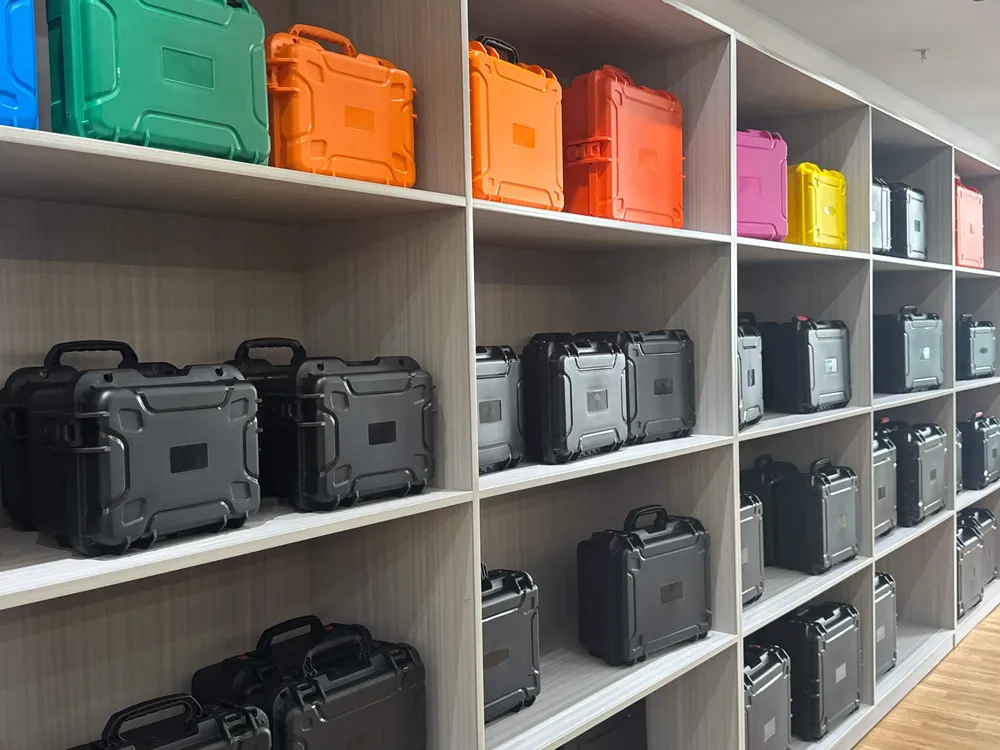
A working case is laid out by frequency of use, not by size. Items reached for on every job sit in the lid or the top layer; spares and consumables go below. Every cavity has one home, so a missing adapter is visible before the van leaves.
- Fixed locations with high-contrast liners make gaps obvious at a glance.
- Lid organisation for the small parts that otherwise scatter.
- Cable separation, because leads stored against instruments abrade both.
- Consumable access without unpacking the instruments.
ESD and Connector Care
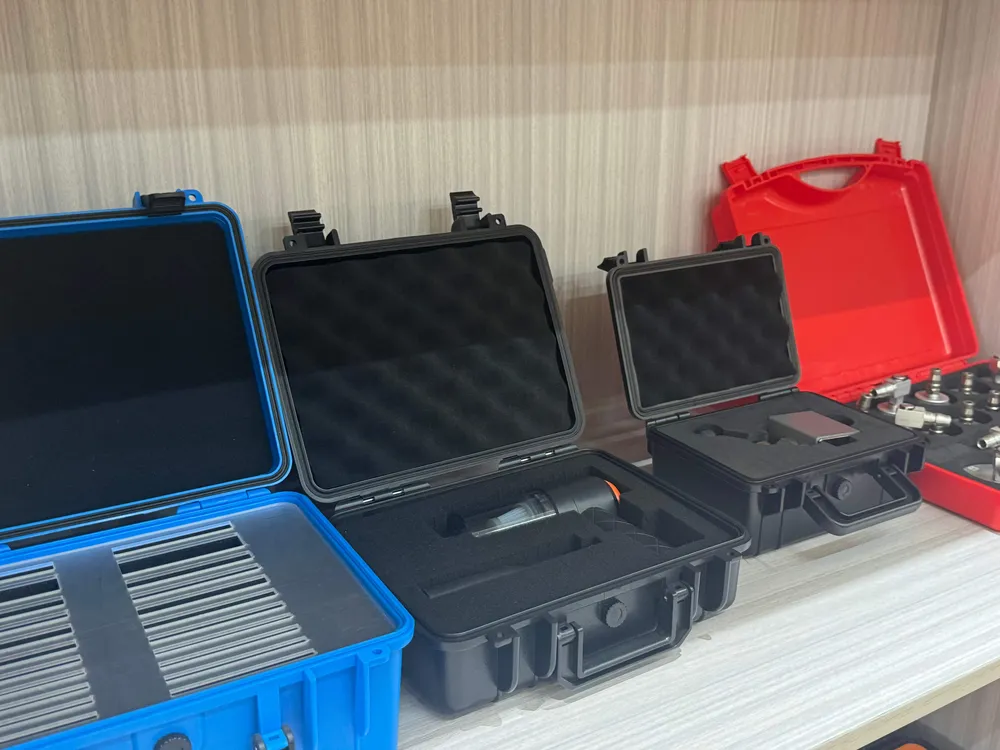
Optical and RF interfaces are sensitive to contamination and electrostatic discharge. Where instruments or modules are handled outside their antistatic packaging, an ESD-considered liner is worth specifying — the principles are set out in our guide to ESD and anti-static protective cases. Also keep dust caps on unused ports: a contaminated fibre end-face causes more call-backs than a drop does.
Transport Reality
Most damage in this sector happens in the vehicle, not on site. Cases slide, stack under other equipment and vibrate for hours. Restrain cases in the vehicle, avoid stacking heavy items on instrument cases, and keep the case out of direct sun in a parked cab — heat is as damaging to calibration as shock.
For a structured approach to sizing and interior selection, see our precision instrument case selection guide.