

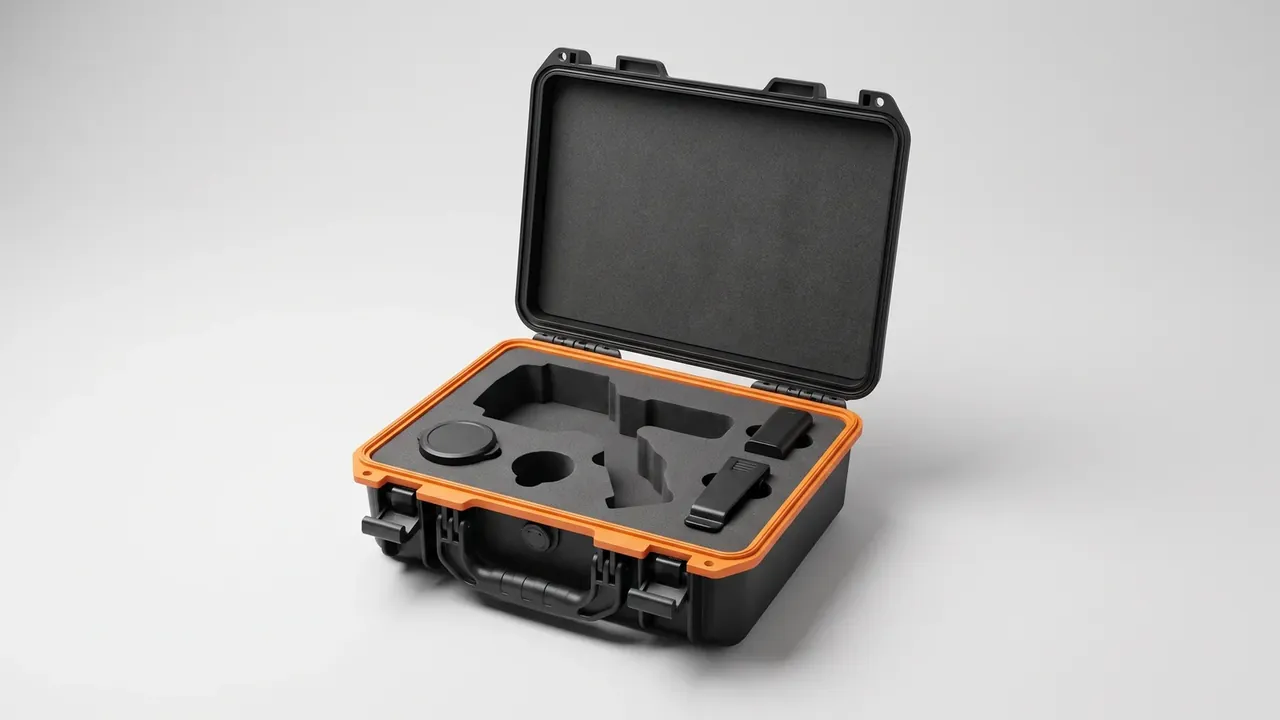
Quick answer: A temperature-controlled case competes with a cold room, a refrigerated truck and dry ice in a plain box. All four hold temperature; they differ in mobility, load threshold and cost per trip. Compare route shape, not headline numbers.
Table of contents
- Three Axes to Compare First
- Against a Cold Room: Mobility
- Against a Refrigerated Truck: Load Threshold
- Against Loose Dry Ice: Evenness
- Turning the Gaps into a Decision Table
- FAQ
1. Three Axes to Compare First
A comparison starts with structure, not a datasheet. A temperature-controlled case is a foamed body, a swappable cold or heat source, and a sensor. A cold room has no portable body, a truck's body is the cargo box, and dry ice in a plain box is a cold source with nothing around it. Different structures set different limits.
Three axes decide the rest. Range: swapping panels covers −20 °C, 2–8 °C or 15–25 °C inside the same temperature-controlled case. Holdover: the usual 36-hour claim assumes a 25 K gradient, 70% loading and two openings, and at 40 K it falls to about 20 hours. Cost: spread across 400 trips, a 62 L unit lands near 18 CNY each.
| Axis | Temperature-controlled case | Cold room | Truck | Dry ice |
|---|---|---|---|---|
| Cooling | Eutectic panels | Compressor | Vehicle unit | Sublimation |
| Holdover | Yes, scaled by gradient | None | None | Yes, fading |
| Entry | One unit | Floor and power | Per-trip minimum | One unit |
| Evenness | Channels and dividers | Best | Good | Worst |
The dividing line is rarely temperature: rooms and trucks bring goods to equipment, a case brings equipment to goods.
2. Against a Cold Room: Mobility
A cold room wins on paper with 12 m² of floor, 3.5 kW installed and ±1 °C control. Its weakness sits between the door, the loading bay and the handover, where nothing is controlled at all.
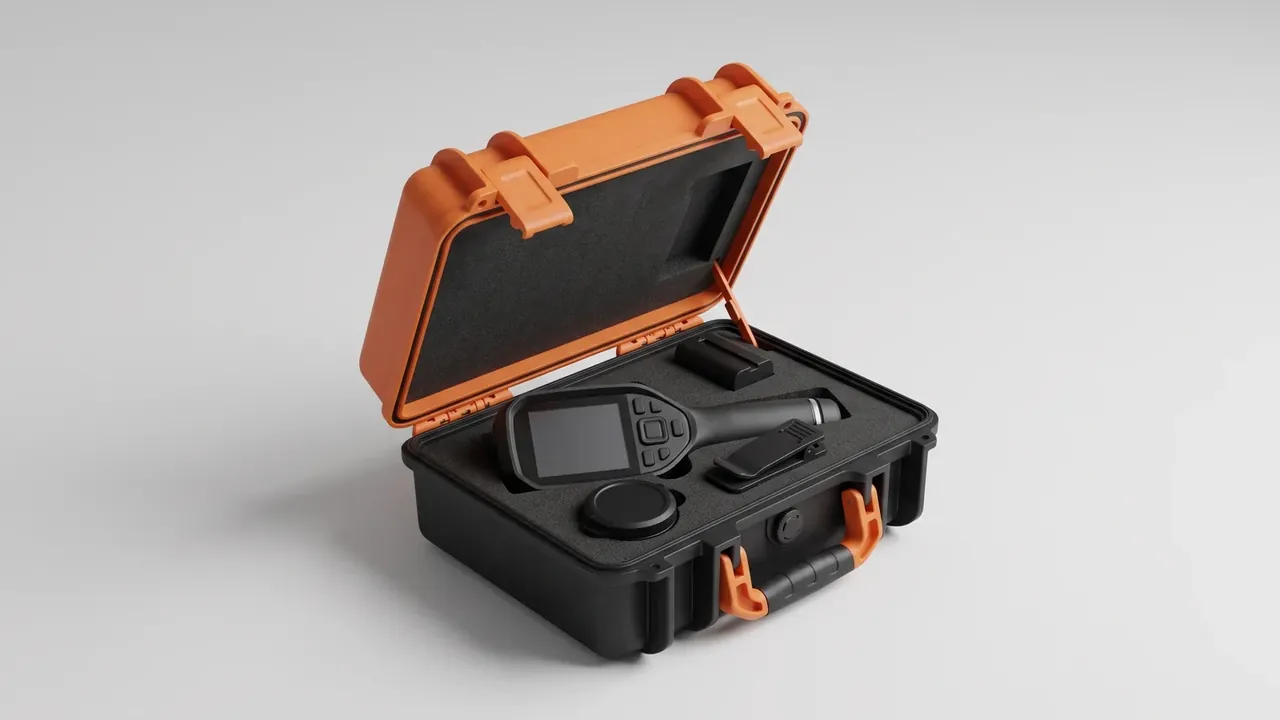
What a temperature-controlled case offers is one shelf of that room, carried: a 45 mm polyurethane wall at 0.022 W/mK, 21.5 kg empty, liftable by two people. Across a 40-minute handover the room drifts 1.5 °C per door cycle while the case climbs 0.8 °C.
3. Against a Refrigerated Truck: Load Threshold
Truck terms set the threshold: 4.2 m body, 5.5 kW unit, eight-hour minimum, from 1,200 CNY per run. Twenty 62 L cases hold 1.24 m³ and split into four routes without a full load.
There is no active cooling in a temperature-controlled case, though. A load generating its own heat exhausts the panels early; insulation only buys time.
| Item | Case, 62 L | Truck, 4.2 m | Cold room |
|---|---|---|---|
| Volume | 0.062 m³ | about 18 m³ | by pallet |
| Entry cost | per unit | 1,200 CNY per run | floor plus power |
| Swing | ambient and load | ±0.5 °C | ±1.0 °C |
| Split drops | yes | same route | no |
4. Against Loose Dry Ice: Evenness
Dry ice reaches a lower floor than any panel, −78.5 °C at sublimation, and burns 2.8 kg per 24 hours in a 30 L box. What that number hides is stratification: about six degrees between the top and the bottom of the same box.
With −21 °C eutectic panels at 70% load, a temperature-controlled case holds wall-to-centre within 1.2 °C because internal channels force air to move. The ceiling is the material, since common salts stop near −30 °C. Dry ice also carries class 9 rules: 2.5 kg per package by air, and packaging that vents.
5. Turning the Gaps into a Decision Table
Judge batch volume, then longest transit, then drop count. Cross any limit and the method changes, not the panel count.
| Scenario | Method | Why | Watch for |
|---|---|---|---|
| 2 km on-site transfer | Temperature-controlled case | one unit, no minimum | pre-chill panels |
| 300 km, full load | Refrigerated truck | volume, continuous cooling | door-open losses |
| Four city drops | Temperature-controlled case | separate signatures | restart the clock |
| Storage over 3 months | Cold room | tightest control | last mile |
| Below −30 °C | Dry ice inside a case | extends the floor | venting |
The reverse case is just as sharp: beyond 72 hours, above 15 W of internal heat, or over 2 m³, extra panels only make the unit too heavy to lift.
Conclusion
No method is better in the abstract; each is bounded. A room sells stability, a truck sells capacity, dry ice sells a lower floor, and a temperature-controlled case sells the hours after the goods leave the building. Measure batch size, transit time and drop count, then let the route choose.
This article discusses only the container (case body) side of specifications and design intent, and does not cover any handling, loading or use of the contents.
Related Reading
- Active versus passive temperature control
- Setting range, holdover and power draw
- How case requirements differ by industry
- Reusable shipping boxes and their alternatives
Related Products
- 8 Series — Gun Cases; Military Equipment Cases; Camera Equipment Cases; Drone Cases; Watch Cases; Knife Cases; First Aid Cases; Electronics Equipment Cases
- WL8-2812 PP Gun Case — model WL8-2812
- All protective cases and toolboxes: 7 series, 158 models