

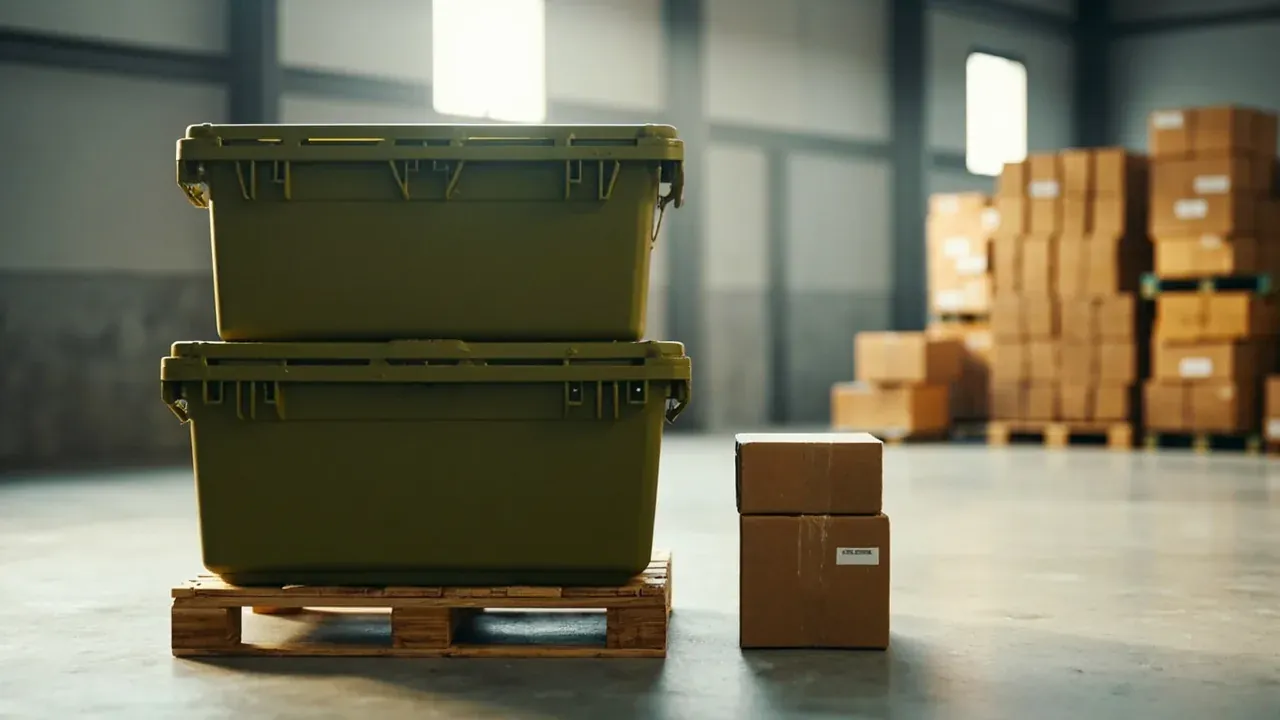
Quick answer: A reusable shipping and storage container reverses the cost timing of one-way packaging. Cartons charge per shipment; a reusable case front-loads the spend and spreads it across trips. Three inputs decide it: life-cycle spend per case, handling cost per return loop, and the price of equivalent one-way protection. Fixed spend divided by the per-trip gap gives a break-even count, usually twelve to thirty trips, and any lane below that stays one-way.
Table of contents
- How reusable shipping and storage container costs differ
- Beyond the purchase price
- Damage, repair and retirement
- Storage and stacking density
- When a reusable case pays off
- FAQ
1. How reusable shipping and storage container costs differ
One-way packaging is pure variable cost, settled with each shipment. A reusable shipping and storage container is a fixed asset with a variable tail: purchase, return freight, cleaning, repair and disposal share one ledger.
| Cost line | One-way | Reusable case |
|---|---|---|
| Purchase | Every shipment | Once, per unit |
| Return and inspection | None | Empty legs, cycle checks |
| Floor space | Outbound goods only | Empty units all year |
| Disposal | With the load | Consolidated, billable |
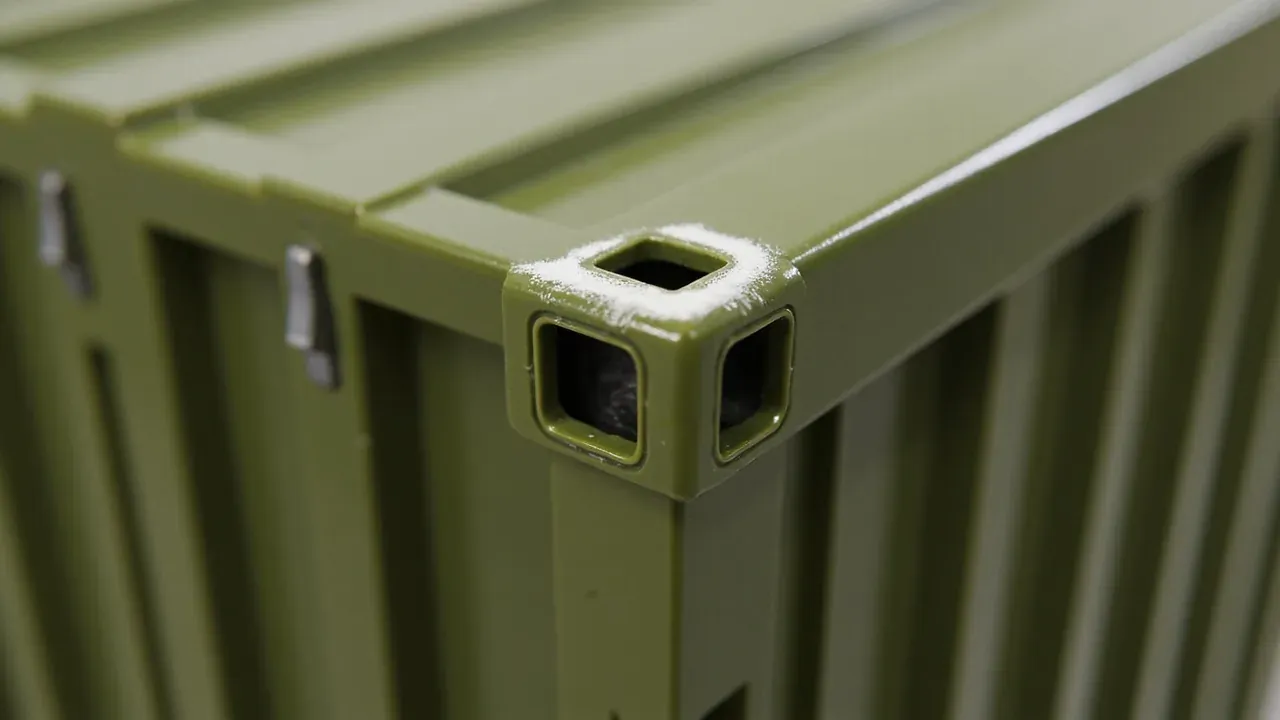
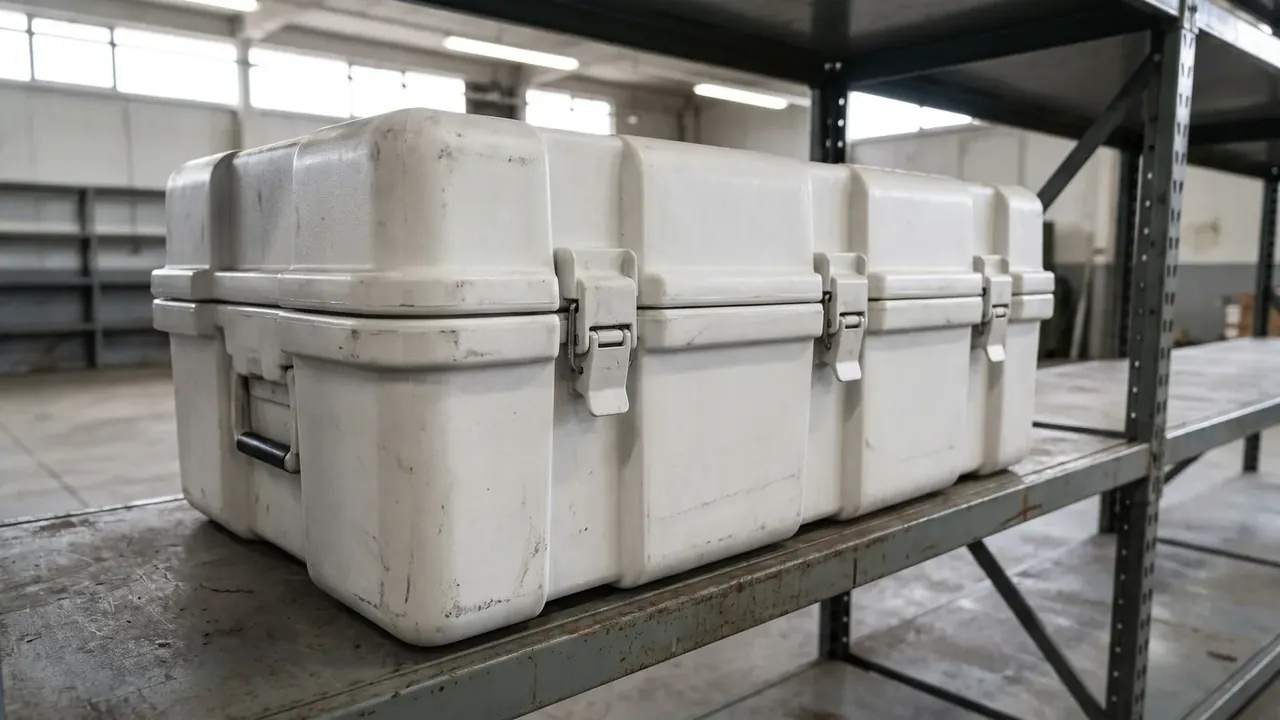
Shell design sets the ratio. Thicker walls, ribs and reinforced corners raise price while cutting repair frequency; replaceable latches and gaskets split one major repair into small ones. The ribbed wall in the photo follows that logic.
2. Beyond the purchase price
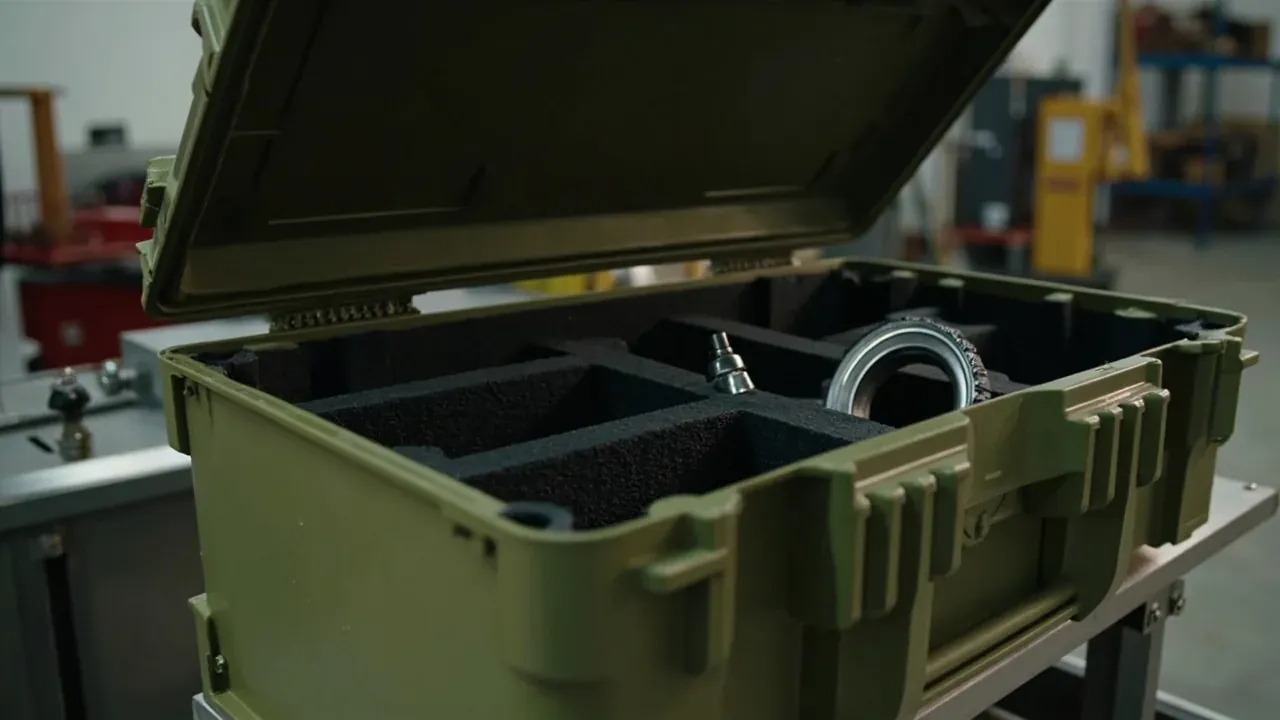
Cost per trip equals life-cycle spend divided by trips completed. The numerator is easy; the denominator is where cases fail.
Cost per trip = (purchase + repair + return handling + disposal − residual value) ÷ trips
Three traps hide there. Life is quoted in years while cost accrues per trip, so a case leaving eight times in five years can cost more per trip than one running sixty trips in three. Re-linering resets amortization, and idle months never enter the count but still hold floor space.
3. Damage, repair and retirement
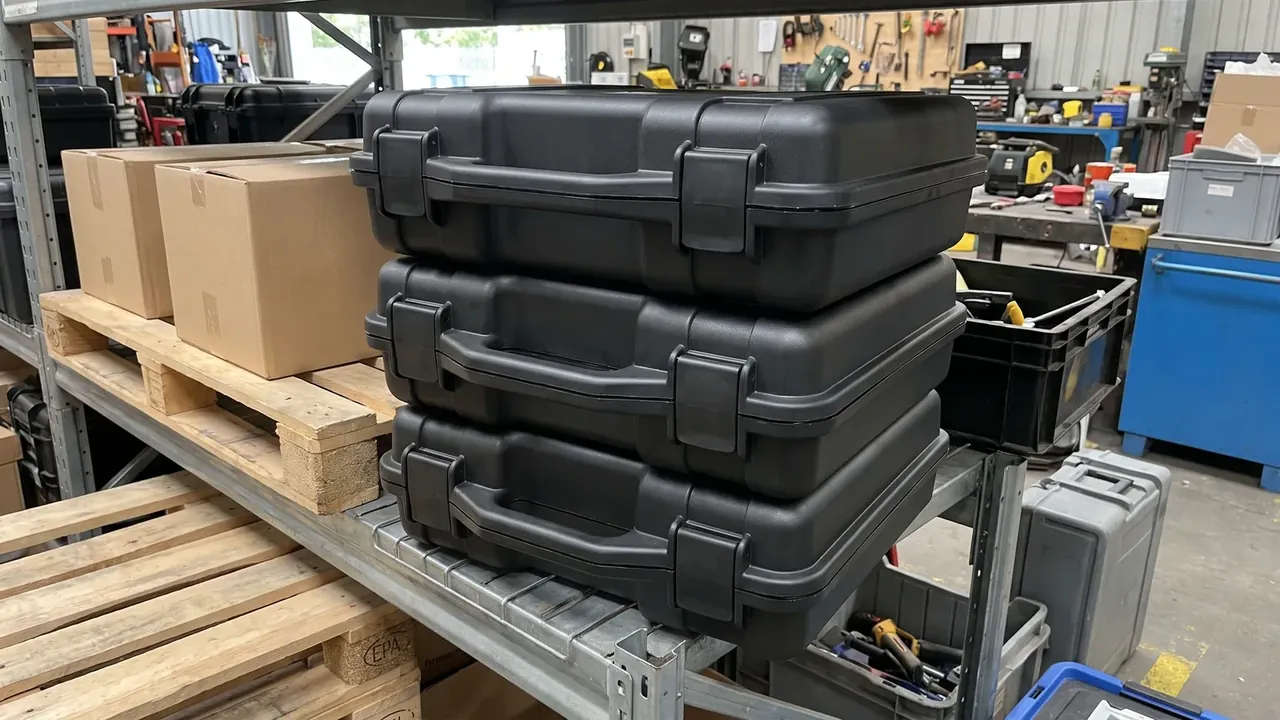
Repair spend concentrates at corners, latches and gaskets. Wear comes from handling knocks and misaligned stacking rather than a single drop.
In the photo, three black cases sit on a steel shelf with the top unit pushed back. Its weight lands on the rim instead of the load-bearing face, so the corner carries standing stress. Steel beams support along a line, and the base ribs deflect first.
Repair or retire turns on three numbers: repair cost against replacement price, trips left after the fix, and spare coverage. Early retirement from a liner mismatch wastes years of life.
4. Storage and stacking density
Hidden cost appears when the case stops moving: empty units in racks, return legs in trailers, wider aisles. A rigid shell cannot be flattened. Charged by volume, return freight is set by the empty-to-loaded ratio, and a hollow case still cubes out at full size. Knock-down crates keep an edge on that lane.
Rack density follows stacking geometry. A lid recess mating with a base boss adds a layer per bay; a shell without interlock needs straps at every pick. The white case on the beams shows grime along the lid, harmless but extra cleaning.
5. When a reusable case pays off
Feed three variables into the formula to get your lane's threshold. Below it one-way wins; above it the case pays back.
Break-even trips = fixed spend ÷ (one-way cost per trip − reusable variable cost per trip)
Figures are indexed, with fixed spend held at 60.
| Lane shape | One-way per trip | Reusable per trip | Break-even |
|---|---|---|---|
| In-plant loop, short shuttles | 6 | 2.5 | about 18 |
| Regional loop, mid-route returns | 8 | 3.0 | about 12 |
| Cross-region, one-way heavy | 6 | 4.0 | about 30 |
Payback follows return radius, not case price. A longer radius lifts variable cost per trip and raises the threshold faster than planners expect.
- Lane closes, and empty units can ride the return
- Annual trips sit above the break-even figure
- Payload outline is stable; liners rarely change
- Empty storage space and a unit register exist
- One-way quotes include disposal and transit losses
Conclusion
Fix the order: measure return radius, count annual trips, confirm how often liners change, then compare prices. The answer lands in one of three places — closed high-frequency loop, one-way low-frequency lane, or a mixed model. A life-cycle comparison does not crown a cheaper option; it shows which line item you pay for.
This article covers container-side specifications and design implications only.
Related Reading
- Cleaning, inspection and retirement criteria for reusable cases
- Shipping case selection: load, stacking and lifting fit
- Stacking design for stackable cases
- Why cases fail after repeated trips
Related Products
- 8 Series — Gun Cases; Military Equipment Cases; Camera Equipment Cases; Drone Cases; Watch Cases; Knife Cases; First Aid Cases; Electronics Equipment Cases
- WL8-2812 PP Gun Case — model WL8-2812
- All protective cases and toolboxes: 7 series, 158 models