

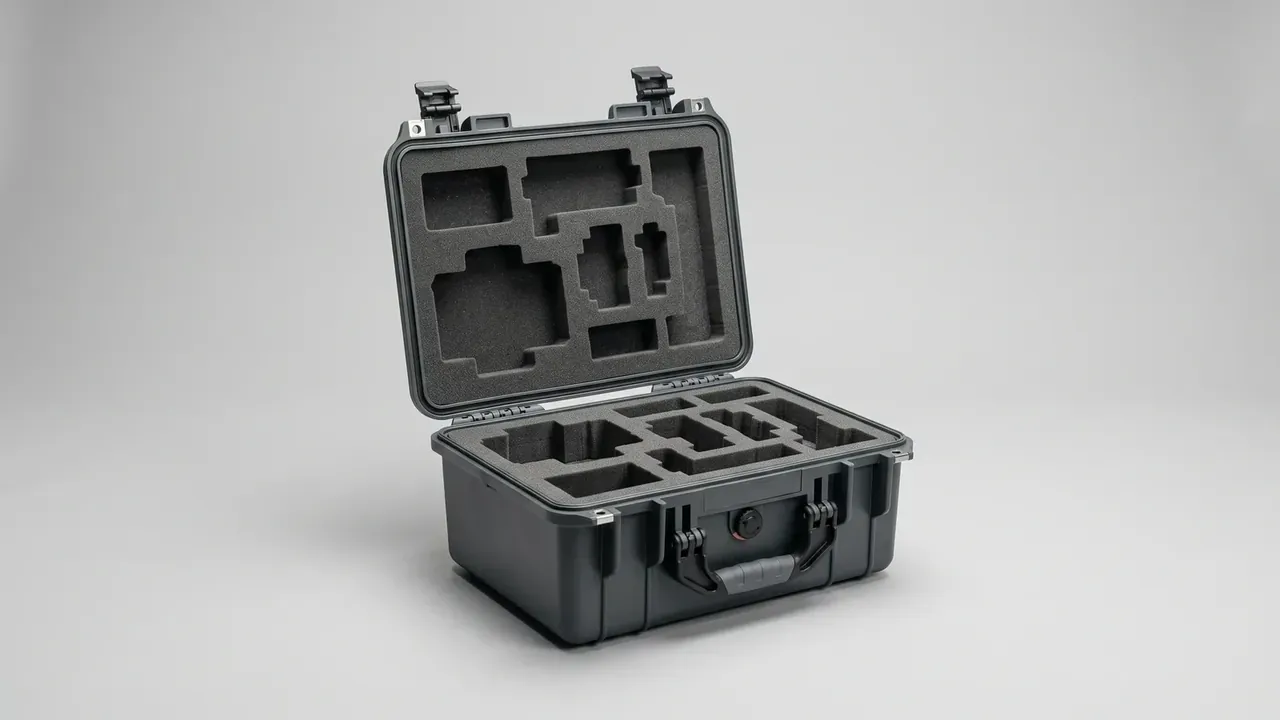
Quick answer: A shipping case that has been through many cycles fails in four predictable places: corners and rim, latches and hinges, base, and the shell where it deforms. None of this comes from a wall that is simply too thin. It comes from stress concentration at geometry changes, fasteners that work loose, and handling that loads one point instead of four. Stop the crack, restore the load path, then restore the sealing face.
Table of contents
- Four shipping case damage types that show up first
- Why corners and rims crack
- Latch and hinge failure
- Shell deformation and stack instability
- Reinforcement and repair by damage location
- FAQ
1. Four shipping case damage types that show up first
Damage on a shipping case is concentrated. Panels rarely fail; wear sits on vertical edges, the lid rim, latch keepers and base corners. Each is a geometry change where load must turn; at a corner the liner is notched rather than continuous.
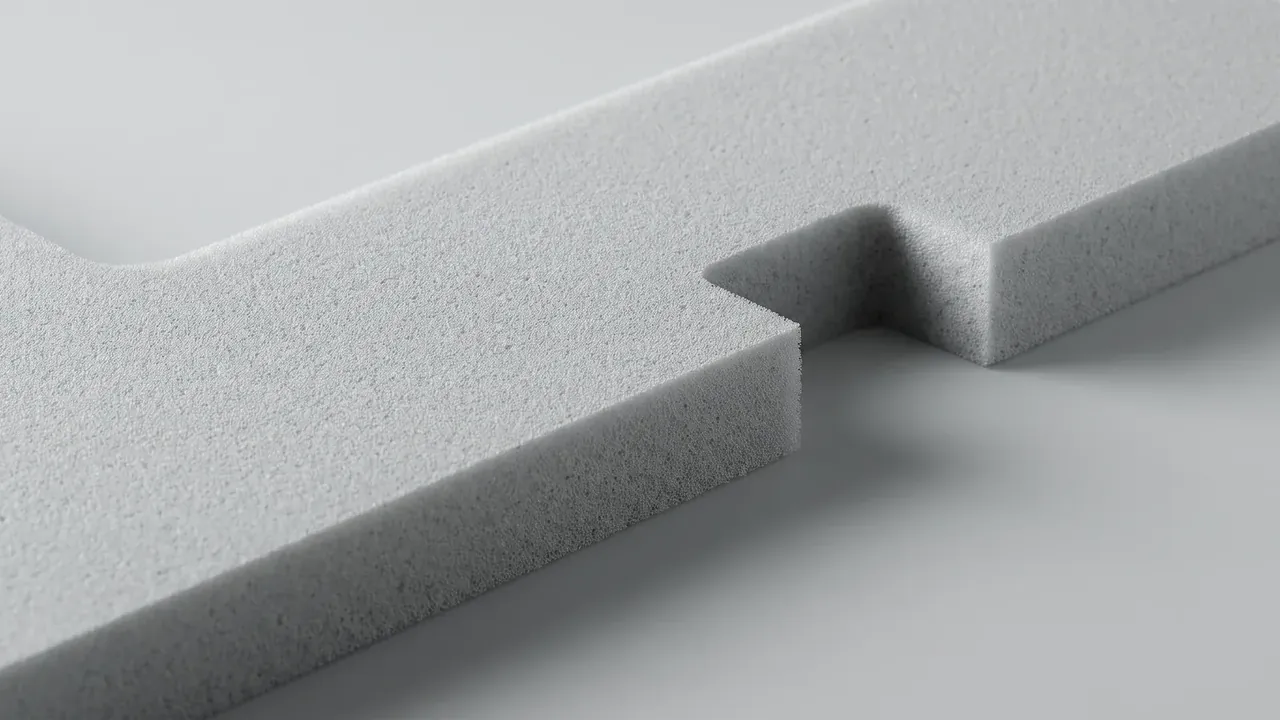
By frequency, the four are thin splits on a vertical edge, splits along the lid joint, latch or hinge failures, and base wear at the foot roots. Every opening leaves a small plastic set, and dozens of cycles add up to a crack. Checks should follow cycle count, not the calendar.
2. Why corners and rims crack
Corner cracks come from stress concentration on thin walls, not from a high drop. A corner is the last place material flows in moulding, so its wall runs thinner. With cold or UV ageing, an ordinary impact starts a split.
| Origin | Appearance | Trigger |
|---|---|---|
| Inner edge | Thin split, flat face | Off-centre stack |
| Outer edge | Radial cracks, white | Drop |
| Lid rim | Short cross split | Over-stacking |
A split from inside with a flat face is fatigue; one from outside with radial lines is impact. Fatigue cracks stay tight; impact cracks open wider. Rim splits trace to a narrow mating face.
3. Latch and hinge failure
Latches and hinges loosen, bind, then break. A keeper pulls out when the wall around its screws is too thin. A pin wears when the material is soft or dry, and play drops clamping force after thousands of cycles.
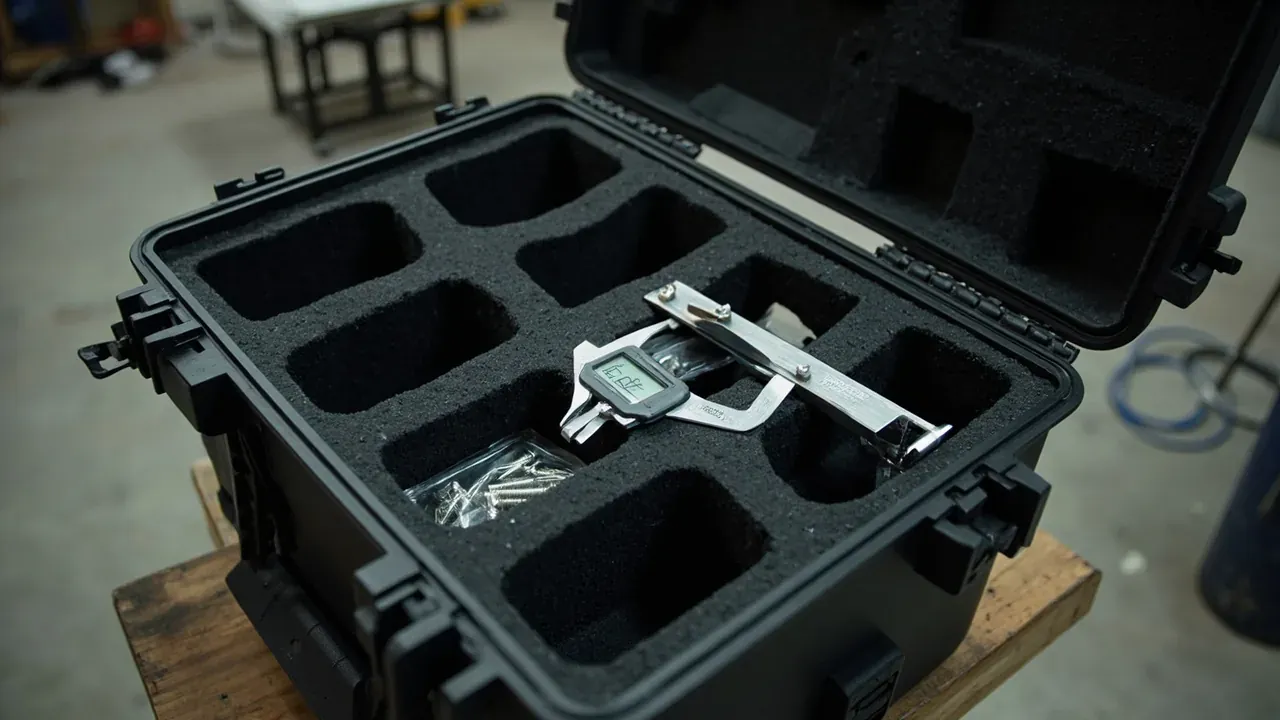
Liner condition gauges clamp evenness: seated compartments mean even pressure, a collapsed block means that side is overloaded. Hinges hide wear until a pin backs out or the lid rocks. A long hinge outlasts a short one through leverage, not pin size.
4. Shell deformation and stack instability
Deformation starts with a single-point load or uneven support, and stack collapse follows. Carry a loaded case by one handle and the diagonal shifts a few millimetres. Invisible on the floor, it is a lean by tier three.

Support matters as much. When pallet boards sit wider than the base ribs, few lines carry load and the bays sag; past five millimetres the next case cannot reach four corners. Plastics creep, so tier counts belong to long-term behaviour.
5. Reinforcement and repair by damage location
A repair restores three things: the crack stops, the fastener carries load, and the seal closes. Miss one and the work only delays scrapping. The finished case should close flat and sit square.
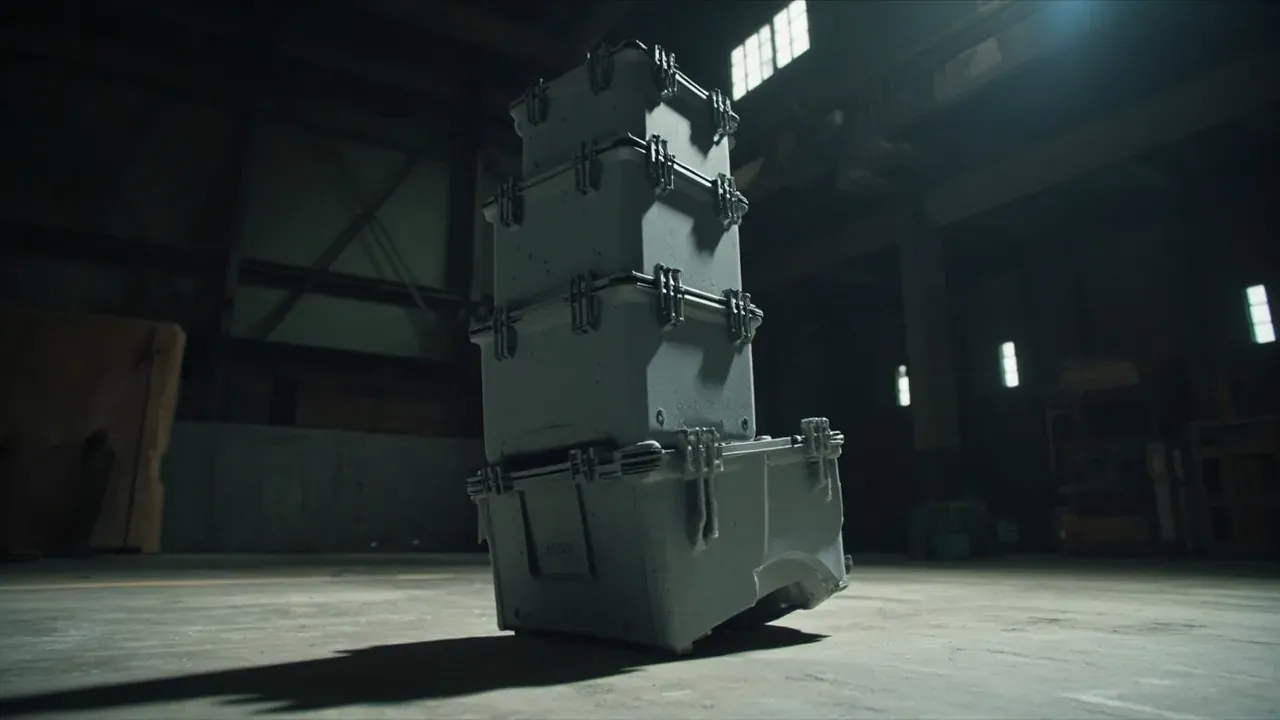
Continuous lid ribs and an even latch row show whether the load path came back. A through-crack on a primary load path, a damaged seal groove, or a third split is not worth repairing. Those cases cost less to replace than to keep patching.
| Damage | Method | Limit after repair |
|---|---|---|
| Corner crack | Stop holes, groove, weld, guard | No lifting |
| Rim split | Grind, weld, rivet a strip | One tier lower |
| Keeper out | Backing plate, through-bolts | Re-torque |
| Hinge mount torn | Pad plate, refit or replace | No one-sided load |
| Base worn | Hot-melt patch, wear strip | No dragging |
Check the work in order:
- Stop holes drilled, crack no longer extends
- Keepers and hinges still at rated clamp
- Lid gap even, all four corners touching
Conclusion
Work in order: locate damage at corner, rim, latch or base, decide impact versus fatigue, then stop the crack, restore the load path and check flatness. Replace rather than repair a through-crack, a damaged seal groove or a repeat split.
This article covers container-side specifications and design implications only.
Related Reading
- Shipping case selection: load, stacking, forklift and lifting
- Repairing a cracked shell or replacing the case
- Latch selection and failure diagnosis
- Reinforcement ribs and load paths
Related Products
- 8 Series — Gun Cases; Military Equipment Cases; Camera Equipment Cases; Drone Cases; Watch Cases; Knife Cases; First Aid Cases; Electronics Equipment Cases
- WL8-2812 PP Gun Case — model WL8-2812
- All protective cases and toolboxes: 7 series, 158 models