

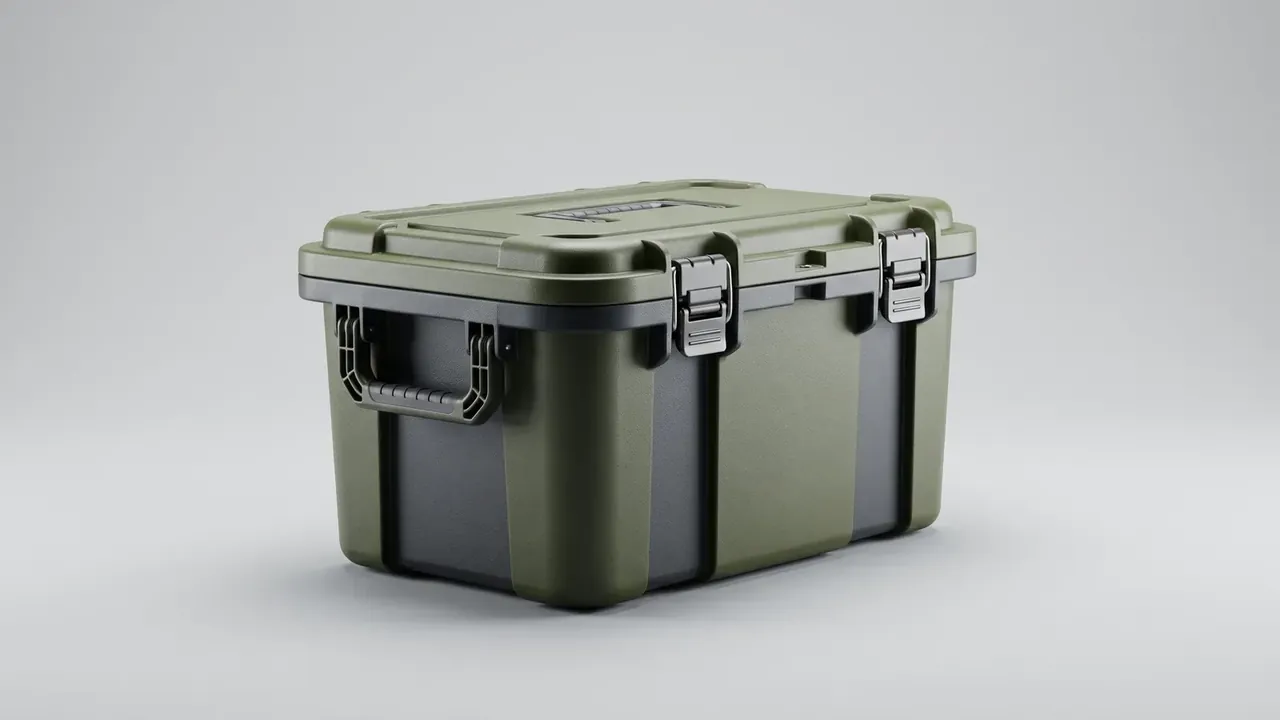
Quick answer: Service the container by cycle count, not calendar date. Seals, latches and hinges wear with every opening and lift; shell ageing follows exposure time. Two clocks stop a quiet quarter being over-serviced and a busy one missed. Clean by contaminant type, inspect seal, latch, hinge then shell, retire when damage passes what repair restores.
Table of contents
- Setting the interval by cycles, not dates
- Cleaning: matching the agent to the contaminant
- Inspection order: seal, latch, hinge, shell
- Repair or retire: where the line sits
- Decommissioning and material recovery
- FAQ
1. Setting the interval by cycles, not dates
One unit may open twelve times a year, the one beside it forty times a week; a quarterly schedule wastes labour on the first and misses the second. Set the interval in openings and lifts, plus one calendar item for exposure.
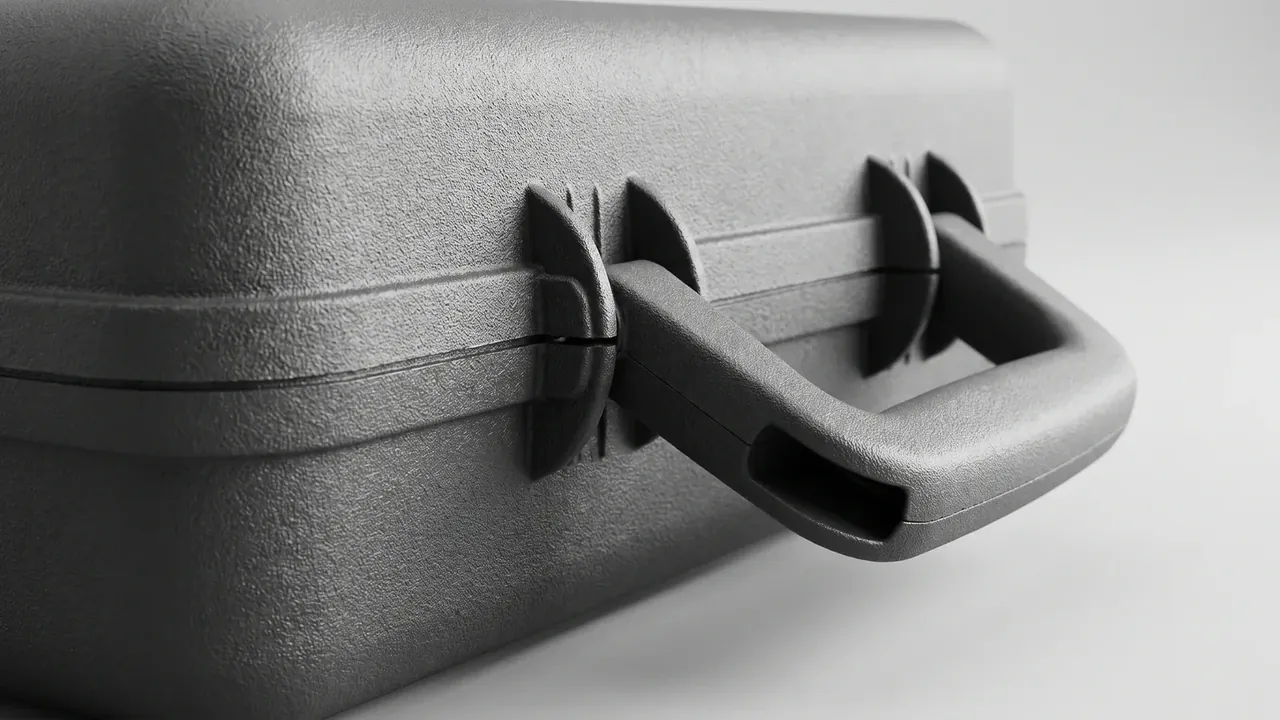
The slotted mounts at each end of the folding handle and the lid-to-body seam are the most skipped points. Count lifts apart from openings.
| Item | Unit | Interval | Early trigger |
|---|---|---|---|
| Seal | Openings | 500 | Condensation, grit |
| Latch | Openings | 1,000 | One side loose |
| Hinge | Openings | 2,000 | Lid sinks past 3 mm |
| Handle | Lifts | 300 | Rocking, whitening |
| Shell | Calendar | 12 months | Salt, spills, sun |
A count only helps if recorded: log transfers on the label panel or rebuild them from dispatch paperwork.
2. Cleaning: matching the agent to the contaminant
Cleaning starts with what must come off, not which product to buy: dust, salt, oil and chemical residue answer to different media.
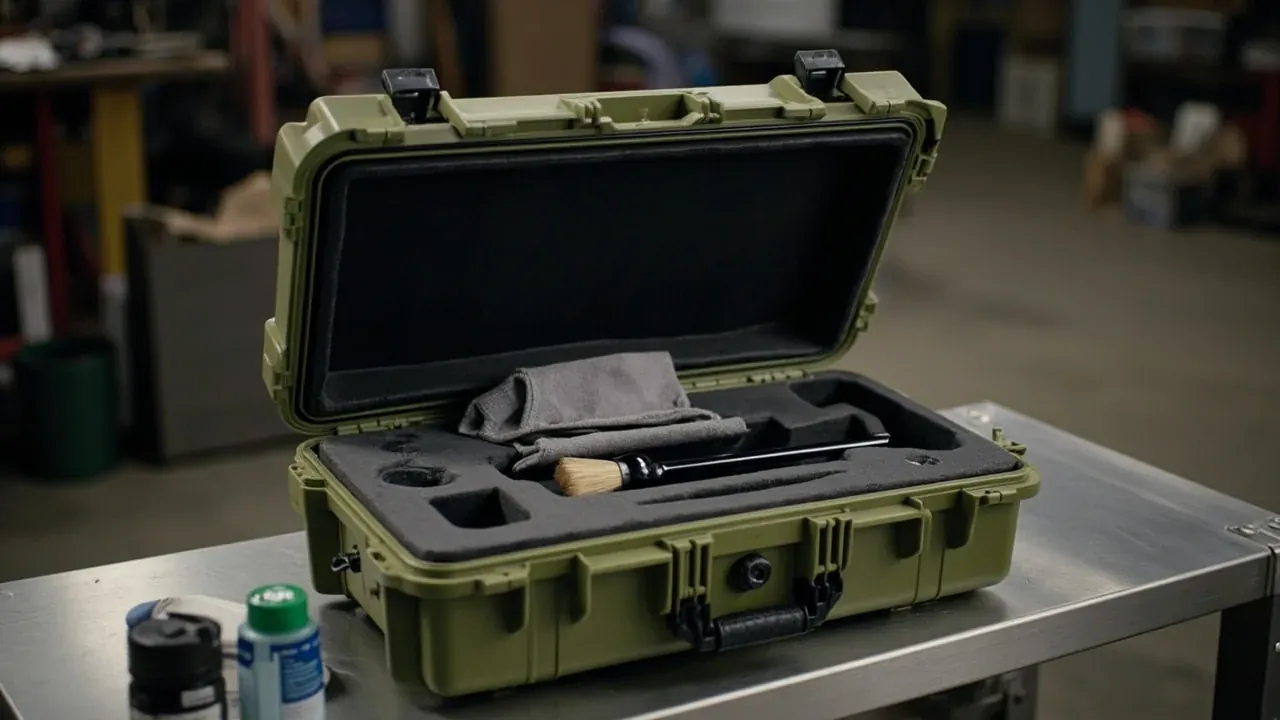
Empty the liner, wash the shell, then refit; reversing it drags grit into the seal groove. Salt needs rinsing and drying, not an acid descaler; grease yields to weak alkaline. Ketones and chlorinated solvents bloom polycarbonate into fine cracks; petroleum products swell silicone seals.
3. Inspection order: seal, latch, hinge, shell
Failure travels in order: a failed seal admits water, a failed latch shifts the lid, a failed hinge misaligns the face, a failed shell removes the base for all three.
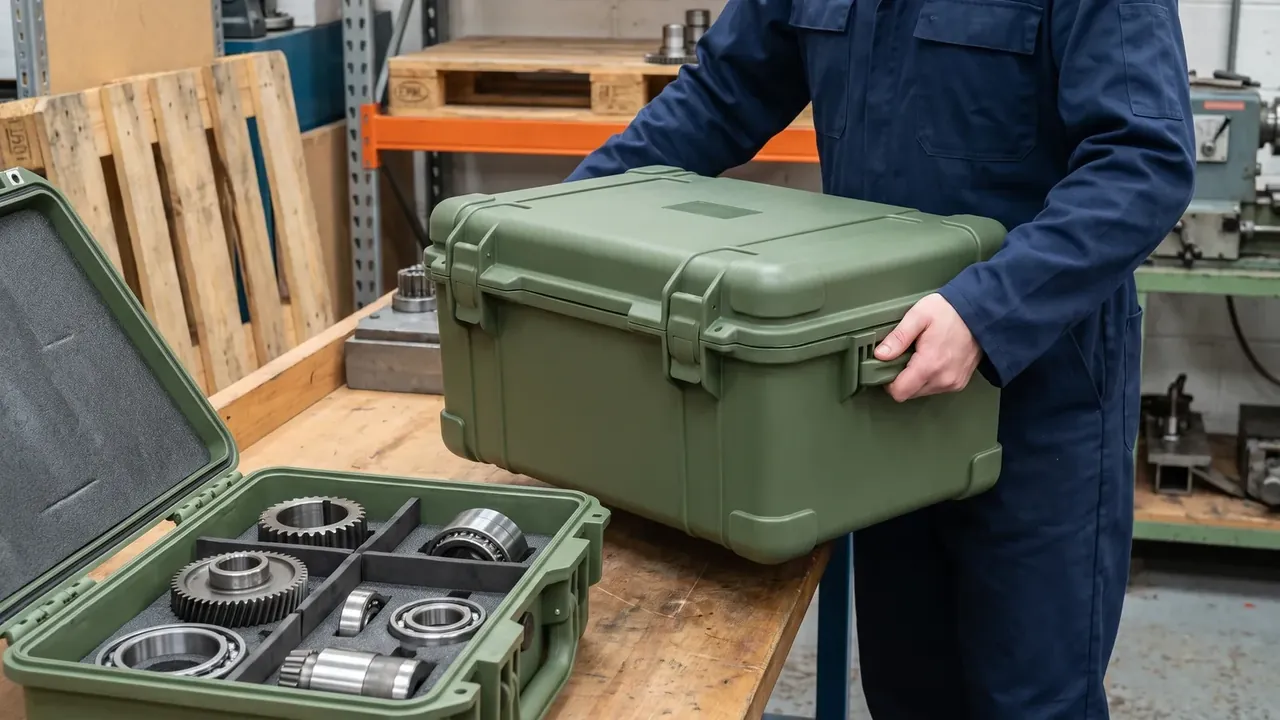
Lifting by the handle shows the load a mount sees; pull along the carry direction, not sideways.
- Seal: lift the loop out, check set, cuts, hardening.
- Groove: grit, scores, adhesive, along the full length.
- Latch: body, keeper, pin; 2 mm of lid movement means lost clamp.
- Hinge: two cycles, listen, watch for a backing-out pin.
- Handle: load along the carry direction; rocking means teardown.
- Shell: corners, edges, rib roots, latch seats.
Three records per service, date, count and parts, keep the next interval honest.
4. Repair or retire: where the line sits
Three questions decide it, not the damage name: does it breach the sealing path, weaken the load path, and can repair restore function?
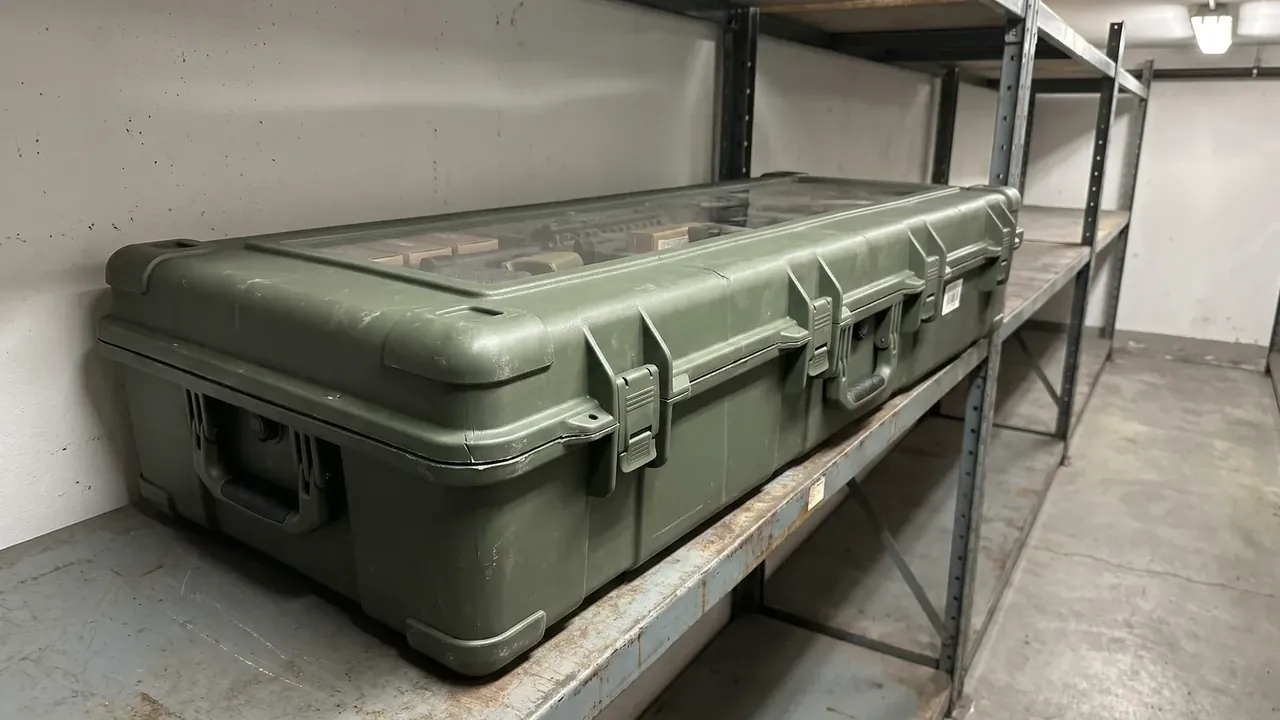
Scratches on the racked case, labelled face included, are cosmetic; only a score catching a fingernail, or one on the sealing face, is structural.
| Damage | Repair | Retire when |
|---|---|---|
| Compressed seal | New loop | Groove cracked |
| Loose latch | New body or pin | Keeper hole oval |
| Hinge play | New pin, bush | Seat tears the wall |
| Wall crack | Stop-drill and weld | Crosses rib root |
Welding suits rotomoulded shells, but the weld zone never regains the original toughness.
5. Decommissioning and material recovery
Retirement is a sequence of separations, not a skip: remove identity, strip hardware, separate the liner, sort, log.
- Identity: plates, barcodes and colour tags off, so nothing re-enters service.
- Hardware: latches, hinges and mounts become spares if the pin holes stay round.
- Liner: foam and shell are separate streams; bonded liner is cut out.
- Sorting: shell to regrind, metal to scrap, plastic waste to a licensed handler.
- Log: reason, date, quantity, which is how a weak batch gets found.
A unit failing no red line but no longer travelling goes to workshop storage once markings are erased and status changed.
Conclusion
Four steps: is the sealing path breached, the load path weakened, can function be restored, and is the labour cheaper than replacement? Only a clean sweep justifies repair.
Run two clocks, cycles for hardware and seals, calendar for shell and exposure. Record both and service life becomes predictable, not a matter of feel.
This article covers container-side specifications and design implications only.
Related Reading
- Reusable versus single-trip shipping units: life-cycle cost
- Case seal replacement and judging seal ageing
- Latch and hardware selection for hard cases
- Crack repair and spare parts for hard cases
Related Products
- 8 Series — Gun Cases; Military Equipment Cases; Camera Equipment Cases; Drone Cases; Watch Cases; Knife Cases; First Aid Cases; Electronics Equipment Cases
- WL8-2812 PP Gun Case — model WL8-2812
- All protective cases and toolboxes: 7 series, 158 models