

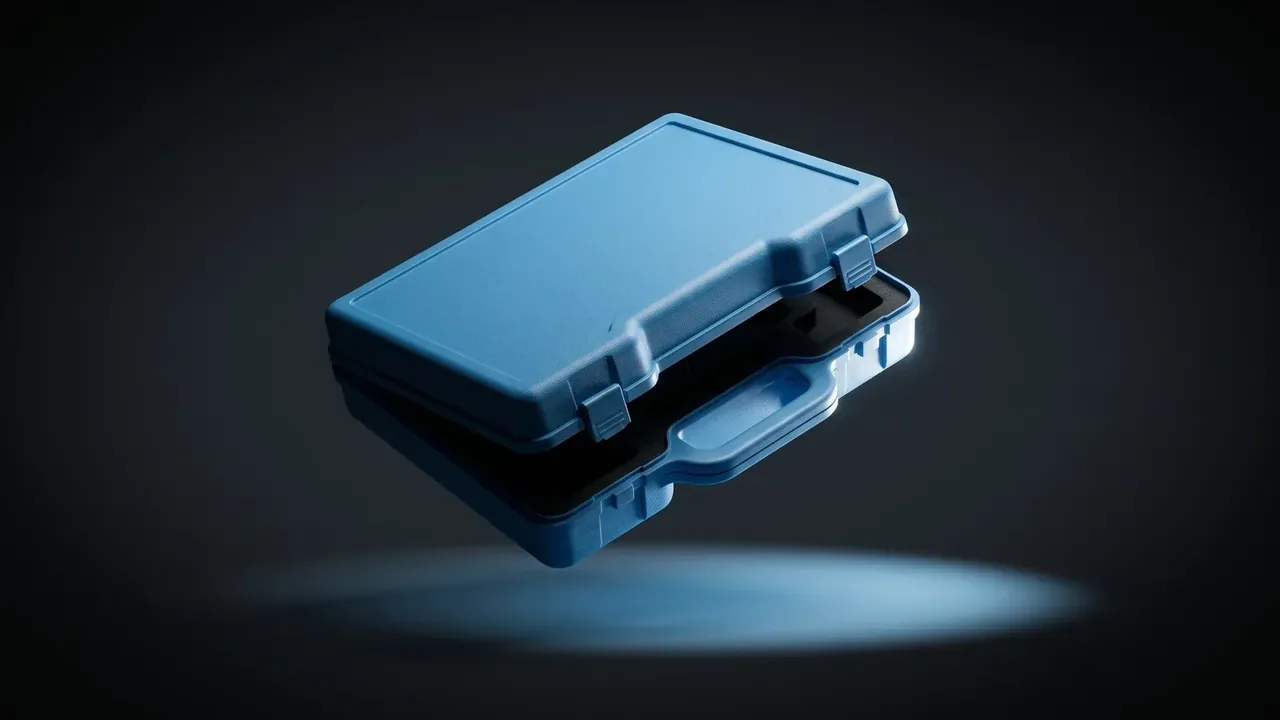
Quick answer: A tool box lid is configured by scene, not by price. A repair bay wants swing feel and a tool board, a cold chain wants frost control, a clean line wants a flat face, and stacking wants a load-bearing recess.
Table of contents
- How the lid differs across five scenes
- Repair bay: swing feel and the inner tool board
- Outdoor work and cold chain: cold, sun and frost
- Clean line and stacking: texture and load
- Lid configurations for the five scenes
- FAQ
1. How the lid differs across five scenes
Move a case to another floor and the tool box lid changes in ways price does not explain. A repair bay opens it 45 times a day, so the stop and latch feel set the pace; a cold store opens it rarely, and whether the gasket recovers after frosting decides everything; a clean line only asks whether dust settles in.
Four settings matter: opening and stop, a stacking recess, the gasket, a tool board.
| Scene | Opening | Lid build | Gasket, measure |
|---|---|---|---|
| Repair bay | 45 a day, one hand | Pin hinge, board | Single lip, under 35 N |
| Outdoor | Intermittent | Thick face, guards | Double lip, 1 m drop |
| Clean line | 6 to 8 a shift | Flat, no texture | Flat pad, Ra 1.6 micron |
| Cold chain | 2 to 3 a shift | Anti-frost channel | Double lip, silicone |
| Stacking | 1 to 2 a day | Stacking recess | Single lip, 90 kg |
2. Repair bay: swing feel and the inner tool board
A repair bay opens a tool box lid more than any other scene: 45 openings over eight hours at six seconds each is 4.5 minutes of motion before anyone hunts for a part. The stop must hold at full open and the latch must release one-handed.
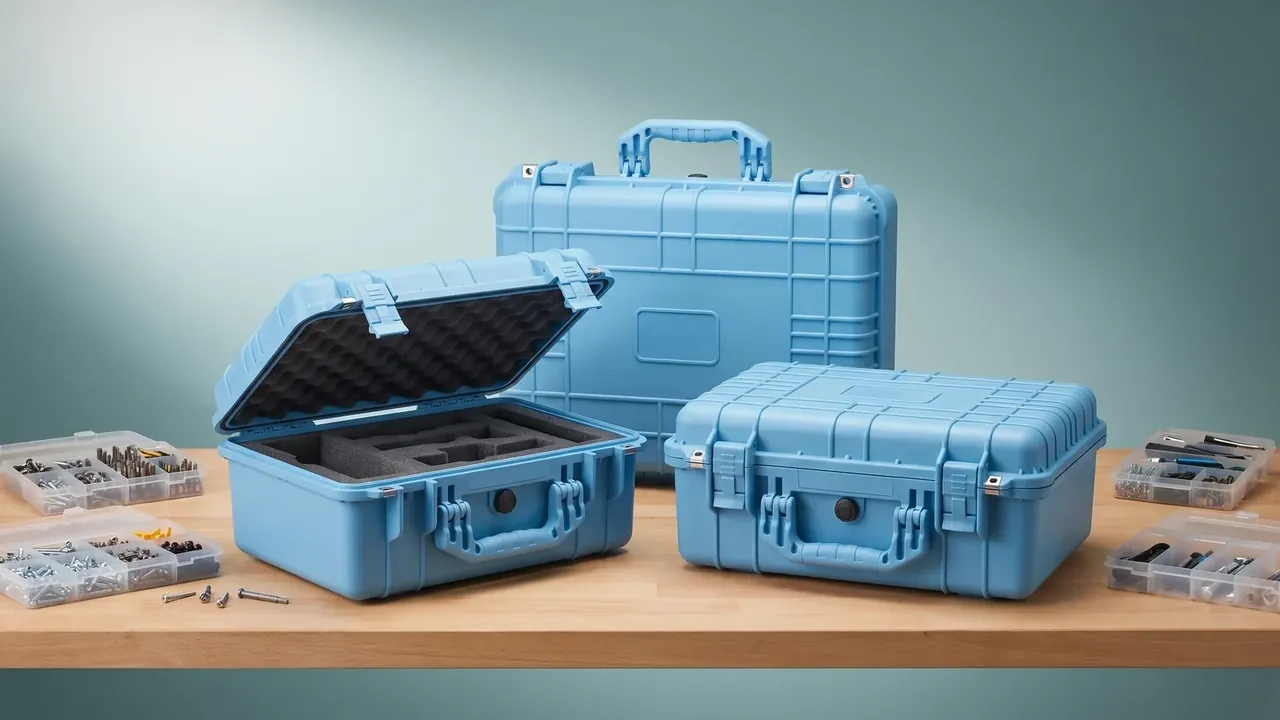
An inner tool board is standard, two tiers with twelve socket hooks. It pushes lid weight to about 1.6 kg, so a 40 N gas strut holds any angle without slamming.
3. Outdoor work and cold chain: cold, sun and frost
Outdoors, toughness comes first: modified polypropylene must survive a 1 m drop at -25 C without cracking, where homopolymer snaps at the corner. A light grey face also runs about 12 C cooler than dark grey at midday.
On a tool box lid in cold chain, frost matters more than cold. After 72 hours at -30 C the gasket hardens and opening force climbs from 45 N to 80 N; over 20 freeze-thaw cycles frost lifts the seal off its seat. The fix: an anti-frost channel, a silicone film, a larger tab.
4. Clean line and stacking: texture and load
A clean line asks whether the tool box lid face wipes clean. Texture is a field of pits; after 300 alcohol wipes the edges fray and hold dust, so the face runs flat at Ra 1.6 with 304 latches.
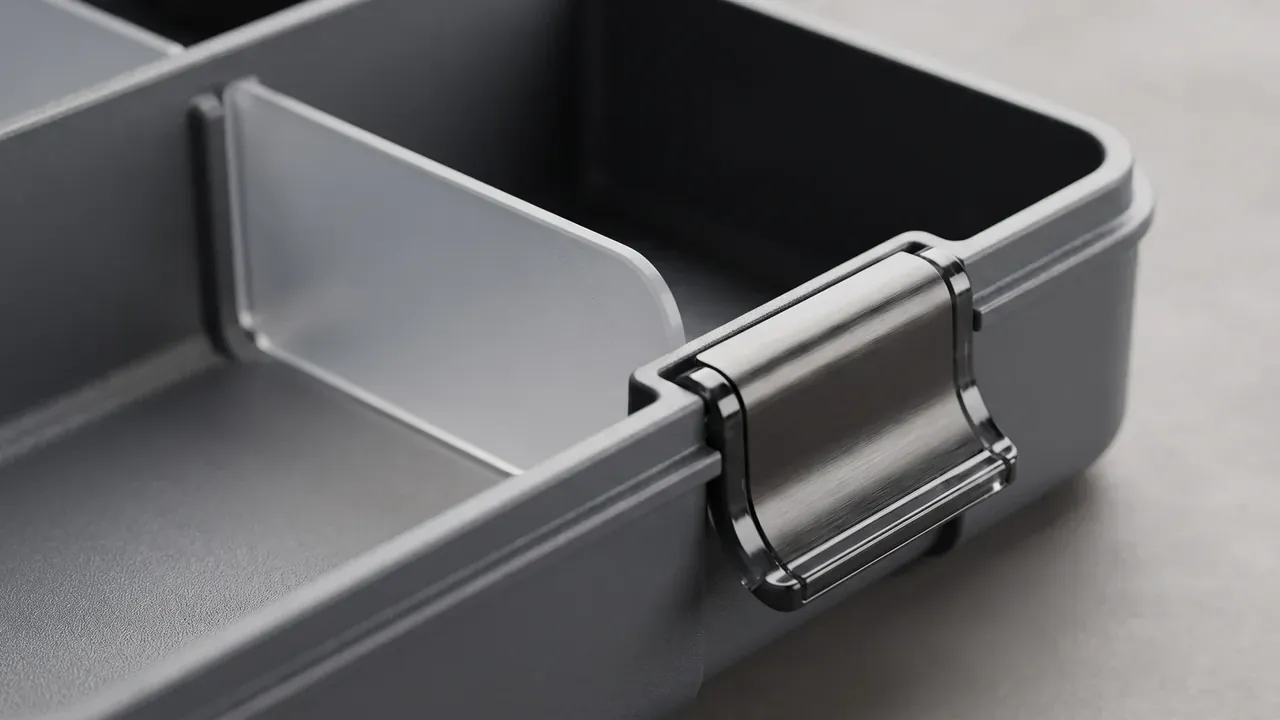
Stacking loads the face: five tiers at 18 kg on a 1.8 m stack puts 90 kg on the top lid, needing a 3 mm recess to seat the case above. On a 1200 by 1000 mm pallet it alone locates the middle case.
5. Lid configurations for the five scenes
Set the scenes side by side and the list writes itself:
| Scene | Lid type | Latches | Gasket |
|---|---|---|---|
| Repair bay | Flat, pin hinge | 3 | Single lip, 40 N strut |
| Outdoor | Thick, guards | 4 | Double lip, nameplate |
| Clean line | Flat, no texture | 2 | Flat pad, 304 latch |
| Cold chain | Anti-frost channel | 3 | Double lip, larger tab |
| Stacking | Recessed face | 4 | Single lip, 3 mm recess |
Borrowing across scenes is the usual mistake: a cold-chain case on a clean line brings texture the line rejects, and a clean-line lid in a repair bay has no tool board, so tools pile up and dent the face. A tool box lid moved out of its scene fails within months.
Conclusion
The scene sets the configuration: swing feel and a board in a repair bay, cold toughness outdoors, frost control in a cold chain, a flat face on a clean line, a recess for stacking. Get them wrong and the seal or the face fails within a season; read the scene before specifying the tool box lid.
This article discusses only the container (case body) side of specifications and design intent, and does not cover any handling, loading or use of the contents.
Related Reading
- How a tool box is structured
- Typical scenes for a hardware tool box
- Configuring a vehicle tool case
- Where a rolling tool case is used
Related Products
- 8 Series — Gun Cases; Military Equipment Cases; Camera Equipment Cases; Drone Cases; Watch Cases; Knife Cases; First Aid Cases; Electronics Equipment Cases
- WL8-2812 PP Gun Case — model WL8-2812
- All protective cases and toolboxes: 7 series, 158 models