

Quick answer: Three things decide what a Transit Case really costs: whether the quote is itemised, how tooling is amortised against order quantity, and whether lead time is broken into milestones. Fix all three in the contract and price and delivery become controllable.
Table of contents
- How to Break Down a Transit Case Quotation
- MOQ and Tooling Amortisation: 500 vs 3,000
- Lead-Time Milestones: From Tool to Shipment
- Sample and First-Article Sign-Off
- Payment, Inspection and Replenishment Terms
- FAQ
1. How to Break Down a Transit Case Quotation
Same drawing, three quotes, a 40% spread: the gap rarely sits in the shell. It sits in foam density, latch brand and how tooling is spread. Ask for an itemised quote first.
| Cost item | Share | Basis |
|---|---|---|
| Shell | 58% | weight, resin, machine rate |
| Foam insert | 19% | density and cutting time |
| Latches, hinges | 11% | per set |
| Packing, pallet | 5% | per unit |
| Tooling | 7% | one-off or per unit |
Foam from 25 to 45 kg/m³ adds about 18 CNY a unit; a glass-filled nylon latch saves 6 CNY and halves life from 8,000 to 3,000 cycles.
Ask who owns the tool and what a transfer costs; unclear ownership traps a buyer at the next change.
2. MOQ and Tooling Amortisation: 500 vs 3,000
A single-cavity Transit Case tool at 48,000 CNY costs 96 a unit over 500 pieces, 16 over 3,000: an 80 CNY gap no haggling closes.
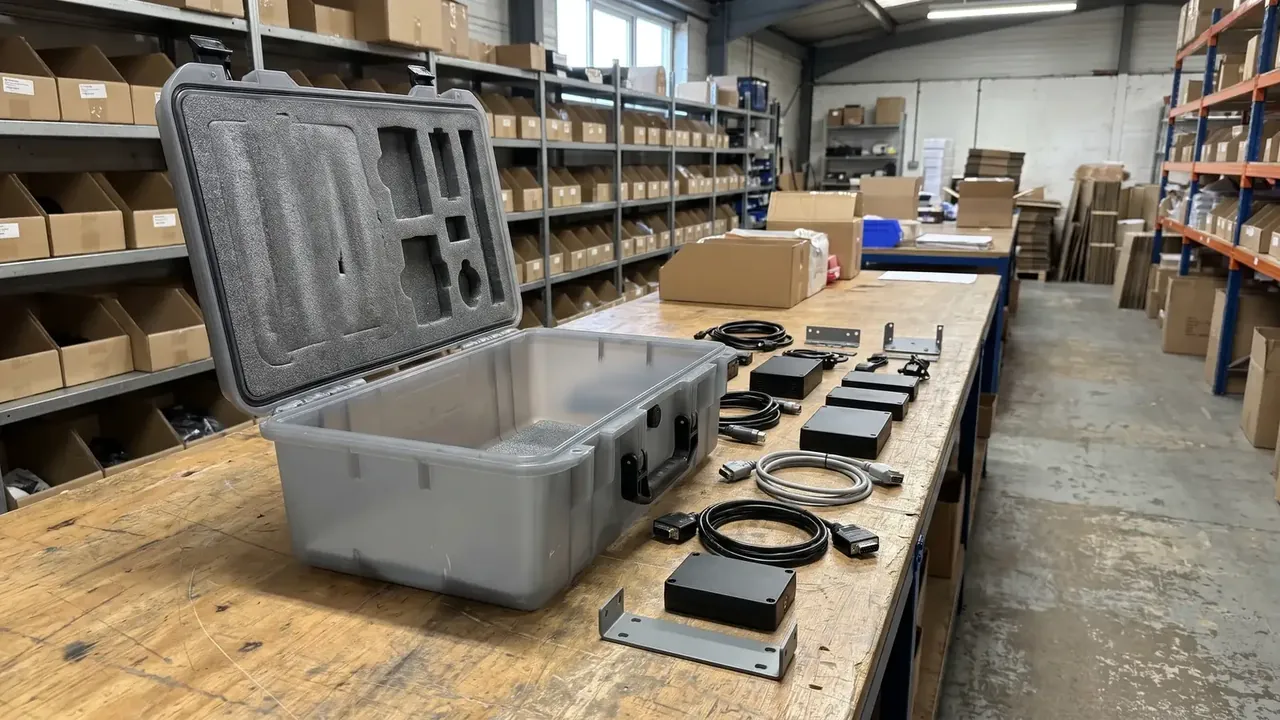
MOQ follows cavity count and changeover cost. 300 pieces is the usual floor; below it, plants quote a smaller machine or a welded build, at a higher price and less strength. For a hundred-unit trial, a stock size beats a new tool.
Amortisation comes three ways: all on the first order, spread to a 3,000-piece cap, or bought outright at about 1.2 times tool cost.
Write the cap down: no tooling charge past 3,000 pieces, colour changes billed at 3,000 CNY each.
3. Lead-Time Milestones: From Tool to Shipment
A single delivery number is the easiest thing to miss; milestones with deliverables give you something to hold.
| Milestone | Working days | Deliverable | Trigger |
|---|---|---|---|
| Tooling | 22 | acceptance sheet | 30% advance |
| First article | 6 | report, sample | none |
| Pilot batch | 10 | 50 units, records | none |
| Volume | 24 | lot, shipping report | 60% on B/L |
The critical path is tooling and first article; volume compresses, tooling does not. To cut ten days, drop the slides or prove assembly on an aluminium prototype and run the first article with the pilot.
Peak season has its own arithmetic: 30 days before Spring Festival, the same tool takes 15 days longer. Write working days, not calendar days.
4. Sample and First-Article Sign-Off
A sample is not a colour check. Appearance, then assembly, then verification: colour and print position, foam pockets and latch feel, then drop and stack before sign-off.
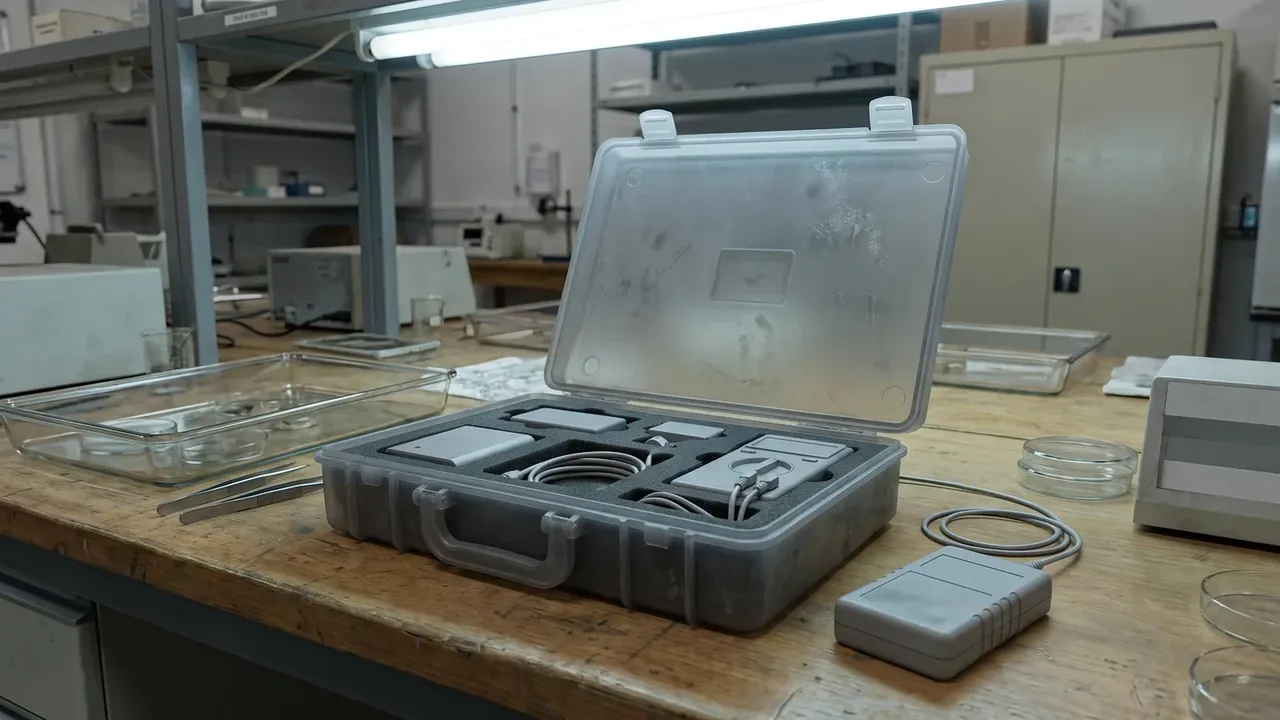
Each step can veto the rest. Fail appearance and everything restarts; fail assembly and only the foam drawing changes; fail verification and you must separate structure from process. Merge them and you learn after volume that a latch sits 3 mm off.
Samples run about 1,200 CNY each, two refunded at 500 pieces. The sign-off sheet carries three hard lines: colour code, foam density, latch model.
5. Payment, Inspection and Replenishment Terms
Payment belongs on milestones, not on the calendar.
| Term | Suggested | Note |
|---|---|---|
| Advance | 30% | tooling, first resin |
| Shipment | 60% | 3 days from B/L copy |
| Balance | 10% | 15 days after acceptance |
| Breakage | 0.8% | supplier replaces above |
| Replenishment | 50 units | 12% premium cap |
| Price review | resin ±5% | quarterly |
Inspection runs AQL 2.5 on 50 units, zero tolerance on fatal defects. A failed inspection holds the balance until rework passes; put that in the payment clause.
Replenishment is the clause everyone forgets. Latches and lids fail first, and reorders run to dozens. Fix a 50-unit minimum, 12% premium cap and 20 days delivery, or a 20-unit reorder gets quoted at the new MOQ.
Conclusion
Buying a Transit Case comes down to three sheets: the itemised quote shows what you compare, the amortisation sheet where unit cost lands, the milestone sheet who to call when it slips.
Payment and replenishment belong to lifetime cost: once breakage and price review are written down, year-two reorders stop being a negotiation. That is how Transit Case procurement stops being a one-off haggle.
This article discusses only the container (case body) side of specifications and design intent, and does not cover any handling, loading or use of the contents.
Related Reading
- Where a Transit Case gets used
- How case requirements differ by industry
- How to specify a custom foam insert
- Export packing, pallets and fumigation
Related Products
- 8 Series — Gun Cases; Military Equipment Cases; Camera Equipment Cases; Drone Cases; Watch Cases; Knife Cases; First Aid Cases; Electronics Equipment Cases
- WL8-2812 PP Gun Case — model WL8-2812
- All protective cases and toolboxes: 7 series, 158 models