

0 Series Tool Case: Structure and Latch
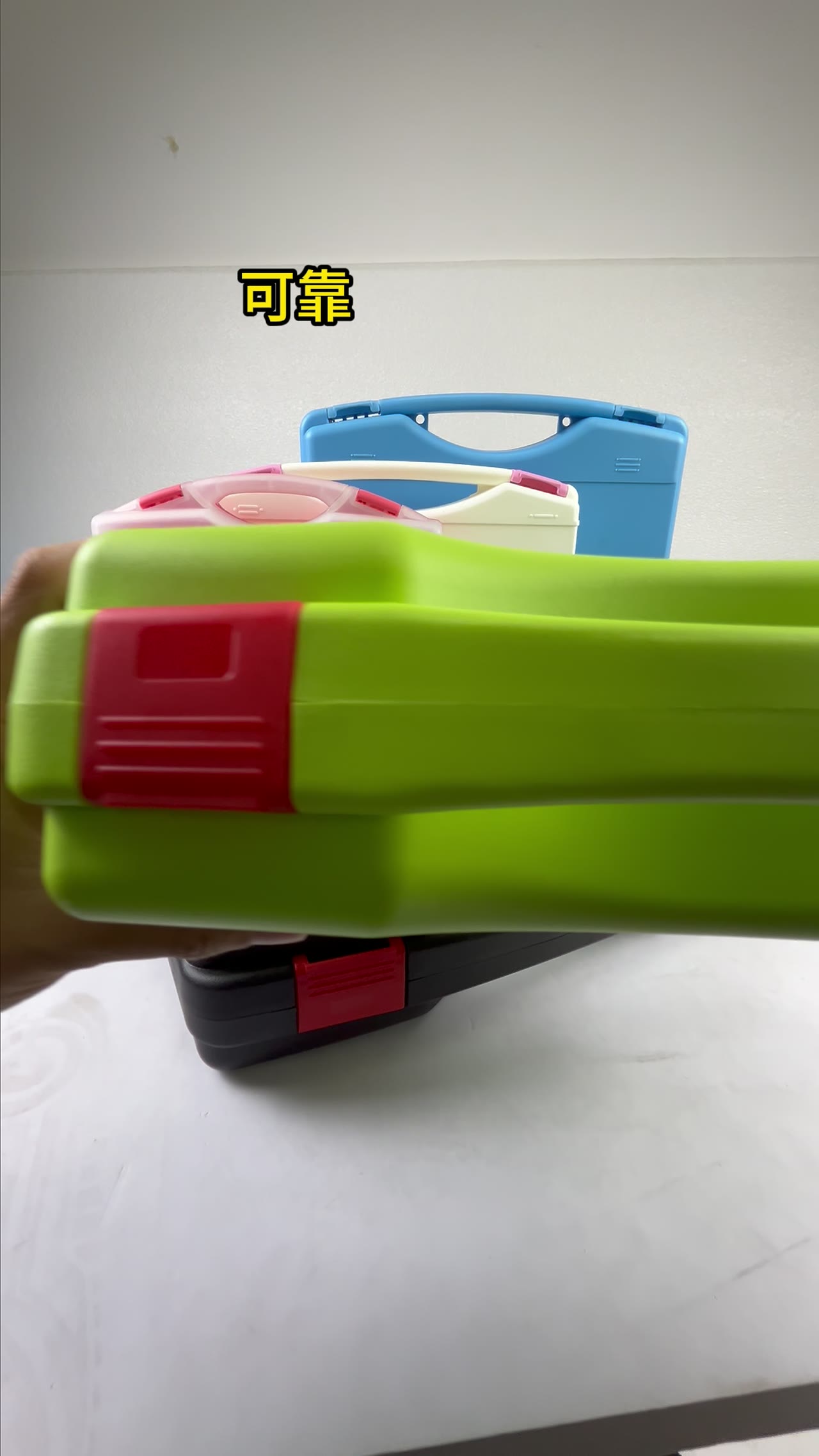
Shut a tool case and all anyone sees is a shell and two latches. What decides whether it lasts three years sits one layer down: how the wall feeds load into ribs, how much draft was left for ejection, how tight the lid meets the base, and where the latches pull that lid down. The clip walks that structure once, from pellet to moulded shell to the closing sequence. What follows are the numbers behind each step, so a sample on the bench can be checked against them, one at a time.
01The Wall Carries Nothing; the Ribs Carry
An injection-moulded case is a shell, and a shell is poor in bending. Load travels through ribs grown from the inside face: they cut a wide panel into short spans and route force to a support. Wall on this class of case lands between 2.5 mm and 3.5 mm, and rib height runs two to three times that, so 5 mm to 10 mm. Go taller and the show face sinks.
Two rules govern rib layout. Spacing between ribs stays under twenty times wall thickness, or the panel between them still bulges. And every rib root needs a radius, usually 0.5 mm to 1 mm, because a sharp corner concentrates stress and a drop starts a crack there. The base needs ribs most: a perimeter ring plus a cross is the cheapest way to carry a full case.
02One or Two Degrees of Draft Is an Ejection Allowance
Plastic shrinks as it cools, and this class runs 0.4% to 0.8%. Shrinkage makes the part grip the core, so a truly vertical wall gets scraped on the way out and deep cavities can tear. Every face parallel to the pull direction therefore carries draft, 1° to 2° as a rule, 3° or more on textured surfaces. Draft is not a tolerance; it is a precondition.
The bill arrives in the dimensions. One degree over a 100 mm wall puts about 1.7 mm between top and bottom, so the rim is wider than the floor. Lay out pockets from the rim dimension and the floor of each pocket is quietly narrower, enough to jam a long item. Measure clearance at the narrowest point, then add margin upward.
03Where the 0.3 mm Joint Gap Comes From
The joint between lid and base is set by the parting face, not by feel. Machining accuracy, mould stiffness and clamp force decide the gap together. On this class of case the target is 0.3 mm or less. Past 0.5 mm a bright line shows to the eye, and the same line becomes a path for water and dust.
Two things open the gap: mould wear and short packing. Under-pack and the melt retracts while cooling, the edge sinks, and the joint appears to have spread. Check it with feeler gauges at 100 mm intervals around the perimeter. A spread of more than 0.15 mm between readings points at mould stiffness or uneven clamp, not at the design.
04Four Beats to Open It With One Hand
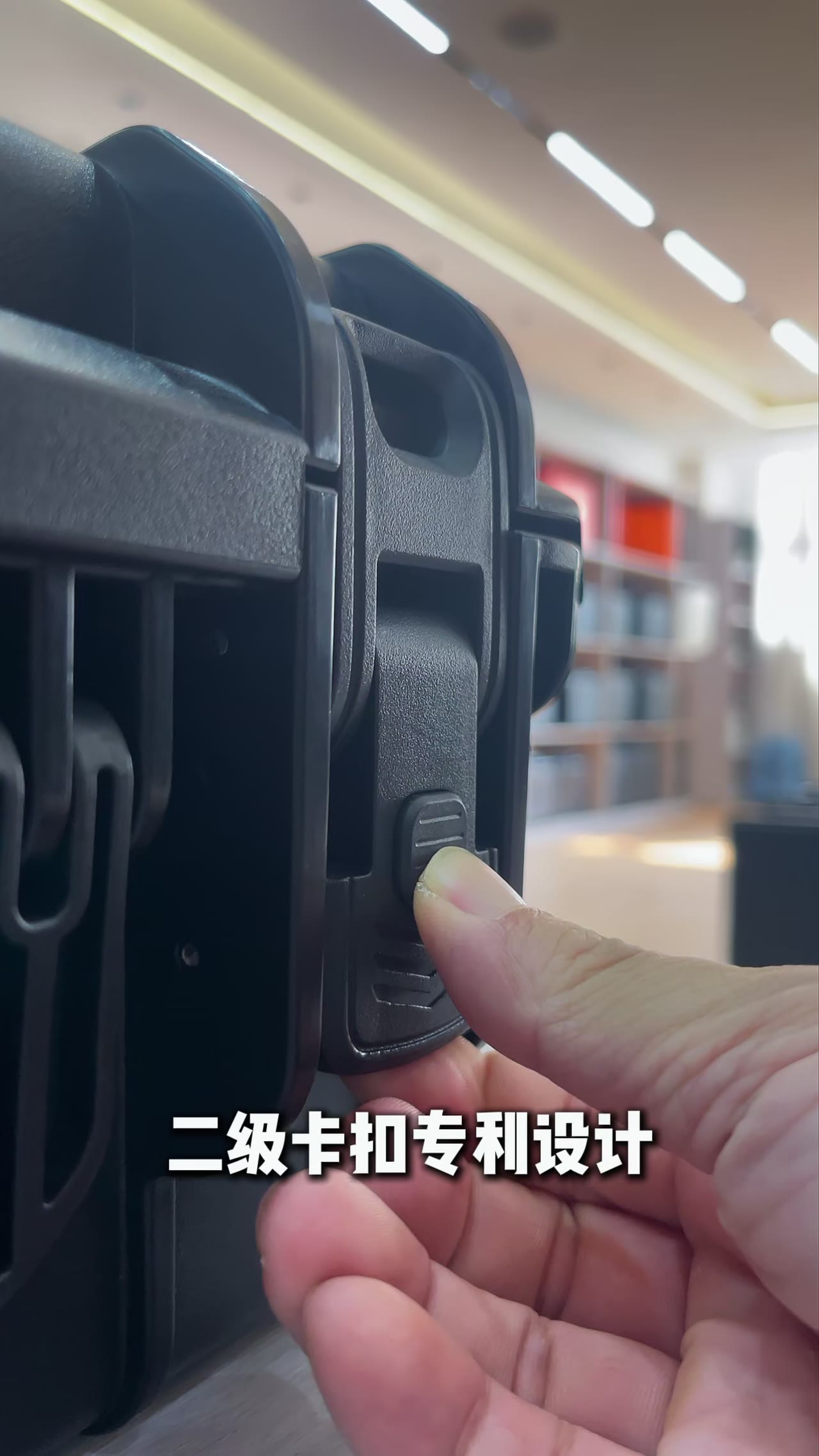
Opening a case one-handed takes four beats: the web of the hand holds the lid edge, the thumb breaks the latch, the wrist lifts 30° to 45°, and the lid stops against the hinge limit. If any beat needs a second hand, the case gets opened on the floor in real service. Latch force on this class runs 30 N to 60 N: above 60 N a thumb will not break it, below 30 N it pops open in transit.
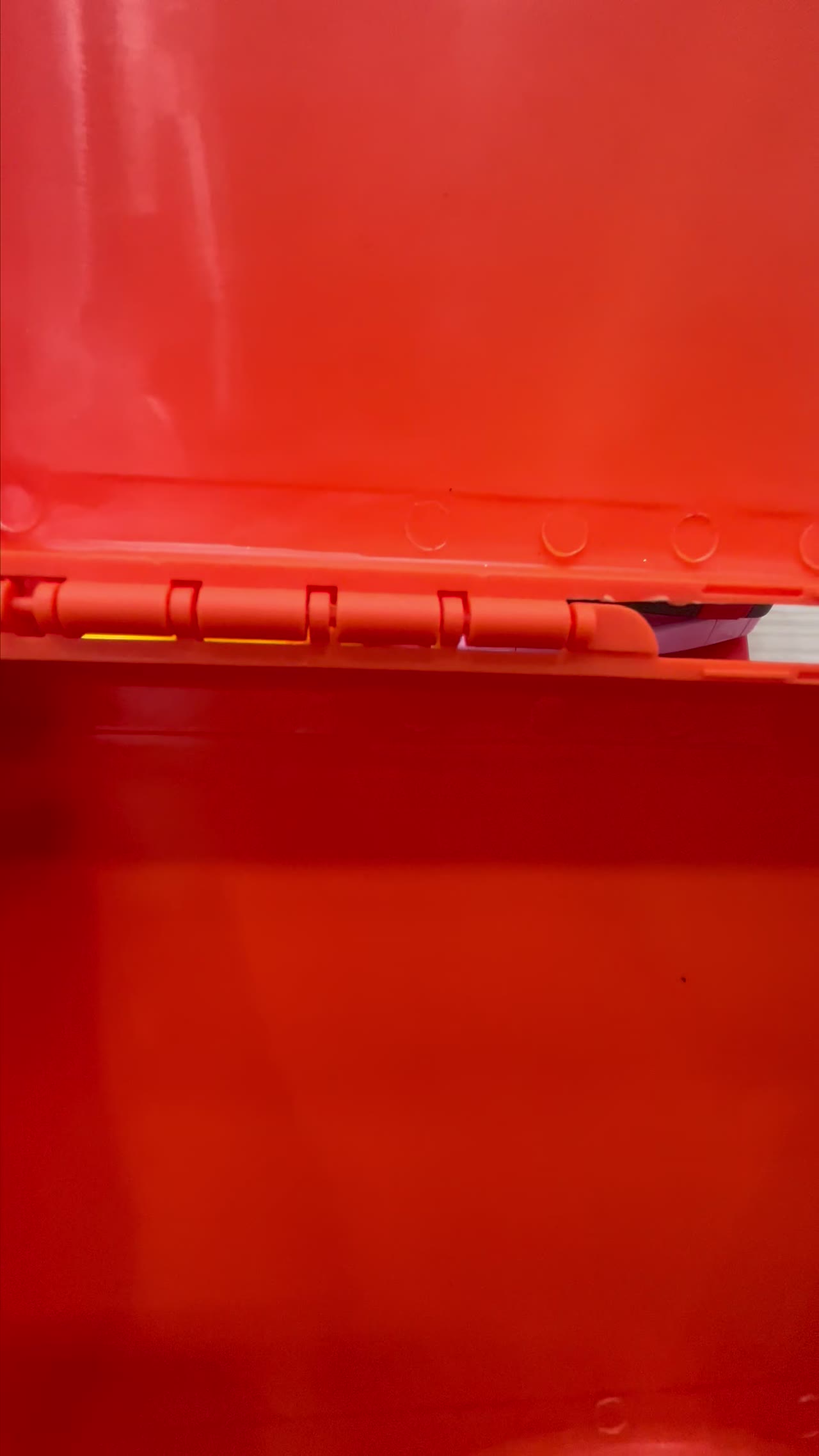
The hinge owns the fourth beat. Pin-to-lid clearance wants 0.2 mm to 0.4 mm; tighter feels stiff, looser lets the lid wobble half open. The stop is usually set at 95° to 110°, because under 90° the lid crowds the hand and past 120° the centre of gravity moves back and the case tips. None of these numbers matters alone.
05Five to Ten Thousand Cycles, Held by Three Details
Rated life on this class is 5000 to 10000 open-close cycles, and three details carry it: the latch spring arm, the hinge pin, the lid tongue. The arm works on the material's own recovery, so strain is held under 0.8%; beyond that it relaxes and stops clamping. Hinge pins are glass-filled nylon or metal, with 0.1 mm to 0.2 mm of bore clearance.
Assembly counts toward life as well. Screw torque at the latch base usually sits at 1.2 N·m to 2.0 N·m: low and it works loose, high and the base cracks. Torque wrenches get audited by batch rather than trusted. For acceptance, run 200 cycles and then look for whitening around the latch seat; whitening is the first signal, well ahead of a crack.
| Wall thickness | 2.5–3.5 mm |
|---|---|
| Rib height | 2–3× wall (5–10 mm) |
| Draft angle, textured face | 1°–2° (≥3°) |
| Lid-to-base joint gap | ≤0.3 mm |
| Latch closing force | 30–60 N |
| Rated open-close life | 5000–10000 cycles |
| Moulding shrinkage | 0.4%–0.8% |
| Latch base screw torque | 1.2–2.0 N·m |
FAQ
Is a stiffer latch always safer?
No. The 30 N to 60 N band trades feel against sealing. Above 60 N a thumb cannot break it and the one-handed sequence falls apart; below 30 N a loaded case pops itself open on a rough road. For more security, add a latch or change the closing geometry rather than stiffening one.
Should a new case have a visible line at the joint?
Up to 0.3 mm of step from the parting face is normal. Run a finger round the perimeter and worry only if the feel rises and falls. Feeler gauges every 100 mm should stay within 0.15 mm of each other; a wider spread points at mould stiffness or clamp force, and is worth a re-measure.
How is a 5000-cycle rating converted to years?
One open plus one close counts as a cycle. Twenty cycles a day is about 5000 a year; an assembly bench running 30 to 60 per shift burns through it far faster. The figure is a bench criterion, not a service life, and salt, dust and sunlight all take their share.
Can a case keep working after a hard drop?
Check two places: rib roots and hinge seats. Both concentrate stress, and whitening hairline marks there mean retire the case, because a crack will run along the root. Whether the joint still sits flat and the latch still closes one-handed tells you more than the cosmetics.