

0 Series Large Tool Case: Capacity in Practice
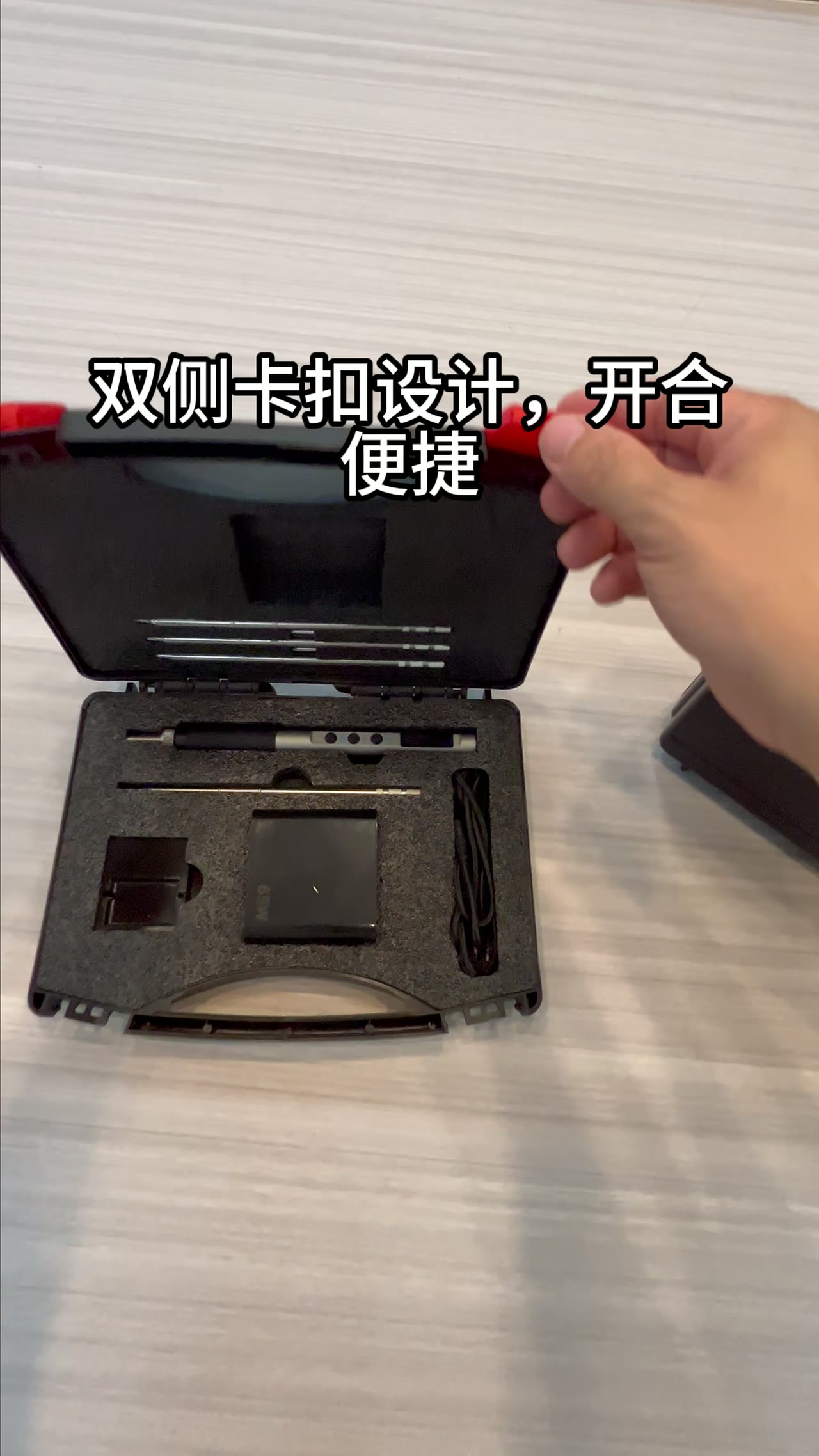
Open a large tool case on a bench and the first impression is generosity: sockets, a drill, a tape measure, all visible at once. Volume is the wrong number to buy on, and the figure printed on the carton rarely helps. What a case really hands over is the share of its outside envelope that survives walls, ribs, latch bosses and the lid joint, and that share is usually smaller than the box suggests. Work the ratio out, then test it against load density and the three-dimensional envelope of the bulkiest item you own.
01Only Sixty to Seventy-Five Percent Is Yours
Measure a case from the outside and a good part of that box is not empty. Walls, base ribs, latch seats, hinge seats and the tongue at the lid opening all take a cut. On an injection-moulded shell the usable share typically lands between 60% and 75% of the outside envelope; rotational mouldings, being thicker, sit lower. Take one shell from 2.5 mm to 3.5 mm of wall and clearance shrinks all the way round.
Work it as subtract, then multiply. Get gross volume from internal dimensions, deduct divider thickness, rib height and the finger clearance to lift an item out. Load density in this class runs 0.15 to 0.35 kg/L, hand tools and gauges near the top, power tools and cable near the bottom. Under 0.15 kg/L the case is oversized; above 0.35 kg/L it stops being quick to unload.
02The Expensive Dimension Is the One You Forgot
A grinder is not a brick. It has a handle, a guard, a chuck that sticks out. What it occupies is an envelope, and if any one of three dimensions overshoots the pocket, the whole pocket is gone. That is where large cases waste space: the floor takes the tool, the lid will not close over it, so it stands upright and one pocket becomes half of one.
Test a pocket with the real item, not a drawing. Closing the lid proves nothing about access. A hand needs 15 mm either side to get fingers in, or the tool gets tipped out. Ribs hanging from the lid project 8 mm to 15 mm, which comes off the stated pocket height, and a drawing can pass while the product does not.
03Order Pockets by the Sequence of the Hand
Sorting dividers by tool size is the obvious move and the wrong one. On an assembly bench a case opens 30 to 60 times a shift, always in the same order: torque wrench out, socket out, both back. Pockets arranged large-to-small make the hand cross two compartments to return something, and the extra movements cost more per shift than the space saved.
A workable layout runs one main line along the opening. Frequent items sit at the front edge, heavy items near the centre line, occasional items fall to the back. Each divider costs 10 mm to 15 mm of usable width on both sides once board thickness and draft are counted, so more dividers is not more capacity. Two dividers and three tiers often hold more than six cells.
04A Loaded Case Does Not Weigh What the Handle Feels
Move the centre of gravity off the case centre line and the shell tilts; the wrist pays to keep it level. A working figure is roughly 8% more perceived handle load for each 20 mm of offset. A case loaded to 25 kg with its mass 40 mm off centre feels near 29 kg, which is why a large case at full load is not a one-hand proposition: comfort tops out around 15 to 20 kg.
So ballast is not a matter of heavy things at the bottom. It is heavy things near the centre line, mirrored left and right. Batteries and a rotary hammer go in the middle row, cable and PPE at the ends as counterweight. Then test statically: lift one-handed for 30 seconds and look at the base against the floor. More than 5° of tilt means another pass.
05Three Costs That Arrive With the Size
The first is tare weight. A bigger shell needs more wall and more rib, and an empty case drifts from the 4 kg class toward 7 kg, none of which carries tools. The second is how it travels: past roughly 20 kg loaded, one hand stops being realistic, so it takes two people or a wheel set, and wheel bosses eat 15 mm to 25 mm of internal height.
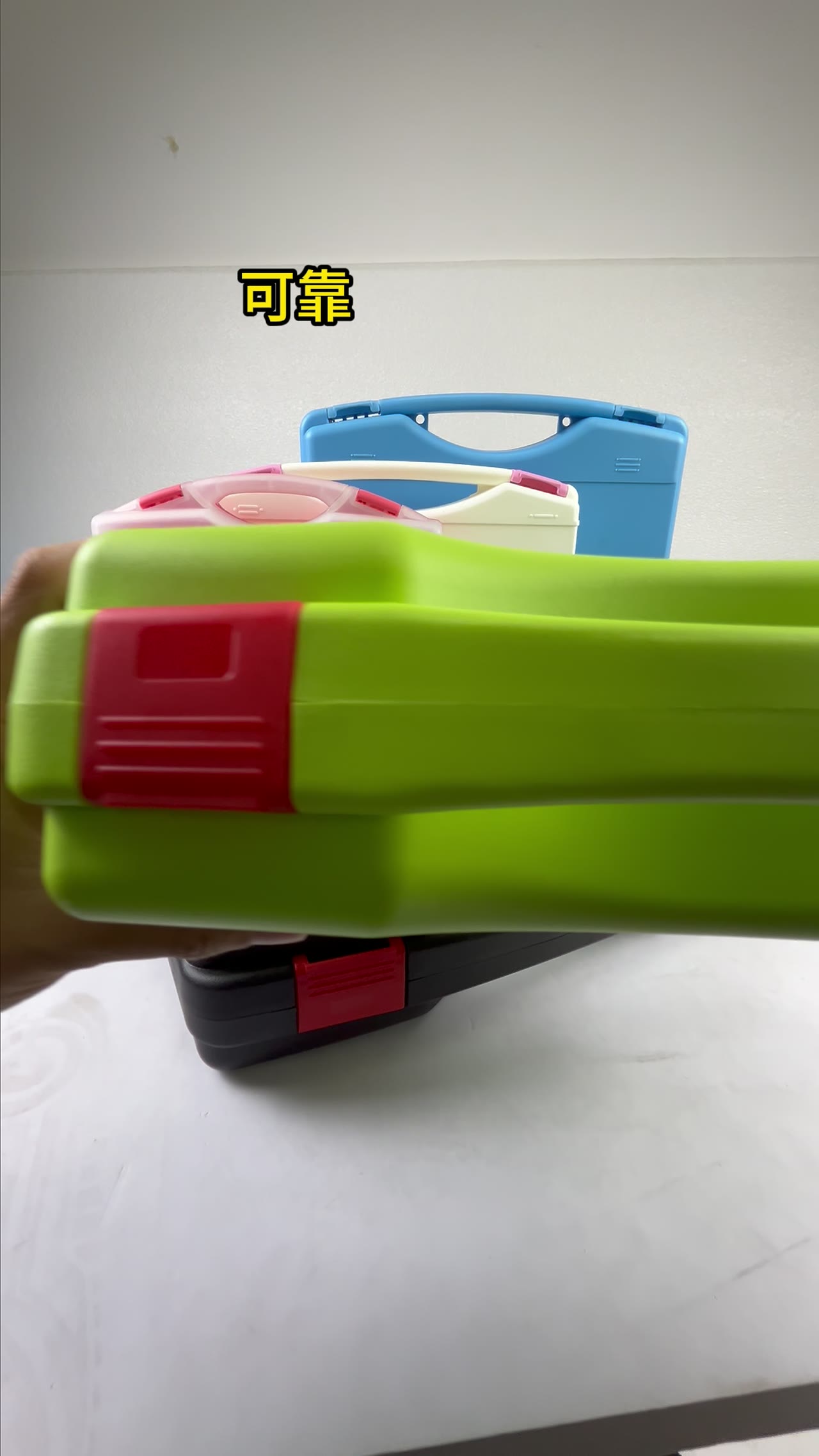
The third is floor space when empty. Stack height is limited by what the lid will bear; above three high, creep at the bottom lid passes 2 mm over time, which on pallet-counted space converts into rent. The acceptance run is short: load to service weight, carry one-handed 30 seconds, open and close three times, park it on a shelf for a week.
| Usable volume, share of envelope | 60–75% |
|---|---|
| Load density by application | 0.15–0.35 kg/L |
| One-hand carry, comfortable top | 15–20 kg |
| CG offset effect, per 20 mm | +8% handle load |
| Width lost per divider | 10–15 mm |
| Rib projection under the lid | 8–15 mm |
| Access frequency, assembly bench | 30–60 per shift |
| Stack creep, three high | ≤2 mm |
FAQ
Can a full large case go as checked baggage?
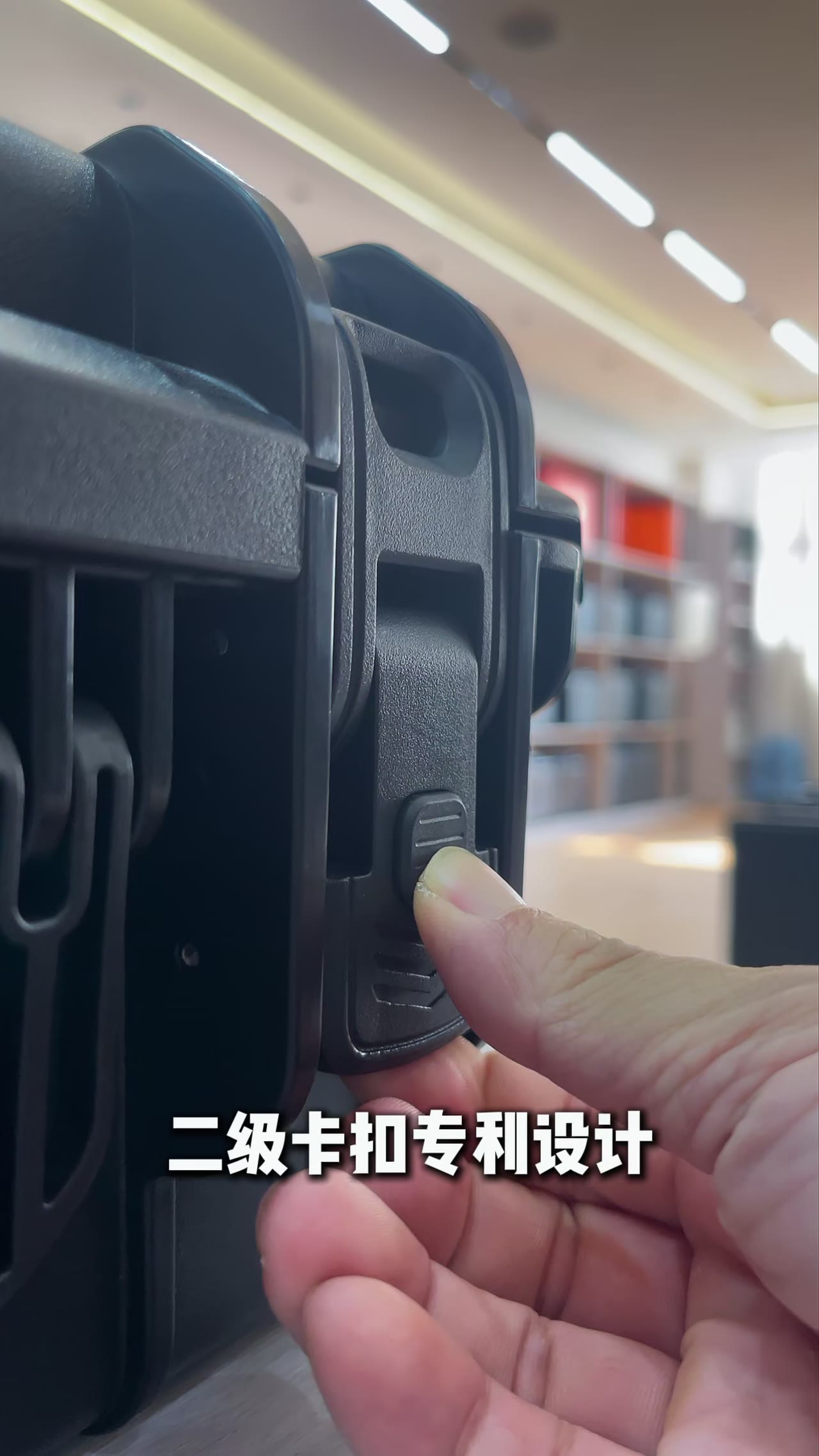
Weigh it first, empty plus contents, then check the carrier limit, commonly 20 kg to 23 kg per piece with a size rule on the three sides added. The case does not solve overweight; past 20 kg, split it or add wheels. Latch everything shut so the joint carries no crush load.
Does packing tighter make life easier?
No. Past 0.35 kg/L the case slows down: fingers no longer fit into the 15 mm either side of an item, so the pocket gets tipped out instead. Cases packed denser than 0.4 kg/L tend to be spread across a bench in service, with the case itself sitting idle.
Why does a large case hold less than it looks?
Between 25% and 40% of the envelope goes to wall, rib, latch seat and lid joint, then divider thickness and access clearance come off the rest. Add the envelopes that kill whole pockets, and real capacity commonly lands near half the nominal figure.
Do more dividers give clearer organisation?
Clearer, and smaller. Each divider removes 10 mm to 15 mm of usable width on both sides, so six cells hold about a tenth less than two dividers making three tiers. Let access rate decide: under 30 cycles a shift, divide; above 60, remove a divider.