

3917 Protective Case: Model Footage
A 53 s vertical clip can spare a buyer one round of sample shipping, or plant an assumption that survives all the way into the purchase order. What follows is a reading method rather than a description: how the 9:16 frame crops the case, which measurements a hand or a latch can stand in for, where the visible detail runs out, and which three questions only a physical unit can settle. The goal is narrow: leave the clip with numbers you can defend in a meeting, and a short list of what still needs a bench.
01The 9:16 crop: a quarter lost at each end
A portrait frame trades width for height. At an equivalent focal length of 24–28 mm and an arm's length of working distance, the case roughly fills the frame, but about 25% is cut at the top and bottom alike, so the base and the crown of the lid frequently leave the picture together. Before judging shape, check whether both ends survived. If either is missing, every later estimate carries a discount.
Horizontal coverage comes to roughly 0.75 of the real width, which means the outer walls often sit outside the frame. Whether a case is wide enough has to be judged from something inside the picture, never from the gap between the shell and the frame edge. Hold that in mind and the readings from handle to latch start to line up.
02Hands and latches as rulers, read in millimetres
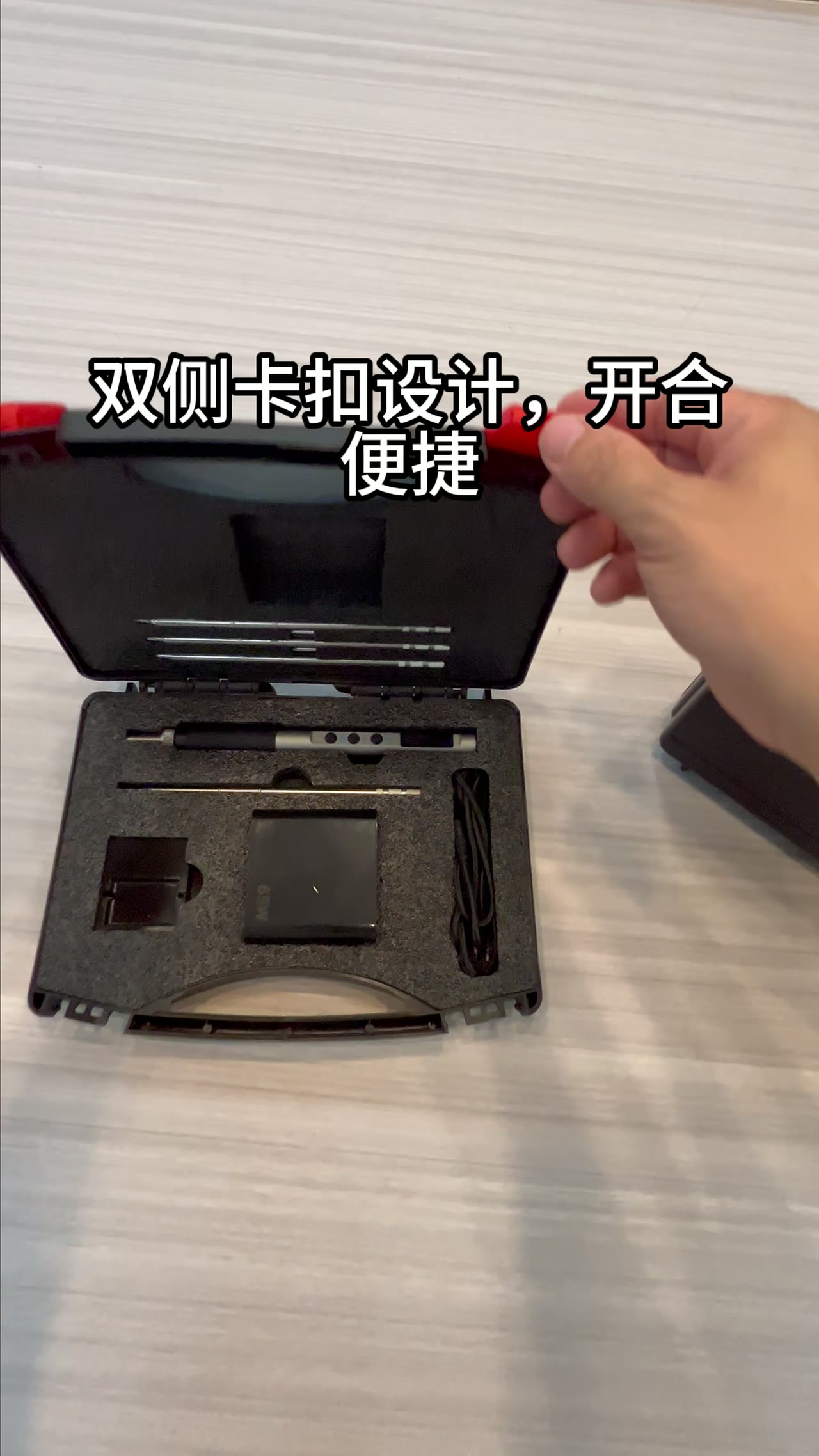
The handle is the most reliable ruler in this footage. An adult palm spans 80–90 mm, so a grip across the middle of the handle gives a repeatable span from thumb web to knuckle. Call that screen length one, measure the case along the same axis, and multiply back for an estimate in the right order of magnitude. Latch width serves as a second ruler; two rulers that disagree expose a bad reading.
State the error before you use the number. Handheld footage carries perspective, and reference-based readings typically drift by ±5%. On a 400 mm case that is ±20 mm of slop, enough to separate two neighbouring sizes and nowhere near enough to tell a 3 mm wall from a 4 mm one. Video yields steps between sizes, not tolerances.
03Five things the footage settles, and where it stops
Roughly five judgements are available in 53 s. Proportions: whether length, width and height read square or flat. Lid share: how much of total height the lid takes, and where usable depth sits once it opens. Parting line: whether moulding is clean and the edges align. Cavity outline: rounded or chamfered corners, and which face carries the ribs. Opening: whether the diagonal is eaten by structural parts.
All five are visible relationships and none depends on a published figure. Write them down one by one; it beats a general remark about build quality. Any conclusion that begins with looks like should carry a pending tag until it is measured, so it never reaches a quotation unchecked. A model number is an index, not a datasheet.
04Why 1.0–1.5 m is the right viewing distance
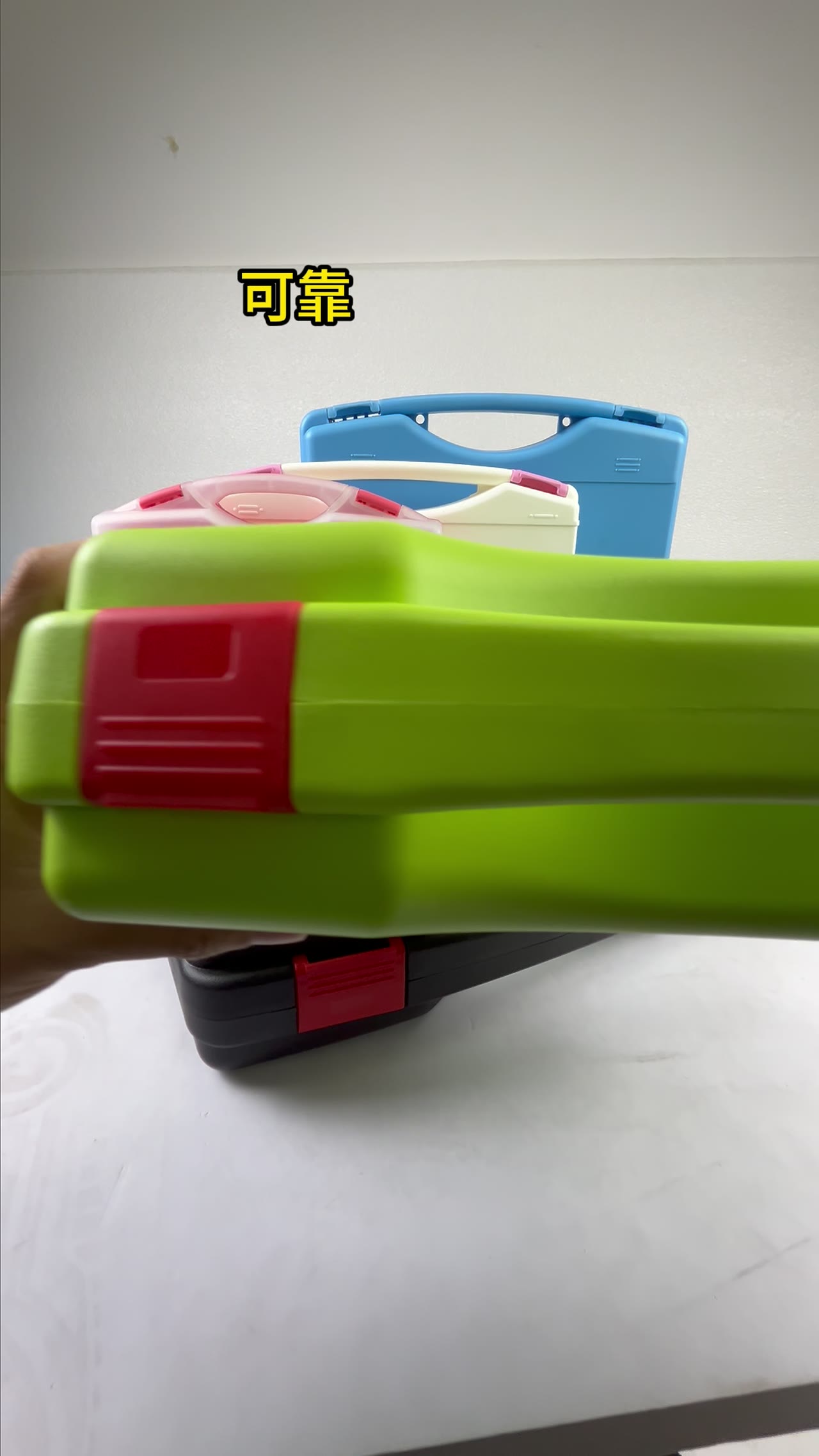
Most handheld portrait shots are taken from 1.0–1.5 m. The advantage is gentle perspective: three faces of the case stay in frame at once. The cost is resolving power — the seal and the latch tongue blur into a single edge. Resist the urge to zoom, because enlargement turns compression noise into what looks like a burr.
Only two areas deserve magnification: the parting line and the four cavity corners. Everything else reads correctly at the original 1.0–1.5 m, which is also where a buyer's eye naturally sits when watching on a phone. Move the camera further out and the case drops below half the frame height, the ruler stops working, and the relationship between width and depth is gone for good.
05Three questions that wait for the sample
Reading footage has a hard boundary. Wall thickness is invisible; the picture shows a tonal edge, while thickness is set by internal ribs rather than the outline. Seal compression is invisible too, since resistance and rebound at closing leave no trace on video. Loaded deflection is equally absent — an empty case always looks rigid, and only a filled one tells the truth.
Those three belong on a bench: calipers at three points for wall thickness, a feeler gauge around the full perimeter after closing, and a two-hour loaded rest before re-checking how far the lid centre has sunk. Put them on the incoming inspection sheet and the readings from the clip finally have somewhere to land.
| Clip length | 53 s |
|---|---|
| Equivalent focal length | 24–28 mm |
| Working distance | 1.0–1.5 m |
| Portrait width coverage | about 0.75 of real width |
| Top and bottom crop | about 25% |
| Reference reading error | ±5% |
| Judgements available | 5 items |
| Waiting on a sample | 3 items |
FAQ
Can a 53 s clip replace a sample?
No. It answers whether a sample is worth shipping. Proportions, lid share, parting line and opening outline are checkable; wall thickness, seal compression and loaded deflection are not. Screen first, sample to decide.
How do you estimate size with no reference object?
Find the nearest hand. An adult palm at 80–90 mm is the steadiest ruler in this kind of footage. With no hand at all, measure latch pitch and compare with the series norm; error widens past ±10% and only size steps remain readable.
Why does a portrait clip make a case look narrow?
9:16 squeezes width to about 0.75 of reality, and the side walls often fall outside the frame. The impression of narrowness is usually a crop artefact. Judge width from the case-to-handle ratio, not from how much frame is left.
Which findings can go straight into a quote?
Proportions, lid share, opening outline and parting-line condition. Anything numeric gets a pending tag until calipers and feeler gauge report back. A measured column on the sheet is worth more than another adjective.