

Drone Storage: Arms, Batteries and Controller
A drone crew's day opens at the tailgate and closes at the same place. Load before first light, swap packs between sorties, stow before dark — three loops that decide whether a case is worth carrying. Six to eighteen sorties is an ordinary day. Packs run at roughly one per two or three flights, a swap costs 40–90 seconds, batteries are held at 15–25 ℃ once the air turns cold, a full charge takes 2700–5400 seconds, and packing up eats another 300–600 seconds. Those seconds are the crew's real daily budget.
01Count the sorties, then count the packs
Sorties are set by the smallest of three limits: charge, location and daylight. A shooting day runs 6–18 take-offs — flat ground with a tailwind reaches the top of that range, a ridge in cold headwind only the bottom. Packs are carried at about one per two or three flights. Drop below that ratio and the crew spends its time waiting on chargers instead of waiting on light.
Three to eight packs on board is the usual spread. Three means a light solo outfit topping up from a car charger between locations. Eight means two aircraft in rotation: one flying, one cooling, one on charge. Load order follows the day's shot list — the first pack within reach of the open lid, spares underneath. Which way the lid opens depends on the tailgate, and a solo operator needs it to stay up.
02A 40–90 second swap is choreography, not speed
Landed to airborne in 40–90 seconds is what a practised crew manages. The speed is not in spinning props; it is in never backtracking. The aircraft lands on the same mark, the battery bay faces the same way, spares sit in the same recess, the lens cloth hangs inside the lid. Once the sequence is fixed, muscle memory carries it and nobody has to plan the next step. Slow crews are rarely slow-handed — they are searching.
A pulled pack does not go straight back in. It comes off the aircraft above 40 ℃, and pressing it against the next one pushes the whole case warmer. The common fix is a vented slot where a hot pack rests 300–600 seconds before it is stowed. Packs kept hot for hours degrade faster than packs kept at room temperature, and that shows up in the replacement budget.
03Minus five to ten degrees: keeping packs warm
Cold is the recurring problem in aerial work. Between −5 and 10 ℃, internal resistance climbs, usable capacity falls, and voltage sags sooner after take-off. The answer is not to bake the pack, it is to hold it at 15–25 ℃. An insulated pouch and a hand warmer before departure, packs kept in their own slot rather than pressed against metal airframe parts, and no pack left in an open case on frozen ground.
Warmth has a ceiling too. Above 25 ℃ a pack is just as unhappy. The field test is crude but reliable: the back of a hand should feel warm, not hot. If it stings, open the lid and let it sit 300 seconds before charging. Coming in from the cold, do not open the case at once — the temperature swing condenses moisture on the inner walls. Wait 600 seconds.
04Charging order: what plugs in first
A full charge takes 2700–5400 seconds depending on capacity and charger. That makes daylight top-ups a queue rather than a background task. Back at the vehicle, the two lowest packs go on first. Do not load every port at once. Generators and inverters have limited headroom, and a saturated supply makes chargers throttle, which ends up slower than charging fewer packs properly.
Layout decides throughput. Colour coding or a fixed orientation separates empty, full and in-use, so nobody digs through the case. Full packs return to the insulated slot; empty ones queue on one side of the power strip, cables ordered by length with the long runs on the outside. Before leaving, every pack used that day goes back to the empty queue, so the next morning only charged packs travel.
05Five minutes to close the lid
Packing up takes 300–600 seconds: wipe the airframe, pull props, seat packs, count accessories, check before the lid closes. Props go flat and separate, never under the body. The gimbal faces up so the lens is not loaded for hours. Five minutes of discipline beats doing it at dawn, when finding one missing cable costs considerably more than five minutes.
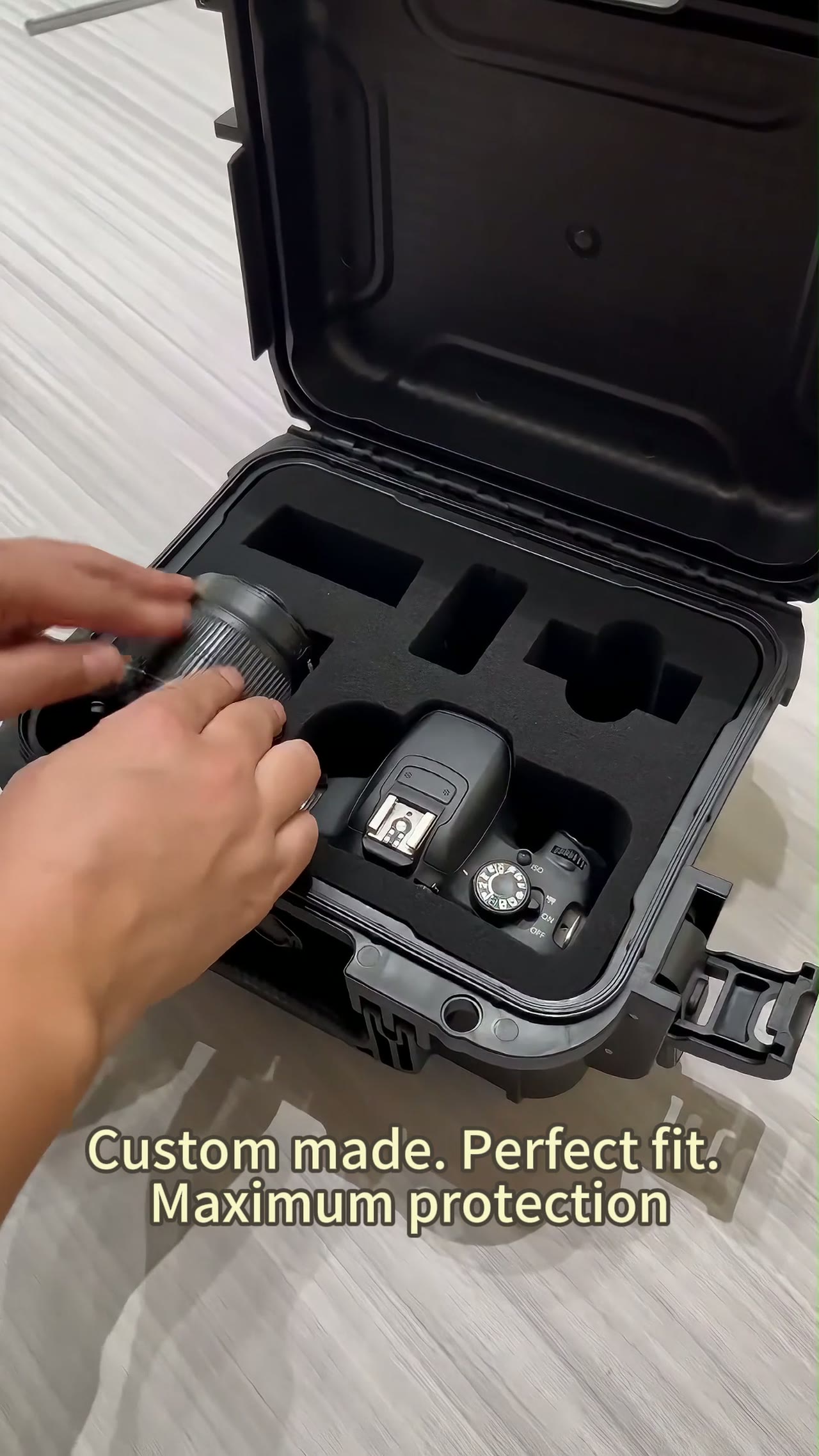
A solo operator should also check the lid. With gas struts it holds at any angle, so one person can swap a pack without a second hand; without struts it falls backward, the case has to lie on the ground, and wind brings dust in. It is an easy thing to overlook when choosing: a lid that stays up is worth more than an extra pocket. The last step is listening for the latch — two clean clicks, or something is trapped.
| Sorties per day | 6–18 |
|---|---|
| Packs to sorties | 1:2 to 1:3 |
| Battery swap | 40–90 seconds |
| Pack holding temperature | 15–25 ℃ |
| Cold-weather floor | −5 ℃ |
| Full charge time | 2700–5400 seconds |
| Packs carried | 3–8 |
| Pack-down time | 300–600 seconds |
FAQ
How many packs should a crew carry?
Work backwards from sorties. Six to eighteen flights a day at one pack per two or three flights lands between three and eight packs. Three suits a solo outfit topping up from a car charger; eight keeps two aircraft rotating without a pause.
Should cold packs be warmed before flight?
Insulate, do not cook. Between −5 and 10 ℃, hold packs at 15–25 ℃ in an insulated pouch with a hand warmer, each in its own slot. The back of a hand should feel warm, never hot. If it stings, vent for 300 seconds.
How does a swap get under a minute?
Choreography, not fast hands. The aircraft lands on the same mark, the bay faces the same way, spares sit in the same recess, the cloth hangs in the lid. Nothing gets searched for. Hot packs rest 300–600 seconds before stowing.
Why reserve five minutes at the end of the day?
Because dawn is more expensive. In 300–600 seconds you wipe the airframe, pull props, seat packs, count accessories and listen for the latch. Skip it and a missing pack or card is discovered back at the location.