

Foam to Finished Case: Fitting the Insert
Foam can be cut to the drawing and still sit wrong once it is inside the shell. Four decisions settle the outcome: which corner serves as the datum, how much air each wall gets, how far the lid layer is squeezed, and whether the sheet is glued or strapped down. None of them is expensive. Get one wrong and the whole batch feels off at the latch. Get them right and the lid closes in one motion, a technician can lift the sheet out whole, and a single operator holds the fit time all shift without the case fighting back.
01One datum corner, three walls that give
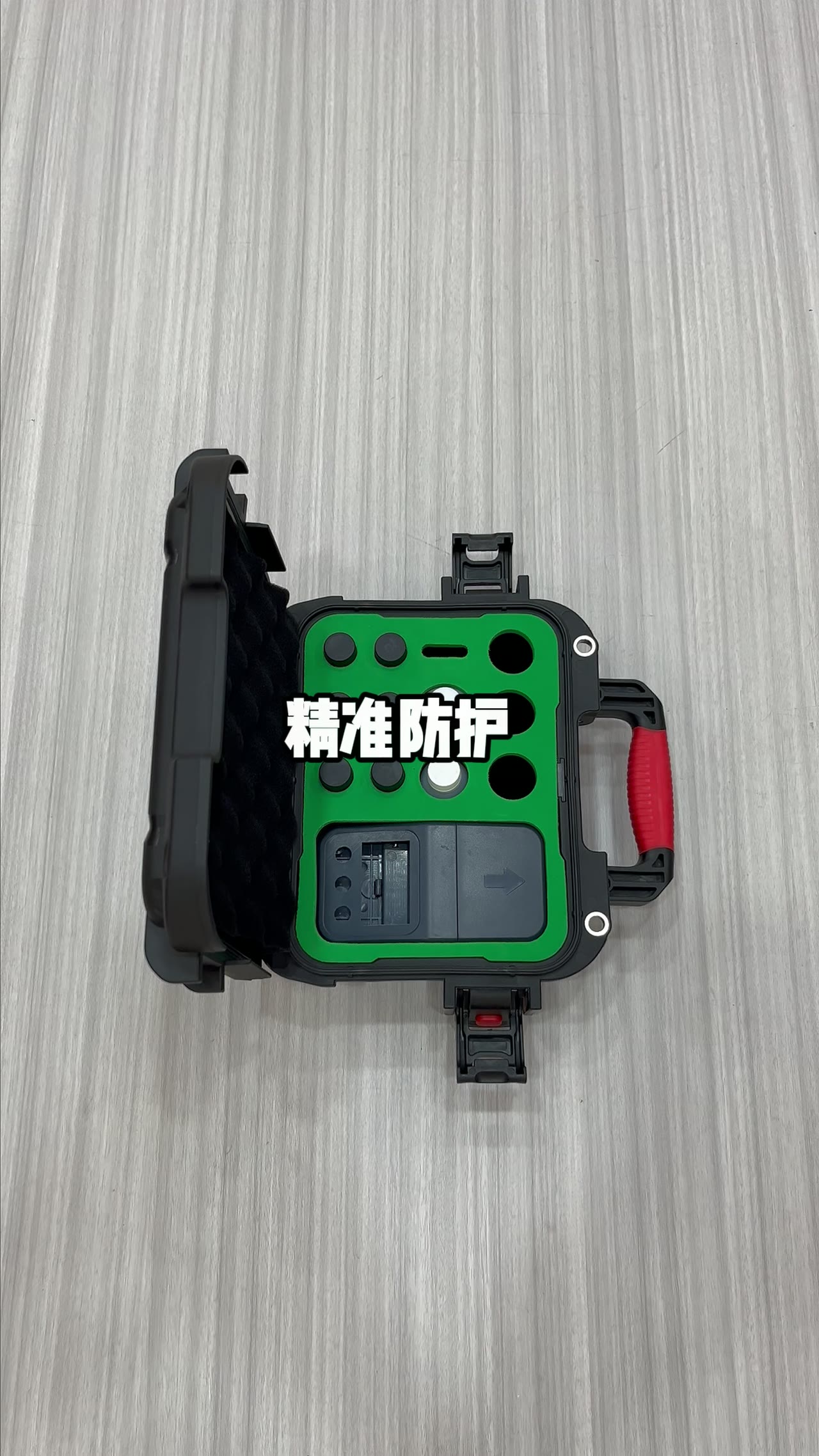
A moulded cavity is never a true box. The walls carry draft, so the opening is wider than the floor, and the same case can differ by 1–2 mm from top to bottom. Cut to an average width and the upper half sits loose while the lower half jams. The workable answer is a single datum corner, usually the hinge-side lower left, with two straight edges acting as X and Y. Every bit of slack goes to the opposite wall.
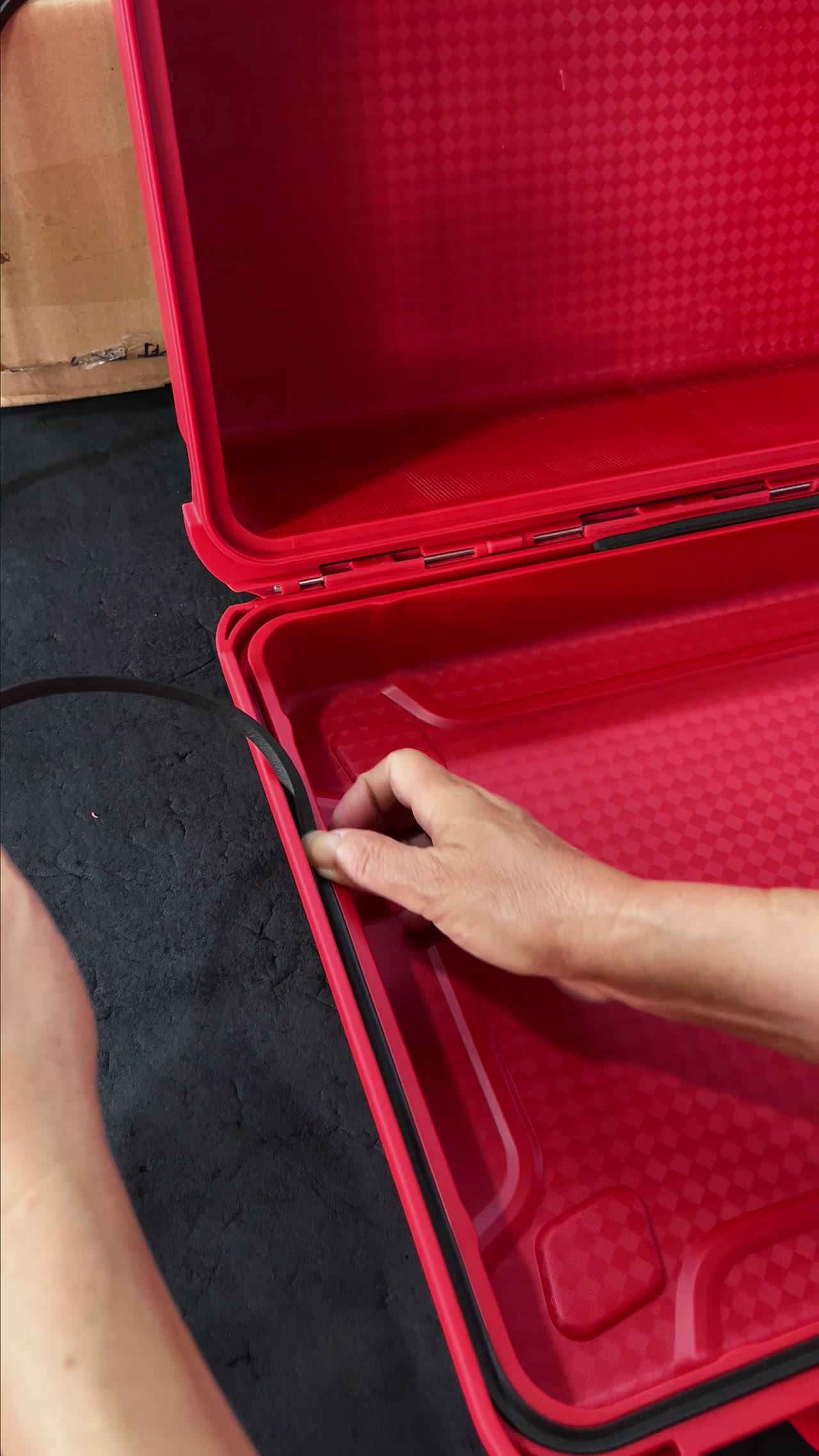
Around the perimeter the insert runs at 0.5–1.5 mm clearance per side. Tighter than 0.5 mm and foam rebound lifts the sheet until the lid will not seat. Looser than 1.5 mm and the insert slides before it absorbs anything, spending travel on clearance instead of cushioning. Push a feeler gauge along four walls: the band it falls into becomes the offset for the next cut.
02Set the lid-to-shell split under the closing plane
Lid foam and shell foam are not two halves of one drawing. The boundary belongs below the closing plane so the lid layer touches first and compresses as the latches come down. The lid layer is cut 1–2 mm thicker than the measured gap, and that surplus gets squeezed. The taller the contents, the lower the boundary moves: with 3 mm of headroom left, a 2 mm layer is already the ceiling.
A misplaced boundary announces itself as a lid that jams in the last 5 mm. Do not answer with more latch force. Lift the lid layer out and close the empty case. If it snaps shut, the fault is lid thickness. If it still jams, shell foam is standing above the boundary and hitting the rim. The fixes are opposite, and adjusting both at once hides which one worked.
03Tape for permanent, hook-and-loop for serviceable
Double-sided tape is thin, cheap and takes no interior volume. An industrial grade at 5–15 N/25mm holds a 20 mm EVA block without trouble. What it does not survive is removal: the first pull takes foam skin with it, and the second bond is weaker. Use it where the sheet will never come out again, such as a base pad, a short divider or a corner filler.
Hook-and-loop costs more and peels at 8–25 N, and it tolerates 3–5 open-and-refit cycles. Anywhere a technician may need the whole sheet out, the strap wins: prying a panel free drops from about 20 minutes to under 3. The deciding question is not unit cost but how often this case will be opened for service over its life. More than once, use strap.
04Hold the added closing force under 15%
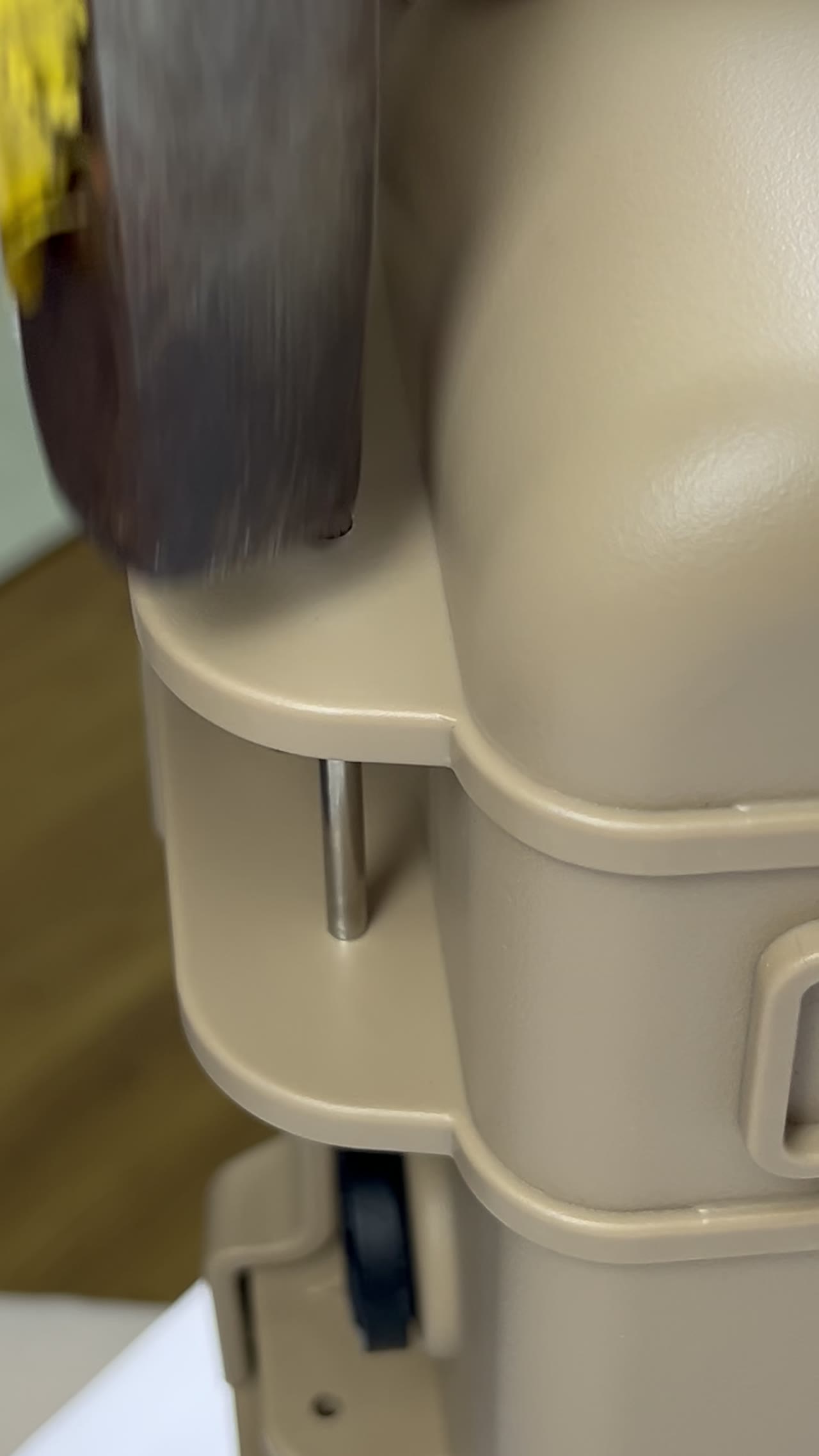
Closing force always climbs once foam goes in. Two things drive it: the lid layer being compressed, and the sheet pushing walls outward so latch span changes. The working ceiling is 15% above the empty case. Past that, a first-time user reads the case as stiff, when in fact the latches are fighting the foam, latch life shortens and the hinge pin picks up side load it was not sized for.
Measure it plainly. Close an empty case three times and average, repeat with foam fitted, divide the difference by the empty figure. Over 15%, shave 0.5 mm off the lid layer first, then check whether shell foam crosses the boundary anywhere. Do not compensate with a heavier latch. That moves the problem from the bench to the customer and multiplies repair cost.
05A jig, not muscle, holds the 90–180 second fit
Fitting an insert takes a practised operator about 90 seconds; a case with many compartments runs to 180. The gap is rarely hand speed. It is whether the bench has a locating plate milled to the shell outline with two stops, so the case drops in and the datum corner is already set. Without one, inserts in the same batch land 1 mm apart and the closing feel changes case by case.
Three checks close the station: a feeler gauge on all four walls, eyes on the boundary against the parting plane, one close to hear the latches land in a single stroke. All three pass, the case ships. Repair starts at the lid layer, which is strapped, so the sheet lifts out whole and the shell never goes back to moulding. A reworked unit stays under 15 minutes.
| Insert-to-cavity clearance per side | 0.5–1.5 mm |
|---|---|
| Datum-corner alignment error | ≤0.5 mm |
| Lid-layer compression | 1–2 mm |
| Hook-and-loop peel force | 8–25 N |
| Tape initial adhesion (25 mm width) | 5–15 N |
| Closing-force increase after fitting | ≤15% |
| Refit cycles without lift-off | 3–5 cycles |
| Fit time per case | 90–180 s |
FAQ
The insert feels loose. Can I just add thicker foam?
No. Looseness means clearance is past 1.5 mm, and thickening only bulges the middle while the corners stay empty. Re-measure from the datum corner and move the surplus to the wall that carries no load.
Why not tape the lid layer down permanently?
The lid layer is the first part removed in a repair. Tape tears the foam skin and halves the second bond. Hook-and-loop at 8–25 N survives 3–5 cycles and costs only about 0.5 mm of depth.
Does a stiffer close mean better sealing?
No. Sealing comes from gasket compression, not latch force. When closing runs more than 15% above the empty case, foam is loading the latches, the seat distorts over time and the seal fails earlier.
Should every case be checked with a feeler gauge?
First-off and every batch change, yes. In production, 3–5 units per hour covers the normal 0.3 mm spread in cavity size. After a mould or resin change, run a fresh first-off and sign it off before the batch starts.