01The Timer Measures How Long, Not Whether
Closing the case, lowering it into water and setting a timer beside it reads at first as a simple leak check. The useful reading is the time axis: the interval between entry and the first bead of water on the inner wall is the real sealing margin. The same gasket, compressed properly or not, differs less in whether it leaks than in how many minutes it holds.
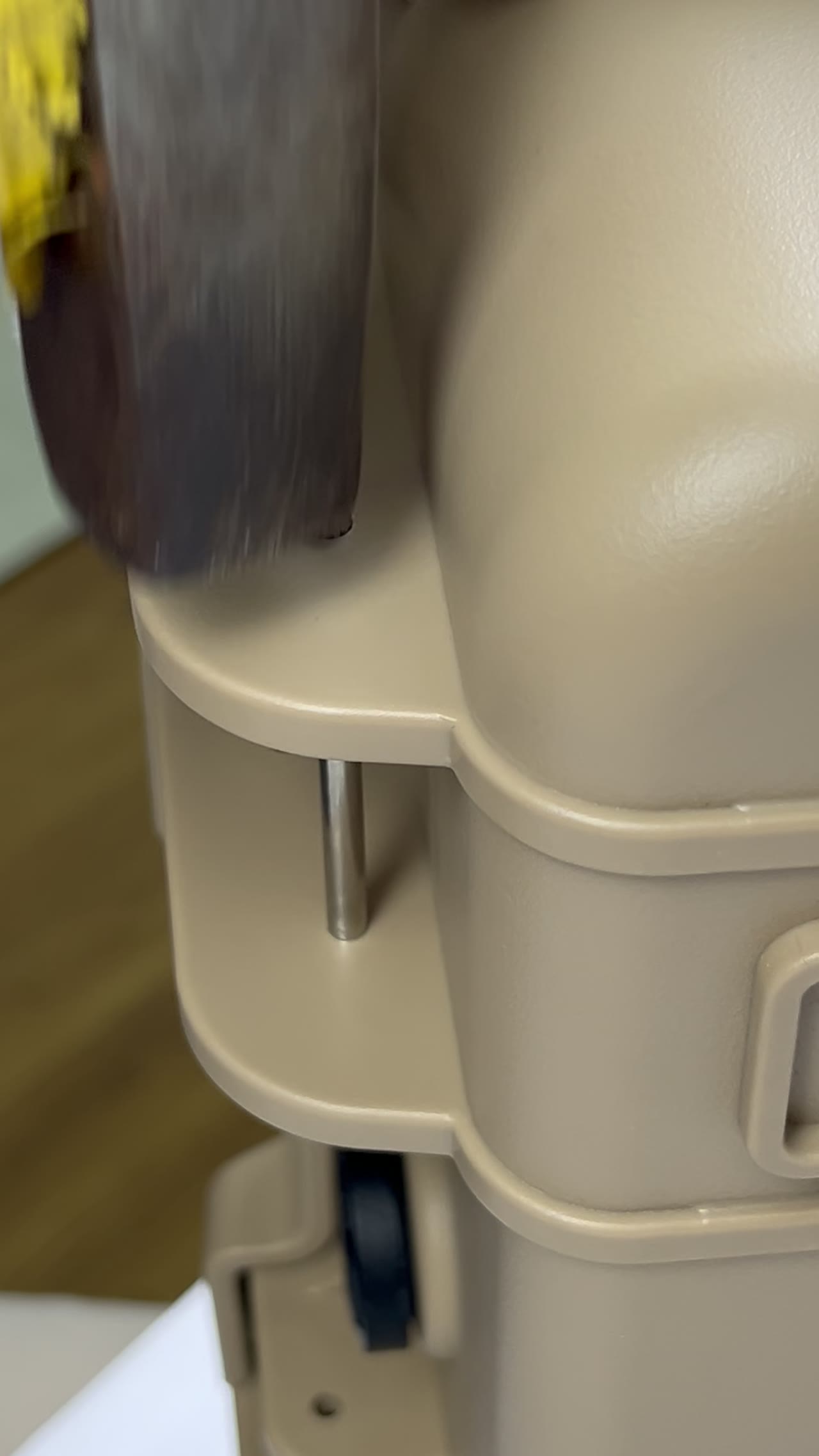
Three things decide it: gasket compression, flatness of the lid joint, and whether the seam stays even once the latches close. Compression commonly sits between 25% and 35%. Below that range a short immersion shows nothing, while pressure swings and temperature cycling in transit open it up. An uneven seam is usually moulding warp rather than the gasket, and tightening the latches makes the gap more visible, not less.
02Four Factory Checks, and All Four Count
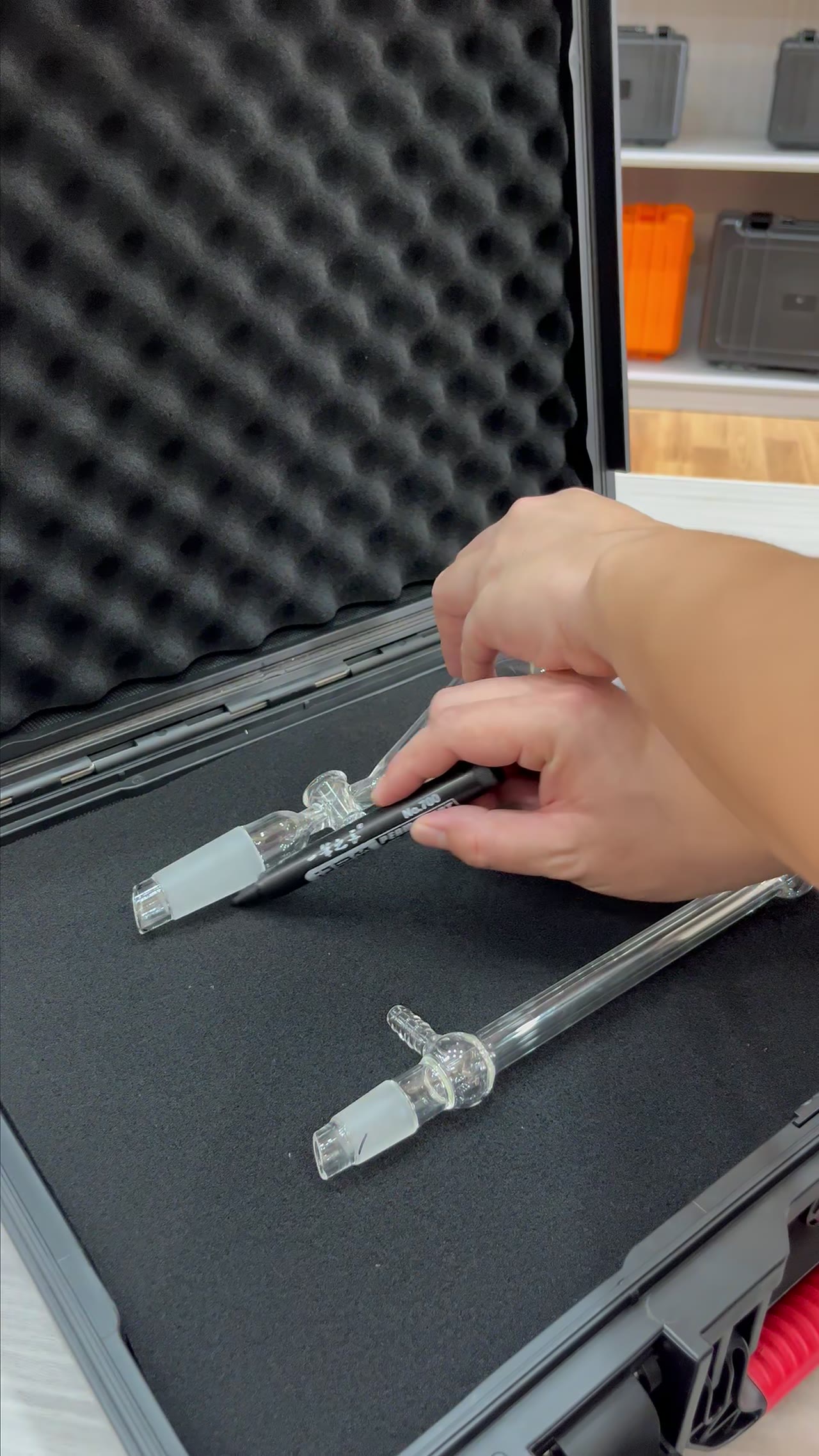
A clip of a few dozen seconds compresses a longer sequence. The verifiable steps are usually four: close and latch an empty case, immerse or spray, open it and inspect the inner wall, then dry and check gasket recovery. Step three gets skipped most often, because a dry exterior says nothing about a film of mist inside. Step four decides whether the case still seals on its second and third trip.
Recovery is judged plainly: the gasket returns to full thickness within about ten seconds and shows no permanent set. A gasket that fails this collapses noticeably after a quarter of stacking in a warehouse, and sealing goes while the case still looks new. That is why a direct manufacturer lets buyers watch the inspection rather than hand over a certificate.
03Direct Versus Trader: Where the Information Chain Breaks
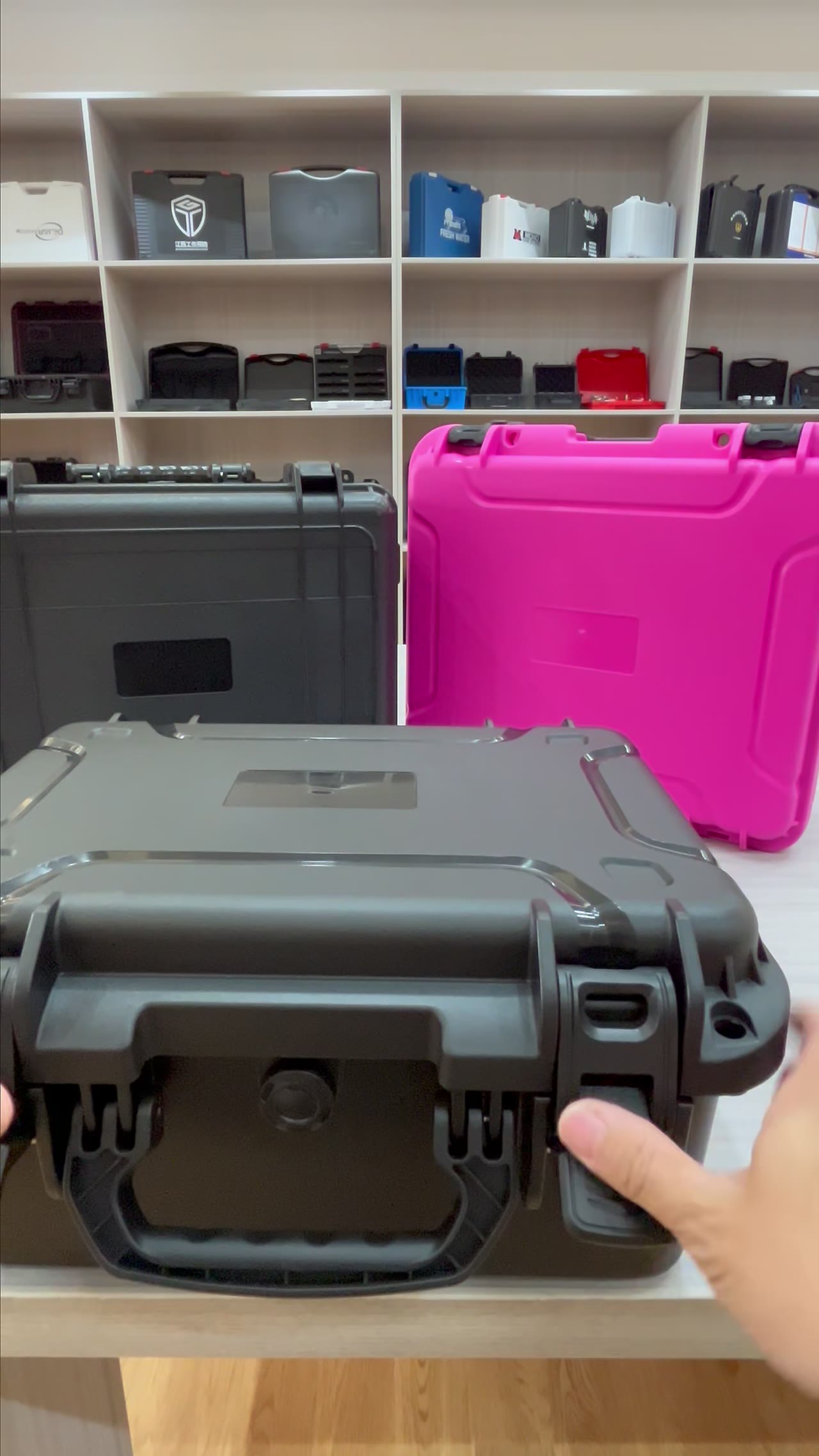
The same case may reach a buyer through zero or three intermediaries. Layers do not decide quality by themselves; what decides it is how far back you can trace when something goes wrong. Buying direct, a colour shift, a wall thickness or a latch feel lands on a specific mould and batch. Through intermediaries, information decays at every handover until the only remedy left is replacing the lot.
Three differences are verifiable: whether batch moulding records can be produced, whether the gasket supplier can be specified, and whether the buyer can sit in during tool modification. None of these is impossible through a trader, but each needs the factory to cooperate, and the response time is not comparable. The question is not whether a supplier is a factory, but where the chain breaks.
04Shipping Constraints Are Stacking and Humidity, Not Distance
Inside a sea container the air can pass 60°C at near-saturation, and that environment tests a case harder than vibration does. Under stacking, the bottom layer carries the whole column and the lid creeps under sustained load; plastics creep faster when warm, so a lid sagging 2 mm over one voyage at three high is unremarkable.
The practical sequence is: bag each unit against dust, add desiccant inside, set stack height by what the lid bears rather than by container height, heavy units low. If seams look uneven on arrival, suspect the journey first. Lay the case flat for 24 hours; most of that distortion is compression set and recovers.
05Three Buyer Checks That Fit in Half a Day
First, ask for inspection records with timestamps rather than an edited cut, and watch the gasket recovery step. Second, pull three units from one batch and immerse them, with one of them opened and closed three times beforehand to mimic service. Third, ask for the gasket grade, its replacement interval, and the acceptance rule for lid warp.
The step that exposes most problems is the second one, with the pre-cycled case. A new case sealing well is normal; a case that leaks only after some use is the real issue. If a supplier will only demonstrate a fresh unit, write the pre-cycled test into the acceptance clause while negotiating, which works far better than arguing afterwards.
| Gasket compression, typical range | 25–35% |
|---|---|
| Gasket recovery time | ≤10 seconds |
| Factory inspection steps | 4 (latch, immerse, inspect, recover) |
| Peak temperature in container | above 60°C |
| Stack creep, three high one voyage | ≤2 mm |
| Recovery observation on arrival | lay flat 24 hours |
| Suggested sampling | 3 units per batch |
| Key acceptance clause | cycle 3 times before immersion |
FAQ
Is buying direct always cheaper?
Not necessarily. Direct supply removes a markup, but at low volume the minimum order and tooling cost come back into the price. Compare total landed cost at equal specification, tooling, MOQ, freight and duty included, rather than unit price alone.
How can I tell an inspection video is not staged?
Look for three things: an unbroken shot from immersion to removal, the timer in the same frame as the case, and a drying action before the inner wall is inspected. Edited cuts tend to skip the interior close-up, or start the timer after the case is already in.
Is a smell after sea freight normal?
A faint plastic odour on a new case is normal; a sharp or persistent one may point to gasket or release-agent residue. Air it 24 to 48 hours and it should fade clearly. If it does not, ask for material reports before using the case for food or medical contents.
What should stack height be based on?
On what the lid bears and how long it stays stacked, not on container height. Four high is workable short term at ambient; on hot routes or for long storage keep it to three, and re-assess if the bottom lid stays loaded beyond a quarter. Heavy units always go low.