

Your Tools Deserve Better
Nobody counts how often they hunt for a tool. The figure is usually 8 to 15 times a day, at 30 to 120 seconds each, which compounds into 20 to 60 hours a year — close to a week and a half of paid time spent opening drawers and asking around. No sentiment is needed to justify a better box. Three numbers will do: how often, how long, how far to the next replacement. The arithmetic is deliberately crude, and it survives contact with a real bench because every input can be timed with a stopwatch instead of argued about.
01Log the searches for three days first
Three days is enough. Keep a sheet by the bench and write down a start and stop time whenever something goes missing, plus what it was and where it turned up. Two patterns usually emerge. A handful of items, 3 to 5 of them, account for more than half the total search time, and the rest disappears into the vague hunt for something you know exists but cannot place.
Convert to a year. Take the midpoint of 60 seconds, 8 to 15 searches a day, 240 working days: the band lands at 20 to 60 h. The low end means storage is already decent; the high end means tools share slots with no fixed home. Hours are only the first layer. The second is idle time, where a whole task waits because one wrench is missing.
02Size the compartments off the tool count
More compartments is not better. The working ratio is 1.1 to 1.4 slots per tool, which usually lands between 12 and 40. Below 1.1, two items share a slot and lifting one drags the other out. Above 1.4, empty slots multiply until nobody remembers what belongs where. Leave 2–4 mm of clearance per slot, enough for a fingertip, not enough to rattle.
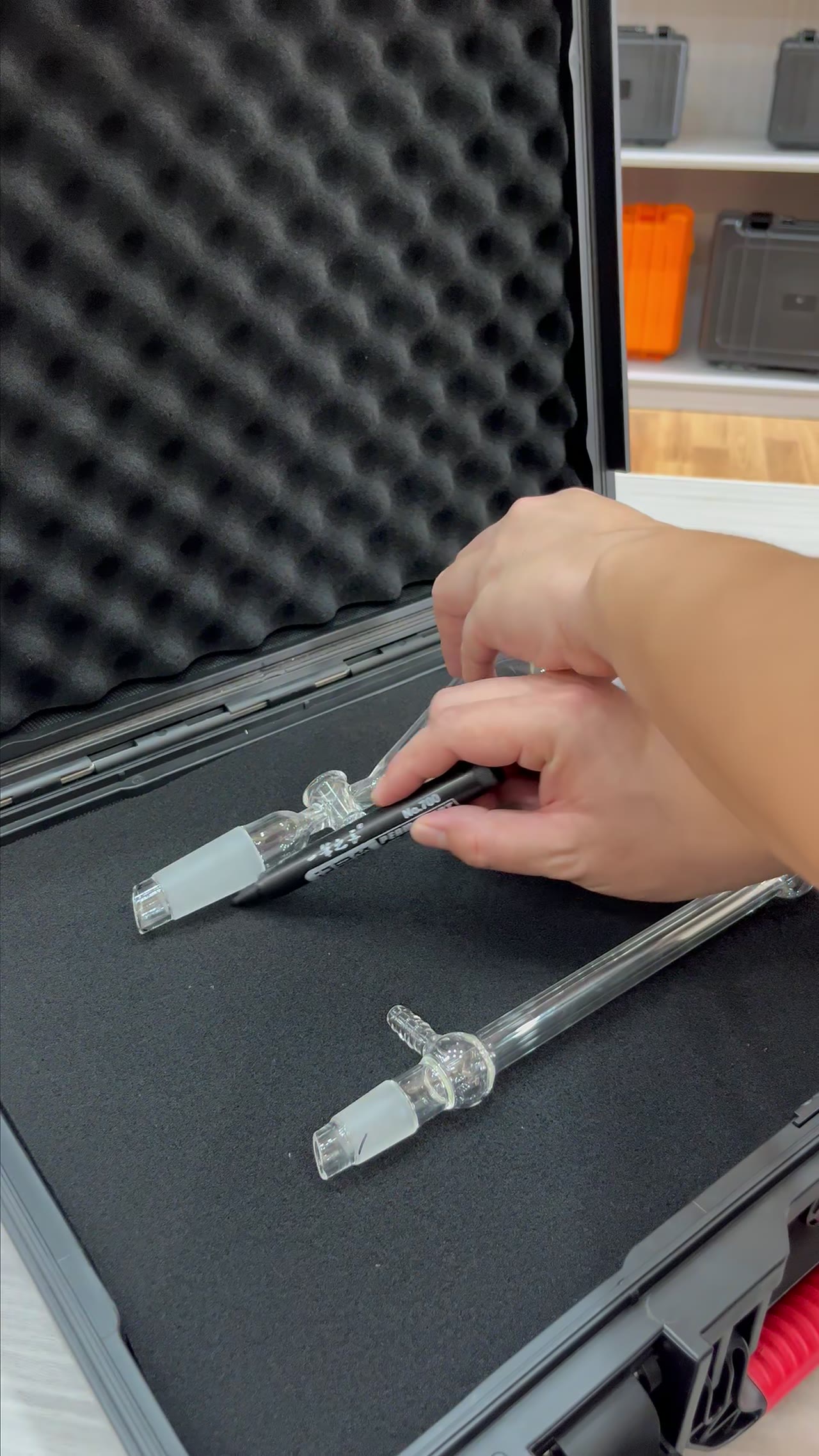
Shape the slots by category rather than by brand. Long items get a through-channel, stepped heads get a stepped pocket, small parts get a shallow tray. Never mix two tool types in one slot; that single habit doubles search time. Cutting edges and measuring tools go into their own lidded slot, because a chipped edge costs more to replace than the whole insert did.
03Shadow board and index card
A shadow board is the tool outline cut at 1:1 into the insert, so an absent tool reads as an empty pocket at a glance. Cut depth runs 60% to 80% of tool thickness: shallower and the outline fades, deeper and you have to dig items out. The index card mounts inside the lid, numbered by slot, one number per pocket, never sorted by tool name. Names repeat; numbers do not.
A full count takes 3–6 minutes and belongs at the end of every shift. With a good shadow board it drops under a minute, because you stop checking items one by one and just look for holes. That is the real gain: a missing tool is caught on the spot instead of the next morning, and a tool caught on the spot is usually still on site.
04The 3–8% loss rate and what refills cost
Annual loss typically runs 3–8%, meaning the share of the inventory replaced each year. A crew holding 60 tools at 5% buys 3 replacements a year, and with unit prices from tens to four figures, the refills often outrun the price of the case itself. Losses concentrate in two groups: small parts with no fixed slot, and hand tools that travel outside the box.
Keep interior humidity at 40–60% RH as a floor for corrosion control. Below 40%, wooden handles and polymer parts dry out and split. Above 60%, steel edges bloom with rust the first time temperature swings. The fix is ordinary: a rechargeable desiccant pack, dried every 3 months, and a wiped seal before the lid closes. One grain of grit is one leak path.
05Build it in order: shadow, slots, weight
Sequence matters or you rebuild twice. Cut the shadow board first, because it fixes the slot layout; cut slots to that layout next; weigh the loaded case last. Keep the total at a weight one person can carry up three flights without switching hands. Past that, the case gets dragged and dropped, and the latches fail first. Then balance it: heavy items near the middle, light ones at the edges.
Sign off on three figures: count under 1 minute, at-the-spot detection at 90% or better, no more than 2 replacements a year. All three means the storage works. Only the first means the board is good but tools still walk, so the gap sits in the take-out-and-return loop, and that needs a two-step habit: log the loan, confirm the slot on return.
| Time per search | 30–120 s |
|---|---|
| Searches per day | 8–15 |
| Lost hours per year | 20–60 h |
| Annual tool loss rate | 3–8% |
| Compartment count | 12–40 |
| Clearance per slot | 2–4 mm |
| Interior humidity | 40–60% RH |
| Full count time | 3–6 min |
FAQ
Twenty slots or forty: how do I pick?
Derive it from the tool count, at 1.1 to 1.4 slots per tool. Below that, two items fight for one pocket; above it, empty pockets blur the map. One tool type per slot, edges and measuring tools in their own lidded pocket, and 2–4 mm of clearance so a fingertip fits without the item shifting.
Is a shadow board worth the cutting time?
It depends on how often you count. Where a count happens daily, a board pulls 3–6 minutes down under one, and it pays for itself inside a quarter. Cut 60% to 80% of tool thickness: too shallow and the outline vanishes, too deep and extraction becomes a dig. Low-count workshops can start with the index card alone.
Why do tools vanish outside the box?
Mostly the ones carried away and never put back. A slot does not enforce a return; a habit does. Two motions close the loop: log the loan on the way out, check the pocket on the way in. Without them, even a well-cut insert sits at the same 3–8% loss band.
Why hold humidity between 40% and 60%?
Dry air splits wooden handles and polymer parts; damp air blooms rust on steel edges. A rechargeable desiccant pack, refreshed every 3 months, plus a clean seal before closing, covers most of it. This is structure and practice only; no rating or certification is implied.