

Quick answer: Same mass, same drop speed, same attitude: both cases take the same impulse. The difference is how they give it back. An airdrop case stretches the pulse with long-travel cushioning and holds the peak down, so energy stops in the liner. A shipping case has little travel, a high peak, and the shell takes what is left. Three numbers show it: peak acceleration, pulse duration, and where the energy is absorbed.
Table of contents
- One impact input: how an airdrop case responds
- Peak acceleration: is there a plateau
- Pulse duration: trading travel for time
- Where the energy stops
- Reading the three together
- FAQ
1. One impact input: how an airdrop case responds
Fix the input first: one item, one drop speed, one attitude. Impulse is then fixed, and so is the area under the curve. An airdrop case can only change its shape, so a lower peak always costs time.
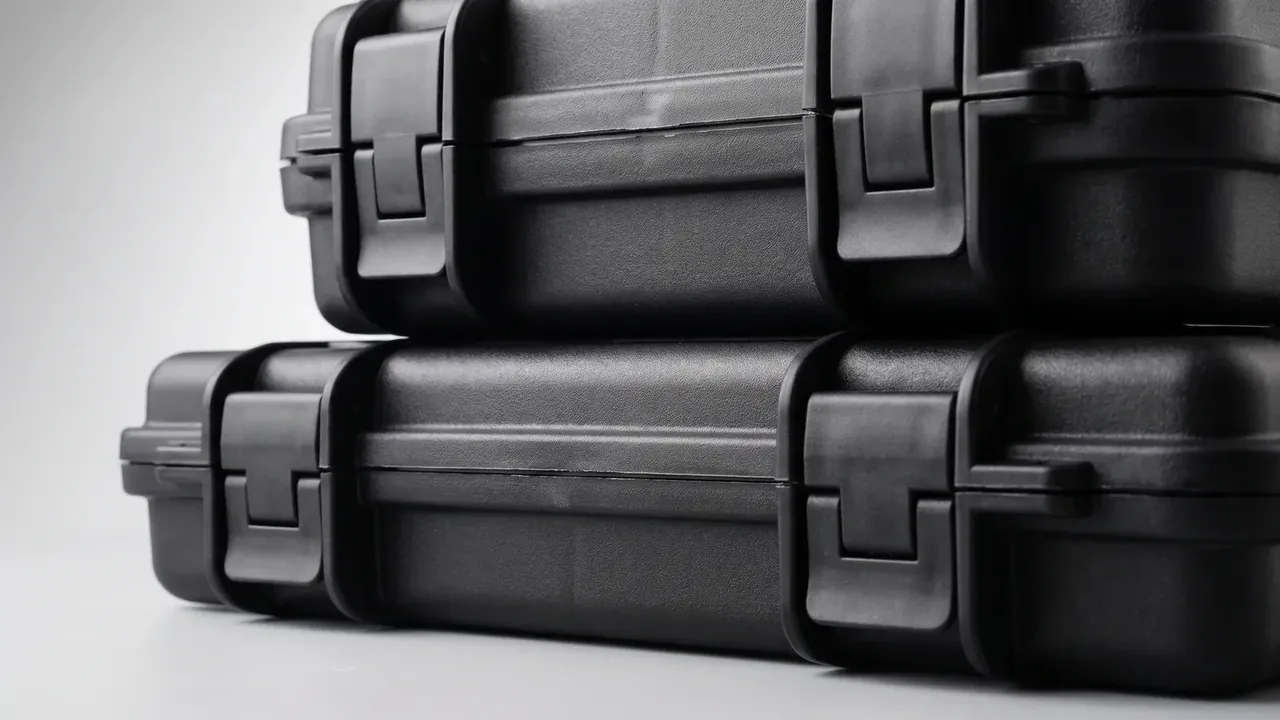
The comparison is not about strength but about where deformation is booked. An airdrop case books most of it in the liner; a shipping case runs a thin liner that bottoms out early and passes load into the shell. The two cases here sit lid to base, the same path stacking uses: upper base on lower lid, weight into the corners.
2. Peak acceleration: is there a plateau
Peak height follows the force-travel curve of the cushion. A good curve is a plateau: force stops climbing once crushing begins, so the peak lands near plateau force over mass. An airdrop case cuts its liner for that plateau; a shipping case with one foam sheet has none.
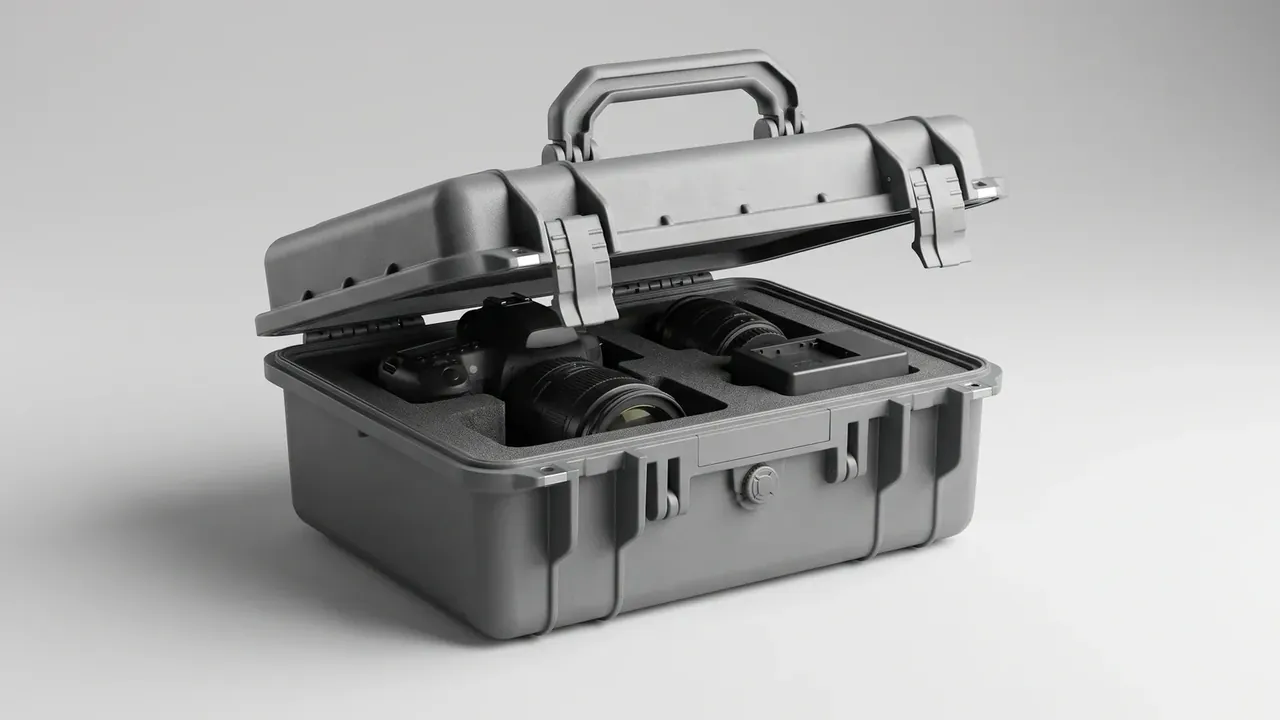
Bottoming out is the dividing line. Once travel is gone a second peak appears, often above the first, and no cushion is left. The foam here is cut per item, so camera body, lenses and charger each sit in a pocket: lateral movement blocked, vertical travel kept.
3. Pulse duration: trading travel for time
Duration runs with travel and against speed. At the same drop speed, doubling usable travel roughly doubles duration and halves the peak. An airdrop case pays out of cavity; a shipping case protects volume, so travel is squeezed.
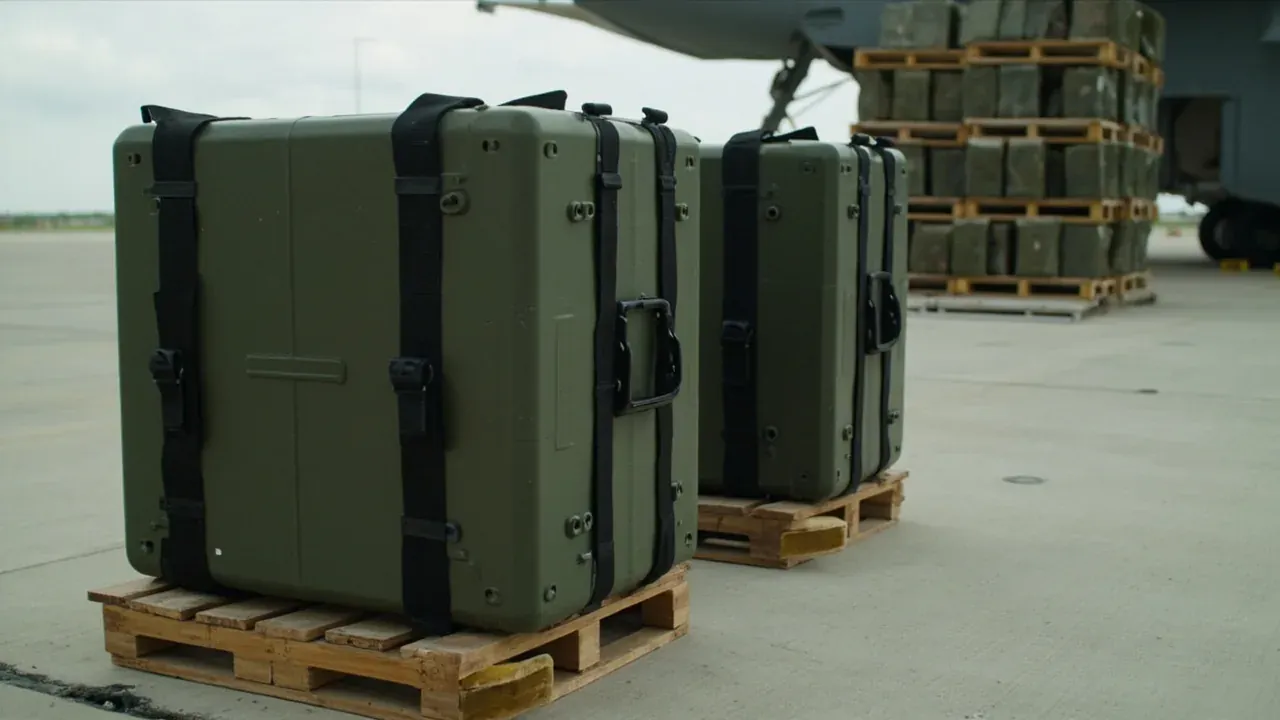
This is why a thicker wall does not help: thickness raises stiffness and shortens the time available for deformation. The three olive cases here sit on pallets under black straps, and a loose strap lets a case land twice, cutting the effective cushion time.
4. Where the energy stops
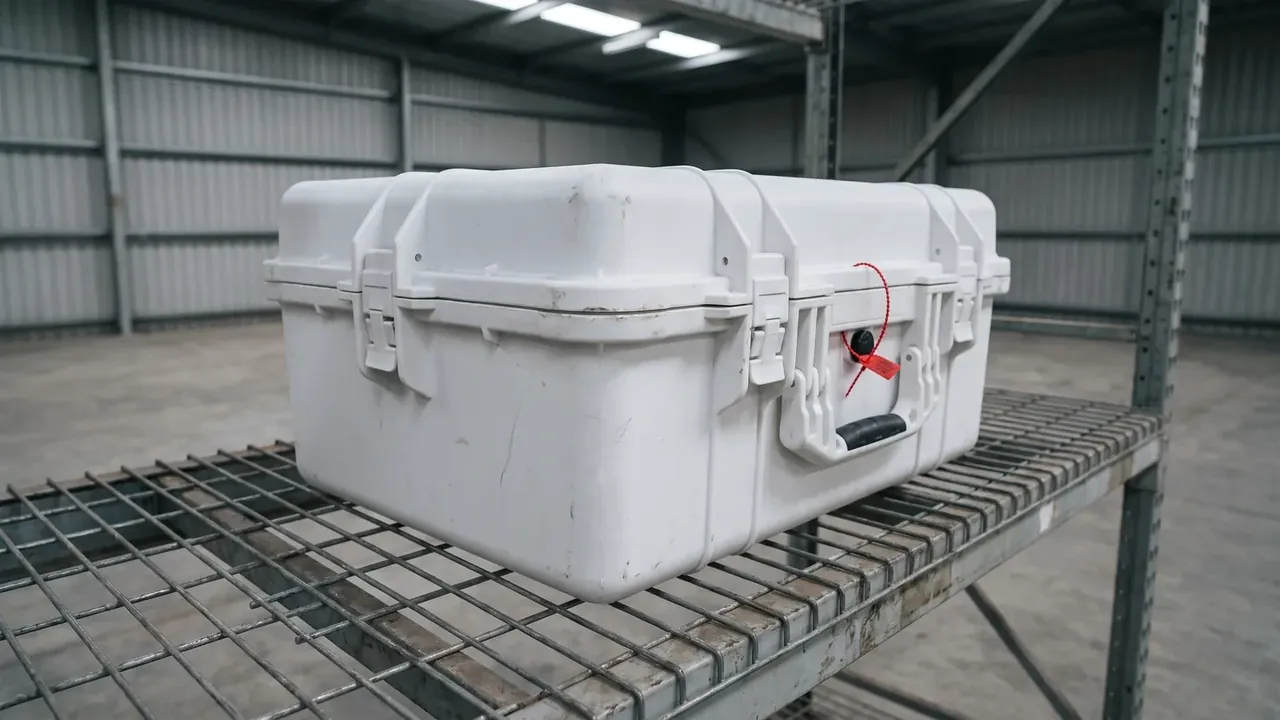
After the same drop, an airdrop case shows compression marks in the liner and local corner deformation. A shipping case shows base dents, a bulged lid or cracked latch seats. Liner marks can be replaced; a dent cannot.
A clean exterior proves nothing. The white case here carries a red seal wire through its hasp, which shows only that the lid was never opened, not that the shell was never overloaded. Inspection reads corners, feet and lid gap, not the seal.
5. Reading the three together
Read the three as a set; any one alone misleads. A low peak with a short duration only moves the impact later.
| Metric | Airdrop case | Shipping case | Field signal |
|---|---|---|---|
| Peak acceleration | Plateau, capped | No plateau, climbs | Second peak |
| Pulse duration | Long, bought with travel | Short, volume-bound | Usable liner travel |
| Energy stop | Liner and corners | Shell and lid | Marks in foam or dents in wall |
Work down the list:
- Input defined: mass, drop speed, landing attitude
- Travel checked against estimated intrusion depth
- Curve checked for a second peak
- Marks checked for a sharp edge and lost thickness
- Shell checked at corners, lid and latch seats
- Reuse checked: new liner, same cavity and seal
The first three decide whether the case works; the last three decide how many drops it survives.
Conclusion
Fix the input, watch how peak and duration trade, then check where the energy stopped. A plateau with a long pulse and marks in the liner is an airdrop case built for impact; a sharp peak and dents in the shell describe a shipping case. Once those three line up, thickness and price are worth comparing on an airdrop case.
This article covers container-side specifications and design implications only.
Related Reading
- Airdrop case structure and cushioning design
- Shipping case selection: load, stacking, forklift and lifting
- Rotomolded Cases: Rotational-Moulded Shell Structure & Pro…
Related Products
- 8 Series — Gun Cases; Military Equipment Cases; Camera Equipment Cases; Drone Cases; Watch Cases; Knife Cases; First Aid Cases; Electronics Equipment Cases
- WL8-2812 PP Gun Case — model WL8-2812
- All protective cases and toolboxes: 7 series, 158 models