

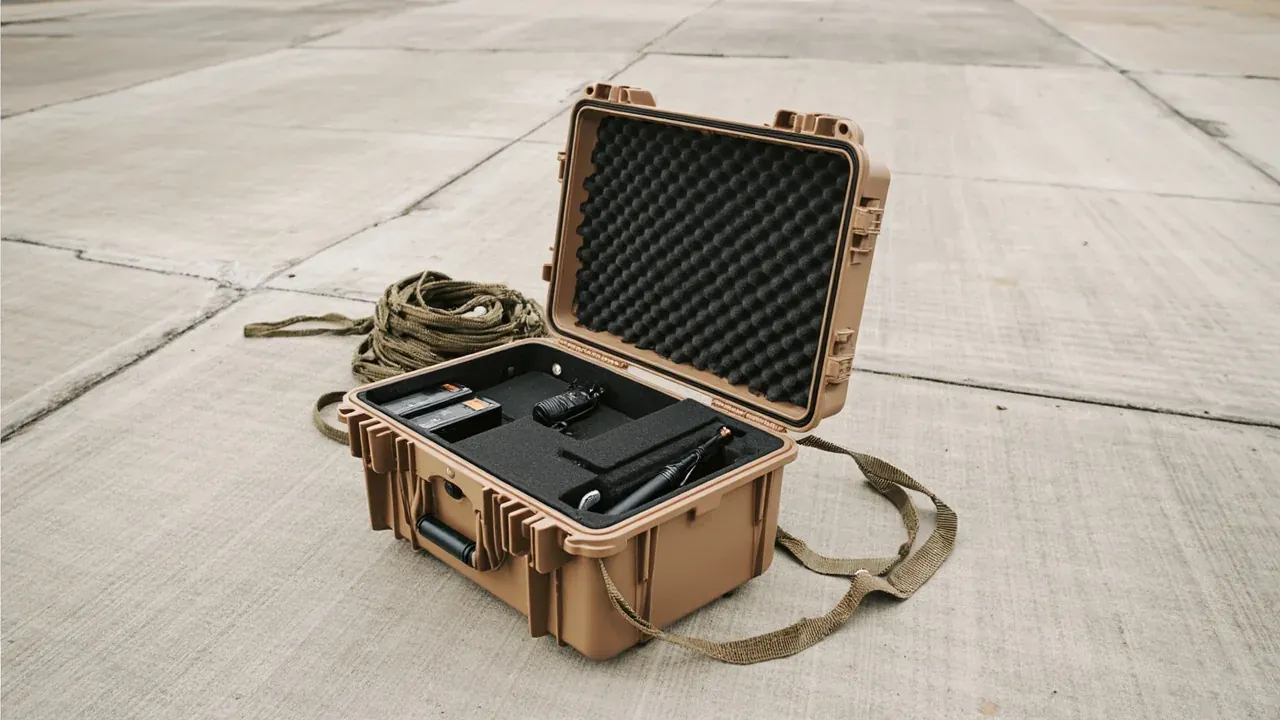
Quick answer: An airdrop case meets three separate load events, not one: release and extraction, canopy opening with its snatch load, and ground impact with rebound. Design in the order of energy path first, shell stiffness second, hardware last. The cushioning stack flattens the acceleration peak, wall thickness and ribs keep the shell from collapsing while it does, and straps plus lifting points feed load into the body evenly. Thickness without cushioning passes shock straight through; cushioning without structure breaks the shell first.
Table of contents
- How an airdrop case takes loads during descent
- Shell structure: wall thickness, corner radii and ribs
- Cushioning layers and the energy path
- Straps, lifting points and hardware
- Reusability after landing
- FAQ
1. How an airdrop case takes loads during descent
An airdrop case meets three load events, and treating them as one misallocates margin. Restraints press on small areas at lifting points. Under canopy the snatch load pulls upward, then becomes a bending cycle.
| Phase | Load | Response |
|---|---|---|
| Extraction | Concentrated pull | Inserts, thickened zones |
| Descent | Snatch load and swing | Reinforced wall at points |
| Landing | Vertical impact | Radiused transitions, base ribs |
Impact energy rises with the square of sink speed and with mass, so extra thickness is a diminishing return: it adds stiffness and mass to the same event. Peak acceleration must be read with duration: a longer time for the same impulse lowers the peak. Name the grade, subject to third-party test reports.
2. Shell structure: wall thickness, corner radii and ribs
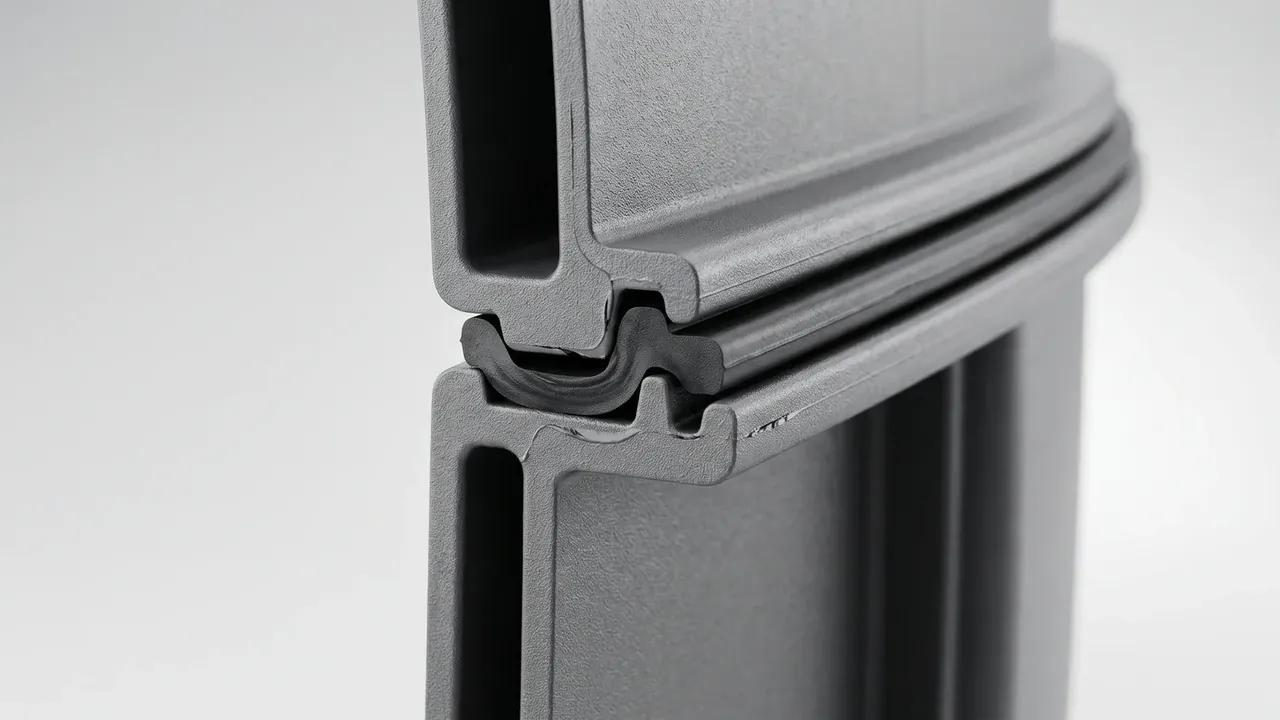
An airdrop case puts material where load enters, not everywhere. The rotomolded double wall closes at the rim into a hollow section that carries bending stiffness and gives the gasket room.
Wall thickness follows the powder charge, so base, corners and the ring around each lifting point run thick. Abrupt steps become stress raisers, so transitions stay gradual.
Corner radii work on two levels: the outer radius turns point contact into area contact, and the inner radius decides whether the liner sits flush. Rotomolding thins material at sharp corners, so keep the radius above the adjacent wall. Ribs raise the second moment of area, where height beats width.
3. Cushioning layers and the energy path
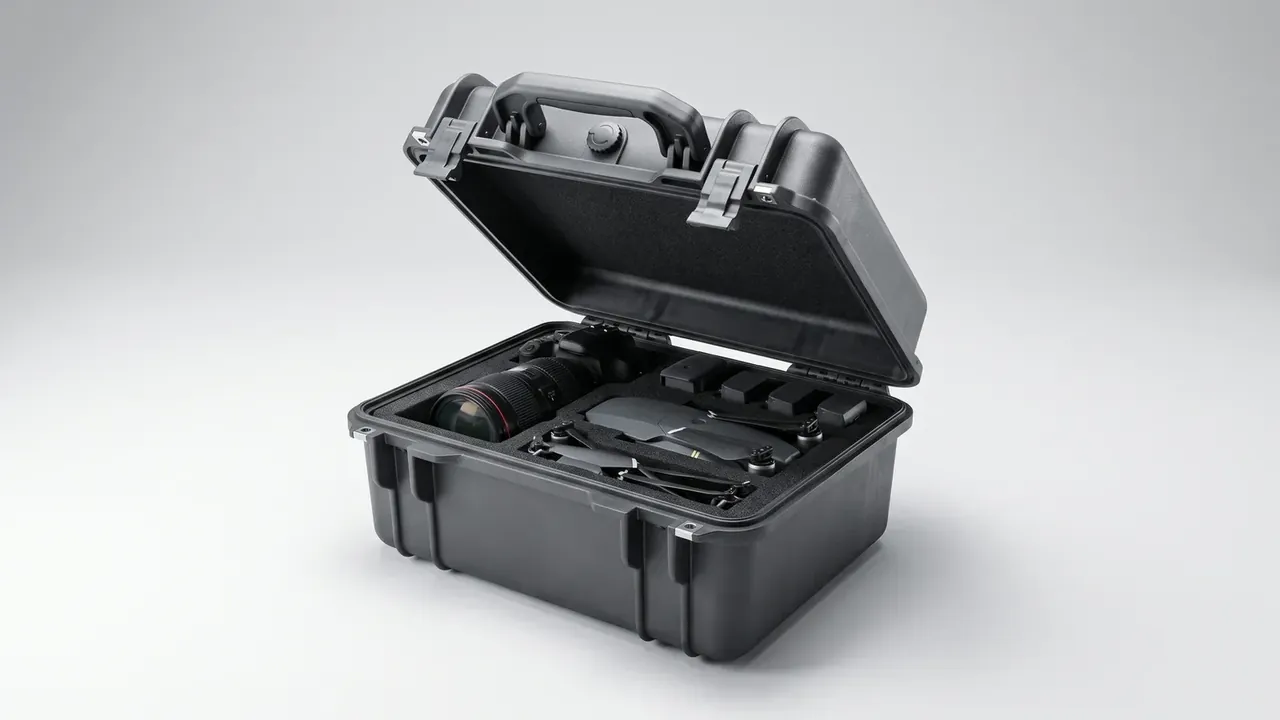
Cushioning spreads impulse over time and area rather than softening the box. A working stack has a locating layer, a main absorbing layer that provides most of the stroke, and an interface layer against the shell.
The main layer works by crushing, and until the material densifies the remaining stroke is the margin. Diced foam yields through gaps and suits irregular shapes; cut foam locates by pocket. In an airdrop case, recovery matters more than spring-back speed.
Three tests govern the path: continuity, so no hard point links a corner to the equipment; stroke, so foam thickness exceeds the intrusion depth; staging, so softer material sits outboard. A second peak on the trace means the foam bottomed out.
4. Straps, lifting points and hardware
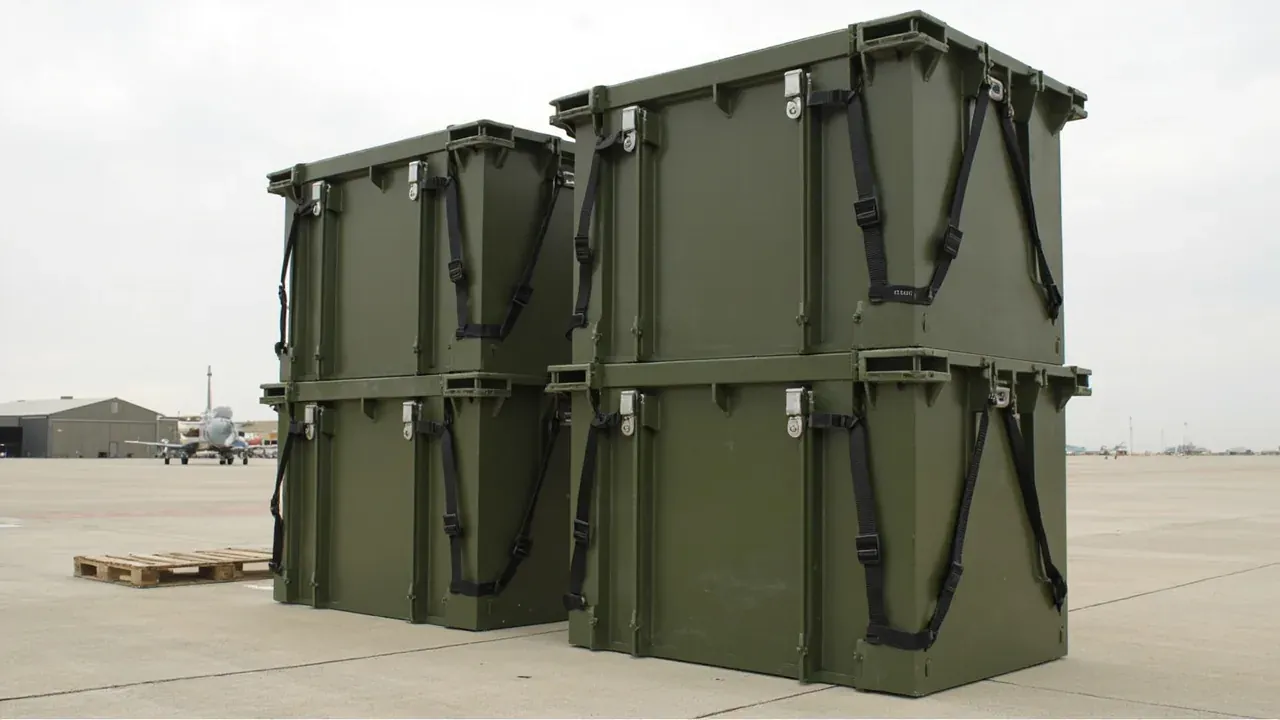
Straps and lifting points connect an airdrop case to the delivery system. They usually fail before the body does, because load enters through a small area. One loose element hands an offset load to everything else.
Lifting points are first an angle problem: a wider sling angle raises the resultant at each point, so four points never share a quarter each. Place them in reinforced zones, molded in or backed by inserts.
Hoop straps close the lid joint and longitudinal straps limit movement, and both should run over ribs rather than the thin span between. Judge hardware on latch coverage, hinge play, bearing.
5. Reusability after landing
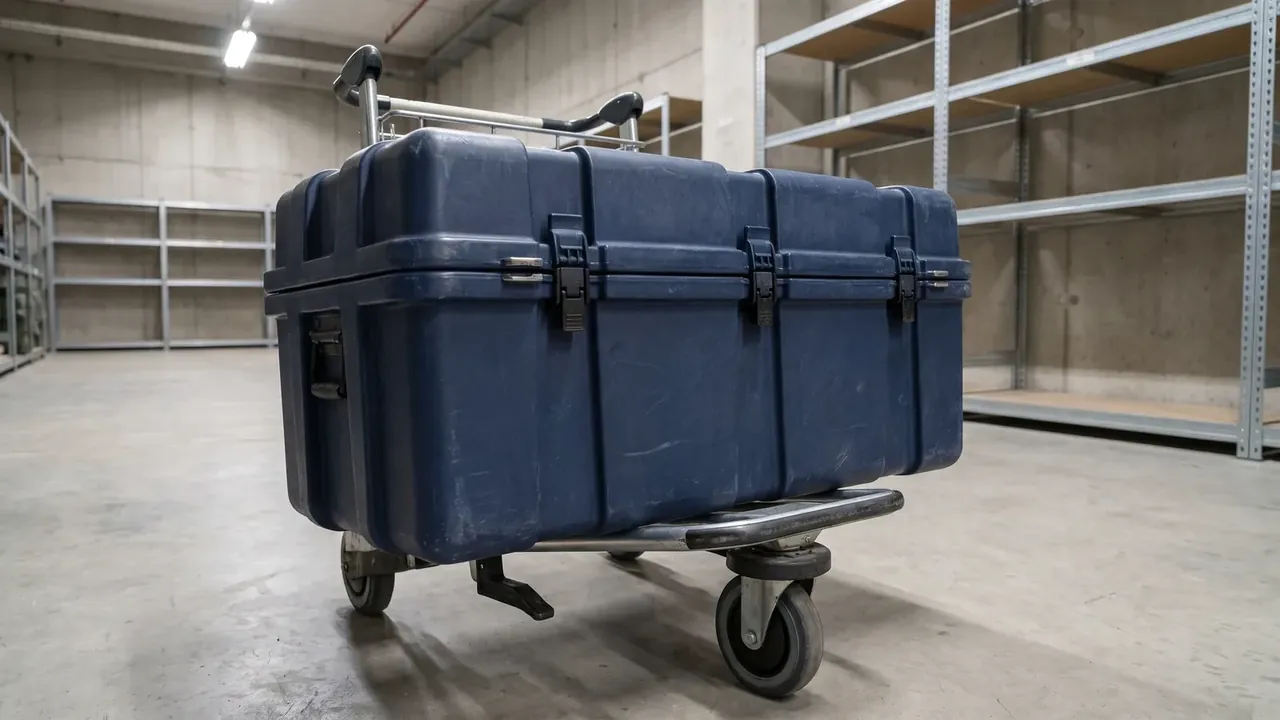
The goal is not one successful drop but an airdrop case that can be dropped again. Three states decide reuse: permanent set, compression at the sealing face, and remaining stroke.
| Area | Criterion | Failure sign | Action |
|---|---|---|---|
| Shell | No bulge or through-crack | Whitened corners | Scrap |
| Rim and gasket | No gap when closed | Water entry | Replace gasket |
| Latches | Full engagement | Will not clamp | Replace hardware |
| Cushioning | Residual thickness | Marks that stay | Replace liner |
Check from the outside in: shell and rim, hardware, liner. Cracks start inside corners, so press them and listen. Reuse counts track sink speed, mass and ground, so a fast-landing airdrop case needs shorter intervals.
Conclusion
Order the work: sink speed and mass, allowed peak acceleration, stroke and thickness, shell wall and ribs, then lifting points, straps and hardware. The sequence cannot be reversed: once shell stiffness is fixed, the stroke can only be negotiated. Any reuse failure keeps it out of the next drop.
This article covers container-side specifications and design implications only.
Related Reading
- Structural design points for an airdrop case
- How reinforcement ribs affect case stiffness
- Cushion liner materials and structure selection
- Wall thickness and case strength
Related Products
- 8 Series — Gun Cases; Military Equipment Cases; Camera Equipment Cases; Drone Cases; Watch Cases; Knife Cases; First Aid Cases; Electronics Equipment Cases
- WL8-2812 PP Gun Case — model WL8-2812
- All protective cases and toolboxes: 7 series, 158 models