

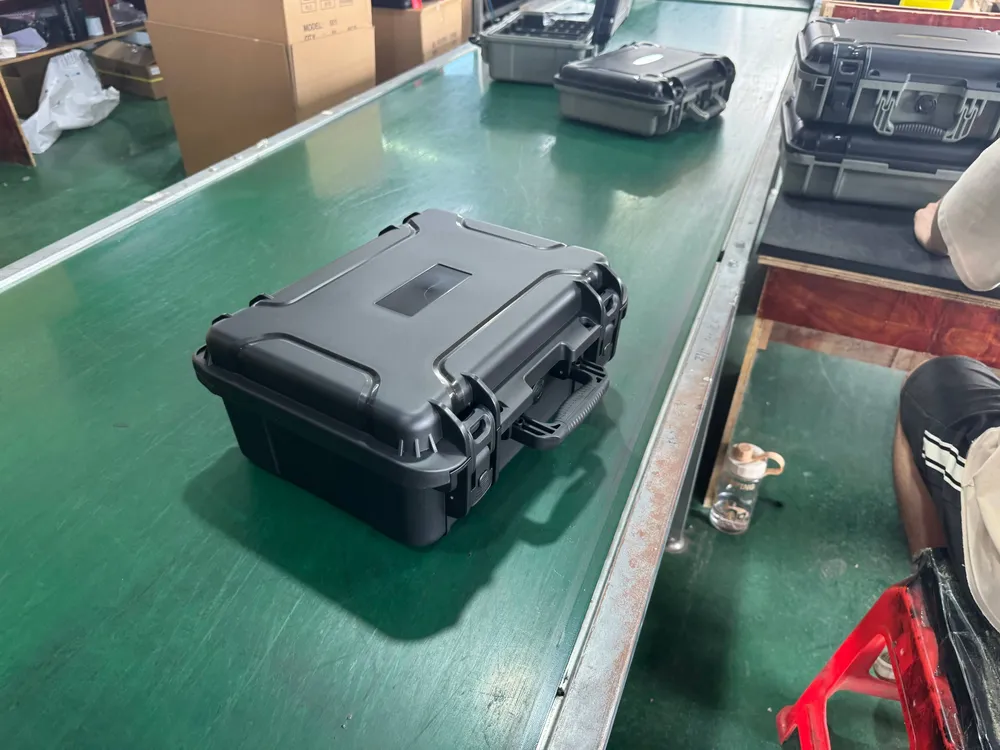
A case can look perfectly sealed and still leak. Visual inspection confirms that a gasket is present and the lid closes; it says nothing about whether the assembly holds pressure. Leak testing closes that gap, and the choice of method determines what you learn.
Method Comparison
| Method | How it works | Locates the leak? | Typical use |
|---|---|---|---|
| Pressure decay | Pressurise the case, then measure pressure loss over time | No — gives a total leak rate | Production line pass/fail |
| Differential pressure | Compare against a sealed reference volume | No, but more sensitive than simple decay | Higher-sensitivity production testing |
| Bubble immersion | Pressurise and submerge; watch for bubbles | Yes — bubbles show the exact point | Development and troubleshooting |
| Tracer gas | Charge with a tracer gas and detect escaping molecules | Yes, with a probe | High-sensitivity requirements |
Why Pressure Decay Readings Mislead
Pressure decay is fast and simple, which is why production lines use it, but three variables corrupt the reading:
- Temperature. A case that warms during the test raises pressure and can mask a leak; one that cools shows a drop that looks like a leak. Test in a stable temperature, and allow the case to stabilise after pressurising.
- Volume change. A flexible shell expands slightly under pressure. If the case is still creeping when measurement starts, that movement reads as pressure loss.
- Test pressure. Too low and small leaks do not show; too high and you risk deforming the case or forcing a seal to pass that would not in service. Test at a pressure related to the real service condition, not the maximum the case can take.
Setting a Pass Criterion
“No bubbles” is not a specification. A meaningful criterion states the test method, the test pressure, the stabilisation and measurement time, the allowable leakage, and the temperature conditions. Without those, two people can test the same case and reach different conclusions.
Decide the allowable leak rate from the consequence of leaking, not from what the equipment can easily measure. A case protecting paper documents and one protecting calibrated electronics do not need the same number.
Where Leaks Actually Come From
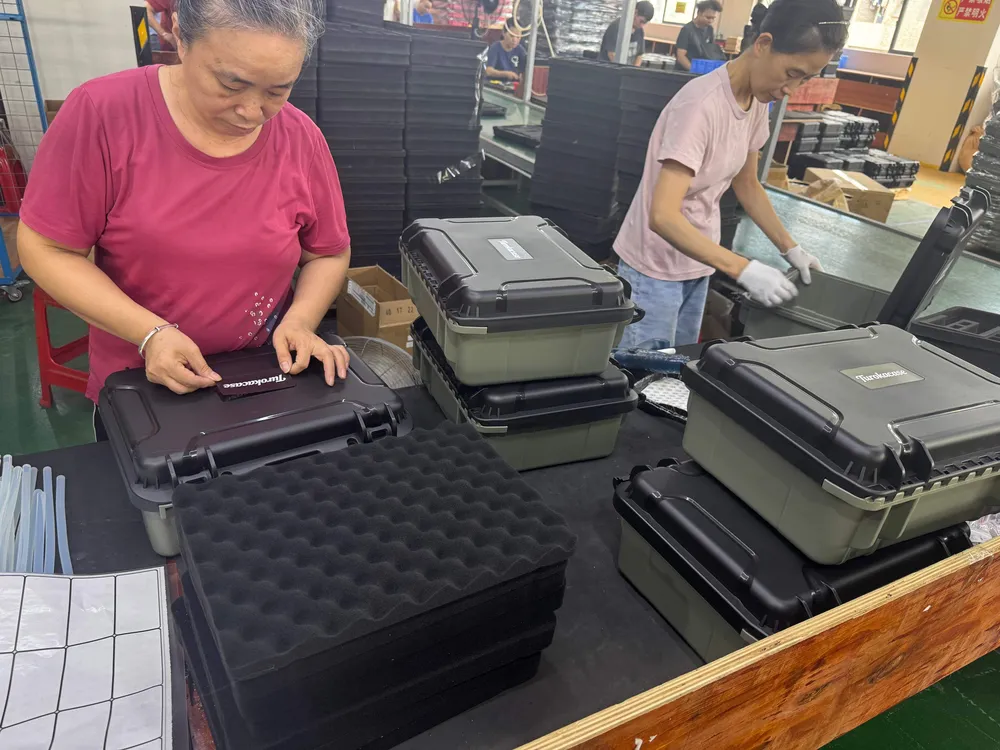
In production, most leaks are assembly issues rather than material failures: a gasket twisted in its groove, an unevenly seated corner, a latch out of adjustment, or a fastener not torqued consistently. That is good news — these are correctable without changing the design. Tracking which failure mode appears most often is the fastest route to a lower leak rate.
For a test a buyer can run on receipt, see our incoming inspection method for waterproof cases.